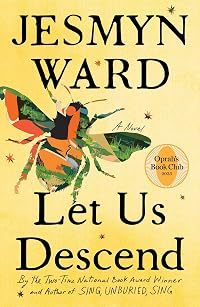
Let Us Descend
by Jesmyn Ward
On This Page
Description
"Let Us Descend is a reimagining of American slavery, as beautifully rendered as it is heart-wrenching. Searching, harrowing, replete with transcendent love, the novel is a journey from the rice fields of the Carolinas to the slave markets of New Orleans and into the fearsome heart of a Louisiana sugar plantation. Annis, sold south by the white enslaver who fathered her, is the reader's guide through this hellscape. As she struggles through the miles-long march, Annis turns inward, seeking show more comfort from memories of her mother and stories of her African warrior grandmother. Throughout, she opens herself to a world beyond this world, one teeming with spirits: of earth and water, of myth and history; spirits who nurture and give, and those who manipulate and take. While Ward leads readers through the descent, this, her fourth novel, is ultimately a story of rebirth and reclamation." -- provided by publisher. show lessTags
Recommendations





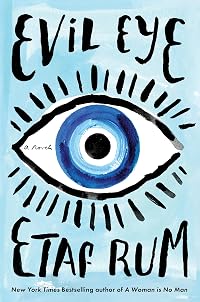
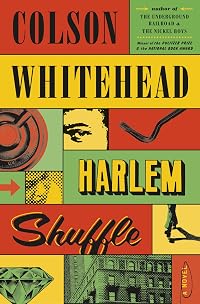
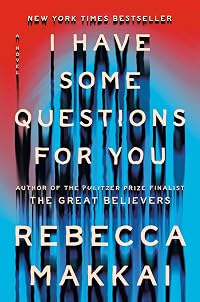
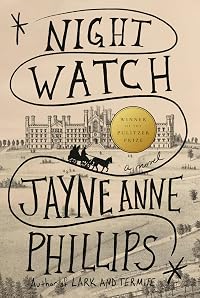

Member Reviews
Let Us Descend, Jesmyn Ward, author and narrator
There are few words I can use to describe the brilliance of this book; there is no good way for me to sum it up without revealing too much. Ward has described the horrors of slavery in such dramatic detail that the reader finds his or herself there, in the center of it all, as a witness to the barbarism. Because they were fed a starvation diet, beaten, and abused, subjected to nightmare punishments for whatever whim the owner decided to fulfill, because they were forced to suffer the breakup of their families and the loss of their friends, to endure being raped by the owner, sometimes even sold at his pleasure, many might have entertained thoughts of escape, but it always seemed foolhardy show more since it was so often futile with unimaginable punishment if caught. I asked myself, what kind of person could tolerate the destruction of humans, bit by bit? Who could treat humans so poorly, even worse than they treated their animals? With every new dawn, every next breath, the future was bleaker for a slave. There was no safe haven, yet there existed a desire for freedom that was unabating.
The world of Arese/Annis is a nightmare world once her mother is sold, but it was not much better when they were together. Worked to the bone, practically starved, taken by the owner to pleasure himself, Arese was born to her mother after the owner raped her. Thus, although she was half-sister to the twin girls in the manor home, their lives were totally different. Arese used to stand by their door, listening to their tutor instruct them. It was in that secret pose that she learned of the expression from Dante’s descent into Hell, that she learned the worlds let us descend. Her mother educated her in the only way she could, she trained her in self-defense and told her to rise, not to descend! Her mother taught her that water was a friend, although it was water that carried her away from her home to this place of captivity. Would water one day save her?
As Annis describes her life, one may be brought to tears or driven to anger. This, however, is a novel, and it tells the story of what took place in the past; there is no rectifying the horrifying lives of these captured people, thought of as less than, thought of as animals who felt nothing or animals that existed for the barbaric pleasure of cruel men and women. These captured humans suffered from every human indignity man could imagine.
Rarely have I felt so moved by a novel. It held such a poetic beauty, as most of Ward’s books do, but this book was magical, filled with legends and spiritual visions. This book takes the readers with it, right into the realm of the slave, and they visibly witness and feel the pain and suffering first-hand, as if it was happening to themselves, and sometimes, even the reader wants it to end a bit more quickly. The author simply takes me places that I do not want to venture, but feel I must. She illustrates life and also the loss of life. She forces the reader to come to terms with the terrible choices slaves had to make, with the terrible lives they were forced to live, with the terrible people who tortured them, but she ends by offering a sliver of hope for the future. show less
There are few words I can use to describe the brilliance of this book; there is no good way for me to sum it up without revealing too much. Ward has described the horrors of slavery in such dramatic detail that the reader finds his or herself there, in the center of it all, as a witness to the barbarism. Because they were fed a starvation diet, beaten, and abused, subjected to nightmare punishments for whatever whim the owner decided to fulfill, because they were forced to suffer the breakup of their families and the loss of their friends, to endure being raped by the owner, sometimes even sold at his pleasure, many might have entertained thoughts of escape, but it always seemed foolhardy show more since it was so often futile with unimaginable punishment if caught. I asked myself, what kind of person could tolerate the destruction of humans, bit by bit? Who could treat humans so poorly, even worse than they treated their animals? With every new dawn, every next breath, the future was bleaker for a slave. There was no safe haven, yet there existed a desire for freedom that was unabating.
The world of Arese/Annis is a nightmare world once her mother is sold, but it was not much better when they were together. Worked to the bone, practically starved, taken by the owner to pleasure himself, Arese was born to her mother after the owner raped her. Thus, although she was half-sister to the twin girls in the manor home, their lives were totally different. Arese used to stand by their door, listening to their tutor instruct them. It was in that secret pose that she learned of the expression from Dante’s descent into Hell, that she learned the worlds let us descend. Her mother educated her in the only way she could, she trained her in self-defense and told her to rise, not to descend! Her mother taught her that water was a friend, although it was water that carried her away from her home to this place of captivity. Would water one day save her?
As Annis describes her life, one may be brought to tears or driven to anger. This, however, is a novel, and it tells the story of what took place in the past; there is no rectifying the horrifying lives of these captured people, thought of as less than, thought of as animals who felt nothing or animals that existed for the barbaric pleasure of cruel men and women. These captured humans suffered from every human indignity man could imagine.
Rarely have I felt so moved by a novel. It held such a poetic beauty, as most of Ward’s books do, but this book was magical, filled with legends and spiritual visions. This book takes the readers with it, right into the realm of the slave, and they visibly witness and feel the pain and suffering first-hand, as if it was happening to themselves, and sometimes, even the reader wants it to end a bit more quickly. The author simply takes me places that I do not want to venture, but feel I must. She illustrates life and also the loss of life. She forces the reader to come to terms with the terrible choices slaves had to make, with the terrible lives they were forced to live, with the terrible people who tortured them, but she ends by offering a sliver of hope for the future. show less
Inferno is the first book of Italian writer Dante Alighieri's 14th-century 3-part narrative poem The Divine Comedy. Inferno describes the journey of a fictionalized version of Dante downward through the circles of Hell. He is guided by the ancient Roman poet Virgil, who says to Dante in Canto IV, "Let us descend now into the blind world. . . . Let us go on, for the long way impels us.”
In Let Us Descend Jesmyn Ward describes the long walk of slaves from North Carolina to the slave markets in New Orleans as a descent through Hell, as seen through the eyes of a young Black slave named Annis. Annis was born after her white master’s repeated raping of her mother, as Annis tells us by explaining that it is he who has given her “the show more middle mud” of her skin.
She heard parts of Dante’s poem by eavesdropping on the tutor to her two half-sisters, who of course were educated, while she worked for this white family from before sun-up until after sun down. When Annis started to grow up, the master sold off the mother intending to replace her with Annis for his sexual predations. But when he saw Annis kissing Safi - another female slave, he was repulsed, and sold off both Annis and Safi.
Annis and Safi turned to each other as “love-hungry, hurt-full children . . . ”
The two were herded together with others by “The Georgia Man”:
“. . . this white man looping and fastening me to the other women on this line . . . who moves us south to New Orleans in the cheapest way, the old way, terrible and nasty: he chains the men, binds the women with ropes, leaving the children to walk behind as far as they can, not caring if they drop dead at the side of the road in this red-earthed place. This wide, cry-choked hell.”
She observed:
“We are expected to walk and drop filth like horses.”
“Us walking cattle, us goats. Us made to be a herd, but we not. We not.”
“We are shuffling slowly, leaning back against our chains and ropes. The tutor’s words ring through my head: Let us descend.”
And again, she recalled from the tutor’s reading of Dante: “I am the way into the city of woe, I am the way into eternal pain, I am the way to go among the lost.’”
Upon arrival, Annis and the others were put into the horse stalls that served as the New Orleans slave market, where they were unprotected from “the men that would sell them, buy them, rape them.” [As Wikipedia explains, “New Orleans, Louisiana was a major, if not the major, slave market of the lower Mississippi River valley of the United States from approximately 1830 until the American Civil War. Slaves from the upper south were trafficked by land and by sea to New Orleans where they were sold at a markup to the cotton and sugar plantation barons of the region.”]
Annis ended up on a sugar plantation, where the work was grueling. But she knew what happened to slaves who tried to escape:
“The thieves gather their men, their thick-saliva’d, hang-toothed dogs, and run after them to steal them back. When the men find them that fled, they wrap the ropes around their hands and feet and necks. They beat them with leather, with boards. They heat steel orange hot, and then they brand the people: their cheeks, their backs. They collar them with spiked metal. They encircle their ankles with iron and chains; they make pregnant people shuffle their way to delivery.”
Though Annis does not explicitly contemplate the unfairness of her lot vis-a-vis those who were born with white skin, it is instructive for readers to continue along with Dante’s fourth canto, because where Virgil first takes Dante is Limbo, where the suffering of people there is through no fault of their own. Virgil explains:
“Now will I have thee know, ere thou go farther,
That they sinned not; and if they merit had,
'Tis not enough, because they had not baptism
Which is the portal of the Faith thou holdest;
And if they were before Christianity,
In the right manner they adored not God;
And among such as these am I myself.
For such defects, and not for other guilt,
Lost are we and are only so far punished,
That without hope we live on in desire.”
Annis was unschooled in the god of Christianity. But she had been taught a religion of sorts by her mother, who told her about spirits worshipped in Africa. Annis, in her attempt to endure the horror of her descent, turned to these spirits, one of whom she envisioned as wearing the face of her grandmother Aza. She perceived this spirit as not only wanting to guide her, but be worshipped by her. But Annis was reluctant; at several points she asked Aza why she had not intervened to stop their suffering. Aza had no answer. And thus Annis turned away from her. She would make her own way. She averred:
“I want to rise. I want stars.”
“I want. I want to grow my hair long, to find food and feed myself without hiding, to sit in the sunlight and scratch the worry out of my scalp, to breathe without fear and terror choking me, to choose my seconds, to choose my minutes, to choose my days.”
And indeed, she improbably found a way to do that.
She ended: “I am, My own.”
Discussion: In this book, the voice of Annis varies from a slave dialect to high literacy, and in the latter mode, she frequently employs Homeric epithets (as is, most famously, “the wine-dark sea”). [Totally Unrelated Aside: For an interesting analysis of why Homer would have referred to the blue-green Aegean as “wine-dark” see this New York Times article.]
But she is quite poetic even aside from the use of epithets, as in this passage describing the effects of working in the sugar cane fields:
“I shrink: the work wrings me to ropes. The walking, lifting, throwing, washing, clearing, and trudging pare my face. I am less. We are all less. The bones of Mary’s hips jut from her skin in a bowl. Esther’s cheekbones are overturned spoons.”
The rich lyricism of the prose is of course in stark contrast to the content, but that paradox serves to set in greater relief her Hell on Earth.
Evaluation: I hope this book engenders readers to question how such evil was possible, and might still occur without the constraints of law, even among those who profess to be “Christians.” It boggles the mind. But the blood, sweat, and tears of slavery, not to mention the profound injustice, is in fact as much or more of the foundation of this country as the “Founding Fathers,” about whom we prefer to contemplate. (And even in our contemplation we like to elide over their slave-holding and slave-abusing behaviors.) Highly recommended. show less
In Let Us Descend Jesmyn Ward describes the long walk of slaves from North Carolina to the slave markets in New Orleans as a descent through Hell, as seen through the eyes of a young Black slave named Annis. Annis was born after her white master’s repeated raping of her mother, as Annis tells us by explaining that it is he who has given her “the show more middle mud” of her skin.
She heard parts of Dante’s poem by eavesdropping on the tutor to her two half-sisters, who of course were educated, while she worked for this white family from before sun-up until after sun down. When Annis started to grow up, the master sold off the mother intending to replace her with Annis for his sexual predations. But when he saw Annis kissing Safi - another female slave, he was repulsed, and sold off both Annis and Safi.
Annis and Safi turned to each other as “love-hungry, hurt-full children . . . ”
The two were herded together with others by “The Georgia Man”:
“. . . this white man looping and fastening me to the other women on this line . . . who moves us south to New Orleans in the cheapest way, the old way, terrible and nasty: he chains the men, binds the women with ropes, leaving the children to walk behind as far as they can, not caring if they drop dead at the side of the road in this red-earthed place. This wide, cry-choked hell.”
She observed:
“We are expected to walk and drop filth like horses.”
“Us walking cattle, us goats. Us made to be a herd, but we not. We not.”
“We are shuffling slowly, leaning back against our chains and ropes. The tutor’s words ring through my head: Let us descend.”
And again, she recalled from the tutor’s reading of Dante: “I am the way into the city of woe, I am the way into eternal pain, I am the way to go among the lost.’”
Upon arrival, Annis and the others were put into the horse stalls that served as the New Orleans slave market, where they were unprotected from “the men that would sell them, buy them, rape them.” [As Wikipedia explains, “New Orleans, Louisiana was a major, if not the major, slave market of the lower Mississippi River valley of the United States from approximately 1830 until the American Civil War. Slaves from the upper south were trafficked by land and by sea to New Orleans where they were sold at a markup to the cotton and sugar plantation barons of the region.”]
Annis ended up on a sugar plantation, where the work was grueling. But she knew what happened to slaves who tried to escape:
“The thieves gather their men, their thick-saliva’d, hang-toothed dogs, and run after them to steal them back. When the men find them that fled, they wrap the ropes around their hands and feet and necks. They beat them with leather, with boards. They heat steel orange hot, and then they brand the people: their cheeks, their backs. They collar them with spiked metal. They encircle their ankles with iron and chains; they make pregnant people shuffle their way to delivery.”
Though Annis does not explicitly contemplate the unfairness of her lot vis-a-vis those who were born with white skin, it is instructive for readers to continue along with Dante’s fourth canto, because where Virgil first takes Dante is Limbo, where the suffering of people there is through no fault of their own. Virgil explains:
“Now will I have thee know, ere thou go farther,
That they sinned not; and if they merit had,
'Tis not enough, because they had not baptism
Which is the portal of the Faith thou holdest;
And if they were before Christianity,
In the right manner they adored not God;
And among such as these am I myself.
For such defects, and not for other guilt,
Lost are we and are only so far punished,
That without hope we live on in desire.”
Annis was unschooled in the god of Christianity. But she had been taught a religion of sorts by her mother, who told her about spirits worshipped in Africa. Annis, in her attempt to endure the horror of her descent, turned to these spirits, one of whom she envisioned as wearing the face of her grandmother Aza. She perceived this spirit as not only wanting to guide her, but be worshipped by her. But Annis was reluctant; at several points she asked Aza why she had not intervened to stop their suffering. Aza had no answer. And thus Annis turned away from her. She would make her own way. She averred:
“I want to rise. I want stars.”
“I want. I want to grow my hair long, to find food and feed myself without hiding, to sit in the sunlight and scratch the worry out of my scalp, to breathe without fear and terror choking me, to choose my seconds, to choose my minutes, to choose my days.”
And indeed, she improbably found a way to do that.
She ended: “I am, My own.”
Discussion: In this book, the voice of Annis varies from a slave dialect to high literacy, and in the latter mode, she frequently employs Homeric epithets (as is, most famously, “the wine-dark sea”). [Totally Unrelated Aside: For an interesting analysis of why Homer would have referred to the blue-green Aegean as “wine-dark” see this New York Times article.]
But she is quite poetic even aside from the use of epithets, as in this passage describing the effects of working in the sugar cane fields:
“I shrink: the work wrings me to ropes. The walking, lifting, throwing, washing, clearing, and trudging pare my face. I am less. We are all less. The bones of Mary’s hips jut from her skin in a bowl. Esther’s cheekbones are overturned spoons.”
The rich lyricism of the prose is of course in stark contrast to the content, but that paradox serves to set in greater relief her Hell on Earth.
Evaluation: I hope this book engenders readers to question how such evil was possible, and might still occur without the constraints of law, even among those who profess to be “Christians.” It boggles the mind. But the blood, sweat, and tears of slavery, not to mention the profound injustice, is in fact as much or more of the foundation of this country as the “Founding Fathers,” about whom we prefer to contemplate. (And even in our contemplation we like to elide over their slave-holding and slave-abusing behaviors.) Highly recommended. show less
This is the story of Annis, her childhood enslaved on a North Carolina plantation working as a housemaid in her father's house, close to her mother, who protects and nurtures her as best she can, teaching her about her grandmother, who was brought over from Africa. Then first her mother is sold, then Annis is sold and marched to New Orleans to be sold, entering into worse circumstances with every mile deeper into the South.
Ward is a brilliant writer, her words sing from the page and her use of magic realism folds naturally into this very harsh story. I avoided this novel because although I loved Sing, Unburied, Sing, it was clear from the description that this novel would be hard to read. But eventually I did pick it up and it is a show more testament to how well Ward writes that a novel as unrelentingly bleak as this one would flow so beautifully. It's both horrifying and gorgeous. I will likely never want to read this book again, but so much of it is sitting with me, inhabiting my imagination now. show less
Ward is a brilliant writer, her words sing from the page and her use of magic realism folds naturally into this very harsh story. I avoided this novel because although I loved Sing, Unburied, Sing, it was clear from the description that this novel would be hard to read. But eventually I did pick it up and it is a show more testament to how well Ward writes that a novel as unrelentingly bleak as this one would flow so beautifully. It's both horrifying and gorgeous. I will likely never want to read this book again, but so much of it is sitting with me, inhabiting my imagination now. show less
I knew from the first sentence I could never write anything deserving of this book: "The first weapon I ever held was my mother's hand." The book begins with the beautiful relationship of young Annis and her mom at her "sire's" house. The first part of the book might be the most enchanting and strongest, simply because of this solid, admirable relationship between a mother and daughter. Annis hears her half-sisters being taught Dante's Inferno by their tutor. Soon, Annis starts her own journey shortly after. To be fair, I have never read Dante's Inferno, so I'm not sure how much Ward's novel actually mirrors that book. But I don't think I would want it to -- this is perfect the way it is, no knowledge of Dante's Inferno is necessary. show more Dante's Inferno is more like an inspiration or jumping off point. Orienting the American South during times of slavery as Dante's Inferno really doesn't seem like a far stretch or impossible idea, but man, this is brutal. But there is purpose in this brutality and beauty within this book. It doesn't take much to make any slave narrative seem like a hellscape -- just tell the truth. Injustice after injustice, as it usually was/is for people of color. I'm a little sad this is being published in October, as it seems necessary to read it in summer. Both for the themes and setting, but also for mental health of the reader. To be honest, the two Jesmyn Ward novels that I previously have read were not novels that I found to be my favorites and other readers have loved her books much more than I do. But this one! Wow. Words can't describe. It's like this is a lesson that I have to read every book by every author or something. Yikes. Maybe her style of writing just works better with a more historical setting? I kept wanting to read these sentences as slow as honey. I had heard that Jesmyn Ward lost her husband a couple years ago, and this is very much a book about grief. This book is a diamond made from grief. Though Jesmyn Ward has already won so many awards, I think this will win ALL the awards. This is an example of the most perfect art that has resulted from something so terrible in American history. Stunning, luminous, heartbreaking, perseverant, redeeming, necessary. I'm honored to have had the privilege of reading it. show less
[3.25] How I wanted this widely-acclaimed book that reimagines Dante’s “Inferno” to land on my all-to-short list of 5-star reads. It seemed to have all the ingredients. A socially and historically significant theme that creatively explores the tragedy of slavery through the eyes of a girl. A heartbreaking storyline that shines a spotlight on the resiliency of the human spirit. A talented author known for her lyrical prose. Unfortunately, it didn’t quite work for me — and I’m struggling to understand why it didn’t. I think my biggest issue involved the way the story unfolded in a stream of consciousness style fashion. It was a challenge for me to navigate the narrative path. As for the magical realism – something I show more typically get into – this aspect of “Let Us Descend” seemed – for a lack of a better word – “contrived.” Nevertheless, the book sheds light on a harrowing era in our nation’s history. The author clearly did meticulous research and used her wordsmithing to craft a myriad of riveting vignettes. show less
Jesmyn Ward writes on a different plane than other people, somehow turning prose into poetry while telling heart-breaking stories. With Let Us Descend, she again transcends the novel form to give readers the spiritual introspection and struggle of Annis, an enslaved young woman who endures the separation from her mother, the forced march from Carolina to Lousiana, and the atrocities of a sugar plantation. Throughout it all, Annis converses with the spirits of her ancestors and learns their secrets and histories as she struggles to survive. Let Us Descend is a beautifully difficult book that explores themes of slavery, motherhood, and ancestry like only Jesmyn Ward can.
The subject here is endurance and triumph over deprivation, cruelty and abuse. Nothing is softened or euphemized, yet often while reading I felt the way I sometimes feel reading poetry...the words wash over me as the meaning sinks away beneath the tide. Metaphor and symbolism are as thick as mosquitoes in the Louisiana swamps. Some of it works, a lot of it doesn't. I had a very hard time with the narrative voice--first person, present tense, modern excellent English, from a 19th century unlettered, 3rd generation enslaved African woman half dead from starvation, physical punishment and exhaustion. I just couldn't suspend my disbelief, first that any human being could endure for over a year the overwork, lack of food (and I mean near show more absence of food), constant harassment and fear of beating or being consigned to "the hole", and retain any sense of self, no matter how well trained in martial arts nor how determined she might be; and second, that even the basest of slave-runners or slaveholders would fail to provide their human "livestock" with the minimum requirements of life to protect their investment. A horse treated as Annis and her companions were treated would soon fall down dead and useless. Cattle driven to market under the conditions we are shown would arrive with little value left on their bones, if they hadn't drowned or collapsed before reaching their destination. I know that conditions for enslaved people were brutish, filthy, and dangerous; I know that a great many died of their mistreatment and a great many were intentionally mutilated or killed for minor transgressions, let alone for outright rebellion or attempts to escape. I know that to some white people they were considered expendable in ways that farm animals were not...not just less than human, but less than alive. I still balked at a mistress who made no provision whatsoever (as far as I could gather from the text) for feeding her house slaves, even punishing them for trying to cook a dead wild animal no white person would eat, because it was "hers" and so was the fire. Yes, the woman was demented, but there was no counterpoint to her ...nothing to suggest that her approach was atypical in any way. Let Us Descend is literary; it has some "good bones" as a story. Ward's descriptive talent is huge. (Rarely have I encountered such marvelous use of the English language to present such unpalatable content.) But overall, I cannot rate this book very highly, as it simply failed to work for me. show less
Members
- Recently Added By
Lists

Bitter Southerner Summer Reading Roundup
198 works; 8 members

READ in 2023
244 works; 1 member

Everand 2023
53 works; 1 member

Books Read in 2024
4,623 works; 126 members

To read
61 works; 1 member

Fiction: BLM
60 works; 1 member
Author Information

12+ Works 12,979 Members
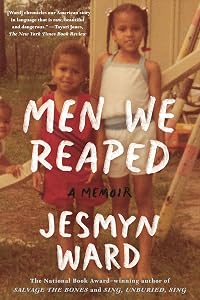
Jesmyn Ward was born in DeLisle, Mississippi in 1977. She became a writer after the death of her brother by a drunk driver. She received a MFA in creative writing from the University of Michigan. Her books include the novel Where the Line Bleeds, the memoir Men We Reaped, and the nonfiction work The Fire This Time: A New Generation Speaks about show more Race. Salvage the Bones won the National Book Award in Fiction in 2011 and an Alex Award in 2012. Sing, Unburied, Sing won the National Book Award in Fiction in 2017. She taught at University of New Orleans, the University of South Alabama, and Tulane University. (Bowker Author Biography) show less
Some Editions
Awards and Honors
Awards
Distinctions
The Guardian Book of the Day (2023-12-13)
Common Knowledge
- Canonical title
- Let Us Descend
- Original publication date
- 2023
- People/Characters
- Annis; Mama Aza; Safi
- Important places
- New Orleans, Louisiana, USA
- Publisher's editor
- Belden, Kathy
Classifications
Statistics
- Members
- 1,199
- Popularity
- 20,777
- Reviews
- 43
- Rating
- (3.74)
- Languages
- 7 — Catalan, Dutch, English, French, German, Spanish, Swedish
- Media
- Paper, Audiobook, Ebook
- ISBNs
- 22
- ASINs
- 7