
The Illustrated Man
by Ray Bradbury
On This Page
Description
You could hear the voices murmuring, small and muted, from the crowds that inhabited his body. A peerless American storyteller, Ray Bradbury brings wonders alive. The Illustrated Man is classic Bradbury- eighteen startling visions of humankind's destiny, unfolding across a canvas of decorated skin. In this phantasmagoric sideshow, living cities take their vengeance, technology awakens the most primal natural instincts, Martian invasions are foiled by the good life and the glad hand, and show more dreams are carried aloft in junkyard rockets. Provocative and powerful, Ray Bradbury's The Illustrated Man is a kaleidoscopic blending of magic, imagination, and truth-as exhilarating as interplanetary travel, as maddening as a walk in a million-year rain, and as comforting as simple, familiar rituals on the last night of the world. show lessTags
Recommendations
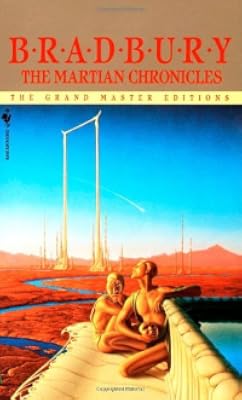
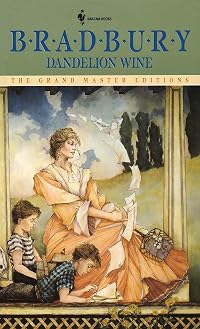










Member Reviews
This is only the second book of short stories that I've finished in recent memory. For the most part, I don't like short stories, but these were very good. They are unrealistic in their views of Mars and space travel coming from the late 1940s and early 1950s. The beauty is not the science in them, but rather it is the story-telling. There is a depth of feeling and a drawing out of thought about life. The true brilliance is the way with words to stir the imagination and the heart. Bradbury does this powerfully. These stories are charged, one in the horror of revenge and one in the beauty of family love and the span in between.
Siguiendo el estilo de 'Crónicas Marcianas', Ray Bradbury recopila varios de sus relatos, ya publicados en diversas revistas, todos ellos conteniendo historias con elementos en común, para formar una novela. Aunque bien es cierto que 'El Hombre Ilustrado' no tiene la cohesión de 'Crónicas Marcianas' ni alcanza los niveles de calidad de ésta.
El libro empieza a raíz del encuentro de un personaje con el Hombre Ilustrado, una especie de fenómeno de feria que tiene todo su cuerpo tatuado; pero se trata de tatuajes muy especiales, ya que cada dibujo refiere una historia del futuro. A pesar de que el Hombre Ilustrado avisa reiteradamente a este personaje del peligro que conlleva estar a su lado, decide acampar con él. Y es que está show more fascinado con las ilustraciones que decoran su piel. A partir de aquí se van desplegando cada uno de los dieciocho relatos, cada uno de ellos asociado a una ilustración distinta.
Todos los cuentos contienen esa poesía inherente a las historias de Bradbury, en los que impera el carácter literario y de fábula más que el científico. Bradbury nunca se ha preocupado de la parte científica de sus libros, algo que le han achacado algunos de sus colegas en múltiples ocasiones. Pero a él no le preocupan detalles del tipo de si la luna sale por tal o cual lado, a él lo que le importa es contar historias.
En 'El Hombre Ilustrado' se dan la mano diversos géneros, fantásticos, ciencia ficción y terror. Entre los que más me han gustado se encuentran 'Caleidoscopio', que cuenta la caída de varios astronautas hacia la atmósfera. 'Los desterrados', homenaje a los grandes maestros de lo sobrenatural, que narra lo que les sucede cuando sus libros son destruidos. 'El zorro y el bosque', donde es posible viajar al pasado para huir de la guerras del futuro. 'Marionetas S.A.', cuento que narra la posibilidad de hacer una copia de ti mismo para salir de ciertos apuros. 'La hora cero', relato inquietante donde los niños de la Tierra son utilizados para invadirnos. 'El cohete', donde priman los sueños por encima de cualquier cosa, en donde el protagonista le hace a su familia un regalo fabuloso. Pero realmente todos los cuentos tienen algo memorable. No cabe duda, Ray Bradbury fue un visionario. show less
El libro empieza a raíz del encuentro de un personaje con el Hombre Ilustrado, una especie de fenómeno de feria que tiene todo su cuerpo tatuado; pero se trata de tatuajes muy especiales, ya que cada dibujo refiere una historia del futuro. A pesar de que el Hombre Ilustrado avisa reiteradamente a este personaje del peligro que conlleva estar a su lado, decide acampar con él. Y es que está show more fascinado con las ilustraciones que decoran su piel. A partir de aquí se van desplegando cada uno de los dieciocho relatos, cada uno de ellos asociado a una ilustración distinta.
Todos los cuentos contienen esa poesía inherente a las historias de Bradbury, en los que impera el carácter literario y de fábula más que el científico. Bradbury nunca se ha preocupado de la parte científica de sus libros, algo que le han achacado algunos de sus colegas en múltiples ocasiones. Pero a él no le preocupan detalles del tipo de si la luna sale por tal o cual lado, a él lo que le importa es contar historias.
En 'El Hombre Ilustrado' se dan la mano diversos géneros, fantásticos, ciencia ficción y terror. Entre los que más me han gustado se encuentran 'Caleidoscopio', que cuenta la caída de varios astronautas hacia la atmósfera. 'Los desterrados', homenaje a los grandes maestros de lo sobrenatural, que narra lo que les sucede cuando sus libros son destruidos. 'El zorro y el bosque', donde es posible viajar al pasado para huir de la guerras del futuro. 'Marionetas S.A.', cuento que narra la posibilidad de hacer una copia de ti mismo para salir de ciertos apuros. 'La hora cero', relato inquietante donde los niños de la Tierra son utilizados para invadirnos. 'El cohete', donde priman los sueños por encima de cualquier cosa, en donde el protagonista le hace a su familia un regalo fabuloso. Pero realmente todos los cuentos tienen algo memorable. No cabe duda, Ray Bradbury fue un visionario. show less
When it comes to Ray Bradbury, I’m definitely a fan of his gothic-styled fantasy stories, but even though I am less interested by his space-based sci-fi exploration I will admit that he is a master of language and has a way of picking up on the small humanities within his characters to keep the stories well-motivated. This collection begins with “The Veldt”, a story that I sought out a number of years ago in single form after hearing deadmau5’ electronica musical rendition, and which even after years away still strikes an ominous chord due to the themes around toxic family structures and technology. Most of the stories in this selection are similarly focused on humanity’s interactions with technology and space, a clear show more preoccupation for Bradbury as he was writing during an era of an increased availability (and dare we say obsession) with both. Like many other science fiction “predictions,” few of Bradbury’s specifications came true in a literal sense, but his exploration of themes such as increased alienation, conflict between different life forms (or races), and the many ways technology could influence our lives (for better or worse) still hold much intrigue and possibly even truth. While I can’t say I’ll ever feel the need to read this collection again (space and tech doesn’t quite do it for me on a recurring basis), Bradbury’s language and narration was expectedly comforting and highly engaging through each of the short vignettes herein. Now, if only the vague frame story of the Illustrated Man was made into an actual novel, I would be much more inclined to read deeply into that! show less
These sci-fi short stories are timeless (and not just because after re-revisiting these stories after several decades it was like reading them for the first time). The stories' themes examine human nature (often dark and evil) and probe real and psychological fears (of our children, of nuclear holocaust) that remain relevant even now. Counterbalancing some of the heavier material are other stories that examine man's religiosity. None are clunkers, though one or two stories are a bit heavy handed by today's standards, with their meaning spelled out for the reader in too much detail. But for the most part, these 18 tales are masterpieces of the genre. Originally written in the late 40s and early 50s for pulp magazines, these stories stand show more the test of time and tell us an incredible amount about ourselves, and illustrate a fantastic vision for our future, even today. show less
Bradbury is known as a science fiction writer for good reason, but man this collection is a reminder of how dark and horrifying a lot of his stories can be. More often he's using his familiar realm of rockets and martians as a backdrop for psychological horror that would fit right alongside Shirley Jackson or Stephen King. Actually, any time that someone uses "Black Mirror/Twilight Zone" as a comp I would add this collection to that list. The Illustrated Man is a great dive into the mind of a brilliant storyteller and an example of why Ray Bradbury is one of my favorite authors.
Imaginative science fiction; there's an inextricable link between Bradbury's stories and art which isn't found quite as often in other sci-fi writers like Asimov. "The Exiles" came to be one of my favourites over reading this collection, but so many of them inspire the mind. Mars comes to feel less like the planet of red dust that we see in reality, and more like an Eden or an Oz, a fantastical other-world where the imagination can run rampant.
Four stars.
Four stars.
There is no Ray Bradbury of our generation. No one writes short stories anymore the way he did, for much of his style seems to be a bygone relic (see also Harlan Ellison). Now, perhaps, those writers sharpen their words into claws and write Black Mirror episodes. Bradbury’s stories in this collection are not toothless—but it often seems he would get right up to a point and refuse to put too fine a point on it… “the reader understand, and I have other stories to write!” you can almost hear him shout.
The titular tattooed man is nothing but a framing device for the eighteen stories here. He’s sufficiently creepy and pitiable, but not used as much as I would have liked. My favorites: The Exiles, in which dead authors of horror show more live in some kind of afterlife on Mars. Ever wanted to know how Poe and Dickens would have talked to each other? Wonder no longer. Kaleidoscope, where all protagonists and living dead in the coldness of space and face their deaths in bitterness and wonder. The Other Foot; Mars is colonized by black people (likely American), the older generation remembering the horrors of deadly racism. When a white man visits Mars, there is no pity for him. The Man is Jesus come to visit another planet just as humans land there, and each responds not unlike descriptions in the New Testament. Man never changes. The Fox and the Forest, a metaphorical title about a time-traveling couple escaping their horrible present in the past, and the bounty hunter sent to bring them back.
Perhaps my favorite is The Rocket, about a poor Italian man who wishes to travel the stars. With only $3000, he makes a poor investment and it seems his family will never see space as the rich upper class can.
I won’t spoil the story, because so much of the joy of reading Bradbury is in the discovery of his world. He doesn’t care so much about engines and laws of gravity and how science works so much as he cares about the men and women of his stories. They become, in scant words and paragraphs, real people. Mars is not the fourth planet of our solar system, Mars is possibility and the unknown. Mars is a mirror for humanity and where we can reimagine ourselves. Our old horror is just behind, but a new joy and tragedy waits. show less
The titular tattooed man is nothing but a framing device for the eighteen stories here. He’s sufficiently creepy and pitiable, but not used as much as I would have liked. My favorites: The Exiles, in which dead authors of horror show more live in some kind of afterlife on Mars. Ever wanted to know how Poe and Dickens would have talked to each other? Wonder no longer. Kaleidoscope, where all protagonists and living dead in the coldness of space and face their deaths in bitterness and wonder. The Other Foot; Mars is colonized by black people (likely American), the older generation remembering the horrors of deadly racism. When a white man visits Mars, there is no pity for him. The Man is Jesus come to visit another planet just as humans land there, and each responds not unlike descriptions in the New Testament. Man never changes. The Fox and the Forest, a metaphorical title about a time-traveling couple escaping their horrible present in the past, and the bounty hunter sent to bring them back.
Perhaps my favorite is The Rocket, about a poor Italian man who wishes to travel the stars. With only $3000, he makes a poor investment and it seems his family will never see space as the rich upper class can.
I won’t spoil the story, because so much of the joy of reading Bradbury is in the discovery of his world. He doesn’t care so much about engines and laws of gravity and how science works so much as he cares about the men and women of his stories. They become, in scant words and paragraphs, real people. Mars is not the fourth planet of our solar system, Mars is possibility and the unknown. Mars is a mirror for humanity and where we can reimagine ourselves. Our old horror is just behind, but a new joy and tragedy waits. show less
Members
- Recently Added By
Lists

Best Science Fiction Novels
816 works; 426 members
Survey of Classic Science Fiction
171 works; 48 members

NPRs your picks: top 100 Sci-Fi/Fantasy books
297 works; 80 members

Classics you know you should have read but probably haven't
421 works; 409 members
Read the book and saw the movie
1,170 works; 193 members

20th Century Literature
1,161 works; 54 members

Short Story Collections and Anthologies
261 works; 40 members

Dystopian and Apocalyptic Literature
350 works; 74 members

S.F. Masterworks (Complete)
229 works; 15 members

Favorite Short Fiction
228 works; 99 members

Character-driven SF
59 works; 1 member

Speculative Fiction: The Classics
36 works; 5 members

Les 100 principaux titres de la science-fiction (1981)
126 works; 3 members

Books We Want To Read Again For The First Time
384 works; 160 members

AbeBooks: 50 essential science fiction books
50 works; 6 members

science fiction
17 works; 1 member

short stories / novella
23 works; 1 member

Books Read in 2024
4,727 works; 125 members

Books Read in 2025
4,128 works; 98 members

Best Fantasy Novels
821 works; 361 members

Stories Set at Carnivals, Circuses, and Theme Parks
39 works; 6 members

American Lit for Eng 11 Research Project
368 works; 6 members

SHOULD Read Books!
354 works; 9 members

Backlisted
109 works; 9 members

Unread books
1,063 works; 83 members

Summer Reading 2015
18 works; 1 member
Favorite Childhood Books
1,651 works; 515 members

Books Read in 2013
1,630 works; 51 members

Favourite Books
1,820 works; 311 members
1950s
340 works; 22 members
Favorite Science Fiction
457 works; 223 members
Author Information

945+ Works 169,122 Members
Ray Bradbury was born in Waukegan, Illinois on August 22, 1920. At the age of fifteen, he started submitting short stories to national magazines. During his lifetime, he wrote more than 600 stories, poems, essays, plays, films, television plays, radio, music, and comic books. His books include The Martian Chronicles, Fahrenheit 451, The show more Illustrated Man, Dandelion Wine, Something Wicked This Way Comes, and Bradbury Speaks. He won numerous awards for his works including a World Fantasy Award for Life Achievement in 1977, the 2000 National Book Foundation Medal for Distinguished Contribution to American Letters, the 2004 National Medal of Arts, and the 2007 Pulitzer Prize Special Citation. He wrote the screen play for John Huston's classic film adaptation of Moby Dick, and was nominated for an Academy Award. He adapted 65 of his stories for television's The Ray Bradbury Theater, and won an Emmy for his teleplay of The Halloween Tree. The film The Wonderful Ice Cream Suit was written by Ray Bradbury and was based on his story The Magic White Suit. He was the idea consultant and wrote the basic scenario for the United States pavilion at the 1964 World's Fair, as well as being an imagineer for Walt Disney Enterprises, where he designed the Spaceship Earth exhibition at Walt Disney World's Epcot Center. He died after a long illness on June 5, 2012 at the age of 91. (Bowker Author Biography) show less
Some Editions
Awards and Honors
Awards
Distinctions
Notable Lists
Series
Belongs to Publisher Series
ハヤカワ・ファンタジイ (3024)
ハヤカワ・SF・シリーズ (3024)
Born SF (67)
Colecção Argonauta (18)
ハヤカワ文庫 NV (111)
Heyne-Buch (3057)
Distorsions (67)
detebe (127)
Lanterne (L 74)
Science Fiction Book Club (1951)
Gallimard, Folio SF (218)
Work Relationships
Is contained in
Contains
Has the adaptation
Has as a student's study guide
Common Knowledge
- Canonical title*
- L'homme illustré
- Original title
- The Illustrated Man
- Original publication date
- 1951-02 (Collection) (Collection); 1950 (The City) (The City); 1949 (The Concrete Mixer) (The Concrete Mixer); 1949 (The Exiles) (The Exiles); 1951 (The Fire Ballons) (The Fire Ballons); 1950 (The Fox and the Forest) (The Fox and the Forest) (show all 19); 1950 (The Highway) (The Highway); 1949 (Kaleidoscope) (Kaleidoscope); 1951 (The Last Night of the World) (The Last Night of the World); 1946 (The Long Rain) (The Long Rain); 1948 (The Man) (The Man); 1949 (Marionettes ∙ Inc) (Marionettes ∙ Inc); 1951 (No Particular Night or Morning) (No Particular Night or Morning); 1951 (The Other Foot) (The Other Foot); 1950 (The Rocket) (The Rocket); 1951 (The Rocket Man) (The Rocket Man); 1950 (The Veldt) (The Veldt); 1948 (The Visitor) (The Visitor); 1947 (Zero Hour) (Zero Hour)
- People/Characters
- Illustrated Man
- Important places
- Mars; Venus
- Related movies
- The Illustrated Man (1969 | IMDb); The Whispers (2015 | IMDb)
- Dedication
- This book is for Father, Mother, and Skip, with love.
- First words
- It was a warm afternoon in early September when I first met the Illustrated Man.
- Quotations
- They walked down the hall of their soundproofed, Happylife Home, which had cost them thirty thousand dollars installed, this house which clothed and fed and rocked them to sleep and played and sang and was good to them. Their... (show all) approach sensitized a switch somewhere and the nursery light flicked on when they came within ten feet of it. Similarly, behind them, in the halls, lights went on and off as they left them behind, with a soft automaticity.
- Last words
- (Click to show. Warning: May contain spoilers.)I knew that, long before morning, I would reach the town...
- Original language
- English
- Canonical DDC/MDS
- 813.54
- Canonical LCC
- PS3503.R167
*Some information comes from Common Knowledge in other languages. Click "Edit" for more information.
Classifications
Statistics
- Members
- 10,194
- Popularity
- 974
- Reviews
- 175
- Rating
- (3.98)
- Languages
- 19 — Catalan, Chinese, Danish, Dutch, English, Finnish, French, German, Hungarian, Italian, Japanese, Norwegian (Bokmål), Norwegian, Polish, Portuguese, Russian, Spanish, Swedish, Turkish
- Media
- Paper, Audiobook, Ebook
- ISBNs
- 114
- UPCs
- 2
- ASINs
- 103