Nets
by Jen Bervin
On This Page
Description
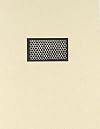
Bervin shows us ways in which we might open up pre- or over-determined uses of past structures without erasing them-making the poems all the more complex by their refusal to dislocate. Her Nets is context responsive and responsible, without the knot of lyric-envy and linguistic guilt of many contemporary poems that pillage the past for strangeness, or worse, for an energetic imagination that might impersonate the writer's. -Christine Hume, Aufgabe. Process note from Jen Bervin: I stripped show more Shakespeare's sonnets bare to the 'nets' to make the space of the poems open, porous, possible-a divergent elsewhere. When we write poems, the history of poetry is with us, pre-inscribed in the white of the page; when we read or write poems, we do it with or against this palimpsest." show lessTags
Recommendations

























Member Reviews
A fascinating book. Shakespeare's Sonnets are printed in halftone, and Bervin has chosen certain words and phrases to print in full, ordinary black type. So you can read the sonnet as a ghostly form "behind" the poem Bervin has created. I don't think he has made full use of the meanings of the Sonnets, but then again it's only right that his own interests, slightly constrained by Shakespeare's choice of words, Here are two examples (you have to imagine the halftone words that separate these words Bervin has selected):
heed this privilege
The hardest knife
and another:
I am
vanishing or vanished
in these black lines
The book rewards re-reading. It is also beautifully designed by the wonderful Ugly Duckling Presse.
heed this privilege
The hardest knife
and another:
I am
vanishing or vanished
in these black lines
The book rewards re-reading. It is also beautifully designed by the wonderful Ugly Duckling Presse.
Ratings
Members
- Recently Added By
Author Information
14+ Works 126 Members
Classifications
Statistics
- Members
- 85
- Popularity
- 374,314
- Reviews
- 1
- Rating
- (3.75)
- Languages
- English
- Media
- Paper
- ISBNs
- 1
- ASINs
- 1