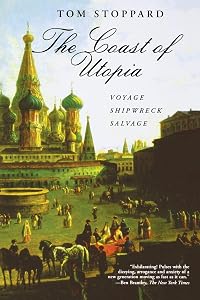
The Coast of Utopia: Voyage, Shipwreck, Salvage
by Tom Stoppard
The Coast of Utopia (Collections and Selections — omnibus (1-3))
On This Page
Description
A trilogy of Stoppard's successful plays: Voyage, Shipwreck and Salvage; all of which premiered at London's Royal National Theatre in August 2002.Tags
Recommendations


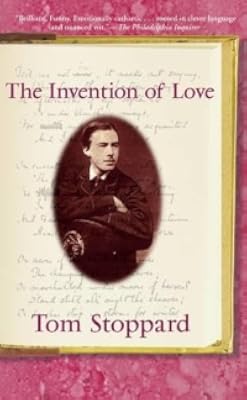
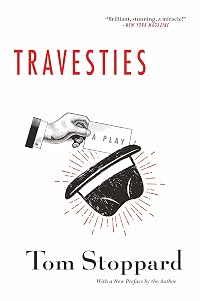






Member Reviews
Stoppard’s "The Coast of Utopia" is a stage trilogy on the daunting topic of Russian intelligentsia in the age of Socialism. It is confusing and exhilarating and painful and so very well written (and almost compulsively readable). Though each play is said to be self-contained, they also feed upon each other and together form a complete picture. The story begins in the "Voyage" and narrows its focus to the character of Herzen in "Shipwreck." "Salvage" offers a glimpse of what life must have been like for these men and women who spent so much of their time moving toward the future only to come to the end and wonder at what they also left behind.
v.1 - Voyage: The Bakunin family is introduced and the growing interest of the only son Michael in foreign philosophy. As he becomes obsessed with German writers, his sisters also become fascinated. Though these new ways of thought open their eyes and expand their minds, it fails to bring happiness. The book ends with Michael being exiled for his revolutionary writing. If he ever returns to Russia, he will be arrested sent to hard labor in Siberia.
v.2 - Shipwreck: Exiled philosophers and writers travel across Europe exploring thought and moonlighting as revolutionaries in other countries. Always hopeful, always naive they are constantly expecting the successful revolution that will forever change reality. The ominous thunder lurks an show more the verge, constantly portending doom.
v.3 - Salvage: Struggling to remain relevant, the architects of the revolution settle in London and await the coming cataclysm. Struggling with family and friendship they become encumbered by responsibility and reason. What is life? What is revolution? All the realities of revolution and happiness
become relevant.
This play is beautiful, funny and historically interesting. show less
v.2 - Shipwreck: Exiled philosophers and writers travel across Europe exploring thought and moonlighting as revolutionaries in other countries. Always hopeful, always naive they are constantly expecting the successful revolution that will forever change reality. The ominous thunder lurks an show more the verge, constantly portending doom.
v.3 - Salvage: Struggling to remain relevant, the architects of the revolution settle in London and await the coming cataclysm. Struggling with family and friendship they become encumbered by responsibility and reason. What is life? What is revolution? All the realities of revolution and happiness
become relevant.
This play is beautiful, funny and historically interesting. show less
breathtaking
Ratings
Members
- Recently Added By
Lists

David Bowie's List of Top 100 Books
94 works; 6 members

David Bowie's Top 100
97 works; 23 members

My Play Collection
769 works; 3 members
David Bowie’s Top 100 Favourite Reads
100 works; 3 members
Author Information

112+ Works 23,602 Members
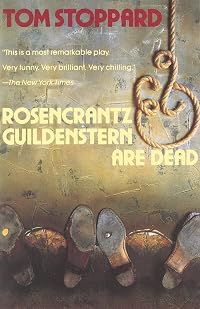
When the National Theatre needed a last-minute substitute for a canceled production of As You Like It, Kenneth Tynan decided to stage Rosencrantz and Guildenstern Are Dead, a work by an unfamiliar author that had received discouraging notices from provincial critics at its Edinburgh Festival debut. Of course, the play, when it opened in April show more 1967, met with universal acclaim. In New York the next year, it was chosen best play by the Drama Critics Circle. In such an unlikely way, Tom Stoppard came to light. Born in Czechoslovakia, a country he left (for Singapore) when he was an infant, he began his literary career as a journalist in Bristol, where play reviewing led to playwriting. After Rosencrantz and Guildenstern, Stoppard's reputation suffered through the production of a number of minor works, whose intellectual preoccupations were shrugged off by reviewers: Enter a Free Man (1968; "an adolescent twinge of a play," N.Y. Times), The Real Inspector Hound (1968; "lightweight," N.Y. Times), and After Magritte. But in the 1970s, the initial enthusiasms aroused by Rosencrantz and Guildenstern were more than vindicated by the production of two full-length plays, Jumpers (1974) and the antiwar play Travesties (1975), whose immense verbal and theatrical inventiveness made them absolute successes on both sides of the Atlantic. Stoppard's method from the start has been to contrive explanations for highly unlikely encounters---of objects (the ironing board, old lady, and bowler hat of After Magritte), characters (Joyce, Lenin, and Tzara in Travesties), and even plays (Hamlet, Rosencrantz and Guildenstern, The Importance of Being Earnest, Travesties, and The Real Thing, 1982). In the 1970s, Tynan called for Stoppard---as a Czech and as an artist---to engage himself politically. But although political subjects have since found their way into pieces from Every Good Boy Deserves Favor (1977) to Squaring the Circle (1985), politics and art seem to have become just two more of the playwright's irreconcilables, which meet, but never join, in the logical frames of his comedy. The presence of political material---such as the Lenin sections that nearly ruin the second part of Travesties---has occasionally strained the structure of the plays. But in The Real Thing Stoppard is comfortable enough with the satire on art and activism to bring a third subject, love, into the mix. Stoppard has acknowledged his Eastern European heritage nonpolitically, in a series of adaptations of plays by Arthur Schnitzler (see Vol. 2), Johann Nestroy, and Ferenc Molnar. (Bowker Author Biography) Tom Stoppard is the author of many plays, including Rosencrantz and Guildenstern Are Dead, Jumpers, Travesties, and The Invention of Love. He lives in London. (Publisher Provided) show less
Awards and Honors
Awards
Notable Lists
Series

Belongs to Publisher Series
Work Relationships
Common Knowledge
- Alternate titles*
- Берег Утопии
- People/Characters
- Herzen, Alexander; Michael Bakunin; Ivan Turgenev; Vissarion Belinsky; Nicholas Ogarev
- Original language
- English
*Some information comes from Common Knowledge in other languages. Click "Edit" for more information.
Classifications
Statistics
- Members
- 455
- Popularity
- 67,215
- Reviews
- 3
- Rating
- (3.93)
- Languages
- English, Italian, Russian
- Media
- Paper, Ebook
- ISBNs
- 8
- ASINs
- 3