The Nakano Thrift Shop
by Hiromi Kawakami
On This Page
Description
This follows a young Japanese woman as she yearns for the love of a reluctant coworker. The objects for sale at the Nakano Thrift Shop appear as commonplace as the staff and customers who handle them. But like those staff and customers, they hold many secrets. If examined carefully, they show the signs of innumerable extravagances, of immeasurable pleasure and pain, and of the deep mysteries of the human heart. Hitomi, the inexperienced young woman who works the register, has fallen for her show more coworker, the oddly reserved Takeo. Unsure of how to attract his attention, she seeks advice from her employer's sister, Masayo, whose sentimental entanglements make her a somewhat unconventional guide. But thanks in part to Masayo, Hitomi will come to realize that love, desire, and intimacy require acceptance not only of idiosyncrasies but also of the delicate waltz between open and hidden secrets, in this novel from the author of Strange Weather in Tokyo. show lessTags
Recommendations






























Member Reviews
The Nakano Thrift Shop is not a book to be devoured, but savored. There is no driving plot, no urge to flip quickly to see what will happen next. Instead, it is a series of vignettes set in a small, quirky thrift shop in Tokyo with a small cast of characters. The result is intimate close-ups of specific moments in time. Dust motes might be mentioned, but the characters′ pasts are not.
Hitomi is a young woman in her late twenties who works at the shop, and the story is told from her perspective. She seems to have no relationships outside of those with the owner, Mr. Nakano; Takeo, the other employee on whom she has a crush; and Masayo, Mr. Nakano′s artistic sister. The four seem almost familial, yet in a vague way, nothing overly show more sentimental. The conversations are mostly gossip about one another and their customers. The language is crisp without wasted words or flowery descriptions, with a deadpan humor, and the dialogue captures the casual and abbreviated way that people well-known to each other speak.
Each chapter is titled after an object, but the item is not the focus, rather it′s a prompt to sketch aspects of the characters′ relationships. Sometimes it′s an item from the shop, but not always. For instance, the opening chapter, Rectangular #2, refers to the envelope that is needed for some photographs a customer has brought into the shop. The chapter is an introduction to the main characters and how they interact with each other as they view and decide how to dispense with the photographs.
′Do you like art, Hitomi?′ Mr. Nakano asked, his eyes widening when I pointed to this photograph. In his hand, he held another photos of the man and woman, completely naked, seated in front of a dressing table.
′I think I prefer classic ones like this,′ he said. The woman sat on the man′s lap with her eyes tightly shut, her hair perfectly coiffed.
′The man and woman aren′t too pretty,′ Takeo said, putting the photos back in order and setting them on the table after carefully examining all ten.
′What should we do with them?′ I asked.
′I′ll return them to Tadokoro,′ Mr. Nakano replied.
′You think you could sell them here?′ Takeo asked.
′They don′t really seem finished, do they?′
The conversation ended there, and Mr. Nakano placed the photographs between the cardboard again and put them back in the envelope, which he set on top of a shelf in the back room.
Later Mr. Nakano singes the envelope with his cigarette, and Takeo runs out to buy the customer a new one.
Got a rectangular #2, Takeo said as he returned. Tadokoro (the customer), ever calm and composed, moved away and slowly pulled the new envelope out of its cellphone wrapper before carefully sliding the cardboard inside.
′See you,′ he said and left the shop.
Immediately afterwards, Mr. Nakano came in, muttering, ′You know what I mean—Takeo, the price was too high today.′ Takeo and I both found ourselves staring at Mr. Nakano′s beard.
′What is it?′ Mr. Nakano asked with a blank look.
Neither Takeo nor I replied, until a moment later, Takeo said, Didn′t know that envelope was called a rectangular #2.
′Yeah?′ Mr. Nakano asked in response, but Takeo didn′t say anything more. I remained silent, starting at Mr. Nakano′s beard.
And the chapter ends.
I enjoyed reading this novel. The slow pace was relaxing, the characters quirky yet endearing, and the overall tone was funny and sweet. It was a nice palate cleanser between heavier books, and I have put the author′s most popular book, Strange Weather in Tokyo, on my wish list. show less
Hitomi is a young woman in her late twenties who works at the shop, and the story is told from her perspective. She seems to have no relationships outside of those with the owner, Mr. Nakano; Takeo, the other employee on whom she has a crush; and Masayo, Mr. Nakano′s artistic sister. The four seem almost familial, yet in a vague way, nothing overly show more sentimental. The conversations are mostly gossip about one another and their customers. The language is crisp without wasted words or flowery descriptions, with a deadpan humor, and the dialogue captures the casual and abbreviated way that people well-known to each other speak.
Each chapter is titled after an object, but the item is not the focus, rather it′s a prompt to sketch aspects of the characters′ relationships. Sometimes it′s an item from the shop, but not always. For instance, the opening chapter, Rectangular #2, refers to the envelope that is needed for some photographs a customer has brought into the shop. The chapter is an introduction to the main characters and how they interact with each other as they view and decide how to dispense with the photographs.
′Do you like art, Hitomi?′ Mr. Nakano asked, his eyes widening when I pointed to this photograph. In his hand, he held another photos of the man and woman, completely naked, seated in front of a dressing table.
′I think I prefer classic ones like this,′ he said. The woman sat on the man′s lap with her eyes tightly shut, her hair perfectly coiffed.
′The man and woman aren′t too pretty,′ Takeo said, putting the photos back in order and setting them on the table after carefully examining all ten.
′What should we do with them?′ I asked.
′I′ll return them to Tadokoro,′ Mr. Nakano replied.
′You think you could sell them here?′ Takeo asked.
′They don′t really seem finished, do they?′
The conversation ended there, and Mr. Nakano placed the photographs between the cardboard again and put them back in the envelope, which he set on top of a shelf in the back room.
Later Mr. Nakano singes the envelope with his cigarette, and Takeo runs out to buy the customer a new one.
Got a rectangular #2, Takeo said as he returned. Tadokoro (the customer), ever calm and composed, moved away and slowly pulled the new envelope out of its cellphone wrapper before carefully sliding the cardboard inside.
′See you,′ he said and left the shop.
Immediately afterwards, Mr. Nakano came in, muttering, ′You know what I mean—Takeo, the price was too high today.′ Takeo and I both found ourselves staring at Mr. Nakano′s beard.
′What is it?′ Mr. Nakano asked with a blank look.
Neither Takeo nor I replied, until a moment later, Takeo said, Didn′t know that envelope was called a rectangular #2.
′Yeah?′ Mr. Nakano asked in response, but Takeo didn′t say anything more. I remained silent, starting at Mr. Nakano′s beard.
And the chapter ends.
I enjoyed reading this novel. The slow pace was relaxing, the characters quirky yet endearing, and the overall tone was funny and sweet. It was a nice palate cleanser between heavier books, and I have put the author′s most popular book, Strange Weather in Tokyo, on my wish list. show less
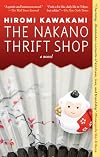
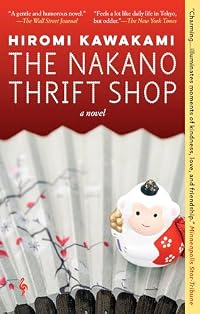
I am a sucker for books translated from the Japanese. Maybe it’s because I studied Japanese for years (but still can’t read beyond a picture book), maybe it’s because I have a fascination with the country and its people. Whatever it is, if I see a book translated to English from Japanese, I will read it quick sticks. I can’t recall ever having read a poor story written by a Japanese author – they are without a doubt quirky, intriguing and well written. The Nakano Thrift Shop is no exception. The delightfully interesting cover reveals a lovely story about the workers of a thrift shop.
The Nakano thrift shop is not a high class antiques shop, but rather a repository for the everyday second-hand goods. They sometimes get quirky show more stuff (such as a life-size 80s star cut-out holding a sewing machine) but it’s generally crockery and the odd kotatsu (heated table/blanket). The novel is told through the eyes of Hitomi, a young lady who works on the till. The shop is full of eccentric characters, starting with Mr Nakano, the owner. He’s had multiple wives and usually has one or two mistresses on the go. Despite his regular trips to ‘the bank’, he’s fond of his employees and looks after them well. His sister Masayo is an artist and is very kind hearted to Hitomi (despite Mr Nakano not approving of her lover). Takeo is of a similar age to Hitomi and the pair have a relationship that starts off awkwardly (Takeo is a man of few words), becomes heated and then settles into something that is equal parts awkward and familiar.
Each chapter of the book has its own title and reads like a short story in the lives of the characters at the thrift shop through the changing seasons. More and more of their private lives are gradually revealed as well as some odd situations (Mr Nakano being stabbed, Masayo’s lover’s over controlling landlord). I loved how layer by layer, I found out just a little more about the characters and could excitedly piece together what I knew. This was particularly true of Hitomi and Takeo’s relationship – it was stilted but it was still so fascinating! Perhaps this was because Takeo himself was such an enigma.
The tone of the book was quiet and unhurried, which I enjoyed because I felt it gave me permission to savour every word. Allison Markin Powell’s translation captures the Japanese culture and the subtle melancholy that Hitomi feels. The last chapter, a kind epilogue, ties things up nicely after the dreamy period of the thrift shop for Hitomi but it still left me with several questions to ponder.
This is a sweet and gentle book that will suck you right in to the magic of the characters’ everyday lives.
Thank you to Allen & Unwin for the copy of this book. My review is honest.
http://samstillreading.wordpress.com show less
The Nakano thrift shop is not a high class antiques shop, but rather a repository for the everyday second-hand goods. They sometimes get quirky show more stuff (such as a life-size 80s star cut-out holding a sewing machine) but it’s generally crockery and the odd kotatsu (heated table/blanket). The novel is told through the eyes of Hitomi, a young lady who works on the till. The shop is full of eccentric characters, starting with Mr Nakano, the owner. He’s had multiple wives and usually has one or two mistresses on the go. Despite his regular trips to ‘the bank’, he’s fond of his employees and looks after them well. His sister Masayo is an artist and is very kind hearted to Hitomi (despite Mr Nakano not approving of her lover). Takeo is of a similar age to Hitomi and the pair have a relationship that starts off awkwardly (Takeo is a man of few words), becomes heated and then settles into something that is equal parts awkward and familiar.
Each chapter of the book has its own title and reads like a short story in the lives of the characters at the thrift shop through the changing seasons. More and more of their private lives are gradually revealed as well as some odd situations (Mr Nakano being stabbed, Masayo’s lover’s over controlling landlord). I loved how layer by layer, I found out just a little more about the characters and could excitedly piece together what I knew. This was particularly true of Hitomi and Takeo’s relationship – it was stilted but it was still so fascinating! Perhaps this was because Takeo himself was such an enigma.
The tone of the book was quiet and unhurried, which I enjoyed because I felt it gave me permission to savour every word. Allison Markin Powell’s translation captures the Japanese culture and the subtle melancholy that Hitomi feels. The last chapter, a kind epilogue, ties things up nicely after the dreamy period of the thrift shop for Hitomi but it still left me with several questions to ponder.
This is a sweet and gentle book that will suck you right in to the magic of the characters’ everyday lives.
Thank you to Allen & Unwin for the copy of this book. My review is honest.
http://samstillreading.wordpress.com show less
3.5⭐
“There are plenty of people in the world I don’t dislike, some of whom I almost like; on the other hand, I almost hate some of those whom I don’t dislike, too. But how many people did I truly love?”
The Nakano Thrift shop by Hiromi Kawakami is a quiet slow paced story that is in turn funny, thought-provoking and insightful. A slice of life story that focuses on the owners and the employees of a second-hand shop in Western Tokyo ( no antiques, please!), the story is narrated in the first person by our protagonist, Hitomi, an employee of the shop who embarks on a complicated on/off relationship with her colleague Takeo, who comes across as socially awkward and difficult to read resulting in confusion, anxiety and heartbreak show more for Hitomi. After a brief introduction to the shop , the larger part of the narrative is divided into different segments, each featuring an item that is either being acquired or sold in the shop. As the narrative takes us through the daily working of the shop we get to meet the store owner Mr. Nakano and his artist sister Masayo, both of whom lead interesting lives. Their respective eventful personal lives result in some humorous situations, awkward (but often meaningful) conversations and unlikely complications for Hitomi and Takeo who find themselves entangled in the lives of their employers.
The author skillfully touches upon themes of love, relationships, friendship, acceptance, and trust. It should be mentioned that the characters in this story are ordinary people, with ordinary people problems. Love and relationships as depicted in this story are not all about grand gestures or dramatic outbursts. As these characters go about their days at work or in their personal lives, the emphasis is on the simple, even banal, but important everyday things-– what we say or don’t say to one another, what we do or don’t do for each other, our willingness to accept the other person with his/her flaws and vice versa and how we cope when things do not go according to plans or as per our expectations, the lessons we learn and how we evolve as individuals.
“It was as if everyone doled themselves out in such small portions. Never completely open, not all at once.”
This book might not be for everyone as some might find the story too slow or bland but with its simple yet elegant prose, concise writing, an
interesting setting and a wonderful cast of characters, I found The Nakano Thrift Shop by Hiromi Kawakami (translated by Allison Markin Powell) to be an enjoyable read. show less
“There are plenty of people in the world I don’t dislike, some of whom I almost like; on the other hand, I almost hate some of those whom I don’t dislike, too. But how many people did I truly love?”
The Nakano Thrift shop by Hiromi Kawakami is a quiet slow paced story that is in turn funny, thought-provoking and insightful. A slice of life story that focuses on the owners and the employees of a second-hand shop in Western Tokyo ( no antiques, please!), the story is narrated in the first person by our protagonist, Hitomi, an employee of the shop who embarks on a complicated on/off relationship with her colleague Takeo, who comes across as socially awkward and difficult to read resulting in confusion, anxiety and heartbreak show more for Hitomi. After a brief introduction to the shop , the larger part of the narrative is divided into different segments, each featuring an item that is either being acquired or sold in the shop. As the narrative takes us through the daily working of the shop we get to meet the store owner Mr. Nakano and his artist sister Masayo, both of whom lead interesting lives. Their respective eventful personal lives result in some humorous situations, awkward (but often meaningful) conversations and unlikely complications for Hitomi and Takeo who find themselves entangled in the lives of their employers.
The author skillfully touches upon themes of love, relationships, friendship, acceptance, and trust. It should be mentioned that the characters in this story are ordinary people, with ordinary people problems. Love and relationships as depicted in this story are not all about grand gestures or dramatic outbursts. As these characters go about their days at work or in their personal lives, the emphasis is on the simple, even banal, but important everyday things-– what we say or don’t say to one another, what we do or don’t do for each other, our willingness to accept the other person with his/her flaws and vice versa and how we cope when things do not go according to plans or as per our expectations, the lessons we learn and how we evolve as individuals.
“It was as if everyone doled themselves out in such small portions. Never completely open, not all at once.”
This book might not be for everyone as some might find the story too slow or bland but with its simple yet elegant prose, concise writing, an
interesting setting and a wonderful cast of characters, I found The Nakano Thrift Shop by Hiromi Kawakami (translated by Allison Markin Powell) to be an enjoyable read. show less
Opening the pages of Hiromi Kawakami's THE NAKANO THRIFT SHOP is like taking a cup of hot tea on a cold, damp day. It's comforting, uplifting, and fortifying with just enough sweetness. The book covers a few years in the life of a Japanese trinket shop, the items that come in and out of it, and the quirky and lovable people who come into contact with it. It is the intermingling of the characters, trinkets, and plots that makes this book an absolute delight to read.
Twenty-five years ago, Haruo Nakano quit his corporate job at a food company and decided to open a thrift shop in a Tokyo suburb. He's an eccentric man, having a penchant for knitted hats with pom-poms on the top, a chain-smoker who doesn't use ashtrays, and having a show more perplexing habit of beginning most of his statements with "You know what I mean?", without giving his listener any context or background information. He's quite a womanizer - married three times, and regularly keeping different mistresses over the course of the novel.
His store is at maximum capacity of second-hand goods, from cups and bowls to clothing, appliances to furniture, there was very little rhyme or reason to what one might find. The stock is constantly rotating, being purchased by the neighborhood's colorful residents and nearby college students. Mr. Nakano also goes on regular "pickups", where he drives to clients' homes to examine the keepsakes, trinkets, and castoffs that they want to sell him. This routine means that the stock in the shop is always changing, which keeps customers coming back.
There are three people who work either full or part-time in the thrift shop. The first is Mr. Nakano's older sister, Masayo. Described, at the beginning of the story, as being in her mid-50's and single, Masayo is an artist. She's embroidering, making dolls, printing on fabrics, and her work is featured in local art shows. Mr. Nakano sees her as flamboyant and silly, having a quintessential artistic temperament. He has no qualms about expressing his opinions of her art, her romantic partners, and her life choices. Masayo keeps no schedule, but comes in and out of the shop generally as she pleases. She has great rapport with the customers, and many of them come in just to see her. Besides being a foil for Mr. Nakano, Masayo also functions as a mentor to another thrift shop employee - Hiromi Suganuma.
The second employee, and narrator of THE NAKANO THRIFT SHOP, is Hiromi. In her mid-20's, she spends most of her time running the cash register, reading books, and closing the shop at the end of the day. She loves to eat pie from a neighborhood bakery, and often shares baked goods with Masayo during their tête-à-têtes. The third employee at the Nakano Thrift Shop is the slightly odd and very reserved Takeo Kiryu. Also in his mid-20's, with floppy hair and missing the end of one of his fingers, Takeo was hired to help Mr. Nakano go out on his pickups. After proving his capacity to make shrewd deals with clients, he is gradually sent out more and more on solo trips. Both Hiromi and Takeo are quiet, socially awkward, and lonely. The form a tenuous friendship, and it's the potential blossoming of that friendship into love that makes up the only significant plot-line that extends throughout the entire novel.
Rather than having standard chapters, THE NAKANO THRIFT SHOP is organized into vignettes. Each covers a few days or weeks, and spends that time in the day-to-day lives of the characters. Each chapter is titled after an object, and that object is revealed as the vignette progresses, and plays a role in the plot. After I read the first chapter, and realized how things were structured, I played a game with myself. I noted what object was the title of the vignette and tried to guess how it would appear within the story. How many did I get it right? None. The plotting is so imaginative and well-constructed that I was always surprised with how she integrated the item into the story.
For example, the seventh chapter is titled "Sewing Machine". In none of the previous six was there any mention of a sewing machine, so there's no previous context for the item. In fact, the chapter begins with Mr. Nakano and a business associate developing an online auction site for some of the thrift shop items. They're talking about an item that Takeo is bringing to the shop, from a pickup. He walks in with what turns out to be a life-sized, full-body, stand-up cardboard photo of a Japanese actress and singer. This unusual item was from a 1980's advertising campaign for a sewing machine company. In the photo, she's holding a sewing machine in one hand, and pointing to her chest with the other hand. It is decided that this advertisement will go up for auction on the store's site, but will be displayed in the thrift store in the meantime. Hiromi and Takeo continue their flirtation, until Hiromi initiates a fight between them. Near the end of the chapter, a customer comes in with a large white case, looking for the thrift store to make her an offer for it. It tuns out that inside the case is a sewing machine - identical to the one in the advertisement. Mr. Nakano decides to take the sewing machine, and creates a display with it next to the cardboard photo. He remarks that the photo must not be exactly life-sized, because in person the sewing machine is larger than it appears in the advertisement. This distortion between what is perceived and what is real is symbolic of the relationship between Takeo and Hiromi at that point in the novel. What Hiromi perceives of Takeo may not be quite accurate of his reality, and she makes a mistake that has long-lasting repercussions for both of them.
Other such items include an envelope, a letter opener, a bowl, and a dress. Each is presented in a beautifully mysterious way, and it's through the author's creative storytelling that these common items are given life and power. They, as was the case with the sewing machine, are also more than just everyday goods - they are also symbols of what's going on in the characters' lives, and function on many levels. The ability of the author to imbue these workaday pieces with such meaning and power is example of her creativity and craft.
The novel was translated from the Japanese by Allison Markin Powell, and published in the US by Europa Editions. I found this translation to be incredibly easy to read, and if it hadn't been clearly stated that this was a novel in translation, I would have been tempted to assume it was originally written in English. For me, that is the sign of a well-translated work - that it reads with a natural ease and rhythm. There are no awkward phrases or unnatural-sounding word choices. It was seamless.
If THE NAKANO THRIFT SHOP is indicative of Hiromi Kawakami's oeuvre, then I hope that other of her novels will be translated into English and made widely available. The story was well-crafted and engaging, the characters endearing, and the overall reading experience was one of joy and great contentment. This feeling is rare with modern novels, so having this book on my shelves will allow me to return to it whenever I'm in need of being enveloped by warmth and comfort. show less
Twenty-five years ago, Haruo Nakano quit his corporate job at a food company and decided to open a thrift shop in a Tokyo suburb. He's an eccentric man, having a penchant for knitted hats with pom-poms on the top, a chain-smoker who doesn't use ashtrays, and having a show more perplexing habit of beginning most of his statements with "You know what I mean?", without giving his listener any context or background information. He's quite a womanizer - married three times, and regularly keeping different mistresses over the course of the novel.
His store is at maximum capacity of second-hand goods, from cups and bowls to clothing, appliances to furniture, there was very little rhyme or reason to what one might find. The stock is constantly rotating, being purchased by the neighborhood's colorful residents and nearby college students. Mr. Nakano also goes on regular "pickups", where he drives to clients' homes to examine the keepsakes, trinkets, and castoffs that they want to sell him. This routine means that the stock in the shop is always changing, which keeps customers coming back.
There are three people who work either full or part-time in the thrift shop. The first is Mr. Nakano's older sister, Masayo. Described, at the beginning of the story, as being in her mid-50's and single, Masayo is an artist. She's embroidering, making dolls, printing on fabrics, and her work is featured in local art shows. Mr. Nakano sees her as flamboyant and silly, having a quintessential artistic temperament. He has no qualms about expressing his opinions of her art, her romantic partners, and her life choices. Masayo keeps no schedule, but comes in and out of the shop generally as she pleases. She has great rapport with the customers, and many of them come in just to see her. Besides being a foil for Mr. Nakano, Masayo also functions as a mentor to another thrift shop employee - Hiromi Suganuma.
The second employee, and narrator of THE NAKANO THRIFT SHOP, is Hiromi. In her mid-20's, she spends most of her time running the cash register, reading books, and closing the shop at the end of the day. She loves to eat pie from a neighborhood bakery, and often shares baked goods with Masayo during their tête-à-têtes. The third employee at the Nakano Thrift Shop is the slightly odd and very reserved Takeo Kiryu. Also in his mid-20's, with floppy hair and missing the end of one of his fingers, Takeo was hired to help Mr. Nakano go out on his pickups. After proving his capacity to make shrewd deals with clients, he is gradually sent out more and more on solo trips. Both Hiromi and Takeo are quiet, socially awkward, and lonely. The form a tenuous friendship, and it's the potential blossoming of that friendship into love that makes up the only significant plot-line that extends throughout the entire novel.
Rather than having standard chapters, THE NAKANO THRIFT SHOP is organized into vignettes. Each covers a few days or weeks, and spends that time in the day-to-day lives of the characters. Each chapter is titled after an object, and that object is revealed as the vignette progresses, and plays a role in the plot. After I read the first chapter, and realized how things were structured, I played a game with myself. I noted what object was the title of the vignette and tried to guess how it would appear within the story. How many did I get it right? None. The plotting is so imaginative and well-constructed that I was always surprised with how she integrated the item into the story.
For example, the seventh chapter is titled "Sewing Machine". In none of the previous six was there any mention of a sewing machine, so there's no previous context for the item. In fact, the chapter begins with Mr. Nakano and a business associate developing an online auction site for some of the thrift shop items. They're talking about an item that Takeo is bringing to the shop, from a pickup. He walks in with what turns out to be a life-sized, full-body, stand-up cardboard photo of a Japanese actress and singer. This unusual item was from a 1980's advertising campaign for a sewing machine company. In the photo, she's holding a sewing machine in one hand, and pointing to her chest with the other hand. It is decided that this advertisement will go up for auction on the store's site, but will be displayed in the thrift store in the meantime. Hiromi and Takeo continue their flirtation, until Hiromi initiates a fight between them. Near the end of the chapter, a customer comes in with a large white case, looking for the thrift store to make her an offer for it. It tuns out that inside the case is a sewing machine - identical to the one in the advertisement. Mr. Nakano decides to take the sewing machine, and creates a display with it next to the cardboard photo. He remarks that the photo must not be exactly life-sized, because in person the sewing machine is larger than it appears in the advertisement. This distortion between what is perceived and what is real is symbolic of the relationship between Takeo and Hiromi at that point in the novel. What Hiromi perceives of Takeo may not be quite accurate of his reality, and she makes a mistake that has long-lasting repercussions for both of them.
Other such items include an envelope, a letter opener, a bowl, and a dress. Each is presented in a beautifully mysterious way, and it's through the author's creative storytelling that these common items are given life and power. They, as was the case with the sewing machine, are also more than just everyday goods - they are also symbols of what's going on in the characters' lives, and function on many levels. The ability of the author to imbue these workaday pieces with such meaning and power is example of her creativity and craft.
The novel was translated from the Japanese by Allison Markin Powell, and published in the US by Europa Editions. I found this translation to be incredibly easy to read, and if it hadn't been clearly stated that this was a novel in translation, I would have been tempted to assume it was originally written in English. For me, that is the sign of a well-translated work - that it reads with a natural ease and rhythm. There are no awkward phrases or unnatural-sounding word choices. It was seamless.
If THE NAKANO THRIFT SHOP is indicative of Hiromi Kawakami's oeuvre, then I hope that other of her novels will be translated into English and made widely available. The story was well-crafted and engaging, the characters endearing, and the overall reading experience was one of joy and great contentment. This feeling is rare with modern novels, so having this book on my shelves will allow me to return to it whenever I'm in need of being enveloped by warmth and comfort. show less
I saw that another reviewer had written of this book: “As ever, I finished the novel, feeling somewhat baffled - such is the nature of Japanese fiction : oblique, dreamlike, enigmatic, subtle”
Kinda sums up this and many other Japanese novels I have read, or to put it more succinctly, a novel in which nothing happens over and over again.
If you imagine western novels as a high speed car chase through busy city traffic then this novel is happening up some quiet side street about 4 blocks over.
I find myself drawn to Japanese novels, they are nothing if not peaceful to read and the weird conversations that appear to be completely normal are delightfully refreshing. So many surprises for a dead end novel with no apparent plot or show more storyline.
Highly recommended show less
Kinda sums up this and many other Japanese novels I have read, or to put it more succinctly, a novel in which nothing happens over and over again.
If you imagine western novels as a high speed car chase through busy city traffic then this novel is happening up some quiet side street about 4 blocks over.
I find myself drawn to Japanese novels, they are nothing if not peaceful to read and the weird conversations that appear to be completely normal are delightfully refreshing. So many surprises for a dead end novel with no apparent plot or show more storyline.
Highly recommended show less
Hitomi and Takeo work in Mr Nakano’s thrift shop, sometimes aided by Mr Nakano’s artistic sister, Masayo. It is a typical small enterprise with a host of colourful customers each with their own involved lives. And the lives of our principals are involved as well, Mr Nakano with his afternoon visits to his “bank” and Masayo with the taciturn Mr Maruyama. Hitomi and Takeo seem like they want to be involved with each other but their reticence is almost painful and inevitably awkward moments ensue.
With glancing light observations and Hitomi’s debilitating self-critique, we follow the ups and down of the thrift shop and its staff over the course of a year with a final chapter catching up on their development over the intervening show more few years subsequent to the shop’s closure. Events shift seamlessly, though sometimes disconcertingly, from the minute to the momentous, or the anodyne to the explicitly adult. But we always return eventually to Hitomi’s slow development (she is turning thirty but you’ll think she is still a teenager emotionally).
A gentle and surprisingly captivating read. Gently recommended. show less
With glancing light observations and Hitomi’s debilitating self-critique, we follow the ups and down of the thrift shop and its staff over the course of a year with a final chapter catching up on their development over the intervening show more few years subsequent to the shop’s closure. Events shift seamlessly, though sometimes disconcertingly, from the minute to the momentous, or the anodyne to the explicitly adult. But we always return eventually to Hitomi’s slow development (she is turning thirty but you’ll think she is still a teenager emotionally).
A gentle and surprisingly captivating read. Gently recommended. show less
Another tale seeped in the daily life of ordinary, not ordinarily functional, people in modern day Japan. The translation is a smooth even flowing read, the story a good mix of small incidents and unclarified feelings.
Members
- Recently Added By
Lists

Japanese Literature
230 works; 40 members
Author Information

39+ Works 4,650 Members
Some Editions
Awards and Honors
Series
Belongs to Publisher Series
dtv (13979)
Common Knowledge
- Canonical title
- The Nakano Thrift Shop
- Original title
- 古道具中野商店; 古道具 中野商店 (Furudōgu Nakano shōten) (Furudōgu Nakano shōten)
- Original publication date
- 2005; 2016 (English translation) (English translation)
- People/Characters
- Hitomi Suganuma; Takeo Kiryu; Haruo Nakano; Masayo; Tadokoro; Maruyama (show all 11); Sakiko; Tokizo; Hagiwara; Kurusu; Rumiko
- Important places
- Tokyo, Japan
- First words
- You know what I mean? Mr. Nakano had a habit of saying this.
- Last words
- (Click to show. Warning: May contain spoilers.)The newly opened bottle of wine clinked against the rim of my teacup, sounding a clear ring.
- Blurbers
- Truong, Monique; Sacks, Sam
- Original language
- Japanese
Classifications
- Genres
- General Fiction, Fiction and Literature
- DDC/MDS
- 895.636 — Literature & rhetoric Asian Literature Literatures of East and Southeast Asia Japanese Japanese fiction 2000–
- LCC
- PL855 .A859 .F8713 — Language and Literature Languages and literatures of Eastern Asia, Africa, Oceania Languages of Eastern Asia, Africa, Oceania Japanese language and literature Japanese literature Individual authors and works
- BISAC
Statistics
- Members
- 819
- Popularity
- 33,460
- Reviews
- 27
- Rating
- (3.39)
- Languages
- 14 — Catalan, Czech, Danish, Dutch, English, French, German, Italian, Japanese, Portuguese, Romanian, Spanish, Swedish, Turkish
- Media
- Paper, Audiobook, Ebook
- ISBNs
- 36
- ASINs
- 8