On This Page
Description
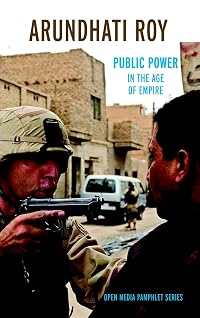
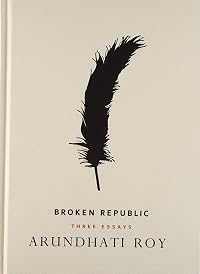
In her major address to the 99th annual meeting of the American Sociological Association on August 16, 2004, "Public Power in the Age of Empire," broadcast nationally on C-Span Book TV and on Democracy Now! and Alternative Radio, writer Arundhati Roy brilliantly examines the limits to democracy in the world today. Bringing the same care to her prose that she brought to her Booker Prize-winning novel The God of Small Things, Roy discusses the need for social movements to contest the show more occupation of Iraq and the reduction of "democracy" to elections with no meaningful alternatives allowed. She explores the dangers of the "NGO-ization of resistance," shows how governments that block nonviolent dissent in fact encourage terrorism, and examines the role of the corporate media in marginalizing oppositional voices. show lessTags
Recommendations








Member Reviews
quick read. there are a lot of very well summarized concepts here. quite depressing. is there a way out?
Ratings
Members
- Recently Added By
Author Information

60+ Works 29,648 Members
Suzanna Arundhati Roy, 1961 - Suzanna Roy was born November 24, 1961. Her parents divorced and she lived with her mother Mary Roy, a social activist, in Aymanam. Her mother ran an informal school named Corpus Christi and it was there Roy developed her intellectual abilities, free from the rules of formal education. At the age of 16, she left home show more and lived on her own in a squatter's colony in Delhi. She went six years without seeing her mother. She attended Delhi School of Architecture where she met and married fellow student Gerard Da Cunha. Neither had a great interest in architecture so they quit school and went to Goa. They stayed there for seven months and returned broke. Their marriage lasted only four years. Roy had taken a job at the National Institute of Urban Affairs and, while cycling down a road; film director Pradeep Krishen offered her a small role as a tribal bimbo in Massey Saab. She then received a scholarship to study the restoration of monuments in Italy. During her eight months in Italy, she realized she was a writer. Now married to Krishen, they planned a 26-episode television epic called Banyan Tree. They didn't shoot enough footage for more than four episodes so the serial was scrapped. She wrote the screenplay for the film In Which Annie Gives It Those Ones and Electric Moon. Her next piece caused controversy. It was an article that criticized Shekar Kapur's film Bandit Queen, which was about Phoolan Devi. She accused Kapur of misrepresenting Devi and it eventually became a court case. Afterwards, finished with film, she concentrated on her writing, which became the novel "A God of Small Things." It is based on what it was like growing up in Kerala. The novel contains mild eroticism and again, controversy found Roy having a public interest petition filed to remove the last chapter because of the description of a sexual act. It took Roy five years to write "A God of Small Things" and was released April 4, 1997 in Delhi. It received the Booker prize in London in 1997 and has topped the best-seller lists around the world. Roy is the first non-expatriate Indian author and the first Indian woman to win the Booker prize. (Bowker Author Biography) show less
Series

Common Knowledge
- Canonical title
- Public Power in the Age of Empire
Classifications
Statistics
- Members
- 97
- Popularity
- 333,397
- Reviews
- 1
- Rating
- (4.06)
- Languages
- English
- Media
- Paper, Ebook
- ISBNs
- 2
- ASINs
- 1