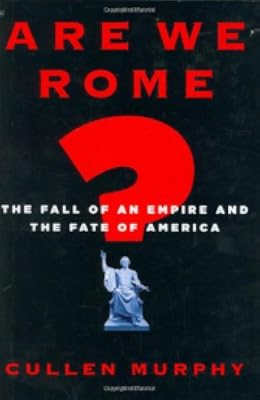
Are We Rome?: The Fall of an Empire and the Fate of America
by Cullen Murphy
On This Page
Description
The rise and fall of ancient Rome has been on American minds from the beginning of our Republic. Depending on who's doing the talking, the history of Rome serves either as a triumphal call to action, or a dire warming of imminent collapse. Esteemed editor and author Murphy ventures past the pundits' rhetoric to draw nuanced lessons about how we might avoid Rome's demise. Working on a canvas that extends far beyond the issue of an overstretched military, Murphy reveals a wide array of show more similarities between the two empires: the blinding, insular culture of our capitals; the debilitating effect of corruption; the paradoxical issue of borders; and the weakening of the body politic through various forms of "privatization." Most pressingly, he argues that we most resemble Rome in the burgeoning corruption of our government and in our arrogant ignorance of the world outside--two things that are in our power to change.--From publisher description. show lessTags
Recommendations
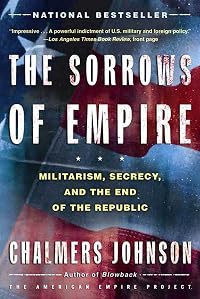
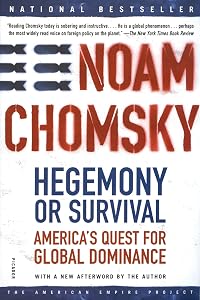
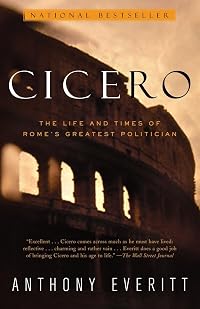
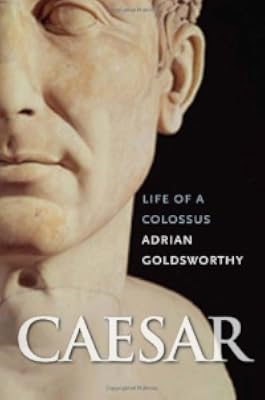

Member Recommendations
Member Reviews
Fairly interesting, though I had to keep pushing myself to finish it. Subtitle is completely misleading. Should be called "How Rome Didn't Fall and A Few Useful Bits We Can Learn From Them." Interesting to history buffs, not so interesting to Michael Moore fans, I would think. At times, reads like a master's thesis, with index card upon index card factoids piled up. If Rome is your thing, you'll know all this stuff already. But for the rest of us, it's informative and does dispel the myth that "we" are Rome. The full story is a more complex (hence the hail of index cards), but could be (and possibly was) condensed into a magazine article. The final chapter is worth reading, since some definite conclusions are finally drawn, some show more opinions voiced, some meat on the table. show less
America's top parlor game, is America mimicking the Roman Empire in its rise and fall? And we in the decline? The author makes many good points but you can take heart in his final conclusion. Despite corruption, slavery, military dominance, and inequities of all types, Romans were ultimately fatalistic in their role. Americans, in contrast, despite similar inequities, corruption, and isolationism, have always looked to the future with hope and expectation. As the author makes clear, there is no room for complacency. Excellent analysis and insight touching on many relevant issues you won't even have considered in contemplating the issue.
A brief but engaging look at a number of comparisons between ancient Rome (more specifically, the Roman Empire) and the modern U.S. Cullen examines not only the obvious and common relationships (military power), but a number of less commonly observed connections (such as privatization of government functions, border and immigration issues, the seats of power themselves). It provokes some interesting thought, and provides insight on some aspects of both civilizations with which some people will be surprised. Cullen also has a gift for clever turns of phrase. The book is excellent for the casual reader.
In the introductory chapter, Murphy pretty much says the book title is a pointless question that he won't answer but goes on to write a very interesting and insightful compare and contrast about the Roman Empire and Modern America and the history of both that is a thoroughly entertaining read. It was full of facts but not overloaded and has a light enough touch to not feel like a dry history lecture. He clearly knows his subject and finds Rome endlessly fasinating and made me feel that way too.
A readable, entertaining look at the parallels between ancient Rome and the U.S., Are We Rome? showcases Murphy's extensive knowledge of his subject. His allusions and quotations are far-reaching and reveal a lifetime spent reading about his subject. He is very good on the idea that both the Romans and those in the beltway think of themselves as anointed; he is also very good on the fixers who secure political favors for a fee. He is less engaging when he discusses the borders of the empire and the U.S., which is more of an argument for completely open borders using Rome as a launching-off point. (It's not even a bad argument--what's irksome is that he channel-surfs into another mode.) But it's his book and he can argue what he pleases. show more
Some reviewers complain that the book sets up six key comparisons between the U.S. and Rome and then backs out at the end, when Murphy answers the question of his title with a ten-page "Sort of." But these complaints seem off-base. I didn't read this to really learn the answer to the question; I read it to learn more about ancient Rome, and I did. show less
Some reviewers complain that the book sets up six key comparisons between the U.S. and Rome and then backs out at the end, when Murphy answers the question of his title with a ten-page "Sort of." But these complaints seem off-base. I didn't read this to really learn the answer to the question; I read it to learn more about ancient Rome, and I did. show less
In this short but very interesting book, Cullen Murphy examines the currently very in vogue comparison of the U.S. to the Roman Republic/Empire. His thorough research and insightful comparisons are nonpartisan, at times very surprising, at times not, but always thought provoking. My biggest disappointment was his conclusion, which is that America will not "fall" like Rome because the essential quality of our society is a drive to progress and change.
Looks really promising, is very easy and enjoyable to read and seems excellently researched, is concise rather than wordy - but I just had to give up because I just don't know enough classical history. It would have taken me forever to get through it, researching all the references, and I'm too old for that s***. However, I do highly recommend it for people who come at it already interested in politics and with some background in history.
Maybe a one-question-quiz will determine if you qualify: Have you ever heard of some dude named Alaric, or if not do you understand the Wikipedia article when you look him up?
Maybe a one-question-quiz will determine if you qualify: Have you ever heard of some dude named Alaric, or if not do you understand the Wikipedia article when you look him up?
Members
- Recently Added By
Author Information

10+ Works 1,233 Members
Cullen Murphy is the managing editor of The Atlantic Monthly. His books include Rubbish! The Archaeology of Garbage and Just Curious: Essays. For nearly twenty years he has written the text of the internationally recognized comic strip Prince Valiant. He lives in Massachusetts.
Awards and Honors
Awards
Common Knowledge
- Dedication
- To my friends and colleagues at The Atlantic Monthly, 1985-2005
- First words
- Imagine the scene: a summer day, late in the third century A.D., somewhere beyond Italy in the provinces of the Roman Empire, perhaps on the way to a city like Sirmium, south of the Danube, in what is now Serbia, where severa... (show all)l roads converge - good Roman roads of iron slag and paving stone.
- Last words
- (Click to show. Warning: May contain spoilers.)The antidote is being American.
Classifications
Statistics
- Members
- 373
- Popularity
- 84,078
- Reviews
- 12
- Rating
- (3.59)
- Languages
- English
- Media
- Paper, Ebook
- ISBNs
- 6
- UPCs
- 1
- ASINs
- 4