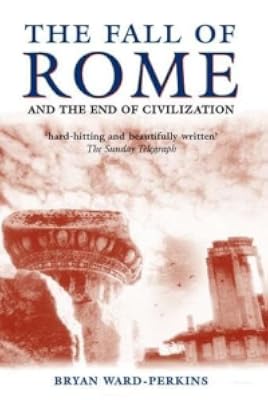
The Fall of Rome: And the End of Civilization
by Bryan Ward-Perkins
On This Page
Description
Was the fall of Rome a great catastrophe that cast the West into darkness for centuries to come? Or, as scholars argue today, was there no crisis at all, but simply a peaceful blending of barbarians into Roman culture, an essentially positive transformation? In The Fall of Rome, eminent historian Bryan Ward-Perkins argues that the "peaceful" theory of Rome's "transformation" is badly in error. Indeed, he sees the fall of Rome as a time of horror and dislocation that destroyed a great show more civilization, throwing the inhabitants of the West back to a standard of living typical of prehistoric times. Attacking contemporary theories with relish and making use of modern archaeological evidence, he looks at both the wider explanations for the disintegration of the Roman world and also the consequences for the lives of everyday Romans, who were caught in a world of economic collapse, marauding barbarians, and the rise of a new religious orthodoxy. The book recaptures the drama and violence of the last days of the Roman world, and reminds us of the very real terrors of barbarian occupation. Equally important, Ward-Perkins contends that a key problem with the new way of looking at the end of the ancient world is that all difficulty and awkwardness is smoothed out into a steady and positive transformation of society. Nothing ever goes badly wrong in this vision of the past. The evidence show otherwise. Up to date and brilliantly written, combining a lively narrative with the latest research and thirty illustrations, this superb volume reclaims the drama, the violence, and the tragedy of the fall of Rome. show lessTags
Recommendations




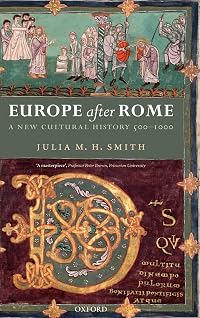
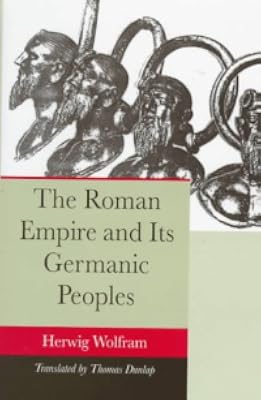
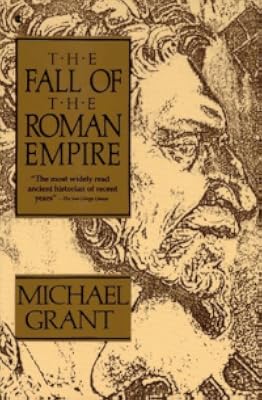
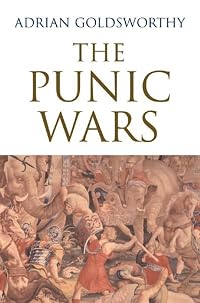


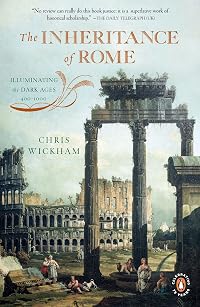


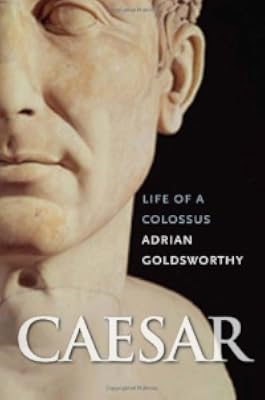

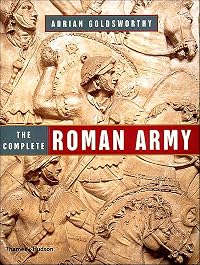
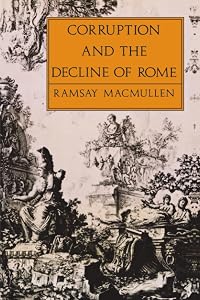
Member Recommendations
Member Reviews
Back in the day I used to play this board game called "Republic of Rome" with some of my friends. Dealing with the late republic, the joke was how that while you were busy trying to conquer the world the whole lot of us could be undone by "paper and dice," as one bad roll of the die and one bad event card too many could collapse the game. Why bring up this personal anecdote? It's that to a large degree that the author is dealing with the concatenation of events that tore apart the Western Roman Empire, between political strife, bad harvests, plague, and, most of all, the great barbarian invasions. This is in opposition to the new conventional wisdom that the changes of the 400s were more transformative than destructive. Ward-Perkins is show more not buying this concept; he's seen too much hard evidence to the contrary. It took the empire to uphold a sophisticated economic system and without that socio-political armature the whole structure could not be maintained. Besides talking about how the need for a usable past for the European Community helped lead to the current academic orthodoxy of Late Antiquity, Ward-Perkins takes the fate of the Western Roman Empire as a warning about the dangers of too much economic complexity and specialization. show less
The term 'deglobaliztion' is used much too freely. The real thing is tragic, even terrifying. It has happened once. At the start of the 400s AD the W Roman Empire still ensured the security & coinage to allow trade to flourish from Egypt to Scotland. Ordinary people even in remote corners, owned many products of sophisticated manufacturing (pottery, coin, tiles etc) produced in specialized factories e.g a variety of wheel-turned, glazed pots, roof tiles, earthenware pipes, textiles, well-made shoes: made sometimes by the state (for the army sometimes in huge specialised commercial factories in e.g. N Africa.
By the end of the 500s this was all gone in the West. Sophisticated manufactures disappear from daily commerce and fm the homes of show more ordinary people and trade itself all but disappears. Only small numbers of poor quality goods & very few/no coins are found outside large cities. Only wooden, thatched buildings. None could build or afford stone. By the end of the 700s this level of wealth was gone in the East, too except for Constantinople & the Levant.
The remarkable story of an economic plunge from the sophisticated, literate 'global' economy of the Empire to the crude, poor, hungrier and more local 8th Century Europe is told fluently and with solid data backing by Bryan Ward-Perkins "The Fall of Rome" (OUP, 2005) show less
By the end of the 500s this was all gone in the West. Sophisticated manufactures disappear from daily commerce and fm the homes of show more ordinary people and trade itself all but disappears. Only small numbers of poor quality goods & very few/no coins are found outside large cities. Only wooden, thatched buildings. None could build or afford stone. By the end of the 700s this level of wealth was gone in the East, too except for Constantinople & the Levant.
The remarkable story of an economic plunge from the sophisticated, literate 'global' economy of the Empire to the crude, poor, hungrier and more local 8th Century Europe is told fluently and with solid data backing by Bryan Ward-Perkins "The Fall of Rome" (OUP, 2005) show less
A brief (I read it in one sitting) but thorough book making the focused point that the end of the Western Roman Empire was, in fact, violent and calamitous, a once-orthodox position now increasingly challenged by a view emphasizing the peaceful and negotiated transition from Roman to Germanic rule and settlement. Ward-Perkins makes a compelling argument for the narrow version of his thesis, and he's careful to note instances where the end of Rome was less violent or calamitous than others. In particular, his arguments about economic history — the collapse of post-Roman economies to, in some cases, more simple and impoverished versions than even pre-Roman civilizations — are compelling. His arguments for the violence of the fall of show more Rome are more rooted in interpretations of a scanty literary record, though from my own biases it's also an easier anecdotal case to make that bands of armed men moving into a new territory, even when officially welcomed, might have been violent and disruptive. show less
è davvero un buon libro per molte ragioni, alcune delle quali forse non farebbero contento l'autore.
Intanto è un libro che mostra anche ai non specialisti che l'"oggettività" storica non esiste (diciamo che è un falso problema che interessa solo chi vuole parlare male degli storici) e che il risultato parziale delle nostre conoscenze sul passato è sempre il frutto di una dialettca in continuo movimento.
E' un libro sincero (l'autore dichiara sempre le sue parzialità)che offre un quadro di sintesi molto utile e di gradevolissima lettura sulle nostre conoscenze del periodo in questione e sui punti controversi delle differenti interpretazioni.
Ma il pregio maggiore - a mio avviso - è che, in realtà, la lettura ci stimola a riflettere show more sul nostro presente: quale migliore risultato per un libro di storia? show less
Intanto è un libro che mostra anche ai non specialisti che l'"oggettività" storica non esiste (diciamo che è un falso problema che interessa solo chi vuole parlare male degli storici) e che il risultato parziale delle nostre conoscenze sul passato è sempre il frutto di una dialettca in continuo movimento.
E' un libro sincero (l'autore dichiara sempre le sue parzialità)che offre un quadro di sintesi molto utile e di gradevolissima lettura sulle nostre conoscenze del periodo in questione e sui punti controversi delle differenti interpretazioni.
Ma il pregio maggiore - a mio avviso - è che, in realtà, la lettura ci stimola a riflettere show more sul nostro presente: quale migliore risultato per un libro di storia? show less
This book covers, over little space, the end of Rome in all parts of its Empire and the impact of that on all classes of its society. It explores the organization of the Emipre as a whole and sundry details of daily life.
'The Fall of Rome' is thoroughly researched and thought through, and presented in a lively way, with humour and outstanding clarity. There are also useful maps, photographs and drawings. Apt for the expert and non-expert alike, and a really good read.
The author discusses different theories about the 'Fall of Rome'and the 'Dark Ages' - moral decline combined with ruthless conquest or peaceful transition and transformation? He also shows how they are informed by the spirit of their own time (for instance, racism).
The show more scholar is fair and balanced in his evaluation of theories and evidence, but concludes confidently that the transition was "traumatic" and threw life back to "prehistoric" standards. Two striking examples from post-Roman Britain: For several centuries, no one built in stone any more. No one wrote.
If you have liked this book, you might want to read "Catastrophe" by David Keys, exploring a possible reason for the decline of civilization in the 6th century - although Bryan Ward-Perkins does not refer to it at all.
Christina Egan show less
'The Fall of Rome' is thoroughly researched and thought through, and presented in a lively way, with humour and outstanding clarity. There are also useful maps, photographs and drawings. Apt for the expert and non-expert alike, and a really good read.
The author discusses different theories about the 'Fall of Rome'and the 'Dark Ages' - moral decline combined with ruthless conquest or peaceful transition and transformation? He also shows how they are informed by the spirit of their own time (for instance, racism).
The show more scholar is fair and balanced in his evaluation of theories and evidence, but concludes confidently that the transition was "traumatic" and threw life back to "prehistoric" standards. Two striking examples from post-Roman Britain: For several centuries, no one built in stone any more. No one wrote.
If you have liked this book, you might want to read "Catastrophe" by David Keys, exploring a possible reason for the decline of civilization in the 6th century - although Bryan Ward-Perkins does not refer to it at all.
Christina Egan show less
With this volume Bryan Ward-Perkins seeks to dispel the myth that the end of the Roman Empire and the subsequent rise to prominence in Western Europe of the Barbarians was a relatively peaceful transition, without a large level of violence, or even major disruption. In this area he is successful, however this does not change my opinion that this book is, overall, mediocre at best.
Ward-Perkins begins by discussing how recent works discussing the Fall of Rome and the Rise of the Barbarian West have dispelled the notion that this transformation was violent, or largely disruptive. IMO this is one of his weakest arguments. I have read dozens of books depicting this era and in none of these have I seen anything to support his claim that this show more is the current trend in the field. All works I have read speak of death, enslavement, destruction, the sack of cities, the displacement of thousands of people, etc. These works have taken differing views on whether this was a good or bad thing, or whether it was necessary, or, above all, just what it was that caused the end of the Western Empire, but in none of these have I read an argument put forward that the period was relatively painless. One text which he specifically takes exception to is Peter Brown's "The World of Late Antiquity" (1971). While I have not read this, I do have Brown's "The Rise of Western Christendom" (1996). In it, I do not see an argument for a peaceful transformation. While one may argue over his characterization of conflicts as being generally small and localized rather than large-scale in nature, Brown refers to the "end of Roman Peace" p 56 and the "grim glimpse of the human cost" p 78.
In addition, Ward-Perkins is given to over-exaggeration. Nowhere is this more evident than in his assertion that the Post-Roman West had fallen to a level of economic prosperity "back to a standard of living typical of prehistoric times." p183 or that "It took centuries for people in the former empire to reacquire the skills and the regional networks that would take them back to these pre-Roman levels of sophistication." p137
I certainly have no argument with anyone who says that overall standards of living, levels of trade, cultural sophistication and complexity, etc., fell and fell radically following the ending of the Roman Empire in the West. But to argue that these fell to below prehistoric levels over anything close to the entire region is beyond belief, particularly when these assertions are not supported. Ward-Perkins appears to ignore the Visigothic taxation system established by Euric in Spain and Southern Gaul immediately following its secession from the Empire, or that evidence exists for a vigorous (if less extensive than during the height of the Empire) maritime trade continuing throughout the Mediterranean. He himself states that "Once the violence was over, in large parts of the former western empire a great deal of the social structure, and much of the administrative and cultural framework of imperial times, re-emerged and flourished." p63 I do not see how this statement can be reconciled with an argument for society to have fallen below pre-Roman standards. Certainly this may be argued for small areas, or for brief periods of time, and I would hesitate even to argue against him for the whole of Britain. But overall, this outlook is insupportable.
I will not say that this book is without worth. For much of it, I found myself agreeing with Ward-Perkins, only to revert back to the thought, "Who is arguing anything else?" In particular, his discussion of pottery and what archaeological evidence can reveal is very instructive. The problem here is not his evidence. The problems are his base premise of historians advocating that the end of the Roman Empire was painless and his consistent overstating of just how far the level of civilization dropped in subsequent centuries.
To his credit, Ward-Perkins admits to being "conditioned by a very 'Roman' upbringing and early experience" p169. I believe that while much of what he says is supportable, much is overblown. If there are works extant that argue for a relatively pain-free ending to the Roman Empire (rather than simply utilizing terminology which Ward-Perkins disagrees with), these are certainly misrepresentations of the evidence, however this is no reason to provide a work which misrepresents matters in the opposite direction.
Ultimately, this reads more as a 200-page editorial than a scholarly historical work. I would not argue against someone purchasing it, but if you do, please purchase another companion volume or volumes covering the same period to help provide a more balanced view. show less
Ward-Perkins begins by discussing how recent works discussing the Fall of Rome and the Rise of the Barbarian West have dispelled the notion that this transformation was violent, or largely disruptive. IMO this is one of his weakest arguments. I have read dozens of books depicting this era and in none of these have I seen anything to support his claim that this show more is the current trend in the field. All works I have read speak of death, enslavement, destruction, the sack of cities, the displacement of thousands of people, etc. These works have taken differing views on whether this was a good or bad thing, or whether it was necessary, or, above all, just what it was that caused the end of the Western Empire, but in none of these have I read an argument put forward that the period was relatively painless. One text which he specifically takes exception to is Peter Brown's "The World of Late Antiquity" (1971). While I have not read this, I do have Brown's "The Rise of Western Christendom" (1996). In it, I do not see an argument for a peaceful transformation. While one may argue over his characterization of conflicts as being generally small and localized rather than large-scale in nature, Brown refers to the "end of Roman Peace" p 56 and the "grim glimpse of the human cost" p 78.
In addition, Ward-Perkins is given to over-exaggeration. Nowhere is this more evident than in his assertion that the Post-Roman West had fallen to a level of economic prosperity "back to a standard of living typical of prehistoric times." p183 or that "It took centuries for people in the former empire to reacquire the skills and the regional networks that would take them back to these pre-Roman levels of sophistication." p137
I certainly have no argument with anyone who says that overall standards of living, levels of trade, cultural sophistication and complexity, etc., fell and fell radically following the ending of the Roman Empire in the West. But to argue that these fell to below prehistoric levels over anything close to the entire region is beyond belief, particularly when these assertions are not supported. Ward-Perkins appears to ignore the Visigothic taxation system established by Euric in Spain and Southern Gaul immediately following its secession from the Empire, or that evidence exists for a vigorous (if less extensive than during the height of the Empire) maritime trade continuing throughout the Mediterranean. He himself states that "Once the violence was over, in large parts of the former western empire a great deal of the social structure, and much of the administrative and cultural framework of imperial times, re-emerged and flourished." p63 I do not see how this statement can be reconciled with an argument for society to have fallen below pre-Roman standards. Certainly this may be argued for small areas, or for brief periods of time, and I would hesitate even to argue against him for the whole of Britain. But overall, this outlook is insupportable.
I will not say that this book is without worth. For much of it, I found myself agreeing with Ward-Perkins, only to revert back to the thought, "Who is arguing anything else?" In particular, his discussion of pottery and what archaeological evidence can reveal is very instructive. The problem here is not his evidence. The problems are his base premise of historians advocating that the end of the Roman Empire was painless and his consistent overstating of just how far the level of civilization dropped in subsequent centuries.
To his credit, Ward-Perkins admits to being "conditioned by a very 'Roman' upbringing and early experience" p169. I believe that while much of what he says is supportable, much is overblown. If there are works extant that argue for a relatively pain-free ending to the Roman Empire (rather than simply utilizing terminology which Ward-Perkins disagrees with), these are certainly misrepresentations of the evidence, however this is no reason to provide a work which misrepresents matters in the opposite direction.
Ultimately, this reads more as a 200-page editorial than a scholarly historical work. I would not argue against someone purchasing it, but if you do, please purchase another companion volume or volumes covering the same period to help provide a more balanced view. show less
Offers an argument opposed to Peter Brown's view that the Fall of ROme was not so cataclysmic as is popularly thought. Wittily presents a great deal of evidence that it was indeed disastrous, and set bat living standards significantly for 1000 years.
Members
- Recently Added By
Lists

Antigua Roma
39 works; 2 members

The Hive Recommends
62 works; 2 members

r/AskHistorians' Recommended Books
1,068 works; 19 members
Author Information

5+ Works 893 Members
Awards and Honors
Awards
Common Knowledge
- Original publication date
- 2005
- Important places
- Ancient Rome; Europe
- Blurbers
- Fernandez-Armesto, Felipe
Classifications
- Genres
- History, Nonfiction, General Nonfiction
- DDC/MDS
- 945.6301 — History & geography History of Europe Italy Marches, Umbria, Lazio; Vatican City Rome And Vatican City
- LCC
- DG311 .W33 — History of Europe, Asia, Africa and Oceania City History of Italy Ancient Italy. Rome to 476 History By period Empire, 27 B.C. - 476 A.D. 284-476. Decline and fall
- BISAC
Statistics
- Members
- 778
- Popularity
- 35,954
- Reviews
- 16
- Rating
- (4.01)
- Languages
- 7 — English, French, German, Greek, Italian, Portuguese, Spanish
- Media
- Paper, Audiobook, Ebook
- ISBNs
- 15
- ASINs
- 5