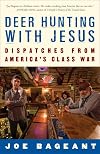
Deer Hunting with Jesus: Dispatches from America's Class War
by Joe Bageant
On This Page
Description
Essays. Politics. Sociology. Nonfiction. By turns tender, incendiary, and seriously funny, this book is a call to arms for fellow progressives with little real understanding of "the great beery, NASCAR-loving, church-going, gun-owning America that has never set foot in a Starbucks." Deer Hunting with Jesus is Joe Bageant's report on what he learned when he moved back to his hometown of Winchester, Virginia. Like countless American small towns, it is fast becoming the bedrock of a permanent show more underclass. Two in five of the people in his old neighborhood do not have high school diplomas or health care. Alcohol, overeating, and Jesus are the preferred avenues of escape. He writes of: - His childhood friends who work at factory jobs that are constantly on the verge of being outsourced - The mortgage and credit card rackets that saddle the working poor with debt - The ubiquitous gun culture-and why the left doesn't get it - Scots Irish culture and how it played out in the young life of Lynddie England. show lessTags
Recommendations




















Member Recommendations

Member Reviews
Joe Bageant is a liberal from a red-neck background. After spending many years away, he moves back to the small town he was born in. This book looks, with affection and respect, at the people from his town and provides their stories and beliefs in a poignant, often funny, way.
At another level, the book also examines why working class Americans seem to vote against their own best interests in so many cases. Why have the Democrats, who argue for more social spending, failed to win the hearts and minds of these voters? Mr. Bageant provides some answers, his main point being that liberals and Democrats need to understand more and judge less.
This book was easy to read and packed a powerful message both in the ideas of the author and the show more portrayals of his neighbours. show less
At another level, the book also examines why working class Americans seem to vote against their own best interests in so many cases. Why have the Democrats, who argue for more social spending, failed to win the hearts and minds of these voters? Mr. Bageant provides some answers, his main point being that liberals and Democrats need to understand more and judge less.
This book was easy to read and packed a powerful message both in the ideas of the author and the show more portrayals of his neighbours. show less
The American heartland explained to the Chardonnay drinking classes
In 2006 a family income of about USD 35,000 made you part of America's underclass in a country where nearly everybody pretends to be middle class. Health insurance is about 250 dollars per person per month, although that covers only 80 percent of health bills. Regional hospitals are often the largest generator of bankruptcies in an area, averaging USD 12,000 (this was before the Obama changes). And only 28 percent of Americans have a college education, which matches the percentage that believes in the Evolution Theory.
These are among the things I learned from Deer Hunting with Jesus, about "redneck" life in Winchester, Virginia. According author Joe Bageant it is a life show more of intellectual bareness in a brutal environment. One third of Americans earn less than 9 dollars per hour and many millions of them are white. They resort to factory work or work at stores like Home Depot or Wallmart. 15 dollars per hour is a top salary for them. Factories nowadays offer less job security than was the case for previous generations, and people often juggle multiple jobs to get by. And, incidentally, the workplace is often also the places where people find pot and methamphetamines.
The status quo is maintained by local elites that have mainly grown rich from land and property. This elite of lawyers, accountants, and real estate developers congregate in the Chamber of Commerce, Kiwanies and Rotaries, and profit from the undemanding uneducated classes. The lower classes have learned to take responsibility for their lives and actions and don't want government handouts, "entitlements" or unionised action. Local lowly educated workers think globalisation is in the national interest, although it makes them compete with Mexicans and Asians, mainly on salaries and job security. On the other hand, the local (rich) Republicans have always maintained their links with small business owners and the electorate much better than the Democrats, who seem little interested in really engaging rednecks. And rich people are thought to deserve their wealth from God, giving their opinions extra meaning.
People's international experience is limited to times in the military. People believe violence can solve political problems when other countries "get out of line":
Any day of the week I can show you a hundred people who believe we should bomb France.
Equally, education is limited. People are too busy earning a living to get educated beyond talk radio they listen to on ear phones in the factory where they work. Discussions in the local pub revolve around "sports, movies, where to get good ribs and seafood, and why GM can't seem to build a good engine". Facts do not matter as much as the emotional value of an opinion:
Theirs is an intellectual life consisting of things that sound right, a blend of modern folk wisdom, cliché, talk radio, and Christian radio babble.
The main thing is that the narrative be a simple one that makes clear whom to love and whom to hate, who is weak and who is strong. The truth matters far less than the sheer audacity of the story. Since the days of Ronald Reagan, Republicans have been good at coming up with such stories.
Working people do not deny reality. They create it from the depths of their perverse ignorance (...) That is what they voted for: an armed and moral republic.
With their limited skills for modern society lowly educated Americans are easily trapped into expensive mortgages for cheap housing and trailers. Guns are part of the way of life. Guns are handed down to younger generations, linking the people to their ancestors from the time of colonisation. It also brings them closer to God when they observe nature. Equally, the bounty of the hunt is seen as a gift from God. These emotions are probably more important than defending the homestead against the government, for which the Second Amendment was meant.
America's lower class has always been evangelical Protestants, as is proven by cartoons and newspaper articles dating back as far as 1820. The fundamentalist church is one of the few social institutions still functioning. The rise of Christian fundamentalism has even driven traditional churches to the right. Fundamentalist churches provide a complete lifestyle to their followers. Its clergy comes from within its own ranks and is usually poorly educated, "though, like most Americans, they do not see themselves that way." Bible colleges that do not teach arts and sciences are considered better for aspiring church men than regular colleges. Christian schools have grown in number since the desegregation of the south. Some evangelicals would like the constitution replaced by "Biblical Law" from the Old Testament (which includes stoning). They prepare for the End Time that started with the founding of Israel. War in the Middle East is always good even if it leads to "martyrdom" of their own kind.
Apart from a lack of education, the author blames Winchester culture on its roots in Ulster and Scotland. Most people now living in Winchester are the descendants of the Ulster Scots and Borderers. Even on the Scottish-English border there ancestors already lived in impermanent earth and log dwellings called "cabins", with almost constant violence around them. These Calvinists have created a parallel culture from the more enlightened Yankee liberals. Calvinism in places like Winchester can be blamed for the idea that the word of God supersedes all government authority. After coming from Ulster and Scotland, they settled eventually in the hills north of the cotton and tobacco growing areas of America's south.
Author Joe Bageant was a left leaning hippie who was born among these people. It has made him an angry man. E.g. there is not a single positive word about the higher classes in the book. On the other hand, nobody else gets spared either. Mr. Bageant's gonzo journalism is not always easy to follow if you are little familiar with country singers, NASCAR-stars, and American brands of fabricated foods. The book paints the life of the people around him with sometimes few data or quotations from other sources (still it seems he saw the coming subprime mortgage mess better than Alan Greenspan). Mr. Bageant's solutions seem old-style, like government funded healthcare and education. You may wonder if America can still afford this, although investing in education might be one of the best places to put the remaining financial resources. You may question however if these people would accept such help as it goes against their value system. show less
In 2006 a family income of about USD 35,000 made you part of America's underclass in a country where nearly everybody pretends to be middle class. Health insurance is about 250 dollars per person per month, although that covers only 80 percent of health bills. Regional hospitals are often the largest generator of bankruptcies in an area, averaging USD 12,000 (this was before the Obama changes). And only 28 percent of Americans have a college education, which matches the percentage that believes in the Evolution Theory.
These are among the things I learned from Deer Hunting with Jesus, about "redneck" life in Winchester, Virginia. According author Joe Bageant it is a life show more of intellectual bareness in a brutal environment. One third of Americans earn less than 9 dollars per hour and many millions of them are white. They resort to factory work or work at stores like Home Depot or Wallmart. 15 dollars per hour is a top salary for them. Factories nowadays offer less job security than was the case for previous generations, and people often juggle multiple jobs to get by. And, incidentally, the workplace is often also the places where people find pot and methamphetamines.
The status quo is maintained by local elites that have mainly grown rich from land and property. This elite of lawyers, accountants, and real estate developers congregate in the Chamber of Commerce, Kiwanies and Rotaries, and profit from the undemanding uneducated classes. The lower classes have learned to take responsibility for their lives and actions and don't want government handouts, "entitlements" or unionised action. Local lowly educated workers think globalisation is in the national interest, although it makes them compete with Mexicans and Asians, mainly on salaries and job security. On the other hand, the local (rich) Republicans have always maintained their links with small business owners and the electorate much better than the Democrats, who seem little interested in really engaging rednecks. And rich people are thought to deserve their wealth from God, giving their opinions extra meaning.
People's international experience is limited to times in the military. People believe violence can solve political problems when other countries "get out of line":
Any day of the week I can show you a hundred people who believe we should bomb France.
Equally, education is limited. People are too busy earning a living to get educated beyond talk radio they listen to on ear phones in the factory where they work. Discussions in the local pub revolve around "sports, movies, where to get good ribs and seafood, and why GM can't seem to build a good engine". Facts do not matter as much as the emotional value of an opinion:
Theirs is an intellectual life consisting of things that sound right, a blend of modern folk wisdom, cliché, talk radio, and Christian radio babble.
The main thing is that the narrative be a simple one that makes clear whom to love and whom to hate, who is weak and who is strong. The truth matters far less than the sheer audacity of the story. Since the days of Ronald Reagan, Republicans have been good at coming up with such stories.
Working people do not deny reality. They create it from the depths of their perverse ignorance (...) That is what they voted for: an armed and moral republic.
With their limited skills for modern society lowly educated Americans are easily trapped into expensive mortgages for cheap housing and trailers. Guns are part of the way of life. Guns are handed down to younger generations, linking the people to their ancestors from the time of colonisation. It also brings them closer to God when they observe nature. Equally, the bounty of the hunt is seen as a gift from God. These emotions are probably more important than defending the homestead against the government, for which the Second Amendment was meant.
America's lower class has always been evangelical Protestants, as is proven by cartoons and newspaper articles dating back as far as 1820. The fundamentalist church is one of the few social institutions still functioning. The rise of Christian fundamentalism has even driven traditional churches to the right. Fundamentalist churches provide a complete lifestyle to their followers. Its clergy comes from within its own ranks and is usually poorly educated, "though, like most Americans, they do not see themselves that way." Bible colleges that do not teach arts and sciences are considered better for aspiring church men than regular colleges. Christian schools have grown in number since the desegregation of the south. Some evangelicals would like the constitution replaced by "Biblical Law" from the Old Testament (which includes stoning). They prepare for the End Time that started with the founding of Israel. War in the Middle East is always good even if it leads to "martyrdom" of their own kind.
Apart from a lack of education, the author blames Winchester culture on its roots in Ulster and Scotland. Most people now living in Winchester are the descendants of the Ulster Scots and Borderers. Even on the Scottish-English border there ancestors already lived in impermanent earth and log dwellings called "cabins", with almost constant violence around them. These Calvinists have created a parallel culture from the more enlightened Yankee liberals. Calvinism in places like Winchester can be blamed for the idea that the word of God supersedes all government authority. After coming from Ulster and Scotland, they settled eventually in the hills north of the cotton and tobacco growing areas of America's south.
Author Joe Bageant was a left leaning hippie who was born among these people. It has made him an angry man. E.g. there is not a single positive word about the higher classes in the book. On the other hand, nobody else gets spared either. Mr. Bageant's gonzo journalism is not always easy to follow if you are little familiar with country singers, NASCAR-stars, and American brands of fabricated foods. The book paints the life of the people around him with sometimes few data or quotations from other sources (still it seems he saw the coming subprime mortgage mess better than Alan Greenspan). Mr. Bageant's solutions seem old-style, like government funded healthcare and education. You may wonder if America can still afford this, although investing in education might be one of the best places to put the remaining financial resources. You may question however if these people would accept such help as it goes against their value system. show less
Bageant succeeds at what J.D. Vance allegedly accomplished with [b:Hillbilly Elegy: A Memoir of a Family and Culture in Crisis|27161156|Hillbilly Elegy A Memoir of a Family and Culture in Crisis|J.D. Vance|https://i.gr-assets.com/images/S/compressed.photo.goodreads.com/books/1463569814l/27161156._SY75_.jpg|47200486]; an honest look at small town working-class America, with an insider's insight into why they seemingly vote against their own interests. Bageant is not particularly kind towards his fellow self-professed rednecks, but his real anger is directed towards the rich and middle class - both Democrats and Republicans - for their part in maintaining "a cheap, unquestioning, and compliant labor force paying high rents and big medical show more bills," and "investing in developing such a labor force by not investing in the education and quality of life for anyone but their own."
Bageant was suitably alarmed by George W. Bush's election. For his sake, I'm glad he passed before the ascendency of Trump, but I can't help but wonder what he would have said about the new depths to which we have sunk. show less
Bageant was suitably alarmed by George W. Bush's election. For his sake, I'm glad he passed before the ascendency of Trump, but I can't help but wonder what he would have said about the new depths to which we have sunk. show less
When NPR correspondent Joe Bageant moved back to Winchester, Virginia after being away for decades, he felt the true breadth of the chasm that exists between - for lack of a better term - the classes in America.
He tells it like it is - showing empathy for the folks who are working hard to sustain a lifestyle that encompasses far less than most of us are accustomed to. He also acknowledges the anger and disbelief that he experiences around these folks who so willingly give their votes to a political party that seems to far removed from their basic needs. Yet, they forsake the promise of good jobs and health care because - as Bible belt Southerners - they put more stock in a candidate's purported stance on God, guns, and guts (a/k/a, show more blowing up foreigners).
The book is, at times, infuriating, and then it swings to heartbreaking, then to humorous. At times it gets bogged down in Michael Moore like fact-checking, but the point is clear - a sizable portion of the American voting pubic is made up of rather simple folks who cling to an ideology that might seem outdated to many of us, but to them, it's what got them this far, and they aren't ready to relinquish it.
Those of us that go to Starbucks every day, and spend time on Goodreads (or, heck, just reading!) are as elitist and odd to them as they may seem hayseed to some of us.
Bageant pulls it all together nicely with the reminder (cliched though it may be) that we're all Americans, and we all essentially want the same basic things - we just have very different views of how to accomplish those goals.
I'll never endorse the NRA/Nascar mentality, but now I have a better understanding of who some of these folks are, and I see why they believe what they believe, whether I agree with it or not. show less
He tells it like it is - showing empathy for the folks who are working hard to sustain a lifestyle that encompasses far less than most of us are accustomed to. He also acknowledges the anger and disbelief that he experiences around these folks who so willingly give their votes to a political party that seems to far removed from their basic needs. Yet, they forsake the promise of good jobs and health care because - as Bible belt Southerners - they put more stock in a candidate's purported stance on God, guns, and guts (a/k/a, show more blowing up foreigners).
The book is, at times, infuriating, and then it swings to heartbreaking, then to humorous. At times it gets bogged down in Michael Moore like fact-checking, but the point is clear - a sizable portion of the American voting pubic is made up of rather simple folks who cling to an ideology that might seem outdated to many of us, but to them, it's what got them this far, and they aren't ready to relinquish it.
Those of us that go to Starbucks every day, and spend time on Goodreads (or, heck, just reading!) are as elitist and odd to them as they may seem hayseed to some of us.
Bageant pulls it all together nicely with the reminder (cliched though it may be) that we're all Americans, and we all essentially want the same basic things - we just have very different views of how to accomplish those goals.
I'll never endorse the NRA/Nascar mentality, but now I have a better understanding of who some of these folks are, and I see why they believe what they believe, whether I agree with it or not. show less
John Steinbeck: "Socialism never took root in America because the poor see themselves not as exploited proletariat but as temporarily embarrassed millionaires."
This book was written shortly after Bush's reelection, as an attempt to explain why so many white working class people seemed to vote against their own interests. My hometown paper said it should be, "required reading for progressive liberals." And despite its subject being a different election, those seeking an answer to how Trump was elected have been urged to read the book. In fact, as I read some of the descriptions and beliefs in this book, I found myself wondering whether Trump had read this book, so many of the positions some of these people espoused are so close to show more Trump's. (Not a serious thought--I know he doesn't read). But we hear from people who want to nuke Iran and nuke North Korea, and take all the oil from the Mideast, all things Trump has advocated.
Bageant, who has been described as a "gonzo" journalist, was born and raised in Winchester, Virginia, and returned to his roots after many years of working as a reporter around the world. Bageant himself said of the book, "..it is a gonzo book intended to give the flavor of the American experience, the thinking going on, more a literary book than just another book of facts and data." I found the book to be anecdotal and very mosaic-like, rather than having a broad analytical overview, so there are not many answers here, although there are lots of thoughts and stories I would like to remember.
Here are some of them:
--The Republican myth of the "Small Businessman." These are actually the self-employed electricians, plumbers and other skilled workers construction companies don't want to hire to avoid paying Social Security, worker's compensation, and health insurance. Instead, they contract with "the small businessman", and he assumes those costs and shuffles through the farce that he is one of America's ever-growing crop of dynamic entrepeneurs.
"{I}n an obsessively religious nation, values remain the most effective smoke screen for larceny by the rich and hatred and fear by the rest. What Christians and so many quiet Americans were voting for in the presidential elections of 2000 and 2004 was fear of human beings culturally unlike themselves, particularly gays and lesbians and Muslims and other non-Christians." (I would add, also people of color).
One of the most eye-opening (for me) facts was that 89-94 million Americans are functionally illiterate. I've long recognized and despaired of the fact that many Trump supporters seem to live in fact-free zones. But many American adults cannot distinguish between an ad and real news. Worse, Bageant points out, the problem is that many are pretty happy just the way they are.
This was an interesting and engaging read. It sometimes seemed to be a little overblown, but the times, particularly now, may warrant that. I'm glad I read it, and if it sounds interesting to you, I can recommend it. It's just not an essential read.
3 stars show less
This book was written shortly after Bush's reelection, as an attempt to explain why so many white working class people seemed to vote against their own interests. My hometown paper said it should be, "required reading for progressive liberals." And despite its subject being a different election, those seeking an answer to how Trump was elected have been urged to read the book. In fact, as I read some of the descriptions and beliefs in this book, I found myself wondering whether Trump had read this book, so many of the positions some of these people espoused are so close to show more Trump's. (Not a serious thought--I know he doesn't read). But we hear from people who want to nuke Iran and nuke North Korea, and take all the oil from the Mideast, all things Trump has advocated.
Bageant, who has been described as a "gonzo" journalist, was born and raised in Winchester, Virginia, and returned to his roots after many years of working as a reporter around the world. Bageant himself said of the book, "..it is a gonzo book intended to give the flavor of the American experience, the thinking going on, more a literary book than just another book of facts and data." I found the book to be anecdotal and very mosaic-like, rather than having a broad analytical overview, so there are not many answers here, although there are lots of thoughts and stories I would like to remember.
Here are some of them:
--The Republican myth of the "Small Businessman." These are actually the self-employed electricians, plumbers and other skilled workers construction companies don't want to hire to avoid paying Social Security, worker's compensation, and health insurance. Instead, they contract with "the small businessman", and he assumes those costs and shuffles through the farce that he is one of America's ever-growing crop of dynamic entrepeneurs.
"{I}n an obsessively religious nation, values remain the most effective smoke screen for larceny by the rich and hatred and fear by the rest. What Christians and so many quiet Americans were voting for in the presidential elections of 2000 and 2004 was fear of human beings culturally unlike themselves, particularly gays and lesbians and Muslims and other non-Christians." (I would add, also people of color).
One of the most eye-opening (for me) facts was that 89-94 million Americans are functionally illiterate. I've long recognized and despaired of the fact that many Trump supporters seem to live in fact-free zones. But many American adults cannot distinguish between an ad and real news. Worse, Bageant points out, the problem is that many are pretty happy just the way they are.
This was an interesting and engaging read. It sometimes seemed to be a little overblown, but the times, particularly now, may warrant that. I'm glad I read it, and if it sounds interesting to you, I can recommend it. It's just not an essential read.
3 stars show less
Bageant invites us to meet the white working class poor: “the ones who smell like an ashtray in the checkout line, devour a carton of Little Debbies at a sitting, and praise Jesus for a truck with no spare tire….” These are the people that liberals should get to know if they ever hope to recapture their votes from the right wing.
Bageant introduces us to people in his hometown of Winchester, Virginia: Dink, Pootie, Dot, Nance, and others, who are, he suggests, quintessential working poor white southerners. They struggle with medical problems and bills, they get their news (if at all) from talk radio, they love their guns as part of their Scots-Irish heritage, and they believe that turning America into a Christian nation will, if show more not out-and-out bring on the Apocalypse, at least foster a return to a moral and comprehensible community.
“God, patriotism, glory, and mayhem come together in the Border scheme of things," Bageant observes, in this Dark Side answer to James Webb’s book “Born Fighting.” Bageant blames the abysmal state of education among working poor people as a major contributor to their limited understanding of current affairs and poor prospects in life. Helping keep them ignorant is an American culture “based on two things: television and petroleum.”
Bageant sometimes paints with a very broad brush, but he makes some excellent points that rarely get made by the mainstream media. (He charges the “praise-seeking pawns of corporate media” able to imagine only two kinds of stories: “(1) worshipful portrayals of the rich, famous, and politically powerful, and (2) tearful glamorizations of crack whores and illegal immigrants. These are the kinds of stories that entertain or stir the emotions of the middle class but do not threaten the status quo.”)
By the time you finish this book, you will think twice about scorning the trailer-park denizens and Wal-Mart workers and ditch-diggers and bus drivers and the born again, flag-waving, gun-toting stereotypes that liberals only love in theory. Instead, you will think about their private pains and dashed hopes and dreams, and what life can be like near the bottom of the food chain. And maybe you might even want to get to know them. show less
Bageant introduces us to people in his hometown of Winchester, Virginia: Dink, Pootie, Dot, Nance, and others, who are, he suggests, quintessential working poor white southerners. They struggle with medical problems and bills, they get their news (if at all) from talk radio, they love their guns as part of their Scots-Irish heritage, and they believe that turning America into a Christian nation will, if show more not out-and-out bring on the Apocalypse, at least foster a return to a moral and comprehensible community.
“God, patriotism, glory, and mayhem come together in the Border scheme of things," Bageant observes, in this Dark Side answer to James Webb’s book “Born Fighting.” Bageant blames the abysmal state of education among working poor people as a major contributor to their limited understanding of current affairs and poor prospects in life. Helping keep them ignorant is an American culture “based on two things: television and petroleum.”
Bageant sometimes paints with a very broad brush, but he makes some excellent points that rarely get made by the mainstream media. (He charges the “praise-seeking pawns of corporate media” able to imagine only two kinds of stories: “(1) worshipful portrayals of the rich, famous, and politically powerful, and (2) tearful glamorizations of crack whores and illegal immigrants. These are the kinds of stories that entertain or stir the emotions of the middle class but do not threaten the status quo.”)
By the time you finish this book, you will think twice about scorning the trailer-park denizens and Wal-Mart workers and ditch-diggers and bus drivers and the born again, flag-waving, gun-toting stereotypes that liberals only love in theory. Instead, you will think about their private pains and dashed hopes and dreams, and what life can be like near the bottom of the food chain. And maybe you might even want to get to know them. show less
Joe Bageant is an angry man, angry with Conservatives and Liberals. He sees American culture as a hologram, an illusion created by Corporations. He writes about the redneck southern working class he grew up in which he feels is deluded and manipulated by Corporate America and the Republican party. It breaks his heart because he loves them.
Members
- Recently Added By
Author Information

3 Works 1,029 Members
Joe Bageant writes an online column (JoeBageant.com) that has made him a cult hero among gonzo-journalism junkies and progressives
Some Editions
Awards and Honors
Distinctions
Series
Belongs to Publisher Series
Common Knowledge
- Original title
- Deer Hunting With Jesus: Dispatches From America's Class War
- Original publication date
- 2007
- People/Characters
- Joe Bageant; Lynddie England
- Important places
- Winchester, Virginia, USA; Fort Shenandoah, Virginia, USA
- Dedication
- For Barbara and Ken
- First words
- On the morning of November 2, 2004, millions of Democrats arose to a new order.
- Last words
- (Click to show. Warning: May contain spoilers.)Employment numbers and the number of Americans killed in Iraq and stock market numbers slosh against the beaches of awareness alongside the football scores and the number of cockroaches swallowed by a busty blonde on Fear Factor, meaningless numbers that, like the cops outside and the drinkers inside, were long ago lost beneath the hologram's gushing spectacle.
- Blurbers
- Alexie, Sherman; Zinn, Howard; Miller, Mark Crispin; St. Clair, Jeffrey; Terkel, Studs; Sirota, David
- Original language
- English
Classifications
- Genres
- Sociology, Nonfiction, General Nonfiction, Politics and Government, Religion & Spirituality
- DDC/MDS
- 320 — Society, Government, and Culture Political science Types of Government
- LCC
- HN90 .S6 .B32 — Social sciences Social history and conditions. Social problems. Social reform Social history and conditions. Social problems. By region or country
- BISAC
Statistics
- Members
- 915
- Popularity
- 29,142
- Reviews
- 50
- Rating
- (3.76)
- Languages
- English, German, Italian, Spanish
- Media
- Paper, Audiobook, Ebook
- ISBNs
- 14
- ASINs
- 7