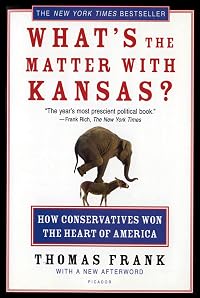
What's the Matter with Kansas?: How Conservatives Won the Heart of America
by Thomas Frank
On This Page
Description
"What's the Matter with Kansas?" unravels the great political mystery of our day: Why do so many Americans vote against their economic and social interests? With his acclaimed wit and acuity, Thomas Frank answers the riddle by examining his home state, Kansas, a place once famous for its radicalism that now ranks among the nation's most eager participants in the culture wars. Charting what he calls the "thirty-year backlash", the popular revolt against a supposedly liberal show more establishment-Frank reveals how conservatism, once a marker of class privilege, became the creed of millions of ordinary Americans. A brilliant analysis, and funny to boot, "What's the Matter with Kansas?" is a vivid portrait of an upside-down world where blue-collar patriots recite the Pledge while they strangle their life chances; where small farmers cast their votes for a Wall Street order that will eventually push them off their land; and where a group of frat boys, lawyers, and CEOs has managed to convince the country that it speaks on behalf of the People. show lessTags
Recommendations




Member Recommendations

Member Reviews
In 2004, Thomas Frank wrote about how the Democratic party lost Kansas. What he described was the blueprint for a political realignment that traded economic self-interest for cultural identity.
I could summarize it in two sentences: Twenty years ago, the Democrats dropped the ball by focusing on issues not important to working-class Americans. In return, the Republicans built a culture war that targeted those disenfranchised workers and remade American politics.
But Frank’s book deserves more than summary. It explains how the politics of grievance overtook the politics of policy, and how the left failed to understand the rules of the new game. Two decades later, the framework he laid out still holds.
It has given us Trump. Twice.
Unless show more things change, Democrats will continue to lose elections. More importantly, the duped working class will continue to decline, never realizing their masters have manipulated them to their own ends.
Key Takeaways
There are four key takeaways from this book:
Frank’s Prescription: Rebuild Class Politics
Frank offers a remedy: return the Democratic Party to its working-class roots.
In short: Frank suggests Democrats reassemble the old economic coalition, put class back at the center, and stop pretending that cultural neutrality is a winning posture.
But that won't be enough.
Lessons for Today
Frank was right about the disease. But twenty years later, his prescription is more likely to kill the patient.
The culture war he described hasn’t just intensified—it has crystallized into identity. What began as political theater is now a governing worldview: moral, coherent, and emotionally understandable. It dominates the right and shapes how tens of millions of Americans see themselves.
The left can't displace that with programs, no matter how generous.
Frank’s plan—to rebuild class politics—relies on conditions that no longer exist. Union power isn’t coming back at scale. Class itself has fractured into tribes defined by culture, geography, and grievance. And voters aren’t waiting for policy; they’re looking for meaning.
That’s what Frank missed. He assumed better messaging and material outcomes would win people back. But what drew them away wasn’t just manipulation. It was meaning. The right gave them a role in a moral story.
To compete, the left needs a better story.
What Comes Next
That story isn’t about restoring old coalitions. It’s about building a new foundation.
A viable politics now must begin with first principles—not demographics, not slogans, and not targeted benefits. It has to speak to the individual as a moral agent—the key player responsible not just for their own life, but for the survival of democracy itself.
This isn’t new. It’s the same challenge the framers confronted in 1787: how to build a republic not around tribes or factions, but around individuals capable of self-government. They knew the experiment would only work if citizens believed in something larger than themselves—and were willing to act on it.
That’s what we need now: a higher purpose to break the back of cultural tribalism.
Frank’s takeaways offer more than diagnosis. They reveal what any winning politics must provide: meaning, clarity, defiance, and recognition. The right delivered those things, wrapped in grievance. The task now is to offer the same architecture—built not on resentment, but on responsibility.
It means building a politics around values. What values? Reason over resentment. Agency over victimhood. Responsibility over dependence. These aren’t slogans—they’re commitments to a free society. And if articulated clearly, they can reframe the entire political conversation.
Why would this work? Because most people don’t want chaos. They want to live in a world that makes sense. The culture war works because it offers coherence. A values-driven politics can do the same—without the authoritarian cost.
But it has to be more than critique. It must be confident. Moral. Structured. Serious.
Frank explained how the left lost the working class. He warned that culture would displace economics—and that resentment would replace solidarity. He was right.
But rebuilding class politics is no longer enough. The work now is to build meaning.
Frank had the right ideas.
The problem is that no one has stepped forward to lead with them. show less
I could summarize it in two sentences: Twenty years ago, the Democrats dropped the ball by focusing on issues not important to working-class Americans. In return, the Republicans built a culture war that targeted those disenfranchised workers and remade American politics.
But Frank’s book deserves more than summary. It explains how the politics of grievance overtook the politics of policy, and how the left failed to understand the rules of the new game. Two decades later, the framework he laid out still holds.
It has given us Trump. Twice.
Unless show more things change, Democrats will continue to lose elections. More importantly, the duped working class will continue to decline, never realizing their masters have manipulated them to their own ends.
Key Takeaways
There are four key takeaways from this book:
-
If you want to win voters, offer meaning.
Cultural identity beats economic logic when it gives people a sense of purpose. The right understood this. It built an emotional narrative around faith, resentment, and belonging. The left, by contrast, offered plans. Plans don’t motivate people, but stories do. -
Moral clarity (real or imagined) wins over procedural competence.
In politics, emotional appeals beat expertise. The right gave voters a worldview with clear villains and simple answers. The left offered process and policy. Voters chose the side that made them feel something. -
Rebellion sells.
The illusion of revolt keeps people aligned with the very power structures that exploit them. Outrage becomes performance designed to provoke an emotional response, and performance becomes loyalty. -
People will trade results for recognition.
Voters don’t just want better outcomes, they want to feel seen. Cultural populism gives them identity and relevance. Until the left offers something equally potent, it will continue to lose ground—even if they have better arguments.
Frank’s Prescription: Rebuild Class Politics
Frank offers a remedy: return the Democratic Party to its working-class roots.
- Recenter class as the defining political fault line, not race, religion, or culture
- Rebuild union power to create solidarity and institutional alignment with the left
- Confront corporate elites rather than defer to them
- Abandon technocracy, which alienates non-college-educated voters
- Refuse to fight on the right’s cultural turf, and redirect the conversation to stuff that is important (wages, healthcare)
In short: Frank suggests Democrats reassemble the old economic coalition, put class back at the center, and stop pretending that cultural neutrality is a winning posture.
But that won't be enough.
Lessons for Today
Frank was right about the disease. But twenty years later, his prescription is more likely to kill the patient.
The culture war he described hasn’t just intensified—it has crystallized into identity. What began as political theater is now a governing worldview: moral, coherent, and emotionally understandable. It dominates the right and shapes how tens of millions of Americans see themselves.
The left can't displace that with programs, no matter how generous.
Frank’s plan—to rebuild class politics—relies on conditions that no longer exist. Union power isn’t coming back at scale. Class itself has fractured into tribes defined by culture, geography, and grievance. And voters aren’t waiting for policy; they’re looking for meaning.
That’s what Frank missed. He assumed better messaging and material outcomes would win people back. But what drew them away wasn’t just manipulation. It was meaning. The right gave them a role in a moral story.
To compete, the left needs a better story.
What Comes Next
That story isn’t about restoring old coalitions. It’s about building a new foundation.
A viable politics now must begin with first principles—not demographics, not slogans, and not targeted benefits. It has to speak to the individual as a moral agent—the key player responsible not just for their own life, but for the survival of democracy itself.
This isn’t new. It’s the same challenge the framers confronted in 1787: how to build a republic not around tribes or factions, but around individuals capable of self-government. They knew the experiment would only work if citizens believed in something larger than themselves—and were willing to act on it.
That’s what we need now: a higher purpose to break the back of cultural tribalism.
Frank’s takeaways offer more than diagnosis. They reveal what any winning politics must provide: meaning, clarity, defiance, and recognition. The right delivered those things, wrapped in grievance. The task now is to offer the same architecture—built not on resentment, but on responsibility.
It means building a politics around values. What values? Reason over resentment. Agency over victimhood. Responsibility over dependence. These aren’t slogans—they’re commitments to a free society. And if articulated clearly, they can reframe the entire political conversation.
Why would this work? Because most people don’t want chaos. They want to live in a world that makes sense. The culture war works because it offers coherence. A values-driven politics can do the same—without the authoritarian cost.
But it has to be more than critique. It must be confident. Moral. Structured. Serious.
Frank explained how the left lost the working class. He warned that culture would displace economics—and that resentment would replace solidarity. He was right.
But rebuilding class politics is no longer enough. The work now is to build meaning.
Frank had the right ideas.
The problem is that no one has stepped forward to lead with them. show less
This was originally published in 2004, so it's definitely dated, but I'd say it's still relevant. Perhaps depressingly relevant.
Thomas Frank ponders the fact that, once upon a time, it was considered almost self-evident that the Democratic party was the party of the ordinary working stiff. But that's changed fairly dramatically, especially in places like Frank's former home state of Kansas, where there has been a great and passionate upsurge in right-wing sentiment among people whose economic self-interest would not seem to be in alignment with the Republican's policies of tax breaks for the rich and minimal support for the rest of us. What gives? Frank claims that it's largely down to the far right's politicians who, capitalizing on show more backlash against the social upheavals of the 1960s, have reframed the conservative vs. liberal dichotomy as a cultural one -- beer-drinking, NASCAR-loving, churchgoing salt-of-the-earth Plain Folks vs. latte-drinking, Volvo-driving, morally permissive, snootily superior elites -- while sidelining the economic issues almost entirely, deliberately focusing attention on such issues as abortion or the teaching of evolution in schools, and away from questions of material benefit.
I am weirdly torn, here, between finding this thesis oversimplistic and perhaps just a little too cynical (although we are talking about politicians, here, so maybe not all that overly cynical) and thinking it's obvious enough to almost not require spelling out. I do think some of his commentary and opinions are more lucid than others (not to mention more sensitively expressed), but overall, I'd say he does have some things to say about the origins of America's current Red vs. Blue conflict that are worth listening to. show less
Thomas Frank ponders the fact that, once upon a time, it was considered almost self-evident that the Democratic party was the party of the ordinary working stiff. But that's changed fairly dramatically, especially in places like Frank's former home state of Kansas, where there has been a great and passionate upsurge in right-wing sentiment among people whose economic self-interest would not seem to be in alignment with the Republican's policies of tax breaks for the rich and minimal support for the rest of us. What gives? Frank claims that it's largely down to the far right's politicians who, capitalizing on show more backlash against the social upheavals of the 1960s, have reframed the conservative vs. liberal dichotomy as a cultural one -- beer-drinking, NASCAR-loving, churchgoing salt-of-the-earth Plain Folks vs. latte-drinking, Volvo-driving, morally permissive, snootily superior elites -- while sidelining the economic issues almost entirely, deliberately focusing attention on such issues as abortion or the teaching of evolution in schools, and away from questions of material benefit.
I am weirdly torn, here, between finding this thesis oversimplistic and perhaps just a little too cynical (although we are talking about politicians, here, so maybe not all that overly cynical) and thinking it's obvious enough to almost not require spelling out. I do think some of his commentary and opinions are more lucid than others (not to mention more sensitively expressed), but overall, I'd say he does have some things to say about the origins of America's current Red vs. Blue conflict that are worth listening to. show less
This phenomenal book explores how Republican party leaders and big business have conspired to equate conservatism with stands on cultural, not fiscal, issues. Rich's writing is solid, yet surprisingly free of any sweeping value judgments: he lets the facts speak for themselves. He also shows how conservatism is a dead end road, and moreover, how it was intended to be such from the get-go--the best way to keep people energised and supportive is by working them up over issues on which they will never be able to definitively declare victory. "Kansas" is an interesting and thought-provoking read from start to finish, which is why I highly recommend that you read it, too.
Fascinating but depressing.
Thomas Frank, born and raised in Kansas, goes home and takes a long hard look at the self-destructive wholesale adoption of hard-right, fundamentalist-christian, conservative politics by the plain ol’ folks of the state.
He fills in Kansas’s historical background of Populism and anti-slavery (Republican in the Lincolnesque sense), and shows how today’s politics represent a complete about-face. Through interviews and anecdotes, he vividly illustrates how the “culture war” works, and how in their eagerness to sign up and fight in that war, farmers and working-class people destroy their own way of life.
Frank also takes the Democratic party to task for creating the vacuum conservative Republicans rushed show more to fill when they completely abandoned their traditional supporters in pursuit of wealthy business owners whose politics were somewhat liberal, thereby taking economic issues off the table and making themselves over into a “Republican-lite” party where moderate Republicans may feel more comfortable as their party continues to become more and more radicalized.
Well worth reading if you want a clear, well-written description how American politics has moved dramatically rightwards. Frank offers no solution, but for most people not high up in the political party hierarchies, there may be no solution save waiting until the parties burn themselves out or wreck the country to the point that revolution becomes a viable and desirable option. show less
Thomas Frank, born and raised in Kansas, goes home and takes a long hard look at the self-destructive wholesale adoption of hard-right, fundamentalist-christian, conservative politics by the plain ol’ folks of the state.
He fills in Kansas’s historical background of Populism and anti-slavery (Republican in the Lincolnesque sense), and shows how today’s politics represent a complete about-face. Through interviews and anecdotes, he vividly illustrates how the “culture war” works, and how in their eagerness to sign up and fight in that war, farmers and working-class people destroy their own way of life.
Frank also takes the Democratic party to task for creating the vacuum conservative Republicans rushed show more to fill when they completely abandoned their traditional supporters in pursuit of wealthy business owners whose politics were somewhat liberal, thereby taking economic issues off the table and making themselves over into a “Republican-lite” party where moderate Republicans may feel more comfortable as their party continues to become more and more radicalized.
Well worth reading if you want a clear, well-written description how American politics has moved dramatically rightwards. Frank offers no solution, but for most people not high up in the political party hierarchies, there may be no solution save waiting until the parties burn themselves out or wreck the country to the point that revolution becomes a viable and desirable option. show less
When I first read What’s the Matter with Kansas? by Thomas Frank, I heard myself saying over and over again, “Yes, yes, yes,” “that’s just the way things are,” “he’s nailed it again.” When I react that positively to an opinion piece or a book on current affairs, especially one as controversial as this one, I always check my enthusiasm by reading what are likely to be negative reviews. This time the one that gave me pause was the scholarly review by Larry Barbels of Princeton University, who subjected Frank's interpretation to a fastidious statistical analysis based on the National Election Study (NES) surveys.
Barbels attempts to reduce Frank to a mere “pundit.” He admits that he is a talented journalist, an show more interesting writer whose style and story-telling have earned attention, but claims that he is regrettably not a serious political scientist as the scholar Barbels sees himself to be. Here is his conclusion: “I focus on four specific questions inspired by Frank’s account: Has the white working class abandoned the Democratic party? Has the white working class become more conservative? Do working class ‘moral values’ trump economics? Are religious voters distracted from economic issues? My answer to each of these questions is ‘no.’”
Well, I read Barbels' report carefully, and I can attest that he worked hard NOT to be an interesting writer whose style and story-telling might gain attention. As for the validity of his arguments, they all depend on statistical analysis of voters. Like many such research reports, it neither illustrates, clarifies, nor confirms its points by interviews, questionnaires, or personal observation. We have only numbers based on polls. If you have ever been subject to such polls, you know how unlikely they are to report the subtle truth. Often you want to say in response to a question, “Yes, but . . . .” “If you let me define your terms my own way, I would say . . . .” “Umm, maybe, I guess so.” They do not distinguish between those respondents who are relatively passive, who answer unthinkingly, who may change their minds tomorrow, and those who are enthusiastic about their positions, work hard to influence others, and are stable and thoughtful in their opinions. No matter what the category, it will lump people together who are not at all alike. "Low-income," as Frank points out in his rebuttal, will include welfare and working-class folk along with retirees, college students working their way through school, beginners in some jobs, even school teachers! "Non-college-educated" may include skilled craftsmen, high-powered sales representatives, truck drivers, self-employed business people, and the like—definitely not all low-income.
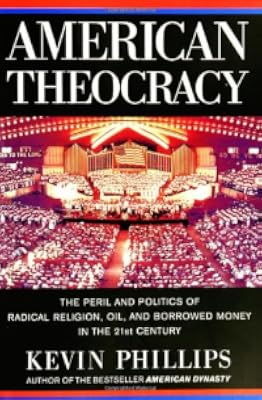
So, rereading Frank, I still find myself saying, “Yep, that’s the way things are; you got it!” It was Kevin Phillips who predicted and helped implement the “emerging Republican majority” as long ago as the 1968 Nixon campaign. Since then, he has pointed out the flaws in the two Bush regimes’ implementation of a so-called conservative agenda. See especially his book on the Bush clan, American Dynasty, and his more recent book on the current political scene, American Theocracy. Both these books are scholarly—and readable, citing statistics but not relying solely on them. For the most part, Phillips’ work corroborates Frank’s report.
Frank is a reporter. He researched his story with interviews of real people, observation of their actual behavior, examination of local news reports and party documents, analysis of legislation and of legislators' relationships with PACs, and his collection of data about voting, economic conditions, business growth and decline, and population shifts. He tells his story well. No matter what NES statistics may indicate, there is simply no way the working class in Kansas could have suffered such a downfall nor corporate giants have enjoyed so many perks except that the latter have the power and the former suffer the consequences. And there is no way candidates could receive the majorities they do, even in the poorest counties and those with the highest percentage of working-class citizens, unless candidates who represent affluent Kansans and corporate CEOs were capturing the votes of the working class.
Why? “For decades Americans have experienced a populist uprising that only benefits the people it is supposed to be targeting.” Spurred on by campaigns against abortion, same-sex marriage, the teaching of evolution, and the like, blue-collar voters elect candidates who then legislate corporate welfare and tax cuts, especially for the upper-income. “The angry workers, mighty in their numbers, are marching irresistibly against the arrogant. They are shaking their fists at the sons of privilege.” And turning right around and electing smooth-talking elitists with their PAC-supported agendas, whose legislation supports and enriches those very affluent, arrogant sons of privilege.
It is true, as Barbels says, that in Kansas issues of race are not as stressful as in the South and, there has not been the huge decline in white voters enraged by civil rights legislation, especially among very low-income whites. Nationally, this subtle racism accounts for the Democrats’ loss of influence among a significant number of working-class voters. Even so, Frank’s account of what happened in Kansas, for example in the formerly heavily Democratic vicinity around Wichita, is clear and persuasive. No matter what the numbers from the anonymous categories of voters surveyed by NES may say. Statistics don't tell the story.
So, if you read no other part of this book, you should at least pay attention to the stories in chapter 2, “Deep in the Heart of Redness,” and especially pp. 51-55, about Garden City and the meatpacking industry in that western part of the state. “The single most important element of [the meatpacking companies’] logic is, as always, the demand for cheap labor.” Therefore, conditions have deteriorated in the city: “One thing you do see these days are the trailer-park cities, dilapidated and unpaved and rubbish strewn, that house a large part of Garden City’s workforce.” Look closely and what you will also see is “injury and infection and death by a hundred forms of degradation; rusting playgrounds for the kids, shabby decaying schools, a lifetime of productiveness gone in a few decades, and depleted groundwater, too.”
But to see this kind of evidence of the new Republican majority, you may have to drive out beyond the well populated cities, beyond the media centers. You have to talk to real working-class people and smell their streets and investigate their work conditions and living conditions and income levels. You can’t do that just by studying NES statistical tables. Oh, you don’t have to go to a third-world country to see what happens in the third world. Just drive out to Garden City, Kansas, in the deep heart of redness. show less
Barbels attempts to reduce Frank to a mere “pundit.” He admits that he is a talented journalist, an show more interesting writer whose style and story-telling have earned attention, but claims that he is regrettably not a serious political scientist as the scholar Barbels sees himself to be. Here is his conclusion: “I focus on four specific questions inspired by Frank’s account: Has the white working class abandoned the Democratic party? Has the white working class become more conservative? Do working class ‘moral values’ trump economics? Are religious voters distracted from economic issues? My answer to each of these questions is ‘no.’”
Well, I read Barbels' report carefully, and I can attest that he worked hard NOT to be an interesting writer whose style and story-telling might gain attention. As for the validity of his arguments, they all depend on statistical analysis of voters. Like many such research reports, it neither illustrates, clarifies, nor confirms its points by interviews, questionnaires, or personal observation. We have only numbers based on polls. If you have ever been subject to such polls, you know how unlikely they are to report the subtle truth. Often you want to say in response to a question, “Yes, but . . . .” “If you let me define your terms my own way, I would say . . . .” “Umm, maybe, I guess so.” They do not distinguish between those respondents who are relatively passive, who answer unthinkingly, who may change their minds tomorrow, and those who are enthusiastic about their positions, work hard to influence others, and are stable and thoughtful in their opinions. No matter what the category, it will lump people together who are not at all alike. "Low-income," as Frank points out in his rebuttal, will include welfare and working-class folk along with retirees, college students working their way through school, beginners in some jobs, even school teachers! "Non-college-educated" may include skilled craftsmen, high-powered sales representatives, truck drivers, self-employed business people, and the like—definitely not all low-income.
So, rereading Frank, I still find myself saying, “Yep, that’s the way things are; you got it!” It was Kevin Phillips who predicted and helped implement the “emerging Republican majority” as long ago as the 1968 Nixon campaign. Since then, he has pointed out the flaws in the two Bush regimes’ implementation of a so-called conservative agenda. See especially his book on the Bush clan, American Dynasty, and his more recent book on the current political scene, American Theocracy. Both these books are scholarly—and readable, citing statistics but not relying solely on them. For the most part, Phillips’ work corroborates Frank’s report.
Frank is a reporter. He researched his story with interviews of real people, observation of their actual behavior, examination of local news reports and party documents, analysis of legislation and of legislators' relationships with PACs, and his collection of data about voting, economic conditions, business growth and decline, and population shifts. He tells his story well. No matter what NES statistics may indicate, there is simply no way the working class in Kansas could have suffered such a downfall nor corporate giants have enjoyed so many perks except that the latter have the power and the former suffer the consequences. And there is no way candidates could receive the majorities they do, even in the poorest counties and those with the highest percentage of working-class citizens, unless candidates who represent affluent Kansans and corporate CEOs were capturing the votes of the working class.
Why? “For decades Americans have experienced a populist uprising that only benefits the people it is supposed to be targeting.” Spurred on by campaigns against abortion, same-sex marriage, the teaching of evolution, and the like, blue-collar voters elect candidates who then legislate corporate welfare and tax cuts, especially for the upper-income. “The angry workers, mighty in their numbers, are marching irresistibly against the arrogant. They are shaking their fists at the sons of privilege.” And turning right around and electing smooth-talking elitists with their PAC-supported agendas, whose legislation supports and enriches those very affluent, arrogant sons of privilege.
It is true, as Barbels says, that in Kansas issues of race are not as stressful as in the South and, there has not been the huge decline in white voters enraged by civil rights legislation, especially among very low-income whites. Nationally, this subtle racism accounts for the Democrats’ loss of influence among a significant number of working-class voters. Even so, Frank’s account of what happened in Kansas, for example in the formerly heavily Democratic vicinity around Wichita, is clear and persuasive. No matter what the numbers from the anonymous categories of voters surveyed by NES may say. Statistics don't tell the story.
So, if you read no other part of this book, you should at least pay attention to the stories in chapter 2, “Deep in the Heart of Redness,” and especially pp. 51-55, about Garden City and the meatpacking industry in that western part of the state. “The single most important element of [the meatpacking companies’] logic is, as always, the demand for cheap labor.” Therefore, conditions have deteriorated in the city: “One thing you do see these days are the trailer-park cities, dilapidated and unpaved and rubbish strewn, that house a large part of Garden City’s workforce.” Look closely and what you will also see is “injury and infection and death by a hundred forms of degradation; rusting playgrounds for the kids, shabby decaying schools, a lifetime of productiveness gone in a few decades, and depleted groundwater, too.”
But to see this kind of evidence of the new Republican majority, you may have to drive out beyond the well populated cities, beyond the media centers. You have to talk to real working-class people and smell their streets and investigate their work conditions and living conditions and income levels. You can’t do that just by studying NES statistical tables. Oh, you don’t have to go to a third-world country to see what happens in the third world. Just drive out to Garden City, Kansas, in the deep heart of redness. show less
Thomas Frank argues that modern conservatism is essentially a bait-and-switch: the social grievances of the many are used to produce immense wealth for the few. Republican politicians campaign on social issues, but their legislative agenda is mainly economic. Their lack of progress in the culture wars means that voters’ social complaints grow and grow, which of course makes them more and more conservative; meanwhile, the Party’s very substantial progress on the economic front keeps the businessmen loyal (and the money flowing).
All of this is able to happen because Democrats have either fallen silent about, or moved to the right on, economic issues. The relatively small (or at least muted) differences between the parties mean that show more many voters aren’t able to draw an informed distinction between them. Thus, they cast their ballots in the areas where they *can* see a difference: social and cultural issues.
I try to read almost everything with a critical eye, but I ended up finding very little here with which to quarrel. That in itself would be reason enough for me to recommend this book; as an added bonus, Franks is witty, direct, and sympathetic to the complaints—if not the choices—of the people he’s describing. The writing is solid; the anecdotes are well-chosen; the tone is exactly right. And because the subject here is a long-term trend, I think the book holds up pretty well today—even though our politics in 2011 are of course very different from our politics in 2004.
I’m not sure how well Franks’ theory explains the Tea Party—they talk about fiscal issues a lot more than most of the people in this book—but then, I think they’re mostly framing the debt as a cultural rather than economic issue. (Real Americans don’t spend money they don’t have, etc.) More importantly, it may be that they’re a little more white-collar than the men and women he’s considering here. show less
All of this is able to happen because Democrats have either fallen silent about, or moved to the right on, economic issues. The relatively small (or at least muted) differences between the parties mean that show more many voters aren’t able to draw an informed distinction between them. Thus, they cast their ballots in the areas where they *can* see a difference: social and cultural issues.
I try to read almost everything with a critical eye, but I ended up finding very little here with which to quarrel. That in itself would be reason enough for me to recommend this book; as an added bonus, Franks is witty, direct, and sympathetic to the complaints—if not the choices—of the people he’s describing. The writing is solid; the anecdotes are well-chosen; the tone is exactly right. And because the subject here is a long-term trend, I think the book holds up pretty well today—even though our politics in 2011 are of course very different from our politics in 2004.
I’m not sure how well Franks’ theory explains the Tea Party—they talk about fiscal issues a lot more than most of the people in this book—but then, I think they’re mostly framing the debt as a cultural rather than economic issue. (Real Americans don’t spend money they don’t have, etc.) More importantly, it may be that they’re a little more white-collar than the men and women he’s considering here. show less
What's the Matter with Kansas, by Thomas Frank, is an entertaining analysis of how conservatives won the heart of Americans, particularly its middle and lower-middle classes, despite following economic policies contrary to the interests of those whose hearts were won.
A defect in the book is that Frank is woefully inexpert at economics. He is a Roosevelt regulator at heart, who honestly thinks that unions are good for the country rather than just the union members. He also has never seen a government regulation he doesn't like. Nevertheless, he writes well and seldom ceases to be entertaining.
The trick used by conservatives is to create a bete noir in the form of the effete, intellectual liberal elite that is at the heart of all the show more nation's problems. Conservative pols rail against the corrupting influence of the liberal media, and then lower taxes and deregulate, all to the benefit of the already rich and to economic detriment of the uncorrupted poor and lower middle class.
Frank believes that the conservative politicians do not actually expect or even want to pass socially conservative legislation. He believes that allowing public school prayer and prohibiting abortion would be unconstitutional. Being able to complain about such matters, however, gives them a permanent set of issues on which to run and be elected by galvanizing a distinct portion of the electorate.
Frank is particularly entertaining when he writes about the movement in Kansas to allow the teaching of creationism in the public schools and about extremely conservative "traditionalist" Catholics.
Frank concludes that "American conservatism depends for its continued dominance and even for its very existence on people never making certain [obvious]mental connections about the world....For example, the connection between mass culture, most of which conservatives hate, and laissez-faire capitalism, which they adore without reservation." The feeling of martyrdom or oppression fuels the conservatives' passion. "Kansas is ready to lead us singing into the apocalypse. It invites us all to join in, to lay down our lives so that others might cash out at the top; to renounce forever our middle-American prosperity in pursuit of a crimson fantasy of middle-American righteousness."
[JAB] show less
A defect in the book is that Frank is woefully inexpert at economics. He is a Roosevelt regulator at heart, who honestly thinks that unions are good for the country rather than just the union members. He also has never seen a government regulation he doesn't like. Nevertheless, he writes well and seldom ceases to be entertaining.
The trick used by conservatives is to create a bete noir in the form of the effete, intellectual liberal elite that is at the heart of all the show more nation's problems. Conservative pols rail against the corrupting influence of the liberal media, and then lower taxes and deregulate, all to the benefit of the already rich and to economic detriment of the uncorrupted poor and lower middle class.
Frank believes that the conservative politicians do not actually expect or even want to pass socially conservative legislation. He believes that allowing public school prayer and prohibiting abortion would be unconstitutional. Being able to complain about such matters, however, gives them a permanent set of issues on which to run and be elected by galvanizing a distinct portion of the electorate.
Frank is particularly entertaining when he writes about the movement in Kansas to allow the teaching of creationism in the public schools and about extremely conservative "traditionalist" Catholics.
Frank concludes that "American conservatism depends for its continued dominance and even for its very existence on people never making certain [obvious]mental connections about the world....For example, the connection between mass culture, most of which conservatives hate, and laissez-faire capitalism, which they adore without reservation." The feeling of martyrdom or oppression fuels the conservatives' passion. "Kansas is ready to lead us singing into the apocalypse. It invites us all to join in, to lay down our lives so that others might cash out at the top; to renounce forever our middle-American prosperity in pursuit of a crimson fantasy of middle-American righteousness."
[JAB] show less
Members
- Recently Added By
Published Reviews
ThingScore 50
Frank's book is remarkable as an anthropological artifact. Although not terribly successful at explaining the cultural divide, it manages to exemplify it perfectly in its condescension toward people who don't vote as Frank thinks they should.
added by mikeg2
Lists

LT picks: Blue Books
197 works; 44 members

True Color
16 works; 1 member

Política - Clásicos
164 works; 2 members

Read These Too
458 works; 9 members

If Books Could Kill Podcast
52 works; 1 member
Author Information

All Editions
Some Editions
Awards and Honors
Distinctions
Series
Belongs to Publisher Series
Common Knowledge
- Canonical title
- What's the Matter with Kansas?: How Conservatives Won the Heart of America
- Original title
- What's the Matter with Kansas?: How Conservatives Won the Heart of America
- Original publication date
- 2004
- People/Characters
- David Adkins; Gary Aldrich; John D. Altevogt; David Bawden; Harry A. Blackmun; John Brinkley (show all 84); William Jennings Bryan; Michael Carmody; Jimmy Carter; James Carville; Jack Cashill; Bill Clinton; Hillary Rodham Clinton; Howard Dean; Eugene V. Debs; S. P. Dinsmoor; E. J. Dionne; Jill Docking; Bob Dole; Wyatt Earp; Gregg Easterbrook; Thomas Edsall; Barbara Ehrenreich; Dwight D. Eisenhower; William T. Esrey; Sheila Frahm; Mark Gietzen; Thomas Gladstone; Dan Glickman; Tim Golba; Mike Gold; Lawrence Goodwyn; Al Gore; Bill Graves; Richard Green; Robert Green; Alan Greenspan; George Gurley; Jerry Heaster; Jeffrey Heaster; William Heffernan; Bud Hentzen; Linda Holloway; Hubert Humphrey; Blake Hurst; John J. Ingalls; Lyndon Baines Johnson; Nancy Kassebaum; Roger Kimball; Phill Kline; C. Everett Koop; A. V. Krebs; Alf Landon; Bruce Larkin; Mary Elizabeth Lease; Marcel Lefebvre; Ronald LeMay; John Leo; Sinclair Lewis; M. T. Liggett; Mark Lilla; Kristin Luker; Dwight Macdonald; George McGovern; Donald Meyer; David Miller; Walter Mondale; Kay O'Connor; Richard Rhodes; Franklin Delano Roosevelt; Steve Rose; Francis Schaeffer; Kathleen Sebelius; Joe Scheidler; Upton Sinclair; Dwight Sutherland; Norman Thomas; Todd Tiahrt; George Tiller; R. Emmett Tyrrell; Thorstein Veblen; William Allen White; Thornton Wilder; Garry Wills
- Important places
- Kansas, USA
- Important events
- Murder of George Tiller
- Related movies
- What's the Matter with Kansas? (2009 | IMDb)
- Epigraph
- Oh, Kansas fools! Poor Kansas fools!
The banker makes of you a tool.
—Populist song, 1892 - First words
- The poorest county in America isn't in Appalachia or the Deep South.
--Introduction - Last words
- (Click to show. Warning: May contain spoilers.)It invites us all to join in, to lay down our lives so that others might cash out at the top; to renounce forever our middle-American prosperity in pursuit of a crimson fantasy of middle-American righteousness.
- Blurbers
- Ivins, Molly; Perlstein, Rick; Kazin, Michael; Ehrenreich, Barbara; Rich, Frank; Greenlee, Steve (show all 24); Weinberg, Steve; Will, George F.; Robin, Corey; Suellentrop, Chris; Denison, Davie; Grossman, Max; Bengali, Shashank; Scialabba, George; Miller, Jim; O'Hehir, Andrew; Cohen, Nick; Epstein, Jason; McCarthy, Daniel; Love, Matt; Canfield, Kevin; Johnson, Paul; Weeks, Jerome; Kazin, Michael
- Original language
- American English
- Canonical DDC/MDS
- 978.1033
- Canonical LCC
- F686.2
Classifications
Statistics
- Members
- 2,946
- Popularity
- 6,100
- Reviews
- 46
- Rating
- (3.70)
- Languages
- English, French, Polish, Spanish
- Media
- Paper, Audiobook, Ebook
- ISBNs
- 12
- ASINs
- 12