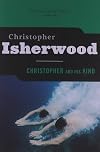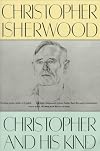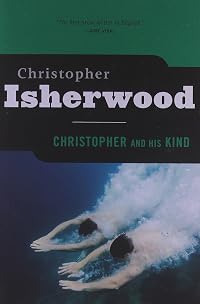
Christopher and His Kind
by Christopher Isherwood
On This Page
Description
An indispensable memoir by one of the most prominent writers of his generationOriginally published in 1976, Christopher and His Kind covers the most memorable ten years in the writer's life--from 1928, when Christopher Isherwood left England to spend a week in Berlin and decided to stay there indefinitely, to 1939, when he arrived in America. His friends and colleagues during this time included W. H. Auden, Stephen Spender, and E. M. Forster, as well as colorful figures he met in Germany and show more later fictionalized in his two Berlin novels--and who appeared again, fictionalized to an even greater degree, in I Am a Camera and Cabaret.What most impressed the first readers of this memoir, however, was the candor with which he describes his life in gay Berlin of the 1930s and his struggles to save his companion, a German man named Heinz, from the Nazis. An engrossing and dramatic story and a fascinating glimpse into a little-known world, Christopher and His Kind remains one of Isherwood's greatest achievements. show lessTags
Recommendations


































Member Recommendations
Member Reviews
I think I was very fortunate to read this novel with just the right amount of background knowledge to know what was going on, but not so much that I knew it all already. In particular, I had recently read the Berlin novels, but I wasn't aware of the story of Christopher's boyfriend, Heinz, which provides the strongest narrative thread in the book. Isherwood's attempts to help Heinz escape the Nazi regime are very compelling and he never spoils the suspense.
I also thought Isherwood cleverly conveyed how much sex was going on in the background of the main events, all with a minimum of jealousy and complication. Really it's only when someone gets the clap that you realise just how madly they've all been shagging away behind the scenes. show more Despite this, the book is not coy, and does reveal that everywhere you suspected characters were having sex in Mr Norris Changes Trains, they were. The nature of Isherwood's sexual and relationship tastes and their relation to class, age, power and the public perception of homosexuality are very interesting to speculate on.
Isherwood's prose is as light and sparkling as ever, with a casual precision that makes it wonderfully easy to read. I shall definitely be adding more of Isherwood's books to my to-read list, maybe even some which don't have gay themes or undercurrents. show less
I also thought Isherwood cleverly conveyed how much sex was going on in the background of the main events, all with a minimum of jealousy and complication. Really it's only when someone gets the clap that you realise just how madly they've all been shagging away behind the scenes. show more Despite this, the book is not coy, and does reveal that everywhere you suspected characters were having sex in Mr Norris Changes Trains, they were. The nature of Isherwood's sexual and relationship tastes and their relation to class, age, power and the public perception of homosexuality are very interesting to speculate on.
Isherwood's prose is as light and sparkling as ever, with a casual precision that makes it wonderfully easy to read. I shall definitely be adding more of Isherwood's books to my to-read list, maybe even some which don't have gay themes or undercurrents. show less
My favorite memoirs are the ones in which the writer is able to distinguish himself in the present from the character he is writing about in his past. The best example I’ve found of this is Christopher Isherwood’s terrific Christopher and His Kind, a memoir of the famous English novelist’s indolent youth in Berlin between 1929 and 1939. This decade covers the period in Isherwood’s life when he was making his name as a novelist and playwright, meeting the eccentric and bohemian characters he immortalized in his Berlin Stories (later transformed into I am a Camera and Caberet), and indulging in the vibrant life of a gay sex tourist, all as the shadow of Nazism was falling over his adopted home.
Isherwood’s memoir is written with show more a frankness that is brisk and refreshing even now, where it must have been positively scandalous on its publication in 1976. The great tension between the experiences of young Christopher (Isherwood writes him in the third person) and the greater knowledge of the narrator (written in the first person) makes an otherwise delightful expat narrative into a brilliant examination of memory, maturity and regret. show less
Isherwood’s memoir is written with show more a frankness that is brisk and refreshing even now, where it must have been positively scandalous on its publication in 1976. The great tension between the experiences of young Christopher (Isherwood writes him in the third person) and the greater knowledge of the narrator (written in the first person) makes an otherwise delightful expat narrative into a brilliant examination of memory, maturity and regret. show less
Makes me want to reread the Berlin Stories now with this added context. I found his insertion of his previous semi-autobiographical writing in this memoir (often with names and pronouns altered for clarity) to be fascinating.
Interesting that while this is the book that sets the record straight, he still refers to himself as "Christopher", not as "I". Really gives you the sense of the old Isherwood peeking back at his younger self, fondly, but as a bit of a mysterious other.
Interesting that while this is the book that sets the record straight, he still refers to himself as "Christopher", not as "I". Really gives you the sense of the old Isherwood peeking back at his younger self, fondly, but as a bit of a mysterious other.
Isherwood, writing in the 70s, reviews his life in the 30s, his homosexuality and his efforts to save his German lover from the Nazi war machine. I had read about Heinz in other books about Isherwood, but I had not realized that he survived the war. Extremely lucky. The relationship led to Isherwood's determination to become a conscientious objector, since he realized he would not kill his lover for being a German soldier and he had no right to be selective and consent to kill someone else's "Heinz". Also contains much about his relationship with W. H. Auden, whom he had known since boyhood, and his "matchmaking" between Erika Mann and Auden. Mann was a lesbian, but needed to marry a British subject before the Nazis deprived her of her show more German citizenship. show less
Ceaselessly meandering, the narrative becomes all-consumingly wayward and aimless after Isherwood leaves Berlin to spread his gay debauchery across the European continent. Stylistically quite bare, apart from the interesting decision to refer to his past self in the omniscient, this book mires itself in the details of the passing month rather than in the vivaciousness of an experienced life, the little details that can evoke emotions. Isherwood finds himself seeded into the literary cream of society, as Auden's BFF and Forster's protege; his love life is a dazzling success. Yet the most intriguing parts of the memoir travelogue proved to be the political ones, the embroilment in the conflicts, as well as those moments where love flings show more itself wildly into his life. Those occurrences bring into being the more thoughtful passages Isherwood masters. show less
This was a very interesting book. I read it as I was working on Cabaret to get a feel for his true story. I do think this book is better if one is familiar with more of his work from and before this time, some of those references had me quite lost as I have only read The Berlin Stories. However, the book chronicles the rise of fascism in Europe so well that it is a bit frightening as we see if unfurl here in the us. I also found it facinating how Isherwood wondered from third person to first in many places showing his continued pondering of the events between 1929 and 1939.
An excellent autobiography of the years 1929 to 1939, best read in close conjunction with his major books from this period, especially the Berlin books. Although it is written in a strange third person style, to highlight that the Christopher of the autobiography is not the same as the author of the autobiography, it is very informative and gossipy too. He also tries to be objectively critical, where he considers necessary, of his younger self.
The book encourages you to go and read his other books from this period, as it sounds as if they will be as fun as this too.
The book encourages you to go and read his other books from this period, as it sounds as if they will be as fun as this too.
Members
- Recently Added By
Lists

Best Autobiographies and Memoirs
370 works; 67 members

Pre-1969 LGBTQ Literature
182 works; 69 members

Favorite Memoirs
64 works; 13 members

Good LGBT fiction for LGBT folk and friends
551 works; 55 members

Books Set in Germany
74 works; 12 members

5 Best 5 Years
71 works; 4 members

End of Your Life Book Club
134 works; 4 members

The Best LGBTQ Nonfiction
218 works; 70 members
Author Information

Christopher Isherwood, born in Cheshire, England, in 1904, wrote both novels and nonfiction. He was a lifelong friend of W.H. Auden and wrote several plays with him, including Dog Beneath the Skin and The Ascent of F6. He lived in Germany from 1928 until 1933 and his writings during this period described the political and social climate of show more pre-Hitler Germany. Isherwood immigrated to the United States in 1939 and became a U.S. citizen in 1946. He lived in California, working on film scripts and adapting plays for television. The musical Cabaret is based on several of Isherwood's stories and on his play, I Am a Camera. His other works include Mr. Norris Changes Trains, about life in Germany in the early 1930s; Down There on a Visit, an autobiographical novel; and Where Joy Resides, published after his death in 1986. (Bowker Author Biography) show less
Some Editions
Awards and Honors
Notable Lists
Series
Belongs to Publisher Series
Work Relationships
Has the adaptation
Common Knowledge
- Canonical title*
- Christopher und die Seinen
- Original title
- De kant van Christopher
- Alternate titles*
- Willkommen in Berlin
- Original publication date
- 2001
- People/Characters
- Christopher Isherwood; Erika Mann; W. H. Auden; Gerald Hamilton
- Important places
- Berlin, Germany
- Important events
- 1920s; 1930s
- Dedication
- To Don Bachardy
- First words
- There is a book called 'Lions and Shadows', published in 1938, which describes Christopher Isherwood's life between the ages of seventeen and twenty-four.
- Quotations
- - from Academums by William Johnson Cory
I'll borrow life, and not grow old,
And nightingales and trees
Shall keep me, though the veins be cold,
As young as Sophocles.
And when I may no longer live
They'... (show all)ll say, who knows the truth,
He gave whate'er he had to give
To freedom and to youth. (Pages 204-205) - Last words
- (Click to show. Warning: May contain spoilers.)At present, he is only four years old.
*Some information comes from Common Knowledge in other languages. Click "Edit" for more information.
Classifications
Statistics
- Members
- 898
- Popularity
- 30,059
- Reviews
- 14
- Rating
- (3.84)
- Languages
- 7 — Danish, Dutch, English, French, German, Italian, Spanish
- Media
- Paper, Audiobook, Ebook
- ISBNs
- 27
- ASINs
- 18