My Father and Myself
by J. R. Ackerley
On This Page
Description
Biography & Autobiography. LGBTQIA+ (Nonfiction.) Nonfiction. HTML:When his father died, J. R. Ackerley was shocked to discover that he had led a secret life. And after Ackerley himself died, he left a surprise of his own—this coolly considered, unsparingly honest account of his quest to find out the whole truth about the man who had always eluded him in life. But Ackerley’s pursuit of his father is also an exploration of the self, making My Father and Myself a pioneering record, at show more once sexually explicit and emotionally charged, of life as a gay man. This witty, sorrowful, and beautiful book is a classic of twentieth-century memoir. show lessTags
Recommendations

















Member Recommendations

Member Reviews
A good many questions have been asked, few receive answers. Some facts have been established, much else may be fiction, the rest is silence. Of my father, my mother, myself, I know in the end practically nothing. Nevertheless, I preserve it, if only because it offers a friendly, unconditional response to my father’s plea in his posthumous letter “I hope people will generally be kind to my memory.”
The quote above could either start this memoir, or end it. It’s that kind of thing. Unknowability is at the heart of the entire work. It’s not tragic, it’s simply the one truth we can take from our own observations. And for that reason, I thought this a wonderful book. Near the end, Ackerley (the younger) round off his story with show more the final years of his mother’s life - she lived for seventeen more years after his father died. She left behind a few personal things: trunks, boxes, bags etc, all precious to her. When the son examines the contents after her death, he finds packages of neatly tissue wrapped papers with bows. Inside were the torn remnants of all the documents the mother ever had, from letters, personal writings, cards, programs etc etc. All mashed up together and incomprehensible. The mother had left the best metaphor of all to round off the story. We simply can never piece it all together, regardless of how much we know.
We can’t know everything. And then after much examination, we could say we hardly know anything. This applies as much about those we know and our own lives. That’s the way it is, we have imperfect information to go on.
I hardly read biographical or memoir material but I have taken a little interest lately – my own father being dead over ten years now – in the telling of the lives of fathers. Having done a little examining and writing myself in this very field of enquiry, I had to hunt this book down. Though reprinted by those good folk at NYRB, still, it’s not a big seller.
One thing I did take an interest in was the observation that the Victorian era dwindled and didn’t quite diminish until about the middle of the 20thC. Much of England seemed unchanged until WW2. Ackerley grew up in an upper middle class, mercantile family. His father a businessman, made his money in banana imports. They all lived well, without much worry for money if at all. About the only thing that this means for Ackerely is that he has nothing at all to lose from honesty, and probity is irrelevant to him. His family all dead by the time he wrote this in 1969, and given to a lifetime of openness in his sexuality, there’s not much hidden. There’s not much left to speculate on after Ackerley talks about his own sexuality. It’s a fascinating chapter or two on the revelations of being a gay man in England, well worth reading just to know how differently some people had to live.
The father subject of the memoir started off in the military and then had a couple of odd relationships with ‘friends’, older men with means, who basically kept him housed, and financed just so he can be around them. These men turn out to be homosexuals, but at the time Ackerley thinks in relation to one (fellow who was a count) that he may well have been only exploring his homosexuality from a distance, so keeping a likable and handsome young man around – Ackerley’s father – was as close as he needed to get to this ‘unspeakable’ matter. Our memoirist himself has no qualms about explaining his sexuality from boarding school masturbation, to his own unfulfilled search for love among the working class, trade and sailor types he tried so hard to know and love. He wanted no more than a special friend, the homosexual man’s equivalent to marriage in a land where sodomy laws were actively prosecuted late into the 20thC.
Who the father is, becomes a quest for the son here. The young father’s strange relationships for a young man in Victorian times getting by on nothing more than a brief military career, no capital, no education to speak of, the elder Ackerley is a fascinating example of a social climber using nothing more than his wits, his looks and a capacity to take risks that work. He marries into minor royalty, his first wife dies, he has a fling with an actress and fathers three children with her living together. All ‘accidents’. Marries her after WW1 in what seemed an act of remorse after the loss of the eldest son to the war, and as we discover later, dies with a second ‘wife’ and three other children living around the corner unknown to anyone. So you can see that the unknowable is everywhere. Ackerley the son has nothing but curious secrets at his disposal and a father with whom three or four near ‘intimate conversations’ never quite happened between father and son.
The basis of this story is fascinating and there have been recently a couple of TV shows that revel in this kind of thing. But for Ackerley the son, it’s an intellectual exercise. What can one ever know about anyone. An entire book leaves us with that worthwhile puzzling but compelling thought.
I might read Edmund Gosse and Turgenev next. show less
The quote above could either start this memoir, or end it. It’s that kind of thing. Unknowability is at the heart of the entire work. It’s not tragic, it’s simply the one truth we can take from our own observations. And for that reason, I thought this a wonderful book. Near the end, Ackerley (the younger) round off his story with show more the final years of his mother’s life - she lived for seventeen more years after his father died. She left behind a few personal things: trunks, boxes, bags etc, all precious to her. When the son examines the contents after her death, he finds packages of neatly tissue wrapped papers with bows. Inside were the torn remnants of all the documents the mother ever had, from letters, personal writings, cards, programs etc etc. All mashed up together and incomprehensible. The mother had left the best metaphor of all to round off the story. We simply can never piece it all together, regardless of how much we know.
We can’t know everything. And then after much examination, we could say we hardly know anything. This applies as much about those we know and our own lives. That’s the way it is, we have imperfect information to go on.
I hardly read biographical or memoir material but I have taken a little interest lately – my own father being dead over ten years now – in the telling of the lives of fathers. Having done a little examining and writing myself in this very field of enquiry, I had to hunt this book down. Though reprinted by those good folk at NYRB, still, it’s not a big seller.
One thing I did take an interest in was the observation that the Victorian era dwindled and didn’t quite diminish until about the middle of the 20thC. Much of England seemed unchanged until WW2. Ackerley grew up in an upper middle class, mercantile family. His father a businessman, made his money in banana imports. They all lived well, without much worry for money if at all. About the only thing that this means for Ackerely is that he has nothing at all to lose from honesty, and probity is irrelevant to him. His family all dead by the time he wrote this in 1969, and given to a lifetime of openness in his sexuality, there’s not much hidden. There’s not much left to speculate on after Ackerley talks about his own sexuality. It’s a fascinating chapter or two on the revelations of being a gay man in England, well worth reading just to know how differently some people had to live.
The father subject of the memoir started off in the military and then had a couple of odd relationships with ‘friends’, older men with means, who basically kept him housed, and financed just so he can be around them. These men turn out to be homosexuals, but at the time Ackerley thinks in relation to one (fellow who was a count) that he may well have been only exploring his homosexuality from a distance, so keeping a likable and handsome young man around – Ackerley’s father – was as close as he needed to get to this ‘unspeakable’ matter. Our memoirist himself has no qualms about explaining his sexuality from boarding school masturbation, to his own unfulfilled search for love among the working class, trade and sailor types he tried so hard to know and love. He wanted no more than a special friend, the homosexual man’s equivalent to marriage in a land where sodomy laws were actively prosecuted late into the 20thC.
Who the father is, becomes a quest for the son here. The young father’s strange relationships for a young man in Victorian times getting by on nothing more than a brief military career, no capital, no education to speak of, the elder Ackerley is a fascinating example of a social climber using nothing more than his wits, his looks and a capacity to take risks that work. He marries into minor royalty, his first wife dies, he has a fling with an actress and fathers three children with her living together. All ‘accidents’. Marries her after WW1 in what seemed an act of remorse after the loss of the eldest son to the war, and as we discover later, dies with a second ‘wife’ and three other children living around the corner unknown to anyone. So you can see that the unknowable is everywhere. Ackerley the son has nothing but curious secrets at his disposal and a father with whom three or four near ‘intimate conversations’ never quite happened between father and son.
The basis of this story is fascinating and there have been recently a couple of TV shows that revel in this kind of thing. But for Ackerley the son, it’s an intellectual exercise. What can one ever know about anyone. An entire book leaves us with that worthwhile puzzling but compelling thought.
I might read Edmund Gosse and Turgenev next. show less
"I was born in 1896 and my parents were married in 1919."
A most intriguing memoir of what-ifs and no resolution. Upon his father's death, Ackerley realises how little he knew about his own father's past and explores it with what personal and public resources available (it's not everyday that one's father is known as the Banana King of London).
A little historical aside: England and Wales decriminalised same-sex sexual relations in 1967, while this book was published posthumously in 1968 (although Ackerley claimed he had written it 20 years earlier and just chucked it in a drawer).
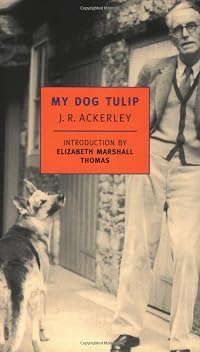
As an openly gay man at his time of writing, Ackerley grapples with the lost opportunities of discussing his sexuality with his father. He however was very open show more with the reader (surprisingly explicit at times - but maybe not surprising when I consider his weird book My Dog Tulip and his father's sometime bawdiness).
As he does, I also wonder how this memoir would've been like if Stockley hadn't convinced him to burn his father's desk of letters. Considering his father's absolute support of him, wanting to read his basically-autobiographical works and not pressuring him to join the fruit business, I think the father and son would've had even more to bond over.
Despite the title, the book actually delves into more than just the two titular people. At times disjointed, its blend of family unconventionality and good writing launches it into the realm of a classic memoir. Knowing next to nothing about Ackerley is probably the best way to get into this. show less
A most intriguing memoir of what-ifs and no resolution. Upon his father's death, Ackerley realises how little he knew about his own father's past and explores it with what personal and public resources available (it's not everyday that one's father is known as the Banana King of London).
A little historical aside: England and Wales decriminalised same-sex sexual relations in 1967, while this book was published posthumously in 1968 (although Ackerley claimed he had written it 20 years earlier and just chucked it in a drawer).
As an openly gay man at his time of writing, Ackerley grapples with the lost opportunities of discussing his sexuality with his father. He however was very open show more with the reader (surprisingly explicit at times - but maybe not surprising when I consider his weird book My Dog Tulip and his father's sometime bawdiness).
As he does, I also wonder how this memoir would've been like if Stockley hadn't convinced him to burn his father's desk of letters. Considering his father's absolute support of him, wanting to read his basically-autobiographical works and not pressuring him to join the fruit business, I think the father and son would've had even more to bond over.
Despite the title, the book actually delves into more than just the two titular people. At times disjointed, its blend of family unconventionality and good writing launches it into the realm of a classic memoir. Knowing next to nothing about Ackerley is probably the best way to get into this. show less
Art is illusion, of course, but this memoir gives at least the illusion of breathtaking candour and unflinching self-disclosure in which a desire for the reader's approval plays no part. The ostensible theme of the book, as the title suggests, is the author's lack of curiosity about or insight into his father's inner or indeed outer life, but in the process we learn more about the author's life than we probably know about most of our supposed intimates. I found it a consistently fascinating read.
The author learns as an adult that his father had a second family. He puzzles as to why he had not been trusted with the secret. His own secret was that he was a homosexual. Unfortunately he could not reconcile his sexual attraction to working class men with his romantic desire for an Ideal Friend. Not perhaps unusual in the England of the time. His account of experience in WWI is harrowing. At one point his elder brother is lying wounded between the trenches. Official policy forbade forays to retrieve the wounded and he is torn between his duty as an officer and his filial feeling. Fortunately for the author his brother crawls back to his own lines, only to die later in a different attack. I was amazed to find that, according to show more Ackerley, His Majesty's Brigade of Guards has a long history in homosexual prostitution, given to hanging about in certain pubs waiting for some kind gentleman to stand them a few pints and the traditional tip of a pound (about $5) to provide a bit of fun. Horse Guards cost more--no explanation of why--were their uniforms more attractive, were they more attractive, did gentlemen enjoy a horsy aroma? Ultimately the book is sad. The author concludes that his happiest period was one in which he gave up the pursuit of human love for the faithfulness and uncritical companionship of a dog. show less
This is an excellent memoir/book. Ackerley writes beautifully, he's open and honest (amazingly so for a Brit!) and joy to read. This could well be fiction, but it's not, or only so far as everything written has a trace of fiction. If you find, late in your life, that you didn't ask enough questions of your parents while they were still alive, you'll find you're not alone and in fact, in good company.
Perhaps the best of the three Ackerley books I've read, certainly the most forthright. The book is almost built around revelation, but Ackerley seems to know that his revelations are insufficient to carry the narrative, and so he resorts to a welcome introspective candor that stops well this side of being overwhelming. It's dedicated to Tulip.
The book is an account and analysis of the distant but cordial relationship between the author and his father. As such it is forthright, honest, and painful for the opportunities for closeness missed. Through a series of revelations, it's clear that the father has led a secret life which adds to the father/son distance. The author attempts to present the reader with these revelations in the same shocking way they were presented to him but his description of his father's early life gives away many of the surprises to the reader. Reading the Introduction first would blow the whole surprise. Wait.
Members
- Recently Added By
Lists

Best Autobiographies and Memoirs
370 works; 67 members

Best family memoirs
28 works; 11 members

Best Biographies
216 works; 26 members

Sexuality & Gender
160 works; 3 members

Read This Next
120 works; 3 members

Books Read in 2017
4,249 works; 130 members

Five star books
1,755 works; 107 members

The Best LGBTQ Nonfiction
129 works; 52 members
Author Information

11+ Works 2,135 Members
Awards and Honors
Series
Belongs to Publisher Series
Work Relationships
Common Knowledge
- Canonical title
- My Father and Myself
- Original title
- My Father and Myself
- Original publication date
- 1968
- People/Characters
- J. R. Ackerley; Roger Ackerley
- Important places
- London, England, UK; Portsmouth, Hampshire, England, UK
- Related movies
- Secret Orchards (1979 | IMDb)
- Dedication
- To Tulip
- First words
- I was born in 1896 and my parents were married in 1919.
- Last words*
- (Click to show. Warning: May contain spoilers.)Cercavo, a volte prima di un incontro, a volte a occhi chiusi durante l'atto agognato ma tanto temuto, di mettermi in uno stato d'animo propizio, dicendomi che ero perfettamente sereno, a mio agio, ben accetto, libero, felice e al sicuro, che tutto era assolutamente "a posto". Certe volte ci riuscivo; spesso, forse, era proprio la paura della frustrazione e dell'umiliazione di un fiasco che mi faceva fallire.
*Some information comes from Common Knowledge in other languages. Click "Edit" for more information.
Classifications
- Genres
- Biography & Memoir, LGBTQ+, Nonfiction
- DDC/MDS
- 306.7662092 — Society, government, & culture Social sciences, sociology & anthropology Social Behavior - Dating, Marriage, Divorce Sexual relations Sexual orientation, transgender identity, intersexuality Homosexuality Male homosexuality History, geographic treatment, biography Biography
- LCC
- HQ76.3 .G7 .A24 — Social sciences The family. Marriage, Women and Sexuality The Family. Marriage. Women Sexual life Homosexuality. Lesbianism
- BISAC
Statistics
- Members
- 521
- Popularity
- 57,276
- Reviews
- 10
- Rating
- (3.92)
- Languages
- 5 — Dutch, English, French, Italian, Spanish
- Media
- Paper, Ebook
- ISBNs
- 16
- ASINs
- 10