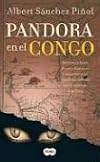
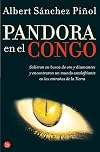
Pandora in the Congo
by Albert Sánchez Piñol
On This Page
Description
"This book is a gripping tale that ventures to the world's darkest places - and beyond - to the furthest reaches of the human mind..." "It is 1914. In the heart of the Belgian Congo Garvey, a bedraggled British manservant, emerges from the jungle. He is the lone survivor of a mining expedition in which both his masters have died, and all of the party's African porters have fled. With him, he carries two huge diamonds." "From his prison cell in London, Garvey recounts his horrific and show more thrilling ordeal. Young Tommy Thomson is assigned to transcribe the story, and only he can untangle the extraordinary mysteries of the Garvey case."--BOOK JACKET. show lessTags
Recommendations




























Member Recommendations
bluepiano Though they've quite a different feel to each other, these two books have a lot in common: jungle setting, fantastical elements made credible, ethical questions, and tricks of narration. And they're both first-rate adventure yarns.
Member Reviews
Just finished Pandora in the Congo by Abert Pinol, translated from the Catalan; quite a peculiar mash-up of genres. Looked at from a distance, as it were, it's a meta-meta-fiction - a ripping tale inside a prisoner's plaint inside a courtroom case in GB circa WWI as told to a ghostwriter's ghostwriter. But - mostly it's a sendup of the white mans burden genre of African adventure. The prisoner, Marcus Garvey, has washed back up on British shores - the sole survivor of a disastrous expedition into the Congo led by two wastrel scions of Brit. aristocracy, planning to recoup all their prior failures through the mineral wealth of the Congo. He's jailed for suspected murder of the brothers for the two enormous diamonds that are all that he's show more had upon his return.
The expedition turns immediately into a horror story as the brothers treat one and all w/ a malicious abandon, marching into the heart beyond the heart of darkness. For not only do they find gold - they find humanoid aliens - who initially appear as white natives but who turn into ever more effective opponents. Of course a love story emerges - Marcus and an alien lady fall for each other, to the disgust of the brothers. Battles and batterings occur. And, most of all, stories under, through and within stories emerge.
If you are willing to totally suspend belief (and ignore errors of fact - as ripping yarns were wont to do) there IS an oddly exciting adventure story here (translated from the Catalan) that bogs down a bit every now and again in its own cleverness and perverseness. But - hey - despite knowing the tricksy nature of the beast in advance, i still got well taken in. So, that's good - I think.
3.5 stars - if you like this sort of thing. show less
The expedition turns immediately into a horror story as the brothers treat one and all w/ a malicious abandon, marching into the heart beyond the heart of darkness. For not only do they find gold - they find humanoid aliens - who initially appear as white natives but who turn into ever more effective opponents. Of course a love story emerges - Marcus and an alien lady fall for each other, to the disgust of the brothers. Battles and batterings occur. And, most of all, stories under, through and within stories emerge.
If you are willing to totally suspend belief (and ignore errors of fact - as ripping yarns were wont to do) there IS an oddly exciting adventure story here (translated from the Catalan) that bogs down a bit every now and again in its own cleverness and perverseness. But - hey - despite knowing the tricksy nature of the beast in advance, i still got well taken in. So, that's good - I think.
3.5 stars - if you like this sort of thing. show less
This, as Tommy Thompson notes part way through the book, is a story of a story. Specifically, the story of Tommy Thompson's writing of Marcus Garvey's experiences in the Congo. He is recruited by Marcus's lawyer to write the story of his experiences in the Congo as an "extralegal" part of his defence: Marcus is on trial for murder. Tommy's and Marcus's narratives are woven together through the book, forming a novel that's as clever as it is gripping.
It started well - the first chapter had me laughing out loud and reading excerpts to my husband of a plot outline for an outlandish pulp novel that Tommy is ghost-writing. Then the deaths start and the tone gets darker as he is employed to write Marcus's story. Both stories are exciting and show more well-paced. Occasionally I would find myself getting frustrated with things that looked distinctly like plot holes, or the way one plot appeared to have turned into a strange homage to Journey to the Centre of the Earth. Nonetheless, the quality both of the story and Lethem's excellent translation meant I wasn't about to stop reading. And it definitely paid off - this is a far cleverer book than it initially seems, which manages to mix in meditations on race, truth and love while still telling a ludicrously compelling story.
I loved this, although I do have one complaint - it needs to come with a warning about how late you're going to stay up thinking to yourself "just one more chapter...." show less
It started well - the first chapter had me laughing out loud and reading excerpts to my husband of a plot outline for an outlandish pulp novel that Tommy is ghost-writing. Then the deaths start and the tone gets darker as he is employed to write Marcus's story. Both stories are exciting and show more well-paced. Occasionally I would find myself getting frustrated with things that looked distinctly like plot holes, or the way one plot appeared to have turned into a strange homage to Journey to the Centre of the Earth. Nonetheless, the quality both of the story and Lethem's excellent translation meant I wasn't about to stop reading. And it definitely paid off - this is a far cleverer book than it initially seems, which manages to mix in meditations on race, truth and love while still telling a ludicrously compelling story.
I loved this, although I do have one complaint - it needs to come with a warning about how late you're going to stay up thinking to yourself "just one more chapter...." show less
 This review was written for LibraryThing Early Reviewers.
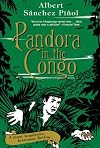
I got this as a reviewing freebie from LibraryThing, which was good because with its title and retro cover of cartoonish man emerging from jungle, I would probably never have picked it up in a bookshop. In fact, it turns out to be a postmodern pastiche of African adventure novels, with a strong metafictional element (the narrator has been told the story by a suspected murderer awaiting trial, and all along he (and we the reader) have to work out whether to believe the increasingly implausible tale).
Knowing all of that would have made me more interested, although metafiction has evolved from an interesting literary experiment into something of a craze, and this book raised no new questions for me about the nature of literary creation and show more the contradictions of the storytellers’ art. The twist at the end was therefore expected — I couldn’t predict the full details, but had some idea of the new information that would come to light, showing many of the narrator’s assumptions to be false, casting doubt on the rest of the narrative, etc. etc. Maybe I’ve just read too many similar works lately, but the “story within a story within a story” thing is getting a little tired for me. It detracts from the story itself and focuses attention on the storyteller and his art, about whom there is only a limited amount you can meaningfully say.
Of course, the novel instantly recalls “Heart of Darkness”, from its setting in the Congo to its journey deep, deep into the jungle, where the party meets with unspeakable horrors. And, of course, Conrad used the “story within a story” approach too, having his narrator tell the story as related to him by Marlow (although Conrad is less interested in the role of the unnamed narrator than the postmodern Pinol). Pinol’s attitude is much more critical of colonialism, though. The English aristocratic brothers who lead the expedition are not corrupted by the “Dark Continent” — they bring their barbarity with them (one was a fraudster, the other a paedophile, back in England). They are cold-blooded, vicious and amoral from start to finish, and Pinol has his narrator, Tommy Thomsen, express the appropriate moral outrage as the prisoner, Marcus Garvey, continues his story. (Apparently Pinol has a fondness for playing with famous names, e.g. Marcus Garvey, but for me it was offputting and I could see no good reason for it).
Yet despite the clarity of Pinol’s moral position, the troublesome images are still there. The “Negroes” in the book are still all dumb, docile creatures, too stupid to escape without the intervention of their marginally more intelligent leader Pepe (named by Marcus after a former pet bear). Their first appearance in the book is when they “sat apathetically, squatting like frogs with their elbows over their knees, waiting for someone to give them marching orders.” Apart from a slight variation in the animal images used to describe them, this is essentially how they appear throughout the book. Yes, of course, these are Marcus Garvey’s descriptions, not Pinol’s. Yes, later developments throw a lot of doubt on Marcus’s version of events. But Conrad, too, distanced himself from the descriptions by placing them in the mouth of another narrator, and yet they are still problematic.
Chinua Achebe famously denounced Joseph Conrad as a racist for his depiction of Africans in “Heart of Darkness.” I have no doubt that Pinol’s intention was to overturn this kind of depiction, but the trouble is that in imitating something, you have to take on a lot of its faults, and so a lot of the racist elements in the novels Pinol is parodying also infect his own. Achebe’s main criticism of Conrad was that he de-humanised Africans, reducing them to a backdrop for the psychological developments of European heroes. I didn’t really feel that Pinol overturned any old stereotypes in his book, and may inadvertently have reinforced some. Even the one African character, Modepa, who exists outside of Marcus’s descriptions, is not really human. He is silent, inert, completely lacking in initiative, waiting for years on the instruction of one white man for another white man to say the words that activate him and bring him into the plot.
My conclusion: if you want postmodern metafiction, read “Atonement”. If you want an antidote to imperial triumphalism, read “Britain’s Gulag.” This mishmash of different styles and stories is diverting for a while, but ultimately unsatisfying. show less
Knowing all of that would have made me more interested, although metafiction has evolved from an interesting literary experiment into something of a craze, and this book raised no new questions for me about the nature of literary creation and show more the contradictions of the storytellers’ art. The twist at the end was therefore expected — I couldn’t predict the full details, but had some idea of the new information that would come to light, showing many of the narrator’s assumptions to be false, casting doubt on the rest of the narrative, etc. etc. Maybe I’ve just read too many similar works lately, but the “story within a story within a story” thing is getting a little tired for me. It detracts from the story itself and focuses attention on the storyteller and his art, about whom there is only a limited amount you can meaningfully say.
Of course, the novel instantly recalls “Heart of Darkness”, from its setting in the Congo to its journey deep, deep into the jungle, where the party meets with unspeakable horrors. And, of course, Conrad used the “story within a story” approach too, having his narrator tell the story as related to him by Marlow (although Conrad is less interested in the role of the unnamed narrator than the postmodern Pinol). Pinol’s attitude is much more critical of colonialism, though. The English aristocratic brothers who lead the expedition are not corrupted by the “Dark Continent” — they bring their barbarity with them (one was a fraudster, the other a paedophile, back in England). They are cold-blooded, vicious and amoral from start to finish, and Pinol has his narrator, Tommy Thomsen, express the appropriate moral outrage as the prisoner, Marcus Garvey, continues his story. (Apparently Pinol has a fondness for playing with famous names, e.g. Marcus Garvey, but for me it was offputting and I could see no good reason for it).
Yet despite the clarity of Pinol’s moral position, the troublesome images are still there. The “Negroes” in the book are still all dumb, docile creatures, too stupid to escape without the intervention of their marginally more intelligent leader Pepe (named by Marcus after a former pet bear). Their first appearance in the book is when they “sat apathetically, squatting like frogs with their elbows over their knees, waiting for someone to give them marching orders.” Apart from a slight variation in the animal images used to describe them, this is essentially how they appear throughout the book. Yes, of course, these are Marcus Garvey’s descriptions, not Pinol’s. Yes, later developments throw a lot of doubt on Marcus’s version of events. But Conrad, too, distanced himself from the descriptions by placing them in the mouth of another narrator, and yet they are still problematic.
Chinua Achebe famously denounced Joseph Conrad as a racist for his depiction of Africans in “Heart of Darkness.” I have no doubt that Pinol’s intention was to overturn this kind of depiction, but the trouble is that in imitating something, you have to take on a lot of its faults, and so a lot of the racist elements in the novels Pinol is parodying also infect his own. Achebe’s main criticism of Conrad was that he de-humanised Africans, reducing them to a backdrop for the psychological developments of European heroes. I didn’t really feel that Pinol overturned any old stereotypes in his book, and may inadvertently have reinforced some. Even the one African character, Modepa, who exists outside of Marcus’s descriptions, is not really human. He is silent, inert, completely lacking in initiative, waiting for years on the instruction of one white man for another white man to say the words that activate him and bring him into the plot.
My conclusion: if you want postmodern metafiction, read “Atonement”. If you want an antidote to imperial triumphalism, read “Britain’s Gulag.” This mishmash of different styles and stories is diverting for a while, but ultimately unsatisfying. show less
This review was written for LibraryThing Early Reviewers.I got this book as part of LibraryThing's Early Reviewer programme, and probably wouldn't have picked it up if I'd simply seen it in the bookshop. But the description in the ER programme intrigued me, and I'm glad I read it.
It's a multi-layered pastiche and parody of the old pulp African adventure stories, with two interlocking stories set early in the twentieth century, narrated by one of the protagonists as an old man late in the twentieth century. As the novel opens the narrator, Tommy Thomson, is scraping a living as a young man by ghost writing pulp adventure stories. He's frustrated by the need to pander to the extreme racism and disregard for facts of the pulp market. He loses the ghost writing job, but is offered the chance to show more write a true African adventure story -- ghost-writing the story of a man who is awaiting trial for the murder of his two employers on a gold-hunting expedition in the Congo.
Tommy is drawn ever deeper into Marcus Garvey's story. It's very like the pulp adventures he's written before, but with one twist -- this time it's a tale of brutal and amoral English aristocrats abusing first the black Africans and then a strange race of underground people, white but not entirely human, with a low-class servant who is the flawed hero. This tale of derring-do is interwoven with the story of Tommy's own life over the course of the years he writes Garvey's story, interrupted by his service in the First World War. Tommy thinks of his own life as boring and humdrum, but it's an enchanting read with some fascinating secondary characters.
There are multiple levels of unreliable narration, so things aren't quite as they seem. Part of the game is deciding who is unreliable and how far, and the author plays fair in the end. In the meantime you get a cracking read, with a lot of homages to other works.
I enjoyed the book a great deal, but I did have some minor problems with it. There are a lot of anachronisms, a couple of which threw me out of the story (in particular, singing "God save the Queen" in court at a time when a King was on the throne). These felt like mistakes by the author rather than being deliberate. One of the signals that part of the story is unreliable simply doesn't work if you're used to reading science fiction or magic realism. If you're an sf fan, switch into mainstream reading protocols when you're reading this book. And be warned that there is some gruesome imagery which might be a bit much for some readers.
One particular point -- this is a translation of a novel written in Catalan. Translations vary a lot in quality and can sometimes feel stiff and lifeless, but this one is excellent. It flows very well and is a joy to read.
Enormous fun, and well worth the time. show less
It's a multi-layered pastiche and parody of the old pulp African adventure stories, with two interlocking stories set early in the twentieth century, narrated by one of the protagonists as an old man late in the twentieth century. As the novel opens the narrator, Tommy Thomson, is scraping a living as a young man by ghost writing pulp adventure stories. He's frustrated by the need to pander to the extreme racism and disregard for facts of the pulp market. He loses the ghost writing job, but is offered the chance to show more write a true African adventure story -- ghost-writing the story of a man who is awaiting trial for the murder of his two employers on a gold-hunting expedition in the Congo.
Tommy is drawn ever deeper into Marcus Garvey's story. It's very like the pulp adventures he's written before, but with one twist -- this time it's a tale of brutal and amoral English aristocrats abusing first the black Africans and then a strange race of underground people, white but not entirely human, with a low-class servant who is the flawed hero. This tale of derring-do is interwoven with the story of Tommy's own life over the course of the years he writes Garvey's story, interrupted by his service in the First World War. Tommy thinks of his own life as boring and humdrum, but it's an enchanting read with some fascinating secondary characters.
There are multiple levels of unreliable narration, so things aren't quite as they seem. Part of the game is deciding who is unreliable and how far, and the author plays fair in the end. In the meantime you get a cracking read, with a lot of homages to other works.
I enjoyed the book a great deal, but I did have some minor problems with it. There are a lot of anachronisms, a couple of which threw me out of the story (in particular, singing "God save the Queen" in court at a time when a King was on the throne). These felt like mistakes by the author rather than being deliberate. One of the signals that part of the story is unreliable simply doesn't work if you're used to reading science fiction or magic realism. If you're an sf fan, switch into mainstream reading protocols when you're reading this book. And be warned that there is some gruesome imagery which might be a bit much for some readers.
One particular point -- this is a translation of a novel written in Catalan. Translations vary a lot in quality and can sometimes feel stiff and lifeless, but this one is excellent. It flows very well and is a joy to read.
Enormous fun, and well worth the time. show less
This review was written for LibraryThing Early Reviewers.I picked this up hoping for a fun adventure story. It started off in a sort of comic book, fanciful, comedic style, which I found quite refreshing and promising. Unfortunately, the author repeatedly switched from this comic style to a dense, depressing realism and back again throughout the book, which ultimately destroyed the story. He seemed to want to create a thrilling adventure, but also wanted to make a point. Unfortunately, he allowed a very simple point (that despite the evil in the world life is worth living) to destroy an otherwise interesting story. Had he simply told the story of the Congo, which would have made the book about half its length, this would have been a much better book.
Pandora in the Congo is two stories. The first story is the story of Tommy Thomson and how he writes and unravels the second story, Garvey’s story, told to Thomson from his prison cell, of adventure in the Congo.
So we hear two stories. Often this can be a problem for the reader who finds herself invested in one story and not the other. There is no problem here, no temptation to skip over Thomson’s parts and get back to the Congo, both stories are exciting, shocking and fast paced.
Garvey’s story brings us adventure, love, good guys and bad guys. He takes us into the Congo, exploreing the exotic setting, the oppressive heat and the extraordinary cruelty. It would be foolish of a novel set at the turn of the century not to deal show more with race, servitude and slavery. Both the expeditions appalling treatment of the natives and the expeditions treatment at the hands of the whiter than white Tectons shows it in a way that is not too sentimental or condescending.
Thomson doesn’t have the same exciting African adventures but he is just as much of a joy to read. He describes the life of a ghost writer with wit and charm. He is, on occasion, too smug and knowing but that only adds to the story.
I was slightly annoyed at opening the book. The first page tells us that Pandora in the Congo is part of a trilogy. No problem as far as the novels ability to stand on its own but irritating all the same. I really wish this information would be included on the cover so the reader knows what they are getting.
My only other complaint is the complaint of a girl guide. There is an anachronistic mention of the boy scouts which is, I suppose, justifiable but it still annoyed me. Possibly just me though. show less
So we hear two stories. Often this can be a problem for the reader who finds herself invested in one story and not the other. There is no problem here, no temptation to skip over Thomson’s parts and get back to the Congo, both stories are exciting, shocking and fast paced.
Garvey’s story brings us adventure, love, good guys and bad guys. He takes us into the Congo, exploreing the exotic setting, the oppressive heat and the extraordinary cruelty. It would be foolish of a novel set at the turn of the century not to deal show more with race, servitude and slavery. Both the expeditions appalling treatment of the natives and the expeditions treatment at the hands of the whiter than white Tectons shows it in a way that is not too sentimental or condescending.
Thomson doesn’t have the same exciting African adventures but he is just as much of a joy to read. He describes the life of a ghost writer with wit and charm. He is, on occasion, too smug and knowing but that only adds to the story.
I was slightly annoyed at opening the book. The first page tells us that Pandora in the Congo is part of a trilogy. No problem as far as the novels ability to stand on its own but irritating all the same. I really wish this information would be included on the cover so the reader knows what they are getting.
My only other complaint is the complaint of a girl guide. There is an anachronistic mention of the boy scouts which is, I suppose, justifiable but it still annoyed me. Possibly just me though. show less
This review was written for LibraryThing Early Reviewers.I have enormously mixed feelings about this novel.
On the one hand, it was a cracking, twisting parody and adventure, with nicely interlocking stories and tricky levels of doubt, but on the other it was frequently heavy-handed and fell into many of the same potholes, plot-holes, and attitudes as the works the author and the writer in the novel was exploring and mocking.
There were errors that became intensely irritating (singing "God Save the Queen" in an era when there was a King, for example) which intrude so far as to pull your mind entirely out of the grasp of the story, and too many clumsy moments in general. But it was also funny, engaging, and deeply creepy, though perhaps not enough to lift free and clear into success.
On the one hand, it was a cracking, twisting parody and adventure, with nicely interlocking stories and tricky levels of doubt, but on the other it was frequently heavy-handed and fell into many of the same potholes, plot-holes, and attitudes as the works the author and the writer in the novel was exploring and mocking.
There were errors that became intensely irritating (singing "God Save the Queen" in an era when there was a King, for example) which intrude so far as to pull your mind entirely out of the grasp of the story, and too many clumsy moments in general. But it was also funny, engaging, and deeply creepy, though perhaps not enough to lift free and clear into success.
This review was written for LibraryThing Early Reviewers.Members
- Recently Added By
Lists

Wild Places
5 works; 1 member
Author Information

19+ Works 2,336 Members
Some Editions
Awards and Honors
Awards
Series
Belongs to Publisher Series
La Campana Tocs (47)
Common Knowledge
- Canonical title
- Pandora in the Congo
- Original title
- Pandora al Congo
- Original publication date
- 2005
- Important places*
- Congo
- First words
- This story began with three funerals and ended with one broken heart.
- Original language
- Catalan
*Some information comes from Common Knowledge in other languages. Click "Edit" for more information.
Classifications
Statistics
- Members
- 444
- Popularity
- 69,360
- Reviews
- 25
- Rating
- (3.62)
- Languages
- 13 — Catalan, Danish, Dutch, English, Estonian, French, German, Italian, Polish, Portuguese, Russian, Croatian, Spanish
- Media
- Paper, Audiobook, Ebook
- ISBNs
- 26
- ASINs
- 5