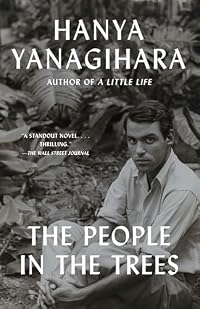
The People in the Trees
by Hanya Yanagihara
On This Page
Description
Joining an anthropologist's 1950 expedition to discover a lost tribe on a remote Micronesian island, a young doctor investigates and proves a theory that the tribe's considerable longevity is linked to a rare turtle, a finding that brings worldwide fame and unexpected consequence.Tags
Recommendations





Member Recommendations

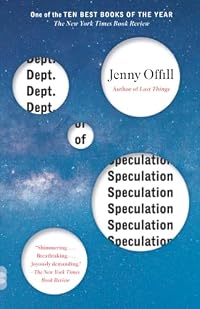
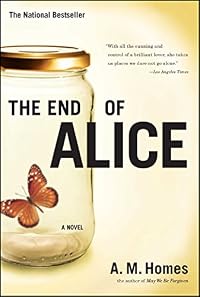
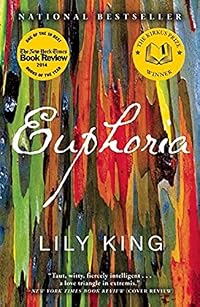
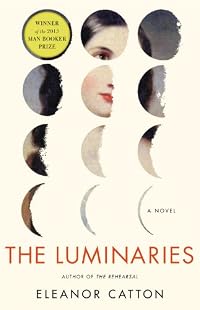
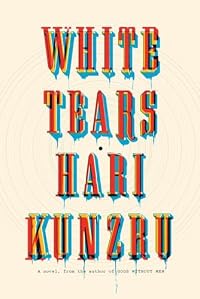
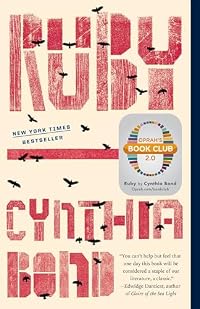
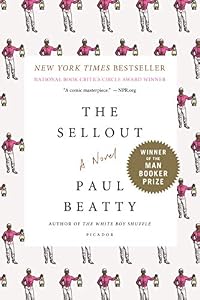
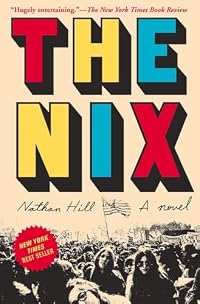
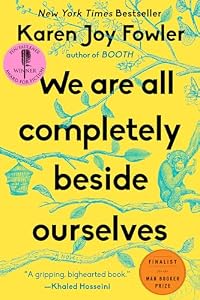
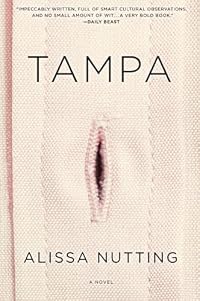
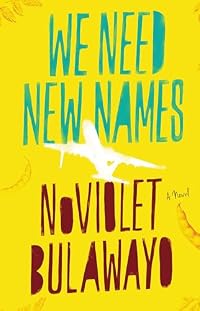
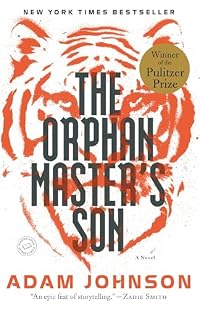
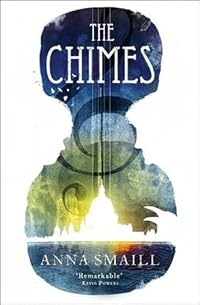
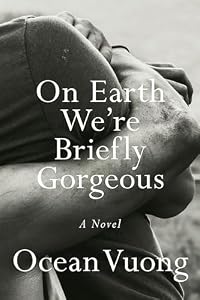
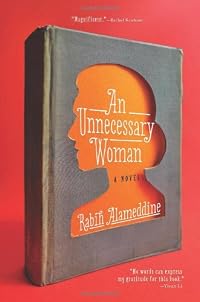
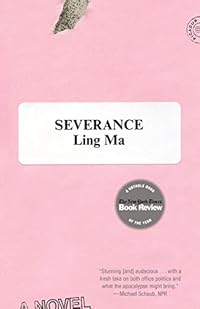
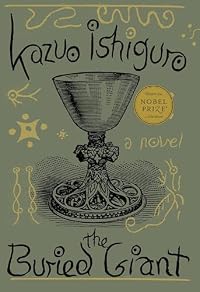
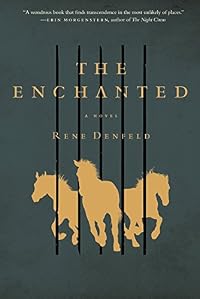
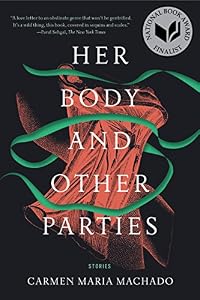
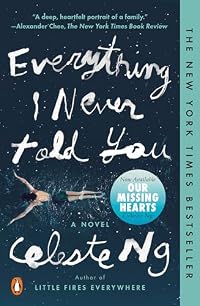
bluepiano Though they've quite a different feel to each other, these two books have a lot in common: jungle setting, fantastical elements made credible, ethical questions, and tricks of narration. And they're both first-rate adventure yarns. Also: 'The Genius and the Boys', a documentary film about the person & events The People in the Trees was based on.
10
Member Reviews
The People in the Trees is a literary novel structured on the actual career and crimes of Daniel Carleton Gajdusek. Like Gajdusek, our narrator, Norton Perina is a doctor who makes a major medical discovery in the South Pacific, winning the Nobel Prize in medicine. He then adopts over fifty children from the place where he did his fieldwork, before his life is undone by verified accusations of systematic sexual abuse of his adopted children. I don't know much about Gajdusek beyond the Wikipedia summary, so I can't say what's lifted aside from these major points, but it's a clear inspiration.
Norton is born in Indiana, drifts through medical school, and as a adventure finds himself on a three person expedition to a remote island in the show more South Pacific. There, deep in the jungle, he discovers a tribe of primitive people who have achieved a limited kind of immortality. The flesh of a turtle halts aging, except for the brain. People can live for centuries, but experience severe mental decline. Norton parley's his discovery into immense scientific success, but the new notoriety of the islands destroys them in a medical imperialist goldrush. As a matter of amends, Norton finds himself adopting a child or two from the islands on each one of his yearly trips, but his beneficence conceals a lust, which is his undoing. The book is structured as a series of letter's to Norton's closest friend and scientific collaborator, who adds commentary in footnotes, and they're monstrous, arrogant, banal, and utterly compelling.
Literary fiction is not my thing, and the basic outlines of Norton/Gajdusek's life are strong enough to hang a lot of story on, but this novel feels blinkered by its points of view so close to the narrator, and it's sense of Norton's righteousness even in the face of his sins. I'm not sure what the right balance of sympathy for a monster is, but this novel doesn't quite hit it. Very good, a hair from great. show less
Norton is born in Indiana, drifts through medical school, and as a adventure finds himself on a three person expedition to a remote island in the show more South Pacific. There, deep in the jungle, he discovers a tribe of primitive people who have achieved a limited kind of immortality. The flesh of a turtle halts aging, except for the brain. People can live for centuries, but experience severe mental decline. Norton parley's his discovery into immense scientific success, but the new notoriety of the islands destroys them in a medical imperialist goldrush. As a matter of amends, Norton finds himself adopting a child or two from the islands on each one of his yearly trips, but his beneficence conceals a lust, which is his undoing. The book is structured as a series of letter's to Norton's closest friend and scientific collaborator, who adds commentary in footnotes, and they're monstrous, arrogant, banal, and utterly compelling.
Literary fiction is not my thing, and the basic outlines of Norton/Gajdusek's life are strong enough to hang a lot of story on, but this novel feels blinkered by its points of view so close to the narrator, and it's sense of Norton's righteousness even in the face of his sins. I'm not sure what the right balance of sympathy for a monster is, but this novel doesn't quite hit it. Very good, a hair from great. show less
Five stars for being extremely well-crafted, although I was not transported by the story. Yanagihara tells a multilayered, highly believable account of a fictional anthropologist and scientist; she has created a robust and heartbreaking world that her protagonist holds at arm's length. Perhaps it is this quality of distance, of life lived at a little bit of a scientific remove, that never allowed me to become immersed in the work.
My librarian colleagues know Yanagihara by her (reportedly) sobbingly heart-wrenching book A Little Life. On the strength of The People in the Trees, that title has joined my "Seriously, Noël, read this damn book before you die even though it's extremely long" list.
My librarian colleagues know Yanagihara by her (reportedly) sobbingly heart-wrenching book A Little Life. On the strength of The People in the Trees, that title has joined my "Seriously, Noël, read this damn book before you die even though it's extremely long" list.
Fresh out of medical school in 1950, Dr. Norton Perina longs to study disease over working with patients. When given the opportunity to accompany anthropologist Paul Tallent on an expedition to Ivu'ivu, an unexplored island in Micronesia, Dr. Perina gladly accepts. Over time, the Americans discover a group of islanders that live much longer than average humans, but with progressively declining mental health. Believing the long lifespan of the Ivu'ivu is caused by a turtle native to the island, Dr. Perina brings one back to the states, setting off a chain of events that eventually lead to both a Nobel Prize and his imprisonment.
Hanya Yanagihara's first novel is framed by narration from Dr. Ronald Kubodera, Dr. Perina's protégé, who show more has received a manuscript of the Dr.’s autobiography, which he wrote from prison. The majority of The People in The Trees is made up of Dr. Perina's autobiography with clarifying footnotes from Dr. Kubodera, detailing his childhood, schooling and study of the people of Ivu'ivu. Yanagihara's creative framework allows the novel to read more like a lyrical diary than a piece of fiction.
Make no mistake, peeking inside that diary is not always pleasant. It’s clear from the start of the The People in the Trees that Dr. Perina is an unreliable narrator. He’s in prison for heinous crimes, some of which he's willing to claim while he sidesteps others. Beginning with his time among the people of Ivu'ivu and particularly more so after, Dr. Perina's moral compass is constantly skewed, making many of his decisions quite unsettling to read.
But the novel's difficult subjects make it possible for Yanagihara to highlight themes like discovery, morality and humanity in complicated questions that beg to be turned over and discussed. The amount of research and careful planning that went into this debut is remarkable, and Yanagihara should prepare for the mountains of praise she is sure to receive.
Blog: www.rivercityreading.com show less
Hanya Yanagihara's first novel is framed by narration from Dr. Ronald Kubodera, Dr. Perina's protégé, who show more has received a manuscript of the Dr.’s autobiography, which he wrote from prison. The majority of The People in The Trees is made up of Dr. Perina's autobiography with clarifying footnotes from Dr. Kubodera, detailing his childhood, schooling and study of the people of Ivu'ivu. Yanagihara's creative framework allows the novel to read more like a lyrical diary than a piece of fiction.
Make no mistake, peeking inside that diary is not always pleasant. It’s clear from the start of the The People in the Trees that Dr. Perina is an unreliable narrator. He’s in prison for heinous crimes, some of which he's willing to claim while he sidesteps others. Beginning with his time among the people of Ivu'ivu and particularly more so after, Dr. Perina's moral compass is constantly skewed, making many of his decisions quite unsettling to read.
But the novel's difficult subjects make it possible for Yanagihara to highlight themes like discovery, morality and humanity in complicated questions that beg to be turned over and discussed. The amount of research and careful planning that went into this debut is remarkable, and Yanagihara should prepare for the mountains of praise she is sure to receive.
Blog: www.rivercityreading.com show less
Did anyone else pick up on the Herbert West reference at the beginning? I literally did a double take. It has to be deliberate - a fellow researcher into drugs to make us live longer? Oh please tell me it is.
Spoilers!
Now I’ve gotten through the whole thing, I’m not sure how I feel about it. Yes, the narrator and the editor are lowlifes, but it’s their self-delusion that makes them fascinating. Take the editor, Ron,; he’s basically in love with Norton and he starts out by defending him and claiming he doesn’t believe Norton abused his adopted children. He says he’s going to judiciously edit Norton’s memoir and one has to surmise he has the whole thing in front of him, but then at the end when he reluctantly includes the show more most telling piece of the narrative, it reveals that Norton is guilty by his own repulsive admission. If the editor did indeed have all the facts, it is shocking to discover his own callous manipulation. I see why it was done though; who would read about a unrepentant child molester? The seeds of doubt had to be sown in order for most readers to attempt to connect with Norton in order to read his story and Ron's cover-up is a good vehicle for it.
That’s Norton’s default position I think, he’s callous. His observations about the people on the island are non-judgmental to the extreme in some areas and I have to think that it’s to allow him his depravities. The ceremony that he describes as an initiation disgusts a fellow researcher who he finds fault with because she can’t get past the fact that young boys get publicly raped during it. He finds sexual promiscuity in the children on the island to be just another of their quaint customs although by and large I think the people repulse him. It’s his dry, clinical approach, his innate callousness and his rationalization of practices outside the western norm that let him run amok among his adopted children. And I admit, much of what is described during the expedition to Ivu-Ivu made me cringe and I didn’t much like Victor either. In the end, I sort of sympathized with Norton until I read the extent of his punishment and revenge. Prior to that, I was ambivalent about Norton, his attitude, his research and the repercussions for the people.
That sums up how I feel about the whole book - largely unmoved. I didn’t identify with the narrators (and who could?) and couldn’t empathize with the subjects of their research. The whole story is a foregone conclusion so getting emotionally attached wouldn’t have amounted to much anyway. The destruction of the people, their culture (what little of it they had), the turtles, the island; it is a sad condition repeated so often in real life that it’s hard to care about it in fiction. Same with the larger theme of western needs taking absolute precedence over the concerns of any other culture. Then there’s the question whether a despicable person’s important work/discoveries/contributions can still be valuable. Does Josef Mengele’s work have validity even though he was a monster? I don’t know, but frankly I can’t get worked up about it.
I do admire the construction and framing of the story however. The inclusion of news reports added to the verisimilitude of presenting the story as memoir. Can we have a follow-up book about what happened to Paul Tallent? That would be sweet. show less
Spoilers!
Now I’ve gotten through the whole thing, I’m not sure how I feel about it. Yes, the narrator and the editor are lowlifes, but it’s their self-delusion that makes them fascinating. Take the editor, Ron,; he’s basically in love with Norton and he starts out by defending him and claiming he doesn’t believe Norton abused his adopted children. He says he’s going to judiciously edit Norton’s memoir and one has to surmise he has the whole thing in front of him, but then at the end when he reluctantly includes the show more most telling piece of the narrative, it reveals that Norton is guilty by his own repulsive admission. If the editor did indeed have all the facts, it is shocking to discover his own callous manipulation. I see why it was done though; who would read about a unrepentant child molester? The seeds of doubt had to be sown in order for most readers to attempt to connect with Norton in order to read his story and Ron's cover-up is a good vehicle for it.
That’s Norton’s default position I think, he’s callous. His observations about the people on the island are non-judgmental to the extreme in some areas and I have to think that it’s to allow him his depravities. The ceremony that he describes as an initiation disgusts a fellow researcher who he finds fault with because she can’t get past the fact that young boys get publicly raped during it. He finds sexual promiscuity in the children on the island to be just another of their quaint customs although by and large I think the people repulse him. It’s his dry, clinical approach, his innate callousness and his rationalization of practices outside the western norm that let him run amok among his adopted children. And I admit, much of what is described during the expedition to Ivu-Ivu made me cringe and I didn’t much like Victor either. In the end, I sort of sympathized with Norton until I read the extent of his punishment and revenge. Prior to that, I was ambivalent about Norton, his attitude, his research and the repercussions for the people.
That sums up how I feel about the whole book - largely unmoved. I didn’t identify with the narrators (and who could?) and couldn’t empathize with the subjects of their research. The whole story is a foregone conclusion so getting emotionally attached wouldn’t have amounted to much anyway. The destruction of the people, their culture (what little of it they had), the turtles, the island; it is a sad condition repeated so often in real life that it’s hard to care about it in fiction. Same with the larger theme of western needs taking absolute precedence over the concerns of any other culture. Then there’s the question whether a despicable person’s important work/discoveries/contributions can still be valuable. Does Josef Mengele’s work have validity even though he was a monster? I don’t know, but frankly I can’t get worked up about it.
I do admire the construction and framing of the story however. The inclusion of news reports added to the verisimilitude of presenting the story as memoir. Can we have a follow-up book about what happened to Paul Tallent? That would be sweet. show less
When I’m going to review a book, I don’t read other reviews, so that they don’t color my opinion. I do read what the publisher or editor sends out, and what the book cover synopsis states about the author and story. But in this case I wish I had read something more, so that I could have been cautioned about what this story was really about. I thought I was getting an adventure story about a young doctor and an anthropologist, who discover a lost tribe in the jungles of an island; based on a true story and similar to some books I’ve read.
My first clue that something ugly might be inside, was in the first few pages, before the preface, where there were some quotes (supposedly) from The Associated Press, and Reuters stating that show more the doctor (in later years) was arrested for rape, statutory rape, and endangering a minor. But after reading the preface by another doctor I thought maybe it was a false accusation. The second inkling I had that this was going to a dark disturbing place, happened in part 2 where he is starting medical school, experimenting on animals and conveying a complete lack of empathy in the suffering of the mice, dogs, and monkeys. Again I excused his behavior given the time period and the context of “all for the greater good of medical discoveries” that medical students and lab workers are exempt from; but this lack of empathy was a revealing look into his moral character. Then in the middle of the book, when they were finally in the jungle and made contact with the tribe; a child is raped, in a ceremony, as the doctor watches, observing, detached and justifying it as part of their culture. Enough already, this was sickening, and it makes me wonder about what publishers and editors consider “fresh new voices” and the best book of 2013; and why author’s who have choices in the retelling of a “based on a true stories” have to go to this depth of graphic detail. I’m doing something I hate doing, because I love books, but this one is going to the dump. It gets 1 star, because I have to give it something. show less
My first clue that something ugly might be inside, was in the first few pages, before the preface, where there were some quotes (supposedly) from The Associated Press, and Reuters stating that show more the doctor (in later years) was arrested for rape, statutory rape, and endangering a minor. But after reading the preface by another doctor I thought maybe it was a false accusation. The second inkling I had that this was going to a dark disturbing place, happened in part 2 where he is starting medical school, experimenting on animals and conveying a complete lack of empathy in the suffering of the mice, dogs, and monkeys. Again I excused his behavior given the time period and the context of “all for the greater good of medical discoveries” that medical students and lab workers are exempt from; but this lack of empathy was a revealing look into his moral character. Then in the middle of the book, when they were finally in the jungle and made contact with the tribe; a child is raped, in a ceremony, as the doctor watches, observing, detached and justifying it as part of their culture. Enough already, this was sickening, and it makes me wonder about what publishers and editors consider “fresh new voices” and the best book of 2013; and why author’s who have choices in the retelling of a “based on a true stories” have to go to this depth of graphic detail. I’m doing something I hate doing, because I love books, but this one is going to the dump. It gets 1 star, because I have to give it something. show less
After becoming disillusioned with laboratory research, Perina joins a small team of anthropologists, headed by Dr. Paul Tallent. They plan to study an isolated tribe living on the (fictional) Micronesian island of U’Ivu. While there, the team finds a related tribe living on the even more remote island of Ivu'ivu, where some people have achieved extreme longevity through consuming the meat of a rare turtle. This discovery launches Perina’s career and wins him a Nobel Prize. Longevity comes at a price, and the storyline gradually reveals the disastrous consequences. Themes include colonialism, ambition, ethics, and moral corruption.
It is structured in multiple layers of unreliable narrators. Perina is telling his version of events in show more his memoir, which is annotated by his colleague and defender, Dr. Ronald Kubodera. Kubodera serves as Perina’s apologist and tries to remove any stains on Perina’s character, which creates even more questions in the reader’s mind. Perina is a deeply flawed unlikeable character. His memoir is written in a matter-of-fact tone and is an attempt to justify himself, while disavowing any responsibility for the fallout.
I was completely immersed in the first two-thirds of the novel. The discovery of the age-defying turtle serves as a metaphor for Western exploitation of indigenous people, which ends up destroying the very cultures it claims to study. In the last third, it moves into a more personal account of moral corruption and abuse of power. I do not think this last part is quite as effective as what came before (or perhaps it was just too disturbing for me). The novel serves as a scathing critique of how power, privilege, and “progress” can be used to justify and conceal moral failures. It is a well-written and provocative work. show less
It is structured in multiple layers of unreliable narrators. Perina is telling his version of events in show more his memoir, which is annotated by his colleague and defender, Dr. Ronald Kubodera. Kubodera serves as Perina’s apologist and tries to remove any stains on Perina’s character, which creates even more questions in the reader’s mind. Perina is a deeply flawed unlikeable character. His memoir is written in a matter-of-fact tone and is an attempt to justify himself, while disavowing any responsibility for the fallout.
I was completely immersed in the first two-thirds of the novel. The discovery of the age-defying turtle serves as a metaphor for Western exploitation of indigenous people, which ends up destroying the very cultures it claims to study. In the last third, it moves into a more personal account of moral corruption and abuse of power. I do not think this last part is quite as effective as what came before (or perhaps it was just too disturbing for me). The novel serves as a scathing critique of how power, privilege, and “progress” can be used to justify and conceal moral failures. It is a well-written and provocative work. show less
This book had one of the most deplorable narrators I've ever encountered, yet was wildly engrossing. Usually hating the main character is a barrier to entry for me, but in this novel—which is written as the memoir of a narcissistic, arrogant, misogynist, ruinous medical scientist named Norton—the protagonist is not presented as an antihero but as a completely, unabashedly horrible person, and in his own words. It was weirdly refreshing.
Sometimes the (true) author's attempts to show, right off the bat, that Norton (the fictional author) was not to be liked were almost ludicrous in their lack of subtlety. Who, in writing their own memoir, would so casually mention the enjoyment he got from murdering helpless lab mice? Who, looking show more back on events of the 50s and 60s from the 90s, would so baldly reveal and revel in their hatred for women's bodies and minds? Who would unabashedly recount their complete lack of shock or dismay when witnessing sexual acts performed on children? Shouldn't he be at least pretending to think about getting the reader on his side?!
On the other hand, this is a consistent part of Norton's narcissistic character. He seems surprised and full of disbelief whenever it is revealed to him that others do not think and feel exactly as he does. That, in fact, his is usually a minority opinion never seems to cross his mind, and neither does the fact, though pointed out to him in seemingly uncountable ways, that many of his actions are utterly reprehensible.
What's really astounding is the framing introduction and epilogue, written by someone who seems to think Norton is the best dude ever. The fact that either of these atrocious, despicable narrators were at all interesting to me is a testament to the excellence of Yanagihara's writing. show less
Sometimes the (true) author's attempts to show, right off the bat, that Norton (the fictional author) was not to be liked were almost ludicrous in their lack of subtlety. Who, in writing their own memoir, would so casually mention the enjoyment he got from murdering helpless lab mice? Who, looking show more back on events of the 50s and 60s from the 90s, would so baldly reveal and revel in their hatred for women's bodies and minds? Who would unabashedly recount their complete lack of shock or dismay when witnessing sexual acts performed on children? Shouldn't he be at least pretending to think about getting the reader on his side?!
On the other hand, this is a consistent part of Norton's narcissistic character. He seems surprised and full of disbelief whenever it is revealed to him that others do not think and feel exactly as he does. That, in fact, his is usually a minority opinion never seems to cross his mind, and neither does the fact, though pointed out to him in seemingly uncountable ways, that many of his actions are utterly reprehensible.
What's really astounding is the framing introduction and epilogue, written by someone who seems to think Norton is the best dude ever. The fact that either of these atrocious, despicable narrators were at all interesting to me is a testament to the excellence of Yanagihara's writing. show less
Members
- Recently Added By
Published Reviews
ThingScore 75
Hanya Yanagihara’s novel takes the form of a purported memoir of a disgraced medical scientist-slash-anthropologist, introduced and footnoted by one of his colleagues. It’s hard to ascertain who is less reliable here: the doctor, Norton Perina, imprisoned for abusing native children he adopted, or his delusional supporting amanuensis, who thinks the doctor is being vilified and who falls show more all over himself to make excuses for Perina’s odd behavior. ... In short, it’s just too damned interesting to put down, which makes it an extremely auspicious debut novel. show less
added by KelMunger
Lists

2014 Tournament of Books
17 works; 20 members

Best Contemporary Literary Fiction (Around the Last 30 Years)
388 works; 124 members

Sense of place
156 works; 13 members

Unreliable Narrators
170 works; 43 members

Books Read in 2014
2,341 works; 86 members

Books Set on Islands
190 works; 24 members

Books Read in 2015
3,298 works; 126 members

Books Read in 2017
4,249 works; 129 members

Stories of Immortality and Reincarnation
17 works; 5 members

Adult Stories Involving Animals
76 works; 6 members

20 Books Off the Beaten Path
20 works; 2 members

Books With Trees and Plants in the Title
27 works; 2 members

Stories Featuring Reptiles
22 works; 5 members

Australia, Oceania, Antarctica
51 works; 5 members

Books Tagged Abuse
152 works; 4 members

BingoDOG - Animals in Adult Fiction
78 works; 20 members

BingoDOG - Scientists in Fiction
111 works; 17 members
Vlogbrothers Book Recommendations
307 works; 4 members
Talk Discussions
Past Discussions
Fiction novel about anthropologist discovering new tribe in Name that Book (September 2020)
Author Information

24+ Works 15,148 Members
Hanya Yanagihara was born in 1975 in Los Angeles, California. She is a graduate of Smith College. She has worked as a publicist, a writer and editor for Conde Nast Traveler, and a deputy editor for T: The New York Times Style Magazine. Her novels include The People in the Trees and A Little Life, which won the Kirkus Prize for fiction in 2015. A show more Little Life also won Fiction Book of the Year from the 2016 British Book Industry Awards. (Bowker Author Biography) show less
Some Editions
Awards and Honors
Awards
Distinctions
Notable Lists
Common Knowledge
- Canonical title*
- Notities uit de jungle
- Original title
- The people in the trees
- Original publication date
- 2013
- People/Characters
- Abraham Norton Perina; Paul Tallent; Ronald Kubodera; Owen Perera; Esme Duff; Victor
- Important places
- U'ivu, Micronesia (fictional island)
- Epigraph
- PROSPERO:
A devil, a born devil, on whose nature
Nurture can never stick; on whom my pains
Humanely taken, all, all lost, quite lost;
And as with age his body uglier grows
So his mind canker... (show all)s. I will plague them all,
Even to roaring.
The Tempest, ACT IV, Scene 1 - Dedication
- To my father
"Vom Vater ...Lust zu fabulieren" - First words
- March 19, 1995
Renowned Scientist Faces Charges of Sexual Abuse
BY THE ASSOCIATED PRESS
Bethesda, Md. - Dr. Abraham Norton Perina, the renowned immunologist and director emeritus of the Center for ... (show all)Immunology and Virology at the National Institutes of Health in Bethesda, Maryland, was arrested yesterday on charges of sexual abuse. - Last words
- (Click to show. Warning: May contain spoilers.)"Vi," I told him, the pillow still over his mouth so he would have to listen to me, "I love you. I give you my heart."
- Blurbers
- Sarah Waters; Smartt Bell, Madison; Doerr, Anthony; Theroux, Paul
- Original language*
- Engels
*Some information comes from Common Knowledge in other languages. Click "Edit" for more information.
Classifications
Statistics
- Members
- 1,674
- Popularity
- 13,271
- Reviews
- 87
- Rating
- (3.67)
- Languages
- 10 — Dutch, English, Estonian, German, Greek, Italian, Polish, Romanian, Russian, Spanish
- Media
- Paper, Audiobook, Ebook
- ISBNs
- 35
- ASINs
- 9