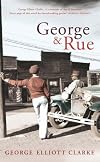
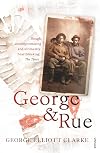
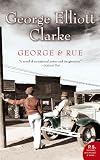
George and Rue
by George Elliott Clarke
On This Page
Description
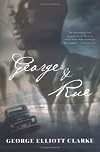
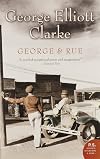
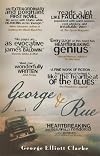
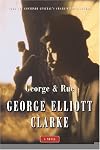
It was, by all accounts,, a "slug-ugly" crime. Brothers George and Rufus Hamilton, in a robbery gone wrong, drunkenly bludgeoned a taxi driver to death with a hammer. It was 1949, and the two siblings, part Mi'kmaq and part African, were both hanged for the killing. Those facts are also skeletons in George Elliott Clarke's family closet. Both repelled and intrigued by his ancestral cousins' deeds, which he only learned about from his mother shortly before her death, Clarke set out to show more discover just what kind of forces would reduce men to crime, violence and, ultimately, murder. His findings took shape in the 2001 Governor General's Award-winning Execution Poems and culminates brilliantly in George and Rue. The novel shifts seamlessly back into the killers' pasts, recounting a bleak and sometimes comic tale of victims of violence who became killers, a black community too poor and too shamed to assist its downtrodden members, and a white community bent on condemning all blacks as dangerous outsiders . George and Rue is a book about a death that brims with fierce vitality and dark humour. Infused with the sensual, rhythmic beauty that defines Clarke's writing, it is a remarkable literary debut. show lessTags
Recommendations









Member Reviews
I found this book in a Little Free Library and I recognized the title as being one that appears on the CBC 100 Novels that Make You Proud to be Canadian so I snapped it up. I'm not sure that the subject matter of the book makes me proud to be Canadian but certainly the calibre of the writing makes me proud to recognize George Elliott Clarke as a Canadian. At the back of the book Clarke says it took him from 1994 to 2004 to write this book; I'm certainly glad that he persevered.
George and Rue Hamilton were brothers raised in a black community in the Annapolis Valley of Nova Scotia called Three Mile Plains. Born into poverty they never managed to rise much farther economically in their lifetimes. George, the elder, probably would have show more been happier farming the fertile land of the Valley but he met a woman he wanted to marry and he felt he had to earn more money. Rue (Rufus) was wilder than his brother and more inclined to violence. He was gifted musically having taught himself how to play jazz and blues on a derelict piano that only had half a keyboard. If that gift had been nourished his trajectory in life (and that of his brother) would have been quite different. He did work for a while as a pianist in Halifax but got embroiled with a prostitute and went downhill from there. George signed up for the Army during World War II but went AWOL when he saw how racist the service was. He then signed up for the Merchant Marine and did a number of tours but when the war was over he was jailed for deserting. He still didn't have much money but he persuaded his girl to marry him and move to Fredericton where he was sure he could find work. He found some jobs and he felt life was pretty good so he wrote to Rue in Halifax and asked him to come to Fredericton. Rue was not a good influence on George and just when George's wife gave birth to their second child the brothers were completely broke. Rue convinced George that they could solve their money problems by robbing a taxi driver. Rue wielded a hammer to hit the driver who died of the blows. They tried to dispose of the body and incriminating evidence but were as useless at that as almost everything else they attempted to do. Police questioned George first who told them Rue had killed the driver. George mistakenly thought he would be allowed to go free if he testified against Rue. Instead both were convicted of murder and sentenced to hang. "July 27, 1949, Anno Domini: the Hamiltons fell like dominoes. They merit no poetry, no laurels, no ballads, no statues, no headstones, no memory, no existence."
As a footnote to the book Clarke tells the reader about two white men in Quebec who committed almost the same crime in December 1949. They were sentenced to die but the sentences were commuted to life in prison. "George and Rue--black--had no such white luck."
Clarke learned the story of the Hamilton brothers from his mother because they were relatives. In fact George Hamilton and George Elliott Clarke were named after the same man, George Johnson. Clarke was also born in the settlement of Three Mile Plains. Thankfully his life turned out much better than the Hamiltons. show less
George and Rue Hamilton were brothers raised in a black community in the Annapolis Valley of Nova Scotia called Three Mile Plains. Born into poverty they never managed to rise much farther economically in their lifetimes. George, the elder, probably would have show more been happier farming the fertile land of the Valley but he met a woman he wanted to marry and he felt he had to earn more money. Rue (Rufus) was wilder than his brother and more inclined to violence. He was gifted musically having taught himself how to play jazz and blues on a derelict piano that only had half a keyboard. If that gift had been nourished his trajectory in life (and that of his brother) would have been quite different. He did work for a while as a pianist in Halifax but got embroiled with a prostitute and went downhill from there. George signed up for the Army during World War II but went AWOL when he saw how racist the service was. He then signed up for the Merchant Marine and did a number of tours but when the war was over he was jailed for deserting. He still didn't have much money but he persuaded his girl to marry him and move to Fredericton where he was sure he could find work. He found some jobs and he felt life was pretty good so he wrote to Rue in Halifax and asked him to come to Fredericton. Rue was not a good influence on George and just when George's wife gave birth to their second child the brothers were completely broke. Rue convinced George that they could solve their money problems by robbing a taxi driver. Rue wielded a hammer to hit the driver who died of the blows. They tried to dispose of the body and incriminating evidence but were as useless at that as almost everything else they attempted to do. Police questioned George first who told them Rue had killed the driver. George mistakenly thought he would be allowed to go free if he testified against Rue. Instead both were convicted of murder and sentenced to hang. "July 27, 1949, Anno Domini: the Hamiltons fell like dominoes. They merit no poetry, no laurels, no ballads, no statues, no headstones, no memory, no existence."
As a footnote to the book Clarke tells the reader about two white men in Quebec who committed almost the same crime in December 1949. They were sentenced to die but the sentences were commuted to life in prison. "George and Rue--black--had no such white luck."
Clarke learned the story of the Hamilton brothers from his mother because they were relatives. In fact George Hamilton and George Elliott Clarke were named after the same man, George Johnson. Clarke was also born in the settlement of Three Mile Plains. Thankfully his life turned out much better than the Hamiltons. show less
Wow! This is some of the best writing I've come across in a while. Mr. Clarke can evoke deep impressions and emotions with his poetic style.
This is the story of two brothers, growing up Black and poor in New Brunswick in the 1930s. It is the fictionalized account of a true crime (murder) committed by the author's distant relatives. The story is well told, and the characters well developed...I developed a real sense of their lives, hopes and frustrations.
Excellent.
This is the story of two brothers, growing up Black and poor in New Brunswick in the 1930s. It is the fictionalized account of a true crime (murder) committed by the author's distant relatives. The story is well told, and the characters well developed...I developed a real sense of their lives, hopes and frustrations.
Excellent.
The cover jumps up and down and screams "read me!" in a very annoying way. I would never have bought this on my own. Thank goodness for goodreads and goodreaders with good taste who recommend great books. From Canada!
This is an imagining of the story behind a real murder. I learned a touch of history about a place other than the USA, about how a group of African descendants came to Nova Scotia. The author is a distant relative of two brothers who were hanged and this fictionalization seems to be an explanation, a personal exploration, a purging of the injustice, poverty, and hatefulness that led to the crime.
I started and finished this quickly, thanks to a bout of indigestion (note to self, getting old and can't eat ice cream late at show more night anymore without consequences...sigh). I got a little tripped up at first by what's described on the back as "a 'blackened English' argot minted for this book" (which mean he sometime write something like this, full-on flow sometime no stops for punctuation and sometime ignore grammar...but much more beautifully than that crappy attempt at an example); but as I kept reading it became the perfect voice in my head for this story. I wish I was religious enough to call upon a deity (Good God! Holy Mother Mary! The grace of Allah! By the Castle of Grayskull!) because only 10 pages in I was amazed. The description of the early days of Cynthy and Asa's marriage, nothing really explicit, just colors and impressions of images like softly fuzzy black&white freeze-frames...I felt flushed. Ahem. This was one of the few not-unhappy parts, since the crime was horrific and the childhood and circumstances of their shaping was even more horrific.
I have a tin eye but I believe this was poetry in paragraph form, the racing pace and beautiful words making gorgeous imagery of the most sordid of scenes.
I have a habit of noting passages about food and after a couple of these, I started marking them intending to type them out. They ended up being too many and too long (and not too much a part of the story other than contrasting their desires for good food compared to what they had) but I just want to note, this author did justice to the glory of food. show less
This is an imagining of the story behind a real murder. I learned a touch of history about a place other than the USA, about how a group of African descendants came to Nova Scotia. The author is a distant relative of two brothers who were hanged and this fictionalization seems to be an explanation, a personal exploration, a purging of the injustice, poverty, and hatefulness that led to the crime.
I started and finished this quickly, thanks to a bout of indigestion (note to self, getting old and can't eat ice cream late at show more night anymore without consequences...sigh). I got a little tripped up at first by what's described on the back as "a 'blackened English' argot minted for this book" (which mean he sometime write something like this, full-on flow sometime no stops for punctuation and sometime ignore grammar...but much more beautifully than that crappy attempt at an example); but as I kept reading it became the perfect voice in my head for this story. I wish I was religious enough to call upon a deity (Good God! Holy Mother Mary! The grace of Allah! By the Castle of Grayskull!) because only 10 pages in I was amazed. The description of the early days of Cynthy and Asa's marriage, nothing really explicit, just colors and impressions of images like softly fuzzy black&white freeze-frames...I felt flushed. Ahem. This was one of the few not-unhappy parts, since the crime was horrific and the childhood and circumstances of their shaping was even more horrific.
I have a tin eye but I believe this was poetry in paragraph form, the racing pace and beautiful words making gorgeous imagery of the most sordid of scenes.
I have a habit of noting passages about food and after a couple of these, I started marking them intending to type them out. They ended up being too many and too long (and not too much a part of the story other than contrasting their desires for good food compared to what they had) but I just want to note, this author did justice to the glory of food. show less
A stunning and poetic book by one of my favourite writers. Clarke delves into the details behind George and Rufus Hamilton's murder of a taxi driver in New Brunswick, in the mid-20th century. The author previously published Execution Poems, a poetic portrayal of the men and their crime; while the poems were sparse and haunting, the novel is immersive and rich. While it is certainly a compelling story, it is Clarke's language that makes the reader stop and think about the real barriers for Black Canadians, the limited choices they had, and the choice that George and Rue ended up making in light of this.
While George is a gentle man who loves farming, Rue is an ambitious lover whose follows a reckless path after the woman he loves falls show more through the ice in winter on her way to see him. Clarke's portrayal of the complex relationship between the two brothers defies any simplistic assumptions about violent crime.
This is an absolutely physical book, at turns erotic, painful, exuberant, and suspenseful. Clarke pulls you along with George and Rue from the opening pages until the brothers' execution. One of the better novels I've ever read. show less
While George is a gentle man who loves farming, Rue is an ambitious lover whose follows a reckless path after the woman he loves falls show more through the ice in winter on her way to see him. Clarke's portrayal of the complex relationship between the two brothers defies any simplistic assumptions about violent crime.
This is an absolutely physical book, at turns erotic, painful, exuberant, and suspenseful. Clarke pulls you along with George and Rue from the opening pages until the brothers' execution. One of the better novels I've ever read. show less
Ratings
Members
- Recently Added By
Lists

CBC Books - Canada's 100 (+ bonus 10): Which have you read?
110 works; 23 members

Canadian Historical Fiction 🇨🇦
157 works; 8 members
Author Information

41+ Works 588 Members
George Elliott Clarke, Febraury 12, 1960 - George Elliott Clarke was born in Windsor Plains, Nova Scotia on February 12, 1960. He earned an Honours B.A. in English from the University of Waterloo, an M.A. in English from Dalhousie University and a Ph.D awarded by Queens University. After college, he accepted a position as assistant professor of show more English and Canadian Studies at Duke University, where he taught topics such as nationalism, post-colonialism, and New World African Literature. In September 1998, he transferred to McGill University in Montréal and became the third Seagram Visiting Chair of Canadian Studies for 1998-1999. He also taught at the University of Toronto as an assistant professor in English. At the age of 21, he received first prize in poetry from the Writers' Federation of Nova Scotia in 1981. In 1983, he was runner-up for the Bliss Carman Award for Poetry. While studying at Queens, he was named winner of the Archibald Lampman Award for poetry in 1991. While teaching at Duke, in 1998, he won the $25,000 Portia White Prize for Excellence in the Arts, That same year, he was awarded a Bellagio Center Residency by the Rockefeller Foundation of New York City. In 1999, he received an honorary Doctor of Laws degree from Dalhousie University, and the University of Waterloo Arts Alumni Achievement Award. He is also the recipient of a Doctor of Letters, honoris causa, from University of New Brunswick. On September 9, 2000, Clarke was awarded Outstanding Writer of a Canadian Feature Film, for One Heart Broken Into Song, by the Black Film and Video Network. Clarke has also edited a two volume anthology, Fire on the Water: An Anthology of Black Nova Scotian Writing (1991-92) and is also the editor of Eyeing the North Star: Directions in African-Canadian Literature. In 2001, Clarke was awarded the Governor General's Award for poetry for his work Execution Poems. (Bowker Author Biography) show less
Awards and Honors
Awards
Notable Lists
Common Knowledge
- Canonical title
- George and Rue
- Original publication date
- 2006-01-03
- People/Characters
- George Hamilton; Rufus Hamilton
- Important places
- Nova Scotia, Canada
- Epigraph
- If something is not done, we will be the murderers of our children----Thomas Jefferson
- Dedication
- For Geraldine Elizabeth Clarke (199-2000), David Johnson, Jean Mendes, and Augus "Sock" Johnson: four siblings of Three Mile Plains, Nova Scotia.
For William Lloyd Clarke, artist, of Halifax, Nova Scotia. And for Gre... (show all)ta, indomitable intellectual, wilful wife. - First words
- A white devil moon haunts the black 1949 brand-new four-door Ford sedan when a black hammer slip out a pocket and smuck the taxi driver's head, from the side.
- Last words
- (Click to show. Warning: May contain spoilers.)Perhaps the dual impulse to creativity and violence in my own genealogy serves to illustrate the Manichaean dilemmas of the African odyssey in this strange American world.
Classifications
Statistics
- Members
- 109
- Popularity
- 290,005
- Reviews
- 4
- Rating
- (4.06)
- Languages
- English
- Media
- Paper, Ebook
- ISBNs
- 9
- ASINs
- 2