On This Page
Description
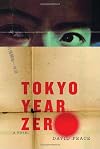
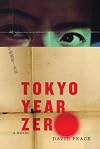
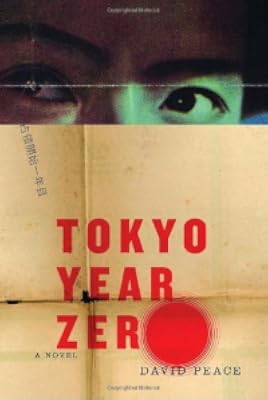
Unblinking in its vision of a nation in a chaotic, hellish period in its history, Tokyo Year Zero is a “brilliant, perplexing, claustrophobic … exhilarating” crime novel (The New York Times Book Review).It's August 1946—one year after the Japanese surrender—and women are turning up dead all over Tokyo. Detective Minami of the Tokyo Metropolitan Police—irreverent, angry, despairing—goes on the hunt for a killer known as the Japanese Bluebeard—a decorated former Imperial show more soldier who raped and murdered at least ten women amidst the turmoil of post-war Tokyo. As he undertakes the case, Minami is haunted by his own memories of atrocities that he can no longer explain or forgive.
. show less
Tags
Recommendations









Member Reviews
The sad irony of completing this book just before and reviewing it just after the latest major earthquake in Japan is not lost on me.
The book is set amongst disaster - a hint of an earlier devastating Earthquake that hit Tokyo directly in 1923 is overshadowed by the triple moral horror of Japanese atrocities in China in the 1930s, the downright evil Allied firebombing of the civilian population and the humiliation of occupation.
This is a crime novel written by a Briton who has lived long in Japan but it is also a novel of horror. Like all such novels, I cannot tell you the plot so I have to give you a warning instead.
This book is worth reading to the end but you may be irritated by Peace's irritating stylistic affectation of constant show more repetitions of sounds and phrases, incantations that have their ultimate purpose that becomes clear by the end but which bear down on the reader for the first 140 pages before the story really takes over.
Yes, this conceit does have its purpose in building atmosphere and psychological trauma but it is painful to read at times and some of you may just give up. I suggest that you don't ... he is a fine writer and a little experimentation in a hackneyed genre is welcome.
I am always wary of writers purporting to 'know' another culture or past but whatever it is that Peace is claiming to know, I won't quarrel with him. As if to deal with sceptics like me, the book closes with a glossary and four pages of further reading in Japanese culture, both fiction and non-fiction.
What he has done well is capture humiliation under an occupation that was far from humane but which was well deserved. As in Germany in Year Zero sex is currency in the battle for survival and humiliation lies not only in defeat but in becoming a whole race of beta males before the alpha conquerors.
The experience may have been relatively short-lived (two or three years perhaps) but it was scarring and, as disaster, it ranks with the earthquake and fire bombing in its own way.
Peace brilliantly captures the dogged a-moralism of a nation of men forced to reinvent themselves much as former Nazis had to do half way across the world.
This is no fashionable political conspiracy novel, however, but a grim tale of sexual obsession and murder and the horror lies less in the slashing of victims (we are used to that by now) and more in the ambience of despair.
It is the first of a trilogy based (we understand) on real murder cases during the American Occupation and, if I can bear any repetition of the stylistic conceits, I shall seek the rest out. show less
The book is set amongst disaster - a hint of an earlier devastating Earthquake that hit Tokyo directly in 1923 is overshadowed by the triple moral horror of Japanese atrocities in China in the 1930s, the downright evil Allied firebombing of the civilian population and the humiliation of occupation.
This is a crime novel written by a Briton who has lived long in Japan but it is also a novel of horror. Like all such novels, I cannot tell you the plot so I have to give you a warning instead.
This book is worth reading to the end but you may be irritated by Peace's irritating stylistic affectation of constant show more repetitions of sounds and phrases, incantations that have their ultimate purpose that becomes clear by the end but which bear down on the reader for the first 140 pages before the story really takes over.
Yes, this conceit does have its purpose in building atmosphere and psychological trauma but it is painful to read at times and some of you may just give up. I suggest that you don't ... he is a fine writer and a little experimentation in a hackneyed genre is welcome.
I am always wary of writers purporting to 'know' another culture or past but whatever it is that Peace is claiming to know, I won't quarrel with him. As if to deal with sceptics like me, the book closes with a glossary and four pages of further reading in Japanese culture, both fiction and non-fiction.
What he has done well is capture humiliation under an occupation that was far from humane but which was well deserved. As in Germany in Year Zero sex is currency in the battle for survival and humiliation lies not only in defeat but in becoming a whole race of beta males before the alpha conquerors.
The experience may have been relatively short-lived (two or three years perhaps) but it was scarring and, as disaster, it ranks with the earthquake and fire bombing in its own way.
Peace brilliantly captures the dogged a-moralism of a nation of men forced to reinvent themselves much as former Nazis had to do half way across the world.
This is no fashionable political conspiracy novel, however, but a grim tale of sexual obsession and murder and the horror lies less in the slashing of victims (we are used to that by now) and more in the ambience of despair.
It is the first of a trilogy based (we understand) on real murder cases during the American Occupation and, if I can bear any repetition of the stylistic conceits, I shall seek the rest out. show less
Tales of disintegration
There’s nothing like an occupying army to stir desperation into the chaos of defeat. Just ask Detective Minami, chief of one of the two murder-investigation units operating in Tokyo during “Year Zero”—the first year after Japan’s surrender to and occupation by the United States.
David Peace, named by Granta magazine in 2003 as one of the best of the young British novelists, isn’t the sort of writer to gloss over grisly reality, whether it’s the gruesome task of identifying the remains of a murder victim or the madness that accompanies the complete destruction of the world in which his characters live.
Tokyo Year Zero might be, in the hands of a lesser writer, a pretty good crime book. On the day of show more Japan’s surrender (a situation unthinkable to most of its citizens, yet one that circumstance force them to wrap their minds around), the rapidly decomposing body of a murdered woman is found floating in the rancid water-filled basement of a bombed-out war factory. Faced with conducting an investigation while in shock, the detectives—including Minami—watch as an enraged Kempetai officer (the Japanese version of the Nazi SS) executes a Korean slave laborer found in the area, then declares the case closed. Simple enough. After all, it’s not as if one more outrage matters much in the face of all the outrages of WWII.
But a year later, as outrage upon outrage piles up for Minami, the bodies of two more murdered women are discovered in a park. His investigation is hampered both by the premature closing of the first case and by the presence among his superiors of an officer who has plenty of reason to keep the original murder from being linked to the bodies before them.
Minami reminds us, with one of several mental refrains, “No one is who they say they are.” The first mystery of the novel is the identity of the killer, but it is the novel’s second mystery that forms the narrative arc: Not “Who did it?” but rather “Who is it?” Finding the names of the dead women and making sure that they are all accounted for obsesses Minami, but he also is continually haunted by questions of identity and responsibility as he navigates the bombed-out, corrupt landscape of post-war Tokyo while struggling to hold on to his cobbled-together sanity.
He is also conducting an “unofficial” investigation into the murder of an organized crime chief, as well as questioning who is really in charge of the investigation into the women’s murders and what everyone might or might not be hiding—including who they really are. Plagued by plots and counter-plots (some of which actually exist), more than anything else he begins to suspect himself.
Peace adopts a break-neck pace, moving throughout the city and into the countryside. One day bleeds seamlessly into the next as the repetition of Minami’s thoughts and the passage of time by seconds (“chiku-taku,” the sound a clock makes ticking away) propels the reader along with him down a road that can only lead to destruction—because, quite simply, rubble is all that’s left of Minami’s Tokyo. The new city that rises in its place will never be what Minami seeks.
Tokyo Year Zero is a creditable murder mystery/police procedural, but the real power of the novel is in all the other tales of disintegration Peace threads throughout the detective story to form an indictment of both the defeated and the occupiers. This, then, is a city that doesn’t need crime to destroy it; war is enough.
Reviewed for Sacramento News & Review: http://www.newsreview.com/sacramento/tales-of-disintegration/content?oid=539231 show less
There’s nothing like an occupying army to stir desperation into the chaos of defeat. Just ask Detective Minami, chief of one of the two murder-investigation units operating in Tokyo during “Year Zero”—the first year after Japan’s surrender to and occupation by the United States.
David Peace, named by Granta magazine in 2003 as one of the best of the young British novelists, isn’t the sort of writer to gloss over grisly reality, whether it’s the gruesome task of identifying the remains of a murder victim or the madness that accompanies the complete destruction of the world in which his characters live.
Tokyo Year Zero might be, in the hands of a lesser writer, a pretty good crime book. On the day of show more Japan’s surrender (a situation unthinkable to most of its citizens, yet one that circumstance force them to wrap their minds around), the rapidly decomposing body of a murdered woman is found floating in the rancid water-filled basement of a bombed-out war factory. Faced with conducting an investigation while in shock, the detectives—including Minami—watch as an enraged Kempetai officer (the Japanese version of the Nazi SS) executes a Korean slave laborer found in the area, then declares the case closed. Simple enough. After all, it’s not as if one more outrage matters much in the face of all the outrages of WWII.
But a year later, as outrage upon outrage piles up for Minami, the bodies of two more murdered women are discovered in a park. His investigation is hampered both by the premature closing of the first case and by the presence among his superiors of an officer who has plenty of reason to keep the original murder from being linked to the bodies before them.
Minami reminds us, with one of several mental refrains, “No one is who they say they are.” The first mystery of the novel is the identity of the killer, but it is the novel’s second mystery that forms the narrative arc: Not “Who did it?” but rather “Who is it?” Finding the names of the dead women and making sure that they are all accounted for obsesses Minami, but he also is continually haunted by questions of identity and responsibility as he navigates the bombed-out, corrupt landscape of post-war Tokyo while struggling to hold on to his cobbled-together sanity.
He is also conducting an “unofficial” investigation into the murder of an organized crime chief, as well as questioning who is really in charge of the investigation into the women’s murders and what everyone might or might not be hiding—including who they really are. Plagued by plots and counter-plots (some of which actually exist), more than anything else he begins to suspect himself.
Peace adopts a break-neck pace, moving throughout the city and into the countryside. One day bleeds seamlessly into the next as the repetition of Minami’s thoughts and the passage of time by seconds (“chiku-taku,” the sound a clock makes ticking away) propels the reader along with him down a road that can only lead to destruction—because, quite simply, rubble is all that’s left of Minami’s Tokyo. The new city that rises in its place will never be what Minami seeks.
Tokyo Year Zero is a creditable murder mystery/police procedural, but the real power of the novel is in all the other tales of disintegration Peace threads throughout the detective story to form an indictment of both the defeated and the occupiers. This, then, is a city that doesn’t need crime to destroy it; war is enough.
Reviewed for Sacramento News & Review: http://www.newsreview.com/sacramento/tales-of-disintegration/content?oid=539231 show less
This is a rhythmically grim novel on post-WWII Tokyo. The mood and the rhythm come from repeating dark thought fragments that continually break up the narrative - that can be striking. It has a story to match the grim feel. Reading it was like being hypnotized; I would just mindlessly follow the rhythm down this dark, hopeless but persistent path. When I would stop reading and put the book down, there was a sharp break from the book to reality; except, I was still carrying around all those repetitive phrases and that rhythm in the back of my head.
The hypnosis transported me fully into 1946 Tokyo – which was apparently an insanely crowded place of destruction, filth and inhumane desperation. It was also apparently a place of mystery, show more as everyone seems to have a hidden past related to the 20 or so years of war. And this only underlies the main story – a detective's search to solve a murder mystery. It’s through this main character we are given our of tour of post-war Japan, and especially of the Japanese police rituals of the time, which are fascinating – a mixture of stultifying ritual and forced intense methodical effort.
I had a mixed response to the book. On one hand it was an interesting story, a vivid dark take on post-WWII Japan. Also, the hypnotic grim tone grabbed my attention. On the other hand, I can't exactly say I'm happy to have read it. show less
The hypnosis transported me fully into 1946 Tokyo – which was apparently an insanely crowded place of destruction, filth and inhumane desperation. It was also apparently a place of mystery, show more as everyone seems to have a hidden past related to the 20 or so years of war. And this only underlies the main story – a detective's search to solve a murder mystery. It’s through this main character we are given our of tour of post-war Japan, and especially of the Japanese police rituals of the time, which are fascinating – a mixture of stultifying ritual and forced intense methodical effort.
I had a mixed response to the book. On one hand it was an interesting story, a vivid dark take on post-WWII Japan. Also, the hypnotic grim tone grabbed my attention. On the other hand, I can't exactly say I'm happy to have read it. show less
 This review was written for LibraryThing Early Reviewers.
Well this one certainly is different!
It's basically detective historical fiction - police solving a series of murders in Tokyo immediately after WW2. But the writing style belongs to no genre that I am aware of - lots of short repetitive phrases and sounds that do tend to paint a picture in the readers mind, but there is a lack of narrative to successfully stitch it all together. It's like reading a cryptic crossword crossed with a novel. It's normal for an author to deliberately withhold information for narrative effect, but this book goes far beyond that.
In the end, I was glad I read the book, but I'm not sure I will be coming back for the subsequent two volumes in the trilogy.
It's basically detective historical fiction - police solving a series of murders in Tokyo immediately after WW2. But the writing style belongs to no genre that I am aware of - lots of short repetitive phrases and sounds that do tend to paint a picture in the readers mind, but there is a lack of narrative to successfully stitch it all together. It's like reading a cryptic crossword crossed with a novel. It's normal for an author to deliberately withhold information for narrative effect, but this book goes far beyond that.
In the end, I was glad I read the book, but I'm not sure I will be coming back for the subsequent two volumes in the trilogy.
Tokyo Year Zero by David Peace has a lot going for it – a good (and real) serial murder case, set against the bleak clean slate of occupied Japan in 1946, told by depressive (and depressing) Detective Minami. The characters are well-drawn, if unlikeable. It’s fun for anyone familiar with more recent Tokyo to match it up with the wreckage left by the war. There are some “howevers” following, but I’ll probably read the promised sequels just for the good job with the ambiance of the city.
For me, Peace’s stylistic tics got in the way of telling his story. He uses italics to signal some kind of interior monologue going on in Minami-san’s head, but other thoughts are not italicized. Catch-phrases are repeated again and again show more and again. I suppose this is to signal the monotony of the unending despair in most of the characters, but even Vonnegut had trouble getting away with this trick. And Peace seems fascinated by the reduplicative onomatopoetic phrases of Japanese: ton-ton ton-ton ton-ton… for the hammering sounds of reconstruction, gari-gari gari-gari… for the detective’s scratching at his crabs and lice, and many others. He substitutes these interstitial formulaic patterns for what could have been better use of the fascinating setting of the losers’ Japan.
There were a couple passages that didn’t ring true to me. A waitress leaves her job because “there were not many tips.” That’s not surprising in a culture that has no tipping. “Scumbag” used for name-calling is an anachronism. Lastly the central theme of substituted identity -- “No one is who they say they are…” -- is a hard fit in a country where one’s identity is established at birth by registration in the local family register and in a culture where family plays so important a rôle.
Lastly, I found the story-telling almost intentionally obscure. The author seems to be saying “this is a really important book, so you have to work to figure out what’s going on.” I don’t mind a little work, but, hey, this is a murder mystery, not Gravity’s Rainbow. It left me a little kari-kari (sound of scratching one’s head). show less
For me, Peace’s stylistic tics got in the way of telling his story. He uses italics to signal some kind of interior monologue going on in Minami-san’s head, but other thoughts are not italicized. Catch-phrases are repeated again and again show more and again. I suppose this is to signal the monotony of the unending despair in most of the characters, but even Vonnegut had trouble getting away with this trick. And Peace seems fascinated by the reduplicative onomatopoetic phrases of Japanese: ton-ton ton-ton ton-ton… for the hammering sounds of reconstruction, gari-gari gari-gari… for the detective’s scratching at his crabs and lice, and many others. He substitutes these interstitial formulaic patterns for what could have been better use of the fascinating setting of the losers’ Japan.
There were a couple passages that didn’t ring true to me. A waitress leaves her job because “there were not many tips.” That’s not surprising in a culture that has no tipping. “Scumbag” used for name-calling is an anachronism. Lastly the central theme of substituted identity -- “No one is who they say they are…” -- is a hard fit in a country where one’s identity is established at birth by registration in the local family register and in a culture where family plays so important a rôle.
Lastly, I found the story-telling almost intentionally obscure. The author seems to be saying “this is a really important book, so you have to work to figure out what’s going on.” I don’t mind a little work, but, hey, this is a murder mystery, not Gravity’s Rainbow. It left me a little kari-kari (sound of scratching one’s head). show less
This review was written for LibraryThing Early Reviewers.Lingering over the words and pages of this novel is probably the worst way to approach it. Its effects accumulate and are best absorbed quickly. Reading Tokyo Year Zero, then, in one or two sittings is the best strategy. That way, it has some mild payoff.
The book's style and writing is neither as off putting as its detractors think or as brilliant as its advocates make out. In fact, it is largely derivative and unsurprising, except for the defining meter of its sentences, which are akin to those of nursery rhymes, which are then given the imagery of a machine gun, and then packaged in an atmosphere of despair and madness.
Dismembering and shattering are the themes. Restoration through ambiguity and identity, the goal. Emerging from the show more ashes, a world and society cut off from its prior centuries. All made anew. But to what end? show less
The book's style and writing is neither as off putting as its detractors think or as brilliant as its advocates make out. In fact, it is largely derivative and unsurprising, except for the defining meter of its sentences, which are akin to those of nursery rhymes, which are then given the imagery of a machine gun, and then packaged in an atmosphere of despair and madness.
Dismembering and shattering are the themes. Restoration through ambiguity and identity, the goal. Emerging from the show more ashes, a world and society cut off from its prior centuries. All made anew. But to what end? show less
Dark, graphic portrait of post-WWII Japan in the guise of a detective story. The tortured detective, crooked cops, corrupt society and sexual violence are straight out of James Ellroy. The style and approach to storytelling are complex, using repetition of sounds, phrases, and images, inner monologue, flashbacks, and other effects with mixed results. At its best, the story is immersive and visceral. At its worst, it's confusing and borderline tedious. Works best as an unflinching look at a defeated, humiliated people in the aftermath of war.
If you're interested in the period, check out Kawabata's Sound of the Mountain for a very different novel set in post-war Japan.
If you're interested in the period, check out Kawabata's Sound of the Mountain for a very different novel set in post-war Japan.
This review was written for LibraryThing Early Reviewers.Members
- Recently Added By
Lists

1001 Books You Must Read Before You Die
1,448 works; 1,134 members

Global Reads: Books Set in East Asia
139 works; 12 members

Novels with a city or town in the title
61 works; 1 member

Shirley Jackson Award Winners and Shortlist 2007-2020
77 works; 6 members
Author Information

19+ Works 5,478 Members
Awards and Honors
Awards
Distinctions
Series

Belongs to Publisher Series
Common Knowledge
- Original title
- Tokyo Year Zero
- Original publication date
- 2007-08-02
- People/Characters
- Detective Minami
- Important places
- Tokyo, Japan
- First words
- Ton-ton. Ton-ton. Ton-ton. Ton-ton. Ton-ton. Ton-ton ...
- Blurbers
- Ellroy, James
Classifications
Statistics
- Members
- 750
- Popularity
- 37,585
- Reviews
- 42
- Rating
- (3.17)
- Languages
- 9 — Dutch, English, French, German, Italian, Japanese, Portuguese, Spanish, Swedish
- Media
- Paper, Audiobook, Ebook
- ISBNs
- 36
- ASINs
- 8