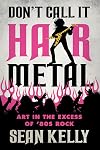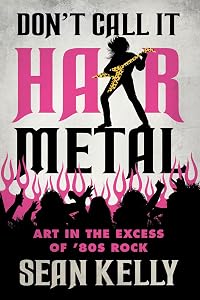
Don’t Call It Hair Metal: Art in the Excess of ’80s Rock
by Sean Kelly
On This Page
Description
A love letter to the hard-rocking, but often snubbed, music of the era of excess: the 1980s. There may be no more joyous iteration in all of music than 1980s hard rock. It was an era where the musical and cultural ideals of rebellion and freedom of the great rock 'n' roll of the '50s, '60s, and '70s were taken to dizzying heights of neon excess. Attention to songcraft, showmanship, and musical virtuosity (especially in the realm of the electric guitar) were at an all-time high, and radio and show more MTV were delivering the goods en masse to the corn-fed children of America and beyond. Time hasn't always been kind to artists of that gold and platinum era, but "Don't Call It Hair Metal" analyzes the sonic evolution, musical diversity, and artistic intention of '80s commercial hard rock through interviews with members of such hard rock luminaries as Twisted Sister, Def Leppard, Poison, Whitesnake, Ratt, Skid Row, Quiet Riot, Guns N' Roses, Dokken, Mr. Big, and others. A love letter to the hard-rocking, but often snubbed, music of the era of excess: the 1980s. Removing the guilt from the pleasure, Kelly invites readers to experience a critical examination of a time when big hooks, big hair, and big fun ruled the airwaves. show lessTags
Recommendations
Member Recommendations
Member Reviews
“But in the end, don’t call it hair metal. It’s only rock’n’roll. And I like it. I think you might too.”
These days I’m not exactly an melophile. As a pre-teen/teen I spent pocket money on cassettes (and later CD’s), I bought Smash Hits magazine, watched Video Hits andCountdown, and listened to the Top 40 on the radio, fingers poised to press ‘Play’ and ‘Record’ to make my own mixtapes. I went to a handful of big act concerts, saw some smaller bands in pubs, and went clubbing all night. I even dated a bass guitarist in a heavy metal garage band who tried to teach me to play Led Zeppelin’s Stairway to Heaven. But then I got married and had kids and for the next decade or so The Wiggles and High 5 played on show more repeat. All this explains, I think, why my taste in music tends to be stuck in the 1970’s and ‘80’s. From the pop hits to the power ballads, the one-hit-wonders to, yes, hair metal, I love it all.
In Don’t Call It Hair Metal, Sean Kelly defends the integrity of the hard rock bands whose sartorial style of big hair, spandex and leather outfits, makeup and showmanship, belied their musicianship. As a musician himself, he writes with authority as he explores the influences on their sound, defined by the combination of a traditional heavy metal sound with elements of pop-influenced hooks, guitar riffs, and shreds, it’s evolution as the look and sound captured commercial interest, and its eventual decline in popularity. Commentary from iconic musicians provides insight into, and reflection on, the era of the industry, including both its music and its culture.
Among the many bands Kelly makes reference to are Twisted Sister, Bon Jovi, Aerosmith, Whitesnake, Skid Row, Stryper, Warrant, Def Leppard, LA Guns, Slaughter, Kiss, Cinderella, Poison, Europe, Guns N Roses, and Motley Crue. I ended up browsing through YouTube searching out well remembered, and forgotten, hits to watch the performances with new appreciation, and fond nostalgia.
I appreciated the moments that Kelly wrote about his own connection to the music, because for me songs are almost always tied to memories. I have to admit, a lot of the technical information in this book went right over my head, so I think perhaps it’s best suited for readers conversant with musical knowledge to extract full value from it.
While I may not know much about music, I know what I like, and whatever Kelly, or others, wants to call it, I’ll continue to enjoy playing air guitar and belting out the lyrics whenever Livin’ on a Prayer, We’re Not Gonna Take It, or Paradise City, play. show less
These days I’m not exactly an melophile. As a pre-teen/teen I spent pocket money on cassettes (and later CD’s), I bought Smash Hits magazine, watched Video Hits andCountdown, and listened to the Top 40 on the radio, fingers poised to press ‘Play’ and ‘Record’ to make my own mixtapes. I went to a handful of big act concerts, saw some smaller bands in pubs, and went clubbing all night. I even dated a bass guitarist in a heavy metal garage band who tried to teach me to play Led Zeppelin’s Stairway to Heaven. But then I got married and had kids and for the next decade or so The Wiggles and High 5 played on show more repeat. All this explains, I think, why my taste in music tends to be stuck in the 1970’s and ‘80’s. From the pop hits to the power ballads, the one-hit-wonders to, yes, hair metal, I love it all.
In Don’t Call It Hair Metal, Sean Kelly defends the integrity of the hard rock bands whose sartorial style of big hair, spandex and leather outfits, makeup and showmanship, belied their musicianship. As a musician himself, he writes with authority as he explores the influences on their sound, defined by the combination of a traditional heavy metal sound with elements of pop-influenced hooks, guitar riffs, and shreds, it’s evolution as the look and sound captured commercial interest, and its eventual decline in popularity. Commentary from iconic musicians provides insight into, and reflection on, the era of the industry, including both its music and its culture.
Among the many bands Kelly makes reference to are Twisted Sister, Bon Jovi, Aerosmith, Whitesnake, Skid Row, Stryper, Warrant, Def Leppard, LA Guns, Slaughter, Kiss, Cinderella, Poison, Europe, Guns N Roses, and Motley Crue. I ended up browsing through YouTube searching out well remembered, and forgotten, hits to watch the performances with new appreciation, and fond nostalgia.
I appreciated the moments that Kelly wrote about his own connection to the music, because for me songs are almost always tied to memories. I have to admit, a lot of the technical information in this book went right over my head, so I think perhaps it’s best suited for readers conversant with musical knowledge to extract full value from it.
While I may not know much about music, I know what I like, and whatever Kelly, or others, wants to call it, I’ll continue to enjoy playing air guitar and belting out the lyrics whenever Livin’ on a Prayer, We’re Not Gonna Take It, or Paradise City, play. show less
Don't Call It Hair Metal by Sean Kelly is a fun and, if you're of an age to remember that period, nostalgic read. It isn't so much an organized argument for that period of music as it is a restatement of the standard, and correct, assertion that what came before influences what came after, which in turn influences what comes after. In other words, it is a continuum, and even periods and/or styles that catch flak are still a part of the history. Nothing new here as far as the "argument," but a nice history of the music nonetheless.
I have to admit a little bias, I have a hard time valuing anyone's opinion who ever thought it would be a good idea to grow a mullet. Have long hair or don't. If you can't, find other ways to speak out, don't show more halfass it. Okay, that is a little tongue-in-cheek, but not entirely. As for the music, I preferred other heavy rock during that time, but did enjoy what has become hair metal. Unfortunately, groups that weren't really thrown into that category at the time have become associated with it as time has gone on, and this book is no exception. Yet that also serves to support the general idea that the music itself was good and a part of the rock continuum, since the lines we perceived at the time blur when we reflect on it.
I would definitely recommend this to rock historians, formal and informal, as well as fans who remember the period. The excerpts from interviews are used very well throughout the book to help tell the larger story. The weakness is that Kelly insists on interjecting his personal commentary when it simply isn't necessary, but some of it adds to the book and none of it detracts from the larger idea of this as more of a history than an argument.
Reviewed from a copy made available by the publisher via NetGalley. show less
I have to admit a little bias, I have a hard time valuing anyone's opinion who ever thought it would be a good idea to grow a mullet. Have long hair or don't. If you can't, find other ways to speak out, don't show more halfass it. Okay, that is a little tongue-in-cheek, but not entirely. As for the music, I preferred other heavy rock during that time, but did enjoy what has become hair metal. Unfortunately, groups that weren't really thrown into that category at the time have become associated with it as time has gone on, and this book is no exception. Yet that also serves to support the general idea that the music itself was good and a part of the rock continuum, since the lines we perceived at the time blur when we reflect on it.
I would definitely recommend this to rock historians, formal and informal, as well as fans who remember the period. The excerpts from interviews are used very well throughout the book to help tell the larger story. The weakness is that Kelly insists on interjecting his personal commentary when it simply isn't necessary, but some of it adds to the book and none of it detracts from the larger idea of this as more of a history than an argument.
Reviewed from a copy made available by the publisher via NetGalley. show less
Ratings
Members
- Recently Added By
Author Information
26+ Works 872 Members
Sean Kelly left teaching to edit The National Lampoon. He writes for children's television (Noddy and Friends) and is the co-author of several books, including Saints Preserve Us! Who in Hell ..., How to Be Irish, and Boom Baby Moon. He lives in Brooklyn. (Bowker Author Biography)
Common Knowledge
- Original publication date
- 2023
Classifications
- Genres
- Music, Nonfiction, General Nonfiction
- DDC/MDS
- 781.6609 — Arts & recreation Music General principles and musical forms Traditions of music Rock (Rock 'n' roll) History, geographic treatment, biography
- LCC
- ML3534 .K295 — Music Literature on music Literature on music History and criticism Popular music
- BISAC
Statistics
- Members
- 17
- Popularity
- 1,445,860
- Reviews
- 2
- Rating
- (3.17)
- Languages
- English
- Media
- Paper, Audiobook, Ebook
- ISBNs
- 3
- ASINs
- 3