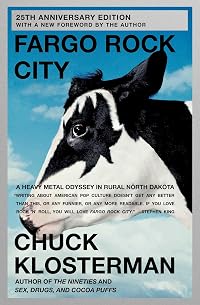
Fargo Rock City: A Heavy Metal Odyssey in Rural North Dakota
by Chuck Klosterman
On This Page
Description
Empirically proving that--no matter where you are--kids wanna rock, this is Chuck Klosterman's hilrious memoir of growing up as a shameless metalhead in Wyndmere, North Dakotoa (population: 498). With a voice like Ace Frehley's guitar, Klosterman hacks his way through hair-band history, beginning with that fateful day in 1983 when his older brother brought home Mötley Crüe's Shout at the Devil. The fifth-grade Chuck wasn't quite ready to rock--his hair was too short and his farm was too show more quiet--but he still found a way to bang his nappy little head. Before the journey was over, he would slow-dance to Poison, sleep innocently beneath satanic pentagrams, lust for Lita Ford, and get ridiculously intellectual about Guns N' Roses. C'mon and feel his noize. show lessTags
Recommendations
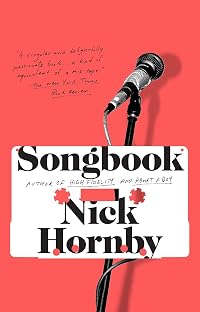
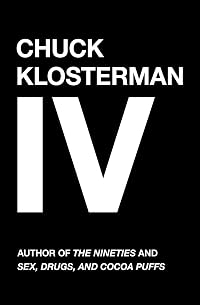
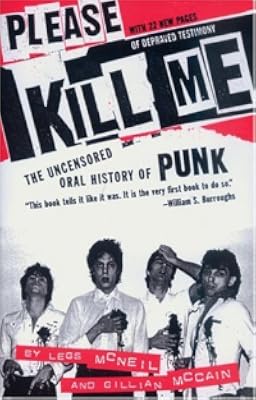








Member Recommendations
Member Reviews
I resonate with Klosterman's musical obsession despite being one generation removed. Sure, he's only two years older than me, but when he was listening to Mötley Crüe, I was into Michael W. Smith. It wasn't until the early 90s that I started obsessing over albums and liner notes.
In Fargo Rock City, Klosterman pays tribute to the genre he loves—lovingly called "hair metal" today. The narrative is a trip through musical and personal landmarks that defined the pre-grunge era.
Klosterman's penchant for ridiculous arguments is on full display in this critical tour of 1980s heavy metal. He also makes a surprising number of astute musical observations. (For example, he presents an unorthodox yet logical argument for why Bush signalled the show more death of Grunge.)
If you long for the days of Def Leppard, Poison, Skid Row, Bon Jovi, and especially G'n'R, this book is for you. show less
In Fargo Rock City, Klosterman pays tribute to the genre he loves—lovingly called "hair metal" today. The narrative is a trip through musical and personal landmarks that defined the pre-grunge era.
Klosterman's penchant for ridiculous arguments is on full display in this critical tour of 1980s heavy metal. He also makes a surprising number of astute musical observations. (For example, he presents an unorthodox yet logical argument for why Bush signalled the show more death of Grunge.)
If you long for the days of Def Leppard, Poison, Skid Row, Bon Jovi, and especially G'n'R, this book is for you. show less
I have kind of a love/hate relationship with Chuck Klosterman. I’ve read all his books (I left this one till last, because it’s about heavy metal and that’s not a subject I’m desperately interested in) and I think he’s frequently incredibly funny and often very insightful. But *man*, does he piss me off sometimes. In "Fargo Rock City," that occurred when he decided to share his views on female music fans. Apparently, male music fans are more loyal and less likely to get distracted by every shiny new thing because men are more analytical and women are more emotional. Yeah. There are so many things wrong with that statement that I risk turning this into a huge rant, which I do not want to do. Leaving aside the issue of show more “loyalty” (well, after I point to exhibit A: the giant collection of U2 stuff that I’ve bought over the years even when a) I had no money, and b) what I was buying was redundant to stuff I already had save for an extra B-side or remix or miniposter or WHATEVER), for Klosterman to use the old “men are analytical, women are emotional” argument is so absurd in the context of this book that it’s almost hilarious. Because the ENTIRE BOOK is about Klosterman’s emotions. How much he loved heavy metal, and how much it changed and shaped his life, and how much he still loves it. How much it bugs him when people dismiss it without thought, and how he thinks it should be considered important because it was important to him. This is a raw outpouring of emotion! Only he’s a guy, so we’re not allowed to call it that. We have to call it *analysis*. Right. Do people—Klosterman and anyone else—really think that when women have emotions—which, y’know, we’re actually willing to admit are emotions—we don’t analyze them at all? That we’re just like, “I feel so HAPPY today! La la la!” or “I’m SAD today. I’m heading straight for the Ben & Jerry’s, no thought involved!” Or even, “I really like this band! I’m just going to listen to them and go to concerts and scream and try to sleep with the drummer AND NEVER CONSIDER MY MOTIVATIONS AT ALL.” Women are clearly brainless puppy-dog creatures!
Okay, so this may have tapped into some other issues I’m having right now? But the point remains. Klosterman’s “analysis” of what makes heavy metal important is actually very minimal: it was important to him. It was important to a lot of other people. Therefore it is important in general. *And I completely agree with this*. I think pop culture should be talked about, because it does say a lot about people and what matters to them—and what could be more important than that? This is why I like reading Klosterman in the first place: because he recognizes that, and talks about it in an amusing manner. It’s just when he decides that he’s an expert on women that he pisses me off. (Well, and some other times. But never mind.)
ANYWAY…all of that said, I actually enjoyed the rest of the book a lot. And I don’t care one iota about heavy metal. But Klosterman does make me care about other people caring. show less
Okay, so this may have tapped into some other issues I’m having right now? But the point remains. Klosterman’s “analysis” of what makes heavy metal important is actually very minimal: it was important to him. It was important to a lot of other people. Therefore it is important in general. *And I completely agree with this*. I think pop culture should be talked about, because it does say a lot about people and what matters to them—and what could be more important than that? This is why I like reading Klosterman in the first place: because he recognizes that, and talks about it in an amusing manner. It’s just when he decides that he’s an expert on women that he pisses me off. (Well, and some other times. But never mind.)
ANYWAY…all of that said, I actually enjoyed the rest of the book a lot. And I don’t care one iota about heavy metal. But Klosterman does make me care about other people caring. show less
I'm torn about this book: on one hand, it is a humorous review of heavy metal music, yet on the other the author takes himself and his subject way too serioulsly. His original intention is good -- he noticed that there were absolutely no critical reviews of this era of music, because all of the critics believe that this type of music isn't worthy of critical consideration. He shows how heavy metal music was important, if only to those who loved this type of music -- those who grew up listening to it during their formative years.
Part critical review and part memoir, the book is organized around a timeline of important metal events, but in my opinion this backfires. He begins every chapter with an event, but the subsequent chapter often show more has nothing to do with the opening statement. I found myself curious about these events only to find no discussion of them, and was forced to do research online to figure out what he was talking about.
Another annoyance: during the course of the book he refers to interviews of various musicians, but doesn't indicate which band they were in or what instrument they played, as if the audience should naturally know this. I am somewhat familiar with this type of music and I only got about half the references. Still, for all this griping the book was still a worthwhile and interesting read. The chapter on how much money you would have to pay him to never listen to [whatever] band again was definitely the best and most insightful part of the book. show less
Part critical review and part memoir, the book is organized around a timeline of important metal events, but in my opinion this backfires. He begins every chapter with an event, but the subsequent chapter often show more has nothing to do with the opening statement. I found myself curious about these events only to find no discussion of them, and was forced to do research online to figure out what he was talking about.
Another annoyance: during the course of the book he refers to interviews of various musicians, but doesn't indicate which band they were in or what instrument they played, as if the audience should naturally know this. I am somewhat familiar with this type of music and I only got about half the references. Still, for all this griping the book was still a worthwhile and interesting read. The chapter on how much money you would have to pay him to never listen to [whatever] band again was definitely the best and most insightful part of the book. show less
Klosterman's aim is to write the first serious critical appraisal of the most maligned musical genre ever - from a fan's perspective. As he explains in his intro:
"If someone wrote an essay insisting Thin Lizzy provided the backbone for his teen experience in the mid 1970s, every rock critic in America would nod their heads in agreement. A serious discussion on the metaphorical significance of Jailbreak would be totally acceptable. I just happen to think the same dialogue can be had about Slippery When Wet."
Having set out his stall, Klosterman goes on to examine the history of a music which traces its roots back to both Black Sabbath and T-Rex (in America it was popularly known as 'glam metal') and ask why it proved so popular with show more teenage boys (and girls!) across the world. Along the way he tackles sexism, bad perms, satanic influences and teenage suicide, the rise of the pop video, and just what it was like to be a teenage metalhead.
Read the full review at my blog. show less
"If someone wrote an essay insisting Thin Lizzy provided the backbone for his teen experience in the mid 1970s, every rock critic in America would nod their heads in agreement. A serious discussion on the metaphorical significance of Jailbreak would be totally acceptable. I just happen to think the same dialogue can be had about Slippery When Wet."
Having set out his stall, Klosterman goes on to examine the history of a music which traces its roots back to both Black Sabbath and T-Rex (in America it was popularly known as 'glam metal') and ask why it proved so popular with show more teenage boys (and girls!) across the world. Along the way he tackles sexism, bad perms, satanic influences and teenage suicide, the rise of the pop video, and just what it was like to be a teenage metalhead.
Read the full review at my blog. show less
Some scattered, partially-formed, thoughts about this book, because I have more to say than nothing, but I have less than enough interest to take the time and effort to make it more cohesive than that.
It is, perhaps, unfair to judge a book written further back in time than the subject matter of the book was from the author when he wrote it. That is, this book is already drinking-aged (pre 9/11!) but it's a "look back" at a genre of music that was, in some cases, barely in the double digits when it was written. (Winger's "She's Only 17" was only 13!)
I am stuck in the odd position of enjoying the book, but also agreeing with almost all of the two-star reviews. I'd probably give it like 3.666 or something.
I probably like it as much as I show more did because I'm just the right age and I grew up in the Northeast version of America that Klosterman did. He reminds me of a friend's older brother --someone who I was both drawn to and afraid of, and it adds another layer of nostalgia to a book that's laden with it. So maybe what is I'm saying is that even the eye-roll-inducing parts managed to make me feel a bit of home-sickness.
Klosterman seems to totally miss the drama embedded in all the best that heavy metal/hair metal/hard rock/whatever has to offer, and that's a bummer. But then (as is probably true of so much review writing) these essays are much more about Klosterman and who he was as a kid and young man (20-something when he wrote it) than the music itself.
And yeah, he comes across as somewhat of a shithead in parts. The nice way to say it might be "tone-deaf." In his defense, he has grown as a person (or at least an author). Even as early as the epilogue for the paperback he cops to being sexist, racist, and homophobic. Not that that excuses it. But it points to the author he will eventually grow into, the man who I actually do enjoy reading, without the caveats. show less
It is, perhaps, unfair to judge a book written further back in time than the subject matter of the book was from the author when he wrote it. That is, this book is already drinking-aged (pre 9/11!) but it's a "look back" at a genre of music that was, in some cases, barely in the double digits when it was written. (Winger's "She's Only 17" was only 13!)
I am stuck in the odd position of enjoying the book, but also agreeing with almost all of the two-star reviews. I'd probably give it like 3.666 or something.
I probably like it as much as I show more did because I'm just the right age and I grew up in the Northeast version of America that Klosterman did. He reminds me of a friend's older brother --someone who I was both drawn to and afraid of, and it adds another layer of nostalgia to a book that's laden with it. So maybe what is I'm saying is that even the eye-roll-inducing parts managed to make me feel a bit of home-sickness.
Klosterman seems to totally miss the drama embedded in all the best that heavy metal/hair metal/hard rock/whatever has to offer, and that's a bummer. But then (as is probably true of so much review writing) these essays are much more about Klosterman and who he was as a kid and young man (20-something when he wrote it) than the music itself.
And yeah, he comes across as somewhat of a shithead in parts. The nice way to say it might be "tone-deaf." In his defense, he has grown as a person (or at least an author). Even as early as the epilogue for the paperback he cops to being sexist, racist, and homophobic. Not that that excuses it. But it points to the author he will eventually grow into, the man who I actually do enjoy reading, without the caveats. show less
Sigh. Sorry Chuck but I've had to give up on this one. I got halfway and that was a struggle. For a book about that flashiest of music, Glam Metal (or Hair Metal, or even Cock Rock), it commits the cardinal sin of being...well, a bit boring.
Klosterman can write, there's no doubt of that, but the subject matter just didn't grab me. And I like books about music! But too many chapters ended up tying themselves in knots to prove that Glam Metal wasn't/isn't sexist. Or, just because you're offended by it doesn't mean it's offensive. Erm, okay Chuck. Methinks the metalhead doth protest too much....
Chuck knows his stuff and clearly loves the music he grew up listening too. But none of it made me want to go beyond the big hits I already knew. I show more certainly didn't have a sudden urge to check out Skid Row or Warrant's back catalogue. Narrow escape there.
There's probably a good book to be had out of the bands, personalities and music of the Metal 80's. Sadly this isn't it.
Oh well... show less
Klosterman can write, there's no doubt of that, but the subject matter just didn't grab me. And I like books about music! But too many chapters ended up tying themselves in knots to prove that Glam Metal wasn't/isn't sexist. Or, just because you're offended by it doesn't mean it's offensive. Erm, okay Chuck. Methinks the metalhead doth protest too much....
Chuck knows his stuff and clearly loves the music he grew up listening too. But none of it made me want to go beyond the big hits I already knew. I show more certainly didn't have a sudden urge to check out Skid Row or Warrant's back catalogue. Narrow escape there.
There's probably a good book to be had out of the bands, personalities and music of the Metal 80's. Sadly this isn't it.
Oh well... show less
There is just something about Chuck Klosterman that I just get. Of course I have to preface this review by saying I am a huge rock fan, Motley Crue in particular, and of my top 3 favorite bands of all time 2 are classic glam rock acts, the aforementioned Crue, Bon Jovi, and a band that I actually categorize in the truest sense of that era Hinder.
Anyway, I've actually read a few of Mr. Klosterman's books and each one is always better than the last, maybe because there's usually a few years between each book reading, but they are always highly entertaining, and almost always either confirm, or at the very least, give me some new insight on whatever it is he was writing about at the time.
Fargo Rock City begins with Chuck when he first show more learns about Motley Crue and then continues to tell how metal music (and all it's incarnations, glam-, speed-, etc.) effected his life, and gives (sometimes) answers to how and why people love, hate, and say they hate but secretly love, metal. The first half of the book I was literally cracking up the entire time I was reading. The second half got a little deeper, with him going into the images rock stars portray and how they affected him, particularly his alcoholism.
The whole book is entirely readable and if you are a fan of metal, or even a fan of music history/sociology I would get a copy and read it immediately. If for mo other reason it's just hilarious. show less
Anyway, I've actually read a few of Mr. Klosterman's books and each one is always better than the last, maybe because there's usually a few years between each book reading, but they are always highly entertaining, and almost always either confirm, or at the very least, give me some new insight on whatever it is he was writing about at the time.
Fargo Rock City begins with Chuck when he first show more learns about Motley Crue and then continues to tell how metal music (and all it's incarnations, glam-, speed-, etc.) effected his life, and gives (sometimes) answers to how and why people love, hate, and say they hate but secretly love, metal. The first half of the book I was literally cracking up the entire time I was reading. The second half got a little deeper, with him going into the images rock stars portray and how they affected him, particularly his alcoholism.
The whole book is entirely readable and if you are a fan of metal, or even a fan of music history/sociology I would get a copy and read it immediately. If for mo other reason it's just hilarious. show less
Members
- Recently Added By
Lists

Blue Pyramid 1,276 Best Books of All Time
1,248 works; 32 members
Author Information

41+ Works 17,632 Members
Chuck Klosterman, currently a music, film, & culture critic for Ohio's "Akron Beacon Journal", began his career with "The Forum" in Fargo, North Dakota. He lives in Akron, Ohio, where he once consumed nothing but McDonald's Chicken McNuggets for seven straight days. (Publisher Provided) Chuck Klosterman is the New York Times bestselling author of show more six books of nonfiction (including Sex, Drugs, and Cocoa Puffs, I Wear the Black Hat and But What If We're Wrong?) and two novels (Downtown Owl and The Visible Man). His debut book, Fargo Rock City, was a winner of the ASCAP-Deems Taylor Award. He currently covers sports and popular culture for ESPN and serves as "The Ethicist" for the New York Times Magazine. (Bowker Author Biography) show less
Awards and Honors
Common Knowledge
- Canonical title
- Fargo Rock City: A Heavy Metal Odyssey in Rural North Dakota
- Original publication date
- 2001-05-22
- Important places
- Fargo, North Dakota, USA; Wyndmere, North Dakota, USA; North Dakota, USA
- Blurbers
- King, Stephen; Bach, Sebastian; Byrne, David; Weingarten, Marc; Ro, Ronin
Classifications
- Genres
- Music, Nonfiction, General Nonfiction, Biography & Memoir
- DDC/MDS
- 781.66 — Arts & recreation Music General principles and musical forms Traditions of music Rock (Rock 'n' roll)
- LCC
- ML3918 .R63 .K56 — Music Literature on music Literature on music Philosophical and societal aspects of music. Physics Social and political aspects of music
- BISAC
Statistics
- Members
- 1,358
- Popularity
- 17,693
- Reviews
- 16
- Rating
- (3.70)
- Languages
- 5 — English, French, German, Italian, Spanish
- Media
- Paper, Ebook
- ISBNs
- 13
- ASINs
- 7