
Chuck Klosterman
Author of Sex, Drugs, and Cocoa Puffs
About the Author
Chuck Klosterman, currently a music, film, & culture critic for Ohio's "Akron Beacon Journal", began his career with "The Forum" in Fargo, North Dakota. He lives in Akron, Ohio, where he once consumed nothing but McDonald's Chicken McNuggets for seven straight days. (Publisher Provided) Chuck show more Klosterman is the New York Times bestselling author of six books of nonfiction (including Sex, Drugs, and Cocoa Puffs, I Wear the Black Hat and But What If We're Wrong?) and two novels (Downtown Owl and The Visible Man). His debut book, Fargo Rock City, was a winner of the ASCAP-Deems Taylor Award. He currently covers sports and popular culture for ESPN and serves as "The Ethicist" for the New York Times Magazine. (Bowker Author Biography) show less
Works by Chuck Klosterman
But What If We're Wrong? Thinking About the Present As If It Were the Past (2016) 1,106 copies, 38 reviews
Chuck Klosterman X: A Highly Specific, Defiantly Incomplete History of the Early 21st Century (2017) 256 copies, 3 reviews
Football: An Essay from Eating the Dinosaur (Chuck Klosterman on Sports) (2026) 82 copies, 2 reviews
Chuck Klosterman on Film and Television: A Collection of Previously Published Essays (2010) 52 copies
The Billy Joel Essays: Essays from Sex, Drugs, and Cocoa Puffs and Chuck Klosterman IV (Chuck Klosterman on Pop) (2010) 2 copies
Not Guilty: An Essay from Chuck Klosterman IV (Chuck Klosterman on Living and Society) (2010) 1 copy
I Novanta 1 copy
33: Celtics vs. Lakers: An Essay from Sex, Drugs, and Cocoa Puffs (Chuck Klosterman on Sports) (2010) 1 copy
I Wanna Get Free: An Essay from Chuck Klosterman IV (Chuck Klosterman on Living and Society) (2010) 1 copy
The Pretenders 1 copy
Görünür Adam 1 copy
Associated Works
Inventory: 16 Films Featuring Manic Pixie Dream Girls, 10 Great Songs Nearly Ruined by Saxophone, and 100 More Obsessively Specific Pop-Culture Lists (2009) — Foreword, some editions — 259 copies, 6 reviews
Binge: 60 stories to make your brain feel different (2021) — Narrator, some editions — 76 copies, 2 reviews
Tagged
Common Knowledge
- Canonical name
- Klosterman, Chuck
- Legal name
- Klosterman, Charles John
- Birthdate
- 1972-06-05
- Gender
- male
- Education
- University of North Dakota (BA|1994)
- Occupations
- writer
journalist
critic
columnist
essayist - Organizations
- Spin
Esquire - Relationships
- Maerz, Melissa (wife)
- Nationality
- USA
- Birthplace
- Breckenridge, Minnesota, USA
- Places of residence
- Wyndmere, North Dakota, USA
Fargo, North Dakota, USA
Akron, Ohio, USA
New York, New York, USA
Portland, Oregon, USA - Map Location
- Minnesota, USA
Members
Reviews
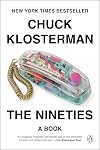
I was there. I was there when it happened. All of it!
The 90's were my roaring 20's and boy was I roaring. I was in at least 3 punk/metal/thrash bands and in at least 2 of those I was "singing". Listening to this on audio was like looking through an old photo album of memories. So many things I hadn't thought about in so long. Tyson's ear biting, Tiger Woods and Eminem, American Beauty (which I still love, I don't care what you say Klosterman!), Titanic, OJ, the Real World, Bill Clinton's show more neo-liberalism, Ross Perot.
But it's not just a retelling of events, Klosterman really does his best to make those who didn't live through the 90's, understand what the hell was actually going on, and why everyone was thinking what they were thinking - which was mostly, "oh well, not surprised, no big deal, probably doesn't make a difference."
He described me and my attitudes at the time, exactly, multiple times, and as far as I know, we've never met. That makes me feel like I'm just like everyone else who lived through the 90's as an adult, and I'm REALLY FREAKING WIERD, so it's not a good feeling.
But it was worth it. Not sure how enjoyable this would be for someone who was born after the 90's, it might be like reading about some ancient civilization or alternate dimension. show less
The 90's were my roaring 20's and boy was I roaring. I was in at least 3 punk/metal/thrash bands and in at least 2 of those I was "singing". Listening to this on audio was like looking through an old photo album of memories. So many things I hadn't thought about in so long. Tyson's ear biting, Tiger Woods and Eminem, American Beauty (which I still love, I don't care what you say Klosterman!), Titanic, OJ, the Real World, Bill Clinton's show more neo-liberalism, Ross Perot.
But it's not just a retelling of events, Klosterman really does his best to make those who didn't live through the 90's, understand what the hell was actually going on, and why everyone was thinking what they were thinking - which was mostly, "oh well, not surprised, no big deal, probably doesn't make a difference."
He described me and my attitudes at the time, exactly, multiple times, and as far as I know, we've never met. That makes me feel like I'm just like everyone else who lived through the 90's as an adult, and I'm REALLY FREAKING WIERD, so it's not a good feeling.
But it was worth it. Not sure how enjoyable this would be for someone who was born after the 90's, it might be like reading about some ancient civilization or alternate dimension. show less
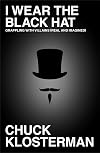
This book should really be called This Is Why They Hate You. These words and this thought recur continually throughout. Although it starts out as being about villainy (the Black Hat of the title), it soon shows its true colors – why “we” apparently love to hate celebrities.
Before that unfortunate transition, Klosterman posits some interesting paradigms to chew on, such as “People are remembered for the sum of their accomplishments but defined by their singular failure.” And “The show more villain is the person who knows the most but cares the least.” That’s an intriguing framework I looked forward to exploring. Silly me.
Klosterman is skintight in his envelope of American pop culture celebrity, mostly sports. You won’t recognize a lot of the people he considers celebrities worth hating, and in 25 years, your children will find this whole book unreadable. They won’t recognize the names he values, and will have no context to make sense of it. He gives the same celebrity/hate “analysis” to politicians, football players, coaches, basketball players, boxers, rockstars, and writers - all males, by the way. If he doesn’t think they care, they’re villains.
He really lost me when he went after Muhammad Ali. Ali was an act with a very short shelf life. To his credit, he understood that well in advance, and plotted a successful strategy. To make it to the top, he had to pull out all the stops; nothing was beneath him psyching out his opponents. He did it and he is lionized for it. But because he racially slandered Joe Frazier, Klosterman casts him as a villain. But lying can be an integral component of a vocation. It’s okay for presidents to lie, but not okay for Ali? Ali verbally pummeled every opponent in sight before they got in the ring with him. He executed brilliantly. Ali was the most entertaining athlete ever, anywhere. Celebrity, not villain. Certainly Lance Armstrong (unmentioned) before Ali. Who hates Muhammad Ali?
So while Black Hat began as fascinating, it degenerated into celebrity-bashing. A large percentage of Klosterman’s villains just aren’t. He seems to confuse villainy with character. Howard Cosell? Character. Wilt Chamberlain? Character. Chevy Chase? Character. Kareem Abdul-Jabbar? Character. You’re allowed to have a less than angelic character without being a villain. I freely admit to not hating 90% of the villains in this book.
It swings back to end on two actual villains, the tiresome OJ Simpson, and Adolf Hitler, the only historical (pre Klosterman) figure in the book. Nothing comes of it, except he classifies Hitler beyond villain, because his definition doesn’t fit. Hitler rates evil. No mention of Dick Cheney or Osama Bin Laden, who surely must rank ahead of Howard Cosell on the villain list.
Had the title been more accurate, I probably would not have read the book, but many more would. We’d all be better off for it. show less
Before that unfortunate transition, Klosterman posits some interesting paradigms to chew on, such as “People are remembered for the sum of their accomplishments but defined by their singular failure.” And “The show more villain is the person who knows the most but cares the least.” That’s an intriguing framework I looked forward to exploring. Silly me.
Klosterman is skintight in his envelope of American pop culture celebrity, mostly sports. You won’t recognize a lot of the people he considers celebrities worth hating, and in 25 years, your children will find this whole book unreadable. They won’t recognize the names he values, and will have no context to make sense of it. He gives the same celebrity/hate “analysis” to politicians, football players, coaches, basketball players, boxers, rockstars, and writers - all males, by the way. If he doesn’t think they care, they’re villains.
He really lost me when he went after Muhammad Ali. Ali was an act with a very short shelf life. To his credit, he understood that well in advance, and plotted a successful strategy. To make it to the top, he had to pull out all the stops; nothing was beneath him psyching out his opponents. He did it and he is lionized for it. But because he racially slandered Joe Frazier, Klosterman casts him as a villain. But lying can be an integral component of a vocation. It’s okay for presidents to lie, but not okay for Ali? Ali verbally pummeled every opponent in sight before they got in the ring with him. He executed brilliantly. Ali was the most entertaining athlete ever, anywhere. Celebrity, not villain. Certainly Lance Armstrong (unmentioned) before Ali. Who hates Muhammad Ali?
So while Black Hat began as fascinating, it degenerated into celebrity-bashing. A large percentage of Klosterman’s villains just aren’t. He seems to confuse villainy with character. Howard Cosell? Character. Wilt Chamberlain? Character. Chevy Chase? Character. Kareem Abdul-Jabbar? Character. You’re allowed to have a less than angelic character without being a villain. I freely admit to not hating 90% of the villains in this book.
It swings back to end on two actual villains, the tiresome OJ Simpson, and Adolf Hitler, the only historical (pre Klosterman) figure in the book. Nothing comes of it, except he classifies Hitler beyond villain, because his definition doesn’t fit. Hitler rates evil. No mention of Dick Cheney or Osama Bin Laden, who surely must rank ahead of Howard Cosell on the villain list.
Had the title been more accurate, I probably would not have read the book, but many more would. We’d all be better off for it. show less

I'll be the first to admit it. This is one of the more unlikely titles you'll see reviewed by this pastor. Klosterman is Coupland without a conscience—Žižek without political science. He wears the black hat proudly and although you might cringe at some of the things he confesses to, he comes off as strangely honest in his admitted depravity.
I read Klosterman for two reasons:
1. He is wickedly funny.
2. His analysis of popular culture reveals the heart of our society.
This was even true in show more the last essay in this collection, "How to Disappear Completely and Never Be Found," which is an analysis of the Left Behind phenomenon. Here's how he unpacks (acerbically yet truthfully) the effect believing that you're right has on people's humility:
"There is no sophisticated reason for believing in anything supernatural, so it really comes down to believing you're right. This is another example of how born agains are cool—you'd think they'd be humble, but they've got to be amazingly cocksure. And once you've crossed over, you don't even have to try to be nice; according to the born-again exemplar, your goodness will be a natural extension of your salvation. Caring about orphans and helping the homeless will come as naturally as having sex with coworkers and stealing office supplies. If you consciously do good works out of obligation, you'll never get into heaven; however, if you make God your proverbial copilot, doing good works will just become an unconscious part of your life" (238).
Now, I know I could challenge the misconceptions in this paragraph (just as I could pull apart the theological naivety behind the Left Behind books). It's clear from his comments on sophistication that he's simply never read any sophisticated Christian. Put those thoughts aside, though and hear what he says. This is what the Left Behind phenomenon conveys of Christians to one of the smartest cultural critics around.
It's not just religion Klosterman focuses on. In fact, religion is one of the smaller themes in his writing. He is at home discussing movies, music, sports, and all the other forms of entertainment we consume.
Now do you see why this pastor reads Klosterman? show less
I read Klosterman for two reasons:
1. He is wickedly funny.
2. His analysis of popular culture reveals the heart of our society.
This was even true in show more the last essay in this collection, "How to Disappear Completely and Never Be Found," which is an analysis of the Left Behind phenomenon. Here's how he unpacks (acerbically yet truthfully) the effect believing that you're right has on people's humility:
"There is no sophisticated reason for believing in anything supernatural, so it really comes down to believing you're right. This is another example of how born agains are cool—you'd think they'd be humble, but they've got to be amazingly cocksure. And once you've crossed over, you don't even have to try to be nice; according to the born-again exemplar, your goodness will be a natural extension of your salvation. Caring about orphans and helping the homeless will come as naturally as having sex with coworkers and stealing office supplies. If you consciously do good works out of obligation, you'll never get into heaven; however, if you make God your proverbial copilot, doing good works will just become an unconscious part of your life" (238).
Now, I know I could challenge the misconceptions in this paragraph (just as I could pull apart the theological naivety behind the Left Behind books). It's clear from his comments on sophistication that he's simply never read any sophisticated Christian. Put those thoughts aside, though and hear what he says. This is what the Left Behind phenomenon conveys of Christians to one of the smartest cultural critics around.
It's not just religion Klosterman focuses on. In fact, religion is one of the smaller themes in his writing. He is at home discussing movies, music, sports, and all the other forms of entertainment we consume.
Now do you see why this pastor reads Klosterman? show less

I resonate with Klosterman's musical obsession despite being one generation removed. Sure, he's only two years older than me, but when he was listening to Mötley Crüe, I was into Michael W. Smith. It wasn't until the early 90s that I started obsessing over albums and liner notes.
In Fargo Rock City, Klosterman pays tribute to the genre he loves—lovingly called "hair metal" today. The narrative is a trip through musical and personal landmarks that defined the pre-grunge era.
Klosterman's show more penchant for ridiculous arguments is on full display in this critical tour of 1980s heavy metal. He also makes a surprising number of astute musical observations. (For example, he presents an unorthodox yet logical argument for why Bush signalled the death of Grunge.)
If you long for the days of Def Leppard, Poison, Skid Row, Bon Jovi, and especially G'n'R, this book is for you. show less
In Fargo Rock City, Klosterman pays tribute to the genre he loves—lovingly called "hair metal" today. The narrative is a trip through musical and personal landmarks that defined the pre-grunge era.
Klosterman's show more penchant for ridiculous arguments is on full display in this critical tour of 1980s heavy metal. He also makes a surprising number of astute musical observations. (For example, he presents an unorthodox yet logical argument for why Bush signalled the death of Grunge.)
If you long for the days of Def Leppard, Poison, Skid Row, Bon Jovi, and especially G'n'R, this book is for you. show less
Lists
Awards


You May Also Like


Associated Authors
Statistics
- Works
- 42
- Also by
- 6
- Members
- 17,611
- Popularity
- #1,253
- Rating
- 3.7
- Reviews
- 367
- ISBNs
- 153
- Languages
- 8
- Favorited
- 76

