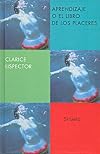
An Apprenticeship or The Book of Pleasures
by Clarice Lispector
On This Page
Description
A boundary-breaking, riveting romance narrative from the seminal Brazilian writer, Clarice Lispector. A lonely woman in Rio de Janeiro makes a connection that will change her life. Ulisses, a mysterious man, has penetrated her soul and turned her inside out. This is a devastating novel of the interior, of a woman yearning to love, of the ultimate unknowability of the other in a relationship, of the cosmic changes that enrich us and destroy us at the dawn of love.Tags
Recommendations






























Member Reviews
What to make of a book that begins with a comma and ends with a colon? Is it a meditation, an interrupted narrative, a lengthy stream of consciousness perhaps? Lispector uses all these techniques. Her skill is such that she is able to not only use them singly, but frequently all at the same time.
Lóri, the protagonist, has a "condition", one that is at first unclear. It could be physical; it could be psychological. It is actually both, but Lóri has rolled them together. Ulisses, her suitor in this still platonic relationship, is able to separate them out. Regarding her limp, her tells her The condition can't be cured but the fear of the condition is curable.
The psychological condition he regards as curable, but this can only be done by show more Lóri, from within. Psychic pain pervades her life; to avoid it she has removed herself from emotional life. As she put it to Ulisses, I'm an insurmountable mountain along my own path.
Although Lóri often seems lost, this is actually a battle of control. Ulisses has told her they will not become lovers until she overcomes her self-doubt, her fear of life, and not only becomes acquainted with herself, but knows herself. Lóri has demanded nothing in return, passively accepting these conditions, yet paradoxically she is in control. Ulisses has said he will wait for her. The timing is all hers. This puts Ulisses in a position of passively waiting for Lóri to come to him, while at the same time allowing Lóri to tease Ulisses with each psychological breakthrough.
Lispector produces a real tension here as the reader wonders with Lóri whether she will be able to achieve self-realization. However, the idea that this process was an apprenticeship, with the goal to earn Ulisses, rather than to know herself for herself, was difficult. The novel is told from Lóri's point of view. Lispector charts her discoveries in a series of what could be called progressive ellipses. She makes some progress, regresses a bit, incorporates new ideas, and moves a bit further forward, while the language circles around on itself.
We know very little about Ulisses, other than the fact that he is a philosophy professor. Why is he worth this inner struggle and turmoil? Why does he put up with Lóri bowing out time after time?
A brief note by Lispector before the novel begins may give a clue. She says, This book demanded a greater liberty that I was afraid to give. It is far above me... She has said of it elsewhere I humanized myself. Lispector, whom the Guardian has called "One of the very great writers of the last century", was a mystic. Much of Lóri's quest involves the presence she calls 'the God', an entity she struggled to comprehend. She realized though "Not understanding" was so vast that it surpassed all understanding - understanding was always limited. But not-understanding had no frontiers and led to the infinite, to the God. This made it easier. Later she discovered Because it's in the Impossible that you find reality. Perhaps Lispector's message is that the apprenticeship is life itself; to arrive at complete self knowledge would leave nothing. show less
Lóri, the protagonist, has a "condition", one that is at first unclear. It could be physical; it could be psychological. It is actually both, but Lóri has rolled them together. Ulisses, her suitor in this still platonic relationship, is able to separate them out. Regarding her limp, her tells her The condition can't be cured but the fear of the condition is curable.
The psychological condition he regards as curable, but this can only be done by show more Lóri, from within. Psychic pain pervades her life; to avoid it she has removed herself from emotional life. As she put it to Ulisses, I'm an insurmountable mountain along my own path.
Although Lóri often seems lost, this is actually a battle of control. Ulisses has told her they will not become lovers until she overcomes her self-doubt, her fear of life, and not only becomes acquainted with herself, but knows herself. Lóri has demanded nothing in return, passively accepting these conditions, yet paradoxically she is in control. Ulisses has said he will wait for her. The timing is all hers. This puts Ulisses in a position of passively waiting for Lóri to come to him, while at the same time allowing Lóri to tease Ulisses with each psychological breakthrough.
Lispector produces a real tension here as the reader wonders with Lóri whether she will be able to achieve self-realization. However, the idea that this process was an apprenticeship, with the goal to earn Ulisses, rather than to know herself for herself, was difficult. The novel is told from Lóri's point of view. Lispector charts her discoveries in a series of what could be called progressive ellipses. She makes some progress, regresses a bit, incorporates new ideas, and moves a bit further forward, while the language circles around on itself.
We know very little about Ulisses, other than the fact that he is a philosophy professor. Why is he worth this inner struggle and turmoil? Why does he put up with Lóri bowing out time after time?
A brief note by Lispector before the novel begins may give a clue. She says, This book demanded a greater liberty that I was afraid to give. It is far above me... She has said of it elsewhere I humanized myself. Lispector, whom the Guardian has called "One of the very great writers of the last century", was a mystic. Much of Lóri's quest involves the presence she calls 'the God', an entity she struggled to comprehend. She realized though "Not understanding" was so vast that it surpassed all understanding - understanding was always limited. But not-understanding had no frontiers and led to the infinite, to the God. This made it easier. Later she discovered Because it's in the Impossible that you find reality. Perhaps Lispector's message is that the apprenticeship is life itself; to arrive at complete self knowledge would leave nothing. show less
"O coração tem que se apresentar diante do Nada sozinho e sozinho bater em silêncio de uma taquicardia nas trevas."
A experiência da protagonista desta aprendizagem mostra afinidades tanto com as provações da bela Psiquê, do mito grego, quanto com a mística aventura da alma, ao atravessar a noite escura no Cântico Espiritual de São João da Cruz.
Como um quadro cujas linhas mestras o recortassem do grande mistério que tudo contém, este livro, que "se pediu uma liberdade maior", é a narrativa de uma iniciação e um extraordinário hino ao amor. Lóri, a mulher, faz uma longa viagem ao mais profundo de si mesma e chega à consciência total de ser. Diz: eu é; o homem, Ulisses, um professor de filosofia, que possui fórmulas show more para explicar o mundo, transforma-se em algo mais simples, um simples homem. Ambos serão iniciados: Ulisses fecha os ouvidos para as outras sereias porque só está disponível para Lóri, cujo verdadeiro nome é Loreley, como a personagem de Heine e de Apollinaire, uma ondina ou sereia que costumava atrair para os rochedos os barqueiros do Reno. Na verdade, cada um vai encontrar-se consigo mesmo em face do outro.
Por ser trabalho, ascese, viagem, o amor de Lóri e Ulisses vence a diferença, o estranhamento, vence até mesmo a morte, ou o medo da morte. E a entrega finalmente física dos personagens se realiza com força tântrica de êxtase, de epifania. Para Lóri, "a atmosfera era de milagre"; Ulisses "estava sofrendo de vida e de amor".
Nada termina, porém, o momento anuncia uma nova aurora: "Ambos estavam pálidos e ambos se acharam belos." Clarice, que se insere sabiamente no possível, fecha com dois pontos a narrativa que começara com uma vírgula. show less
A experiência da protagonista desta aprendizagem mostra afinidades tanto com as provações da bela Psiquê, do mito grego, quanto com a mística aventura da alma, ao atravessar a noite escura no Cântico Espiritual de São João da Cruz.
Como um quadro cujas linhas mestras o recortassem do grande mistério que tudo contém, este livro, que "se pediu uma liberdade maior", é a narrativa de uma iniciação e um extraordinário hino ao amor. Lóri, a mulher, faz uma longa viagem ao mais profundo de si mesma e chega à consciência total de ser. Diz: eu é; o homem, Ulisses, um professor de filosofia, que possui fórmulas show more para explicar o mundo, transforma-se em algo mais simples, um simples homem. Ambos serão iniciados: Ulisses fecha os ouvidos para as outras sereias porque só está disponível para Lóri, cujo verdadeiro nome é Loreley, como a personagem de Heine e de Apollinaire, uma ondina ou sereia que costumava atrair para os rochedos os barqueiros do Reno. Na verdade, cada um vai encontrar-se consigo mesmo em face do outro.
Por ser trabalho, ascese, viagem, o amor de Lóri e Ulisses vence a diferença, o estranhamento, vence até mesmo a morte, ou o medo da morte. E a entrega finalmente física dos personagens se realiza com força tântrica de êxtase, de epifania. Para Lóri, "a atmosfera era de milagre"; Ulisses "estava sofrendo de vida e de amor".
Nada termina, porém, o momento anuncia uma nova aurora: "Ambos estavam pálidos e ambos se acharam belos." Clarice, que se insere sabiamente no possível, fecha com dois pontos a narrativa que começara com uma vírgula. show less
Em honra do centenário de Clarice Lispector
Costumo dizer com veemência que ninguém escreve como Hilda Hilst, mas ninguém escreve como Lispector também. Transformando uma estória aparentemente banal num profundo exercício de estilo em termos literários e filosóficos, essa leitura rápida alimenta o corpo e mente para quem tem fome da mais pura arte.
Costumo dizer com veemência que ninguém escreve como Hilda Hilst, mas ninguém escreve como Lispector também. Transformando uma estória aparentemente banal num profundo exercício de estilo em termos literários e filosóficos, essa leitura rápida alimenta o corpo e mente para quem tem fome da mais pura arte.
[b:An Apprenticeship or The Book of Pleasures|53492652|An Apprenticeship or The Book of Pleasures|Clarice Lispector|https://i.gr-assets.com/images/S/compressed.photo.goodreads.com/books/1605907016l/53492652._SX50_.jpg|148136] is not a quick read try as I did to make it so (overdue at the library). [a:Clarice Lispector|86098|Clarice Lispector|https://images.gr-assets.com/authors/1513703541p2/86098.jpg] is deeply thoughtful and concerned with identity and mysticism and love in ways that have never crossed my mind. [a:Sheila Heti|183760|Sheila Heti|https://images.gr-assets.com/authors/1324044844p2/183760.jpg] has written an afterward guiding the reader although I am still flailing. The book begins with a lone comma, and ends with a colon" show more and goes blank.
The story is about a woman named Lóri and her overwhelming obsession with and love for "the philosophy teacher Ulisses, who to a modern feminist reads as insufferably self-important."At one point, the narrator panics because she's unable to answer the question who am I and soothes herself by making a list of the things she can do:
"eat--look at fruit in the market--see people's faces--feel love--feel hate--have something not known and feel a unbearable suffering--wait impatiently for the beloved--sea--go into the sea--buy a new swimsuit--make coffee--look at objects--listen to music--holding hands--irritation--be right--not be right and give in to someone who is--be forgiven for the vanity of living--be a woman--do myself credit--laugh at the absurdity of my condition--have no choice--have a choice--fall asleep."
Lovely writing:
Her smile in springtime, "was a smile that had the idiocy of angels."
"Long before the arrival of the new season came its harbinger: unexpectedly a mildness in the wind, the first softness in the air. Impossible! Impossible that this softness in the air wouldn't bring more! says the heart, breaking."
On a memorable visit to a market, she sees the "pure purple blood running from a crushed beet root on the ground;" the potato...born inside the earth...whiter than a peeled apple; the fish smell was their souls after death; and the pears...so replete with themselves, almost at their peak; and the unwonted turnips. "
Maybe I've aged out of these love themes and the existential concerns that rack the narrator in physical anguish. Or a reread is in order. I also will go back to the author's fiction. show less
The story is about a woman named Lóri and her overwhelming obsession with and love for "the philosophy teacher Ulisses, who to a modern feminist reads as insufferably self-important."At one point, the narrator panics because she's unable to answer the question who am I and soothes herself by making a list of the things she can do:
"eat--look at fruit in the market--see people's faces--feel love--feel hate--have something not known and feel a unbearable suffering--wait impatiently for the beloved--sea--go into the sea--buy a new swimsuit--make coffee--look at objects--listen to music--holding hands--irritation--be right--not be right and give in to someone who is--be forgiven for the vanity of living--be a woman--do myself credit--laugh at the absurdity of my condition--have no choice--have a choice--fall asleep."
Lovely writing:
Her smile in springtime, "was a smile that had the idiocy of angels."
"Long before the arrival of the new season came its harbinger: unexpectedly a mildness in the wind, the first softness in the air. Impossible! Impossible that this softness in the air wouldn't bring more! says the heart, breaking."
On a memorable visit to a market, she sees the "pure purple blood running from a crushed beet root on the ground;" the potato...born inside the earth...whiter than a peeled apple; the fish smell was their souls after death; and the pears...so replete with themselves, almost at their peak; and the unwonted turnips. "
Maybe I've aged out of these love themes and the existential concerns that rack the narrator in physical anguish. Or a reread is in order. I also will go back to the author's fiction. show less
3.75 stars if im being specific. this is a beautiful and beautifully smart book. Lori's character, especially in her scenes alone, is so well crafted. I wasn't prepared for this to be a romance because I went in blind, and I do have to say it disappointed me. I do take into account that it was published in the late sixties, but the overarching theme of the man (Ulisses) being mentally stronger, more worldly, more knowledgable than the woman (Lori) and wanting a woman to "paint as a blank canvas" is not only uncomfortable to read but also addressed in a manner that makes little sense to me in terms of the rest of the book. Even to the last page we see Lori giving in to Ulisses's corrections of her thoughts and ideas. I don't want to say show more it should be written another way or try to say how it should be written, because I have no capability in doing that - and I don't know enough about Lispector to know how she may have intended this book to read. All I know is I don't appreciate the (implied) sentiment that a woman needs a man, who is "obviously" more intelligent and altogether better than her, in order to teach her how to live.
That being said, I don't think that is a reason to disregard this book, or to not read it if you want to read it. I would even still recommend this book to friends, just maybe with a slight warning. show less
That being said, I don't think that is a reason to disregard this book, or to not read it if you want to read it. I would even still recommend this book to friends, just maybe with a slight warning. show less
"We, like all people, have the potential to be gods. I don’t mean gods in the divine sense. First we must follow nature, not forgetting its low moments, since nature is cyclical, it’s rhythm, it’s like a beating heart. Existing is so completely out of the ordinary that if we were aware of existing for more than a few seconds, we’d go mad. The solution to this absurdity called “I exist,” the solution is to love another being who, this someone else, we understand does exist."
So, I first decided to read this book because I had read a quote on a friend's facebook status, and really liked how the words were phrased.
It didn't disappoint me at all. It starts a little "boring", making you believe it is incomplete and you're arriving to a story that has already started and you just feel out of place, as if fitting and reading it is something you shouldn't be doing. Then, before you actually notice it, it grasps you and throws you into Lori's mind. You feel as sad as she does, you question yourself when she does, and sometimes you want to cry out the answers or your own plea!
It didn't disappoint me at all. It starts a little "boring", making you believe it is incomplete and you're arriving to a story that has already started and you just feel out of place, as if fitting and reading it is something you shouldn't be doing. Then, before you actually notice it, it grasps you and throws you into Lori's mind. You feel as sad as she does, you question yourself when she does, and sometimes you want to cry out the answers or your own plea!
Members
- Recently Added By
Lists

Reading LIst
648 works; 1 member
Author Information

Clarice Lispector was born in the Ukraine and was taken to Brazil as a young child. She was a law student, editor, translator, and newswriter, who traveled widely, spending eight years in the United States. "Family Ties" (1960) is a collection of short stories revealing Lispector's existentialist view of life and demonstrating that even family show more ties and social relationships are temporary. Although tied to each other and to the outside world, the characters are finally totally alone and separate. Lispector received praise from American critics for "The Apple in the Dark" (1967), a novel about a guilt-ridden man's search for the ultimate knowledge (Eve's apple), which he believes will bring him hope. Lispector's books are being translated into various languages in Europe, especially in France, where the critic Helene Cixous is one of her great admirers and a promoter of her works. (Bowker Author Biography) show less
Some Editions
Awards and Honors
Series
Belongs to Publisher Series
Common Knowledge
- Canonical title*
- Oppiaika eli nautintojen kirja
- Original title
- Uma aprendizagem ou O livro dos prazeres
- Original publication date
- 1969
- Original language*
- portugali
*Some information comes from Common Knowledge in other languages. Click "Edit" for more information.
Classifications
- Genres
- Fiction and Literature, General Fiction, Romance
- DDC/MDS
- 869.3 — Literature & rhetoric Spanish Literature Literatures of Portuguese and Galician languages Portuguese fiction
- LCC
- PQ9697 .L585 .A8713 — Language and Literature French, Italian, Spanish and Portuguese literatures Portuguese literature Provincial, local, colonial, etc. Brazil
- BISAC
Statistics
- Members
- 605
- Popularity
- 48,415
- Reviews
- 15
- Rating
- (4.02)
- Languages
- 7 — English, Finnish, French, German, Italian, Portuguese, Spanish
- Media
- Paper, Ebook
- ISBNs
- 34
- ASINs
- 6