

Works by Leanne Shapton
Associated Works
An Apprenticeship or The Book of Pleasures (1969) — Cover artist, some editions — 601 copies, 15 reviews
The Artists' and Writers' Cookbook: A Collection of Stories with Recipes (2016) — Contributor — 19 copies
Tagged
Common Knowledge
- Birthdate
- 1973-06-25
- Gender
- female
- Occupations
- art director (New York Times)
- Organizations
- New York Times
- Nationality
- Canada (birth)
USA - Birthplace
- Mississauga, Ontario, Canada
- Places of residence
- Toronto, Ontario, Canada
New York, New York, USA - Associated Place (for map)
- Ontario, Canada
Members
Reviews
Important artifacts and personal property from the collection of Lenore Doolan and Harold Morris, including books, street fashion, and jewelry by Leanne Shapton

Re-reading this I was struck by the richness of the story that is told in the spaces between the photographs of items from once entwined lives and the sparse objective auctionerr's lot descriptions. The technique is stretched my the electronic age (will we ever auction printouts of emails?) and obliges the couple to live in an anachronistic world of letters, postcards and polaroids that might have worked in the 1980s but is not quite in touch with the 2000s. This is such a tiny gripe about a show more slice of mastery. show less
Important Artifacts and Personal Property from the Collection of Lenore Doolan and Harold Morris, Including Books, Street Fashion, and Jewelry by Leanne Shapton
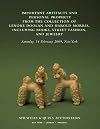
I was instantly in love with the concept behind this. And it was more more complex than her earlier book, which I also really enjoyed. Overall, really well executed. They seemed like the sort of people who really would end up together, and really wouldn't work out. (I did keep wondering whether their incompatibility would have been so obvious if we weren't told at the very beginning that it failed.) She did clearly have a mysterious supplemental income, or a nasty credit card habit, but show more that's so common these days in any medium -- young characters have to be living in NYC no matter what. Giving him a job with lots of travel was a great vehicle for their interactions. And I loved the conversations on playbills. The unusual (?) habit of regularly leaving notes in books seemed a stretch, however. The truly brilliant entry was the restaurant tab towards the end, with the entrees crossed out. It said so much in so few words. show less
Important Artifacts and Personal Property from the Collection of Lenore Doolan and Harold Morris, Including Books, Street Fashion, and Jewelry by Leanne Shapton

This was really unique! An auction catalog of artifacts documenting the rise and fall of a couple's relationship. There is a lot embedded in here, and I loved how the reader becomes an active participant, piecing the story together from each new auction lot. Also an interesting commentary on the sentimentalism related to every day objects and the stories those objects can tell.
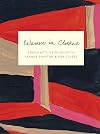
‘Women in Clothes’ collects a sprawling project interviewing (mostly American) women about what they wear and what clothes mean to them. Reading it is inevitably a rather fragmentary experience, as each snippet is only a few pages of the five hundred total. There are also plenty of illustrations, giving the air of a lengthy, intellectual magazine. At first I preferred to read only a small amount of it at time, before getting immersed. I think what makes the project compelling is starting show more to reflect on how your own perceptions and experiences are similar and different to the project’s contributions. A few seemed insufferable, while others were wise or tragic, but the vast majority were thought-provoking. Visually, I particularly liked the photocopies of women’s hands and accompanying discussion of the rings they wore. Also the photos of mothers before they had children, which addressed the generational elements of style and dressing. By contrast, I found the diagrams of clothes scattered on the floor horrifying, as I am very tidy and would NEVER leave clothes on the floor. (Whenever past housemates left their clothes on the floor, I picked them up.) The strongest element and the backbone of the whole project, however, are the survey responses and interviews. The wide range of voices give a fascinating overall impression.
As previously mentioned in my review of [b:The Curated Closet: A Simple System for Discovering Your Personal Style and Building Your Dream Wardrobe|28364022|The Curated Closet A Simple System for Discovering Your Personal Style and Building Your Dream Wardrobe|Anuschka Rees|https://images.gr-assets.com/books/1465676327s/28364022.jpg|48435763], I think about clothes quite a lot already. Nonetheless, ‘Women in Clothes’ inspired me to further reflection and even action. One interview mentioned the futility of keeping garments that will only ever have sad associations, reminding me that I have a purple dress that I wore to my beloved Nana’s funeral last year. I haven’t worn it since and think of the funeral whenever I look at it. Yet I kept it, because I like the shape, colour, and fit. Now I realise that I never want to wear it again, so must give it to charity. I have other things to remind me of happy times with my Nana, rather than the distress of her funeral. The book also spurred me to look through past years of outfit photos that I used to take regularly. Recalling 2013, 2014, and 2015 through outfit selfies was a striking experience. What I wear, what we all wear to some extent, is mediated by how we feel. I started wearing a lot of big, soft woollen jumpers in 2014, during my PhD, because I felt unhappy and they were reassuring. The interviewee who talked about how garments feel on the skin really struck a chord with me - I care a great deal about clothes feel on my body, perhaps more than I care about how they look. Indeed, I think the two are linked.
As well as the individual importance of garments, the book engages somewhat with the fashion industry and the damage it causes. There is a moving and horrifying interview with a survivor of the Rana Plaza factory collapse, a catastrophe in which more than a thousand people died. Several other interviewees focus on the ethical quandaries of dressing. One of them reassured me by stating firmly that second hand clothing is the way forward - we need to stop buying so much new stuff. This is my policy and I rarely buy new clothes, just underwear or the occasional item that I’ve failed for months to find second hand a couple of times a year. Buying ethical new clothes is fraught with difficulties: limited sizing, lack of availability, and the ever-present suspicion of greenwash. I have bought organic cotton items from H&M, although I know that their fast fashion low price ethos is fundamentally incompatible with ethical, environmentally responsible production. I always feel guilty about new purchases. Buying clothes from charity shops, by contrast, is about fun, discovery, and experimentation. Worst case, you’ve given a few pounds to a good cause and can donate the garment back if you don’t wear it.
‘Women in Clothes’ is a broad project and I’m not sure how many readers would think it worth going through the entire write-up. It would be ideal to dip into, though, and I think anyone with even a modicum of interest in clothes, make-up, perfume, embodiment, or femininity would find a lot to think about. The survey responses have a sincere, honest air. Although some across as pretentious or over-privileged, they all have something compelling to say. (I can probably come across as pretentious myself when talking about clothes.) I was tempted to try and answer all the survey questions myself, as well as reflecting on garments that I’ve known, loved, and love still. To me, and certain interviewees, clothing still retains the quality of dressing up in a costume that it possessed during childhood. A tiny pleasure that enhances the mundane working day is to choose an outfit to be someone slightly different, a character in some story more dramatic than your office job. It needn't be perceptible to anyone but you. I took to heart a comment I once read online: Dress for the dystopia you want, not the one that you have. show less
As previously mentioned in my review of [b:The Curated Closet: A Simple System for Discovering Your Personal Style and Building Your Dream Wardrobe|28364022|The Curated Closet A Simple System for Discovering Your Personal Style and Building Your Dream Wardrobe|Anuschka Rees|https://images.gr-assets.com/books/1465676327s/28364022.jpg|48435763], I think about clothes quite a lot already. Nonetheless, ‘Women in Clothes’ inspired me to further reflection and even action. One interview mentioned the futility of keeping garments that will only ever have sad associations, reminding me that I have a purple dress that I wore to my beloved Nana’s funeral last year. I haven’t worn it since and think of the funeral whenever I look at it. Yet I kept it, because I like the shape, colour, and fit. Now I realise that I never want to wear it again, so must give it to charity. I have other things to remind me of happy times with my Nana, rather than the distress of her funeral. The book also spurred me to look through past years of outfit photos that I used to take regularly. Recalling 2013, 2014, and 2015 through outfit selfies was a striking experience. What I wear, what we all wear to some extent, is mediated by how we feel. I started wearing a lot of big, soft woollen jumpers in 2014, during my PhD, because I felt unhappy and they were reassuring. The interviewee who talked about how garments feel on the skin really struck a chord with me - I care a great deal about clothes feel on my body, perhaps more than I care about how they look. Indeed, I think the two are linked.
As well as the individual importance of garments, the book engages somewhat with the fashion industry and the damage it causes. There is a moving and horrifying interview with a survivor of the Rana Plaza factory collapse, a catastrophe in which more than a thousand people died. Several other interviewees focus on the ethical quandaries of dressing. One of them reassured me by stating firmly that second hand clothing is the way forward - we need to stop buying so much new stuff. This is my policy and I rarely buy new clothes, just underwear or the occasional item that I’ve failed for months to find second hand a couple of times a year. Buying ethical new clothes is fraught with difficulties: limited sizing, lack of availability, and the ever-present suspicion of greenwash. I have bought organic cotton items from H&M, although I know that their fast fashion low price ethos is fundamentally incompatible with ethical, environmentally responsible production. I always feel guilty about new purchases. Buying clothes from charity shops, by contrast, is about fun, discovery, and experimentation. Worst case, you’ve given a few pounds to a good cause and can donate the garment back if you don’t wear it.
‘Women in Clothes’ is a broad project and I’m not sure how many readers would think it worth going through the entire write-up. It would be ideal to dip into, though, and I think anyone with even a modicum of interest in clothes, make-up, perfume, embodiment, or femininity would find a lot to think about. The survey responses have a sincere, honest air. Although some across as pretentious or over-privileged, they all have something compelling to say. (I can probably come across as pretentious myself when talking about clothes.) I was tempted to try and answer all the survey questions myself, as well as reflecting on garments that I’ve known, loved, and love still. To me, and certain interviewees, clothing still retains the quality of dressing up in a costume that it possessed during childhood. A tiny pleasure that enhances the mundane working day is to choose an outfit to be someone slightly different, a character in some story more dramatic than your office job. It needn't be perceptible to anyone but you. I took to heart a comment I once read online: Dress for the dystopia you want, not the one that you have. show less
Lists
Awards


You May Also Like


Associated Authors
Statistics
- Works
- 15
- Also by
- 15
- Members
- 1,276
- Popularity
- #20,105
- Rating
- 4.0
- Reviews
- 66
- ISBNs
- 54
- Languages
- 5
- Favorited
- 1