On This Page
Description
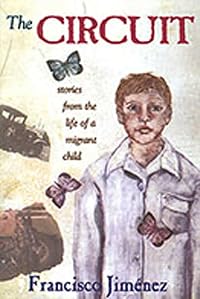
"'La frontera'...I heard it for the first time back in the late 1940s when Papa and Mama told me and Roberto, my older brother, that someday we would take a long trip north, cross la frontera, enter California, and leave our poverty behind." So begins this honest and powerful account of a family's journey to the fields of California — to a life of constant moving, from strawberry fields to cotton fields, from tent cities to one-room shacks, from picking grapes to topping carrots and show more thinning lettuce. Seen through the eyes of a boy who longs for an education and the right to call one palce home, this is a story of survival, faith, and hope. It is a journey that will open readers' hearts and minds.. show less
Tags
Recommendations
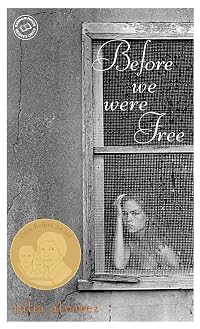
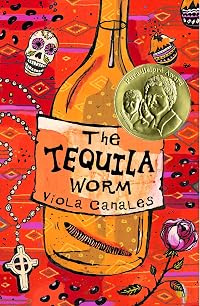
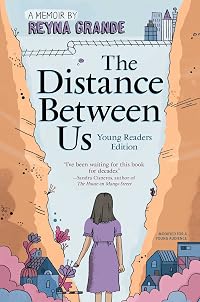
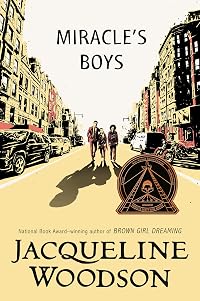







Member Reviews
This slim volume packs an extraordinary emotional punch. The stories Jimenez relates are autobiographical, depicting the life he and his family led as migrant workers in 1940s California. Told from the perspective of the second son in a strong, loving family, the stories carry the reader through about eight years of working “the circuit.”
What I particularly like about the book is that while Jimenez doesn’t sugarcoat the difficulties of this life, he doesn’t dwell on the negatives, either. Yes, we suffer with the family when they cannot afford medical care for a seriously ill child, the father is injured on the job, or people take advantage of their circumstances. But what is more memorable to me is the enjoyment in reading show more about the pleasure of exploring a new setting, of inventing games to play, of laughing with your friends or family, of learning new skills, of achieving goals. I think it is an accurate depiction of how children see the world and their place in it. Jimenez was wise to choose this voice for his stories. I could not help but think of my father, or of cousins who “picked cherries every summer.” I cried, I laughed; I loved this family.
The ending is a kick to the stomach and I sat stunned for a few moments … looking at the last two blank pages and the back cover in disbelief that the book had ended. I know there is a sequel and I will definitely read it. show less
What I particularly like about the book is that while Jimenez doesn’t sugarcoat the difficulties of this life, he doesn’t dwell on the negatives, either. Yes, we suffer with the family when they cannot afford medical care for a seriously ill child, the father is injured on the job, or people take advantage of their circumstances. But what is more memorable to me is the enjoyment in reading show more about the pleasure of exploring a new setting, of inventing games to play, of laughing with your friends or family, of learning new skills, of achieving goals. I think it is an accurate depiction of how children see the world and their place in it. Jimenez was wise to choose this voice for his stories. I could not help but think of my father, or of cousins who “picked cherries every summer.” I cried, I laughed; I loved this family.
The ending is a kick to the stomach and I sat stunned for a few moments … looking at the last two blank pages and the back cover in disbelief that the book had ended. I know there is a sequel and I will definitely read it. show less
A memoir of life as an undocumented child of Mexican migrants picking crops in California in the middle of the 20th century. Very well written, captures the childhood experience of normalcy and excitement and the exhaustion that comes with maturation, crushing poverty, love, and lack of options. I found myself drawn to the implicit indictment of lack of birth control (4 more siblings in just a handful of years, starting from a place of soul-crushing poverty!), an educational system that left the author to coast without any language support and then demanded he repeat the experience the next year, and how chances to get ahead flee with each new slap of poverty and bad luck.
Powerful in its transference of the beloved middle school show more struggle story to the recent present and to a person's lived experience -- this short book seems to be well known in the 10-14 age group, and for cause. show less
Powerful in its transference of the beloved middle school show more struggle story to the recent present and to a person's lived experience -- this short book seems to be well known in the 10-14 age group, and for cause. show less
I really enjoyed the characters and the message of this book. Because the main character, Panchito tells the story, the reader knows all of his thoughts. This gives the reader a glimpse of what the life of an illegal immigrant child is like. He faces many obstacles: interrupted and limited schooling, money, frequent moves, and fear of deportation. All of these factors put stress on his shoulders, even as a young child. Panchito describes desperately begging his father to pick cotton with him in order to earn money and support the family, a worry many children born in the U.S. have not experienced. Learning about the emotions of Panchito can promote empathy and consideration for others.
The overall message of the book is the unity and show more importance of family, but also the risks and struggles of illegal immigration. Throughout all the obstacles the family overcomes; sick children, lack of jobs and money, and unexpected disasters, they all stick together and support each other. This is an important concept for children to learn as families should always stick together and support each other in good and bad times. Also, this book challenges the stigma of illegal immigration today. Many may not realize how this affects the children emotionally and psychologically. Reading this book helped me understand what the life of immigrant children may be like in the United States. Gaining a better understanding of a student’s home life can foster acceptance and tolerance of different cultures and lifestyles in the classroom. show less
The overall message of the book is the unity and show more importance of family, but also the risks and struggles of illegal immigration. Throughout all the obstacles the family overcomes; sick children, lack of jobs and money, and unexpected disasters, they all stick together and support each other. This is an important concept for children to learn as families should always stick together and support each other in good and bad times. Also, this book challenges the stigma of illegal immigration today. Many may not realize how this affects the children emotionally and psychologically. Reading this book helped me understand what the life of immigrant children may be like in the United States. Gaining a better understanding of a student’s home life can foster acceptance and tolerance of different cultures and lifestyles in the classroom. show less
After reading the autobiography, I had mixed feelings because of the sad ending. I loved hearing about Francisco’s journey with his family as they moved around the coast of California making a living while working in the cotton fields. After all of the family’s progress, I found it difficult to enjoy because in a surprise twist, Francisco is deported back to Mexico. As a reader, you learn to root for the protagonist and feel empathy for them (especially because it was an autobiography). Then when tragedy strikes, you feel betrayal towards the author.
I liked the first person point of view. “I wanted to fall asleep and wake up to find it was only a dream.” Here, the reader can look inside Francisco’s mind and read his thoughts; show more It creates a connection between speaker and reader. Another thing I liked was the writing style. Jiménez occasionally throws in Spanish words such as “corridos,” “viejo,” and “carcachita” along with context clues to give the book an authentic feel.
The message I found in this story is family will always be there for you. Francisco reciprocates the sibling love Roberto showed him in caring for his five younger siblings. Even when the family had no money and were praying for their dying infant, the parents managed to give their children candy for Christmas. Also, moving from school to school, Francisco did not make many friends. Francisco’s older brother always made time to play with his younger brother. Family is who we can count on when life gets tough. show less
I liked the first person point of view. “I wanted to fall asleep and wake up to find it was only a dream.” Here, the reader can look inside Francisco’s mind and read his thoughts; show more It creates a connection between speaker and reader. Another thing I liked was the writing style. Jiménez occasionally throws in Spanish words such as “corridos,” “viejo,” and “carcachita” along with context clues to give the book an authentic feel.
The message I found in this story is family will always be there for you. Francisco reciprocates the sibling love Roberto showed him in caring for his five younger siblings. Even when the family had no money and were praying for their dying infant, the parents managed to give their children candy for Christmas. Also, moving from school to school, Francisco did not make many friends. Francisco’s older brother always made time to play with his younger brother. Family is who we can count on when life gets tough. show less
I thought that this was a fantastic book. I liked it for a couple different reasons. First of all, I thought the story itself was so eye opening. Many people don't realize what life is like for a young immigrant child. Readers of this book will get a glimpse of their struggles and walk away with a new perspective and understanding for children in these circumstances. The messages from this story, appreciate what you have and be helpful, are quite impactful on the reader. I also liked this book because all of the characters, but particularly the main character Panchito are so believable and relatable. This is so because they are real life people. Since the book is a biography, the characters are very real and are relatable. Readers find show more themselves getting attached to the characters throughout the book and it is hard to watch this family suffer, even up until the end of the book. Panchito, particularly, is quite believable. This biography focuses around this young boy and the text is written in a way that you feel like you are hearing the story from a young child. These characters give the book that much more depth and a realistic feeling. show less
I had mixed feelings about this book. I liked this book because it pushes readers to think about the tough issue of immigration and about the idea that many immigrant families face a great deal of hardships. For example, in The Circuit, the main character and his family must move from town to town because of harvesting seasons. They live in very poor conditions, and Francisco and his siblings must oftentimes skip school to make money to provide for the family. The main character speaks little English and is often ostracized at school by both children and the teachers. These are very tough issues to read about, but I feel that it is important for children to understand the many struggles and hardships that migrant families face in our show more country. Some children might also be able to relate to Francisco's difficulties making friends or learning a new language.
However, I had mixed feelings about this book because of its rather morose ending. While our main character has been studying and practicing English and is about to recite the beginning of the Declaration of Independence ("...all men are created equal, that they are endowed by their Creator with certain unalienable Rights, that among these are Life, Liberty and the pursuit of Happiness..."), an immigration officer comes into his room and takes him away, presumably back to Mexico. While this ending evoked a powerful reaction from me, I can't help but wonder if this type of ending might be too mature for a young audience. The ending could evoke a sense of injustice and outrage among the young readers, or could leave them very upset and feeling hopeless about the situation.
The big idea of this story is to show the complexities and difficulties of a migrant child's life in America. The Circuit shows the different struggles of Francisco's life, from poverty, to making friends, to learning English, to providing for his family. While Francisco is often able to make the best of his situation through hard work and perseverance, some circumstances are simply out of his control. show less
However, I had mixed feelings about this book because of its rather morose ending. While our main character has been studying and practicing English and is about to recite the beginning of the Declaration of Independence ("...all men are created equal, that they are endowed by their Creator with certain unalienable Rights, that among these are Life, Liberty and the pursuit of Happiness..."), an immigration officer comes into his room and takes him away, presumably back to Mexico. While this ending evoked a powerful reaction from me, I can't help but wonder if this type of ending might be too mature for a young audience. The ending could evoke a sense of injustice and outrage among the young readers, or could leave them very upset and feeling hopeless about the situation.
The big idea of this story is to show the complexities and difficulties of a migrant child's life in America. The Circuit shows the different struggles of Francisco's life, from poverty, to making friends, to learning English, to providing for his family. While Francisco is often able to make the best of his situation through hard work and perseverance, some circumstances are simply out of his control. show less
The Circuit is an autobiography by Francisco "Panchito" Jimenez that tells him and his family's story of moving from Mexico to the United States of America. I appreciated this book because it told the harsh truths of people migrating to America, which can serve as a way to teach children who grew up in America to appreciate not having to go through as many struggles as children such as Panchito. Growing up, he has had to move to different cities and schools, making it nearly impossible to receive the education he wants and deserves. His family struggles to keep jobs (harvesting crops) for long periods of time, making it hard to even eat. This book is incredibly personal; it will make you fell all the emotions. I could see this book show more being read aloud by the teacher to grades 3-5 or even used as a guided reading book in fifth grade.
Questions to consider when using this book (throughout):
-What problems do Panchito and his family face? How do they deal with them? show less
Questions to consider when using this book (throughout):
-What problems do Panchito and his family face? How do they deal with them? show less
Members
- Recently Added By
Author Information

28+ Works 4,040 Members
Francisco Jiménez emigrated from Tlaquepaque, Mexico to California, where he worked for many years in the fields with his family. He received a bachelor's degree from Santa Clara University and a master's degree and a Ph.D. in Latin American literature from Columbia University. He is a professor at Santa Clara University. He has published and show more edited several books on Mexican and Mexican American literature, and his stories have been published in over 100 textbooks and anthologies of literature. His books include The Circuit, Breaking Through, La Mariposa, The Christmas Gift/El Regalo de Navidad, Reaching Out, and Taking Hold: From Migrant Childhood to Columbia University. (Bowker Author Biography) show less
Awards and Honors
Awards
Distinctions
Notable Lists
Series

Common Knowledge
- Important places
- California, USA; Mexico
- Dedication
- To my parents and my seven sisters and brothers:
Avelina/Rorra;
Evangelina/ Yerman;
Maria Luisa/Licha;
Roberto/Toto;
Jose Francisco/Trampita;
Juan Manuel/Torito;
and Rub... (show all)en/Carne Seca - Quotations
- We left the station. Papa carried our dark brown suitcase. We followed behind him until we reached a barbed wire fence. According to Papa, this was la frontera. He pointed out that across the gray wire barricade was Californi... (show all)a, that famous place I'd heard so much about. On both sides of the fence were armed guards dressed in green uniforms. Papa called them la migra, and explained that we had to cross the fence to the other side without being seen by them.
Classifications
Statistics
- Members
- 1,997
- Popularity
- 10,567
- Reviews
- 259
- Rating
- (4.21)
- Languages
- English, Spanish
- Media
- Paper, Audiobook, Ebook
- ISBNs
- 30
- UPCs
- 4
- ASINs
- 12