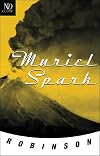
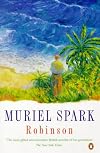
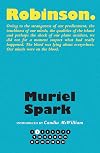
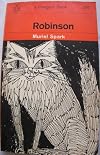
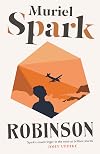
Robinson
by Muriel Spark
On This Page
Description
When their plane, bound for the Azores, crashes on a tiny island, January Marlow and her fellow survivors become the unwelcome guests of the island's solitary owner, Robinson.Tags
Recommendations



























Member Recommendations
Member Reviews
As we almost guessed from the title, Spark's second novel turns out to be an island story, complete with a map of the island as frontispiece. Islands in fiction come in two basic categories, the deserted (Robinson Crusoe to Five on a Treasure Island and Lord of the flies) and the Magus-dominated (The Odyssey and The Tempest to The invention of Morel). Needless to say, Spark cunningly manages to combine the two, when Robinson, the Prospero of his eponymous island, goes missing halfway through the book, presumed murdered by one of the three survivors of the plane crash.
But - as we also guessed - there's more to all this than sea changes, strange noises, Prospero's books, secret passages, a plane crash and a murder mystery. That would be show more barely enough to fill 50 pages in a Spark novel, and we have a good 150 here...
So, there's English social comedy, with the narrator (a slightly bohemian poet and widowed mother) finding that the men she's with on the island strangely remind her of her brothers-in-law, one a pompously respectable doctor, the other an amusing but unreliable bookie. There's Robinson's rather austere and Jansenist version of Catholicism, which makes the narrator, a recent convert, uncomfortable with her own more exuberant faith. There's the occultism of one of the other castaways - as so often in Spark, he's a fraud and a charlatan, but we're left wondering whether there isn't some real evil underlying his self-serving mumbo-jumbo. There's the ambiguous foreigner, Jimmie - said to be a Gibraltarian-born Dutchman - whose sexuality is in question throughout the novel but never quite resolved. And - last but by no means least - there's a pomegranate plantation and a ping-pong-playing pussycat. show less
But - as we also guessed - there's more to all this than sea changes, strange noises, Prospero's books, secret passages, a plane crash and a murder mystery. That would be show more barely enough to fill 50 pages in a Spark novel, and we have a good 150 here...
So, there's English social comedy, with the narrator (a slightly bohemian poet and widowed mother) finding that the men she's with on the island strangely remind her of her brothers-in-law, one a pompously respectable doctor, the other an amusing but unreliable bookie. There's Robinson's rather austere and Jansenist version of Catholicism, which makes the narrator, a recent convert, uncomfortable with her own more exuberant faith. There's the occultism of one of the other castaways - as so often in Spark, he's a fraud and a charlatan, but we're left wondering whether there isn't some real evil underlying his self-serving mumbo-jumbo. There's the ambiguous foreigner, Jimmie - said to be a Gibraltarian-born Dutchman - whose sexuality is in question throughout the novel but never quite resolved. And - last but by no means least - there's a pomegranate plantation and a ping-pong-playing pussycat. show less
Perhaps the most absorbing interest in this short novel is the prominence that the Catholic faith takes in Spark's approach to the psychological interpretation of her fellow castaways and of Robinson himself, lord of all he surveys.
It is a very good read. Muriel Spark is a champion at put-downs that are directed at loathsome characters such at fellow cast-away, Tom Wells. Her female hero in this novel (January Marlowe) is a clear headed, decisive woman who gets cross when others behave poorly and worse. I thought her comparison of her two castaway companions with her brothers-in-law clever.
Muriel Spark wrote at a high standard over a long career.
It is a very good read. Muriel Spark is a champion at put-downs that are directed at loathsome characters such at fellow cast-away, Tom Wells. Her female hero in this novel (January Marlowe) is a clear headed, decisive woman who gets cross when others behave poorly and worse. I thought her comparison of her two castaway companions with her brothers-in-law clever.
Muriel Spark wrote at a high standard over a long career.
I didn't care for this one as much as some of her others as I found it lacked much of the humor in Loitering With Intent (for example). However, now that a few days have passed since I finished it, I find that certain aspects of it are sticking with me more than I expected.
Spark does an excellent job describing how the suspense and fear occasioned by the discovery ofRobinson's disappearance & the bloody trail to the mouth of the volcano impacted January Marlowe's perceptions of the people around her and their actions. Marlowe in her journal as well as in her thoughts tried to be rational and logical but her personal feelings about the other people involved couldn't help influencing her.
Another aspect which stands out for me is the show more religious one. Marlowe, like Spark herself, is a convert to Catholicism. She finds herself at odds with Robinson (and her brother-in-law back in England) who has an extreme aversion to Marianism (which I guess is the worship of the Virgin Mary), and indeed any sort of physical object of worship other than the crucifix, which he regards as superstition. As a result heconfiscated Marlowe's rosary while she was unconscious, a fact she discovers later. This feeling impacts another of the survivors, Tom Wells, who sells "lucky charms". The reader is invited to consider whether Catholic ritual is indeed integral to the religion or whether it is just a superstition like Wells' lucky charms (or indeed conversely if the belief in lucky charms might be religious!).
Don't get me wrong, this isn't really a "religious" book and for those not interested in this theme, it is just part of the background to the story. show less
Spark does an excellent job describing how the suspense and fear occasioned by the discovery of
Another aspect which stands out for me is the show more religious one. Marlowe, like Spark herself, is a convert to Catholicism. She finds herself at odds with Robinson (and her brother-in-law back in England) who has an extreme aversion to Marianism (which I guess is the worship of the Virgin Mary), and indeed any sort of physical object of worship other than the crucifix, which he regards as superstition. As a result he
Don't get me wrong, this isn't really a "religious" book and for those not interested in this theme, it is just part of the background to the story. show less
Muriel Spark has become my go-to author when I need a little cheering up. ‘Robinson’ is not one of her most gripping novellas in my opinion, yet it still contains the essential characteristics of her oeuvre that I enjoy so much: sardonic and unconventional female narrators, strange social situations, witty dialogue, unexpected twists, and memorably peculiar details. That combination is sufficient to lift my spirits. In this case the narrator, a widow named January, is marooned on an island with three men and a boy after a plane crash. The uncomfortable dynamic within the group is further unsettled when one of them vanishes under suspicious circumstances. I liked January and her comparisons between life on the island and in London. show more The best detail in the story is her teaching a cat to play table tennis, initially a throwaway comment that is later elaborated upon to excellent effect. The three men with January on the island are rather too tiresome to be terribly interesting, but I enjoyed the plot twist. Robinson faking his own death, hiding for weeks, then unceremoniously returning to see how everyone had reacted was most entertaining. Especially when January punctures his smugness by revealing that she’s taught the boy Miguel to say the rosary. Then she takes the cat back home with her, a happy ending all round. The island itself remains largely abstract, despite the helpful inclusion of a map. And only now do I realise that Robinson was almost inevitably named after Crusoe. I see what you did there, Spark. show less
With The Comforters, I felt that Muriel Spark really set out her stall so to speak, her debut novel giving us a real taste of what was to come. However, with her second novel Robinson, she shows we might not want to be too quick to pigeon hole her work. As if a writer like Muriel Spark could ever be accurately pigeon holed anyway.
There are layers to Robinson, which make the whole – reasonably slight – novel, deceptively complex. However, it is very readable and gloriously compelling. In this novel, Spark plays homage to Daniel Defoe’s Robinson Crusoe, often said to have been the first novel. However, as Candia McWilliam points out in her introduction to my Polygon edition, we can also be reminded of another island Robinson – the show more Swiss Family Robinson (they made me want a tree house). Muriel Spark’s son was called Robin – he lived with her parents and the two appear to have spent most of his life estranged. Layers, of fascinating possibilities to what might have inspired or driven Muriel Spark to write this extraordinary novel.
Religion plays a big part, Spark’s conversion to Catholicism which was in such evidence in The Comforters is present here too in the character of January Marlow, and in the arguments and discussions between her and other characters.
The plot premise is what made me want to read the book – which of us hasn’t wondered about being marooned on a remote island? (ok just me then).
cof
January Marlow, a young widow, has been sent to research a group of islands, and on a flight from the Azores the plane she is on crashes on a tiny, isolated island in the North Atlantic. January is one of just three survivors; Jimmie Waterford and Tom Wells, are her fellow survivors.
“We were a thousand miles from anywhere. I think the effects of the concussion were still upon me when I got up, the fourth morning after the crash. It was some time before I took in the details of Robinson’s establishment, and not till a week later that I began to wonder at his curious isolation.”
January comes to, finding herself attended by a man named Miles Mary Robinson, on a remote island also called Robinson after its owner – with a ping-pong playing cat, and a young boy named Miguel. Miguel is Robinson’s adopted son, the offspring of one of the pomegranate men who come to the island every few months, who Robinson took on after his natural father died. January has a young son at home, who she realises, will believe her to be dead. She records her experiences in a note book journal given to her by Robinson, with the instruction to write the facts.
“To teach a cat to play ping-pong you have first to win the confidence and approval of the cat. Bluebell was the second cat I had undertaken to teach; I found her more amenable than the first, which had been a male.
Ping-pong with a cat is a simplified and more individualistic form of the proper game. You play it close to the ground, and you imagine the net.”
Soon January meets Jimmie Waterford and Tom Wells, the latter a man still recovering from his injuries, she takes an instant dislike to, Jimmie she recognises from the plane. Robinson tells them they have no way of communicating with the rest of the world, and they will have to sit tight till the pomegranate men arrive in three months’ time. Robinson advises January not to waste time staring out to sea hoping to see a boat – that there won’t be any boats coming their way. In flashback we start to learn something of January and her past, she has begun to see parallels in the personalities of her fellow island inhabitants and her two brothers-in-law back in London.
Robinson has a nineteenth century house in a Spanish style, within sight of a lake. He boasts a well-stocked library – containing many uncut first editions – and has provisions to last till his friends the pomegranate men come again. He and Miguel know the small, man shaped island inside and out – and Miguel particularly proves himself a useful guide. However, Robinson strongly objects to January’s Catholicism and it soon becomes a point of conflict between them as he forbids her from teaching Miguel about the rosary.
Dutchman; Jimmie Waterford, with whom January allies herself – turns out to be related to Robinson, he was on his way to the island anyway – sent by members of the family to persuade him home, to take charge of the family business. Tom Wells is a bit of dubious character, a seller of charms, he runs a funny little magazine, and avoids helping around the island whenever he can. Quick to dish out the snide remarks, which make January feel uncomfortable, there is something quite unlikable about him. While the talkative, Jimmie with his eccentric way of speaking, is a breath of fresh air by comparison.
“In the evenings, however, we did not bicker quite so much. The evening after turning out the storehouse, when we were settled in Robinson’s room, some drinking rum, some brandy, we were tired and relaxed with each other so far as to speculate how it would be when were rescued, how surprised everyone would be.”
Tensions rise between the inhabitants, the weeks before that expected boat stretch out before them. Things take a darker turn when Robinson disappears, no trace of him can be found, but there is a trail of blood all over the island, and poor Miguel is utterly inconsolable. Each of the plane survivors begin to suspect one of the others of being a murderer. With everyone wondering about everybody else’s motivations, the pomegranate men and their boat seem further away than ever. Who – if anyone – can be trusted – and what happened to Robinson?
This is a rollicking good read, proof should it be needed (it isn’t) that a page turner and a literary novel are not mutually exclusive. Honestly, I am going to enjoy reading more by Muriel Spark this year. There is something about her quirkiness and slight darkness that appeals to me. show less
There are layers to Robinson, which make the whole – reasonably slight – novel, deceptively complex. However, it is very readable and gloriously compelling. In this novel, Spark plays homage to Daniel Defoe’s Robinson Crusoe, often said to have been the first novel. However, as Candia McWilliam points out in her introduction to my Polygon edition, we can also be reminded of another island Robinson – the show more Swiss Family Robinson (they made me want a tree house). Muriel Spark’s son was called Robin – he lived with her parents and the two appear to have spent most of his life estranged. Layers, of fascinating possibilities to what might have inspired or driven Muriel Spark to write this extraordinary novel.
Religion plays a big part, Spark’s conversion to Catholicism which was in such evidence in The Comforters is present here too in the character of January Marlow, and in the arguments and discussions between her and other characters.
The plot premise is what made me want to read the book – which of us hasn’t wondered about being marooned on a remote island? (ok just me then).
cof
January Marlow, a young widow, has been sent to research a group of islands, and on a flight from the Azores the plane she is on crashes on a tiny, isolated island in the North Atlantic. January is one of just three survivors; Jimmie Waterford and Tom Wells, are her fellow survivors.
“We were a thousand miles from anywhere. I think the effects of the concussion were still upon me when I got up, the fourth morning after the crash. It was some time before I took in the details of Robinson’s establishment, and not till a week later that I began to wonder at his curious isolation.”
January comes to, finding herself attended by a man named Miles Mary Robinson, on a remote island also called Robinson after its owner – with a ping-pong playing cat, and a young boy named Miguel. Miguel is Robinson’s adopted son, the offspring of one of the pomegranate men who come to the island every few months, who Robinson took on after his natural father died. January has a young son at home, who she realises, will believe her to be dead. She records her experiences in a note book journal given to her by Robinson, with the instruction to write the facts.
“To teach a cat to play ping-pong you have first to win the confidence and approval of the cat. Bluebell was the second cat I had undertaken to teach; I found her more amenable than the first, which had been a male.
Ping-pong with a cat is a simplified and more individualistic form of the proper game. You play it close to the ground, and you imagine the net.”
Soon January meets Jimmie Waterford and Tom Wells, the latter a man still recovering from his injuries, she takes an instant dislike to, Jimmie she recognises from the plane. Robinson tells them they have no way of communicating with the rest of the world, and they will have to sit tight till the pomegranate men arrive in three months’ time. Robinson advises January not to waste time staring out to sea hoping to see a boat – that there won’t be any boats coming their way. In flashback we start to learn something of January and her past, she has begun to see parallels in the personalities of her fellow island inhabitants and her two brothers-in-law back in London.
Robinson has a nineteenth century house in a Spanish style, within sight of a lake. He boasts a well-stocked library – containing many uncut first editions – and has provisions to last till his friends the pomegranate men come again. He and Miguel know the small, man shaped island inside and out – and Miguel particularly proves himself a useful guide. However, Robinson strongly objects to January’s Catholicism and it soon becomes a point of conflict between them as he forbids her from teaching Miguel about the rosary.
Dutchman; Jimmie Waterford, with whom January allies herself – turns out to be related to Robinson, he was on his way to the island anyway – sent by members of the family to persuade him home, to take charge of the family business. Tom Wells is a bit of dubious character, a seller of charms, he runs a funny little magazine, and avoids helping around the island whenever he can. Quick to dish out the snide remarks, which make January feel uncomfortable, there is something quite unlikable about him. While the talkative, Jimmie with his eccentric way of speaking, is a breath of fresh air by comparison.
“In the evenings, however, we did not bicker quite so much. The evening after turning out the storehouse, when we were settled in Robinson’s room, some drinking rum, some brandy, we were tired and relaxed with each other so far as to speculate how it would be when were rescued, how surprised everyone would be.”
Tensions rise between the inhabitants, the weeks before that expected boat stretch out before them. Things take a darker turn when Robinson disappears, no trace of him can be found, but there is a trail of blood all over the island, and poor Miguel is utterly inconsolable. Each of the plane survivors begin to suspect one of the others of being a murderer. With everyone wondering about everybody else’s motivations, the pomegranate men and their boat seem further away than ever. Who – if anyone – can be trusted – and what happened to Robinson?
This is a rollicking good read, proof should it be needed (it isn’t) that a page turner and a literary novel are not mutually exclusive. Honestly, I am going to enjoy reading more by Muriel Spark this year. There is something about her quirkiness and slight darkness that appeals to me. show less
A strange and quiet little book, but I was captivated from start to finish. Muriel Spark is a brilliant writer. January Marlow is the slightly irritable (but not irritating) heroine I never knew I needed.
A plane on its way to the Azores crashes on a remote volcanic island. The resident and apparent owner of the island (and bibliophile), Miles Mary Robinson, finds three survivors and nurses them back to health. One of these three, January Marlow, a young widow, is the narrator of our story. The other two survivors are Tom, a purveyor of amulets, and Jimmy, a Dutch citizen who seems to be related to Robinson. There is also child on the island, an apparent ward of Robinson.There is no communication with the outside world, no means to get off the island except for a boat that will come in seven or eight weeks to harvest Robinson’s pomegranate crop. The group dynamics are interesting….
There are so many ways one could talk about this show more small book. I read it because I am reading a book called [Female Maturity from Jane Austen to Margaret Atwood: When Bildungsroman Meets Zeitgeist] by Michael Griffin and I wanted to read this, one of the three books I hadn’t read of the seven discussed. Thus, I was reading with this in mind. That said, the book does bring to mind other “castaway” stories, this one with a female relating the story. I thought about the context in regards to the 1950 era in which it was written. There are the dynamics of three men and only one woman on the island. There are also allusions to classic literature, and a fair bit of discussion of religion, particularly Roman Catholicism. I’m not going to try to weave that all together, instead I will just say that this is an engrossing, entertaining slim book that will have you thinking back to it long after you closed that back cover. show less
There are so many ways one could talk about this show more small book. I read it because I am reading a book called [Female Maturity from Jane Austen to Margaret Atwood: When Bildungsroman Meets Zeitgeist] by Michael Griffin and I wanted to read this, one of the three books I hadn’t read of the seven discussed. Thus, I was reading with this in mind. That said, the book does bring to mind other “castaway” stories, this one with a female relating the story. I thought about the context in regards to the 1950 era in which it was written. There are the dynamics of three men and only one woman on the island. There are also allusions to classic literature, and a fair bit of discussion of religion, particularly Roman Catholicism. I’m not going to try to weave that all together, instead I will just say that this is an engrossing, entertaining slim book that will have you thinking back to it long after you closed that back cover. show less
Members
- Recently Added By
Lists

Robinsonade Novels
55 works; 4 members
Author Information

101+ Works 22,782 Members
Muriel Spark has been called "our most chillingly comic writer since Evelyn Waugh" by the London Spectator, and the New Yorker praised her novel Memento Mori ri (1959) as "flawless." Her fiction is marked by its remarkable diversity, wit, and craftsmanship. "She happens to be, by some rare concatenation of grace and talent, an artist, a show more serious---and most accomplished---writer, a moralist engaged with the human predicament, wildly entertaining, and a joy to read" (SRSR). She became widely known in the United States when the New Yorker devoted almost an entire issue to The Prime of Miss Jean Brodie (1961). Set in Edinburgh in the 1930s, this is the story of a schoolteacher, her unorthodox approach to life, and its effect on her select group of adolescent girls. Though their idol turns out to have feet of clay, she leaves an indelible mark on their lives. The Girls of Slender Means (1963), also warmly praised, is a sardonic look at the vivacity of youth and the anxieties of young womanhood. Reviewing The Mandelbaum Gate (1965) for the New Republic, Honor Tracy wrote: "There is an abundance here of invention, humor, poetry, wit, perception, that all but takes the breath away. . . . The story, in fact, is pure adventure, with the suspense as artfully maintained as anywhere by Graham Greene, but this is only one ingredient. There are memorable descriptions of the Holy Land, fascinating insights into the jumble of intrigue and piety surrounding the Holy Places, and penetrating studies of Arabs. . . . In each of [Spark's] novels heretofore one of her qualities has tended to predominate over the others. Here for the first time they are all impressively marshaled side by side, resulting in her best work so far." The daughter of an Englishwoman and a Scottish-Jewish father, Spark was born and educated in Edinburgh. After her marriage in 1938, she lived for some years in Central Africa, a period rarely reflected in her work. During World War II, she returned to Britain, where she worked in the Political Intelligence Department of the Foreign Office after the breakup of her marriage. She has been a magazine editor and written poetry and literary criticism. Spark has lived in London's Camberwell section, the setting of The Ballad of Peckham Rye (1960), but now makes her home in New York. Her novels reflect her conversion to Roman Catholicism. (Bowker Author Biography) Writer Muriel Spark was born in Edinburgh on February 1, 1918. In 1934-1935 she took a course in commercial correspondence and précis writing at Heriot-Watt College. After her marriage in 1937, she lived for some years in Central Africa. During World War II, she returned to Britain, where she worked in the Political Intelligence Department of the Foreign Office after the breakup of her marriage. After the war, she began her literary career. She became General Secretary of the Poetry Society, worked as an editor and wrote studies of Mary Shelley, John Masefield and the Brontë sisters. Her first book of poetry, The Fanfarlo and Other Verse, was published in 1952 and her first novel, The Comforters, was published in 1957. She wrote over twenty books including The Prime of Miss Jean Brodie and The Finishing School. She won numerous awards and honors including the 1965 James Tait Black Memorial Prize for The Mandelbaum Gate, the 1992 U. S. Ingersoll Foundation T. S. Eliot Award, the 1997 David Cohen British Literature Prize for Lifetime Achievement, and in 1993 she became Dame Commander of the Order of the British Empire in recognition of her services to literature. The Scottish Arts Council created the Muriel Spark International Fellowship in 2004. She died on April 13, 2006. (Bowker Author Biography) show less
Some Editions
Series
Belongs to Publisher Series
Work Relationships
Is contained in
Is abridged in
Was inspired by
Common Knowledge
- Canonical title
- Robinson
- Original title
- Robinson
- Original publication date
- 1958
- Dedication
- For
MY MOTHER AND FATHER
With Love - First words
- If you ask me how I remember the island, what it was like to be stranded there by misadventure for nearly three months, I would answer that it was a time and landscape of the mind if I did not have the visible signs to summon... (show all) its materiality: my journal, the cat, the newspaper cuttings, the curiosity of my friends; and my sisters — how they always look at me, I think, as one returned from the dead.
- Last words
- (Click to show. Warning: May contain spoilers.)And sometimes when I am walking down the King's Road or sipping my espresso in the morning — feeling, not old exactly, but fusty and adult — and chance to remember the island, immediately all things are possible.
- Publisher's editor*
- Maczó, Péterné
- Original language
- English
*Some information comes from Common Knowledge in other languages. Click "Edit" for more information.
Classifications
Statistics
- Members
- 282
- Popularity
- 113,500
- Reviews
- 14
- Rating
- (3.66)
- Languages
- 5 — English, French, German, Hungarian, Spanish
- Media
- Paper, Ebook
- ISBNs
- 11
- ASINs
- 15