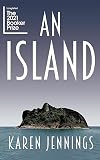
An Island
by Karen Jennings
On This Page
Description
"Samuel has lived alone on a small island off the coast of an unnamed African country for more than two decades. He tends to his garden, his lighthouse, and his chickens, content with a solitary life. Routinely, the nameless bodies of refugees wash ashore, but Samuel--who understands that the government only values certain lives, certain deaths--always buries them himself. One day, though, he finds that one of these bodies is still breathing. As he nurses the stranger back to life, show more Samuel--feeling unsettled and strangely threatened--is soon swept up in memories of his former life as a political prisoner on the mainland: a life that saw his country exploited under colonial rule, followed by a period of revolution and a brief, hard-won independence, only for the cycle of suffering to continue under a cruel dictator. And he can't help but recall his own shameful role in that history. In this stranger's presence he begins to consider, as he did in his youth: What does it mean to own land, or to belong to it? And what does it cost to have--and lose--a home? A timeless and gripping portrait of regret, fear, and the extraordinary stakes of companionship, An Island is a story as page-turning as it is profound"-- show lessTags
Recommendations







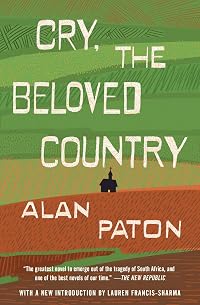
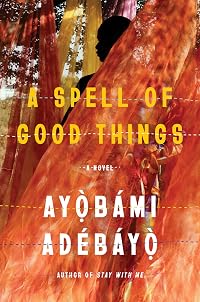

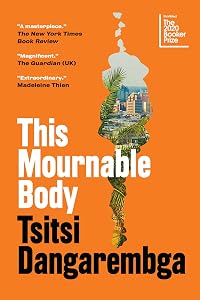
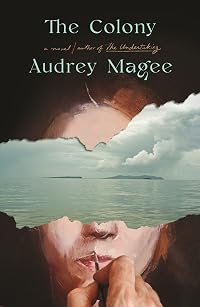


























Member Recommendations

Member Reviews
An Island by Karen Jennings is a highly recommended allegorical novel of a light keeper on an isolated island who has a stranger wash ashore.
Samuel has live on a small island as a lighthouse keeper off the coast of an unnamed African country for many years. He tends his garden, builds his wall surrounding it, cares for his chickens and the lighthouse, and buries any bodies that wash ashore. When a stranger washes ashore still alive, Samuel manages to get him up to his home. The stranger seems to be recovering, leaving Samuel uncertain what he should do.
He vividly remembers his former life on the mainland where he was a political prisoner and his country was exploited under colonial rule. After a revolution, his country won independence, show more but this did not change the suffering of the people. The stranger induces in Samuel pondering and reminiscing about events that have occurred in his past. Samuel knows how fickle people and governments can be, and how only certain lives are actually valued, those who can promote the current regime and their plans.
The narrative follows Samuel recalling his past and trying to live with the stranger. This is really a character study of an old man who has seen enough in the past to doubt what the present has to offer. He is used to being alone and having this stranger living with him on his island is jarring to his sensibilities, but is also causing Samuel to remember events from his past. This juxtaposition of past and present results in mistrust and resentment in Samuel over the stranger which can be akin to the struggles of his unnamed country.
This is a bleak, forlorn novel written in spare prose and meager but essential details. The tension and foreboding runs high, although nothing occurs in the present day to warrant it, Samuel's imagination and reflections on the past are brought to the forefront of the present. 3.5 rounded up
Disclosure: My review copy was courtesy of Hogarth Press via NetGalley.
http://www.shetreadssoftly.com/2022/05/an-island.html
https://www.goodreads.com/review/show/4709481616 show less
Samuel has live on a small island as a lighthouse keeper off the coast of an unnamed African country for many years. He tends his garden, builds his wall surrounding it, cares for his chickens and the lighthouse, and buries any bodies that wash ashore. When a stranger washes ashore still alive, Samuel manages to get him up to his home. The stranger seems to be recovering, leaving Samuel uncertain what he should do.
He vividly remembers his former life on the mainland where he was a political prisoner and his country was exploited under colonial rule. After a revolution, his country won independence, show more but this did not change the suffering of the people. The stranger induces in Samuel pondering and reminiscing about events that have occurred in his past. Samuel knows how fickle people and governments can be, and how only certain lives are actually valued, those who can promote the current regime and their plans.
The narrative follows Samuel recalling his past and trying to live with the stranger. This is really a character study of an old man who has seen enough in the past to doubt what the present has to offer. He is used to being alone and having this stranger living with him on his island is jarring to his sensibilities, but is also causing Samuel to remember events from his past. This juxtaposition of past and present results in mistrust and resentment in Samuel over the stranger which can be akin to the struggles of his unnamed country.
This is a bleak, forlorn novel written in spare prose and meager but essential details. The tension and foreboding runs high, although nothing occurs in the present day to warrant it, Samuel's imagination and reflections on the past are brought to the forefront of the present. 3.5 rounded up
Disclosure: My review copy was courtesy of Hogarth Press via NetGalley.
http://www.shetreadssoftly.com/2022/05/an-island.html
https://www.goodreads.com/review/show/4709481616 show less
The Island is a perfect choice for #NovNov (Novellas in November) because it's an ideal example of the form. With taut prose, action that takes place over just four days and just two main characters, it shows what can be done in under 200 pages. And because its setting is mostly confined to an unnamed island in an unspecified geographical area, it's a profound allegory about the failures of postcolonialism as we see it in Africa, in South America, parts of Asia and in the post Soviet states.
Samuel is an old man living in solitude on a lighthouse long neglected by the authorities. A supply ship visits the island fortnightly but his needs are simple and his facilities are rudimentary to say the least.
From time to time, bodies wash up on show more the shore. Although this is a universal story of postcolonial corruption and brutality, the initial interest in recovering these bodies from the authorities resonates with the hopes of South Africa's Truth and Reconciliation Commission — because once they've found the bodies, that's the time when the healing will begin, for the nation, for us all. But before long, the tone changes. The woman to whom Samuel reports the discovery of three bodies wants to know what colour they are.
One day a survivor washes up on the shore, and Samuel is confronted by having to share his very limited resources, and by the invasion of his privacy and solitude. Although they cannot communicate because they have no shared language, Samuel speculates about the man and this triggers escalating memories of his past.
To read the rest of my review please visit https://anzlitlovers.com/2021/11/04/an-island-by-karen-jennings/ show less
Samuel is an old man living in solitude on a lighthouse long neglected by the authorities. A supply ship visits the island fortnightly but his needs are simple and his facilities are rudimentary to say the least.
From time to time, bodies wash up on show more the shore. Although this is a universal story of postcolonial corruption and brutality, the initial interest in recovering these bodies from the authorities resonates with the hopes of South Africa's Truth and Reconciliation Commission — because once they've found the bodies, that's the time when the healing will begin, for the nation, for us all. But before long, the tone changes. The woman to whom Samuel reports the discovery of three bodies wants to know what colour they are.
'What I am asking is, are they darker than us — their skin — that is what I want to know. Are they darker than you or me?'
'I think so.'
'And their faces? Are they longer? What are their cheekbones like?'
'I don't know. They're children. They look like children.'
'Listen, we're busy people. We have real crimes to deal with. Actual atrocities, you understand. We cannot come out to the island every time another country's refugees flee and drown. It's not our problem.' (p.7)
One day a survivor washes up on the shore, and Samuel is confronted by having to share his very limited resources, and by the invasion of his privacy and solitude. Although they cannot communicate because they have no shared language, Samuel speculates about the man and this triggers escalating memories of his past.
To read the rest of my review please visit https://anzlitlovers.com/2021/11/04/an-island-by-karen-jennings/ show less
"No man is an island,
Entire of itself;
Every man is a piece of the continent,
A part of the main."
John Dunne
Longlisted for the Booker Prize in 2021, this book is set just off an unnamed African country. Samuel is a septarian lighthouse keeper who has lived alone on 'An Island' for many years, with only the crew of a supply boat his only visitors, when a man is washed up alive on the shore along with the wreckage of a boat.
The novel unfolds in two time frames and settings, the present on the 'island' where Samuel has created a fragile sense of home and via his flashbacks to his childhood and rebellious youth on the mainland, a newly postcolonial nation whose dreams of freedom have been crushed by a homegrown dictator. Samuel, lives alone show more in a self-imposed exile after spending many years as a political prisoner in the country of his birth.
However, this novel isn't just a story about a specific place or time in history, but looks at a world defined by totalitarian politics, conflict, social isolation, and displacement. In particular, the story asks: what can a person who has lost everything – country, family, child, and identity – offer another in the same situation?
While some readers may question whether 'An Island' is a “refugee novel,” given that none of the characters is explicitly identified as such, the book points to the various forms that displacement can take. Samuel had early on in his own life been displaced by colonialism so when the man washes up alive on the sands we see the dread, suspicion, and fear that this new arrival may adversely affect his ordered way of life. Although Samuel is only one man, it's possible to see these sentiments reflected in many of the 'receiving' countries of the world, where residents fear that migrants will take up limited local resources and become a burden on their communities. Meanwhile using familiar xenophobic rhetoric 'the Dictator' “blamed foreigners for their suffering, vowed to end their troubles”.
Through the depiction of Samuel’s numerous losses, poverty, and multiple displacements since childhood, Jennings forces us to consider whether first-hand experience should make us more compassionate to a refugee.
Despite Samuel's gradually failing health, his isolation during the twenty-three years that he has lived alone on the island, Samuel regards “the man” with suspicion rather than an additional pair of hands that Samuel desperately needs to keep the island habitable. Yet, it is “the man's' foreignness that appears to threaten Samuel's way of life. Samuel comes to represent the choices that many nations and communities across the world are forced to make today, making readers reflect on their own responses to people from different unknown backgrounds and speaking different languages who arrive in their community/country. Will they be a burden or an asset? What are you willing to provide a stranger in distress? Is our basic instinct one of hospitality or suspicion and self-preservation?
The ending is quite shocking and unexpected although perhaps inevitable leaving us with the uneasy feeling that we, like Samuel, are loyal only to ourselves.' An Island' is a simple yet deeply unsettling story that leaves the reader wondering if, in a world increasingly defined by porous borders, xenophobia, anti-refugee/migrant sentiments, and racism, we, too, are becoming one-person islands. show less
Entire of itself;
Every man is a piece of the continent,
A part of the main."
John Dunne
Longlisted for the Booker Prize in 2021, this book is set just off an unnamed African country. Samuel is a septarian lighthouse keeper who has lived alone on 'An Island' for many years, with only the crew of a supply boat his only visitors, when a man is washed up alive on the shore along with the wreckage of a boat.
The novel unfolds in two time frames and settings, the present on the 'island' where Samuel has created a fragile sense of home and via his flashbacks to his childhood and rebellious youth on the mainland, a newly postcolonial nation whose dreams of freedom have been crushed by a homegrown dictator. Samuel, lives alone show more in a self-imposed exile after spending many years as a political prisoner in the country of his birth.
However, this novel isn't just a story about a specific place or time in history, but looks at a world defined by totalitarian politics, conflict, social isolation, and displacement. In particular, the story asks: what can a person who has lost everything – country, family, child, and identity – offer another in the same situation?
While some readers may question whether 'An Island' is a “refugee novel,” given that none of the characters is explicitly identified as such, the book points to the various forms that displacement can take. Samuel had early on in his own life been displaced by colonialism so when the man washes up alive on the sands we see the dread, suspicion, and fear that this new arrival may adversely affect his ordered way of life. Although Samuel is only one man, it's possible to see these sentiments reflected in many of the 'receiving' countries of the world, where residents fear that migrants will take up limited local resources and become a burden on their communities. Meanwhile using familiar xenophobic rhetoric 'the Dictator' “blamed foreigners for their suffering, vowed to end their troubles”.
Through the depiction of Samuel’s numerous losses, poverty, and multiple displacements since childhood, Jennings forces us to consider whether first-hand experience should make us more compassionate to a refugee.
Despite Samuel's gradually failing health, his isolation during the twenty-three years that he has lived alone on the island, Samuel regards “the man” with suspicion rather than an additional pair of hands that Samuel desperately needs to keep the island habitable. Yet, it is “the man's' foreignness that appears to threaten Samuel's way of life. Samuel comes to represent the choices that many nations and communities across the world are forced to make today, making readers reflect on their own responses to people from different unknown backgrounds and speaking different languages who arrive in their community/country. Will they be a burden or an asset? What are you willing to provide a stranger in distress? Is our basic instinct one of hospitality or suspicion and self-preservation?
The ending is quite shocking and unexpected although perhaps inevitable leaving us with the uneasy feeling that we, like Samuel, are loyal only to ourselves.' An Island' is a simple yet deeply unsettling story that leaves the reader wondering if, in a world increasingly defined by porous borders, xenophobia, anti-refugee/migrant sentiments, and racism, we, too, are becoming one-person islands. show less
One of those stories that is powerful for the content within it, but also for the larger implications it makes you consider - the psychological effects of war, for example. Samuel has been through it all in his unnamed African nation: first, his country's fight for independence from its colonizers, then the optimistic but ineffective (and corrupt) democracy, then the fascist take-over, and finally the revolution to overthrow the Dictator. Samuel and his comrades - in their 20s - are part of this last fight; Samuel's father was part of the first, and his family was displaced from their village and lived in poverty in the city ever since. After serving decades as a political prisoner, Samuel is released (another regime change) and finds show more he has no family left to return to. He takes a job as a lighthouse keeper on an island off the coast and has found peace and purpose at last in the solitary life. He keeps chickens, works a garden, lives with few possessions and relies on a weekly supply boat and has been content for years as his beaten elderly body heals and learns its limits. Lately, refugees have been occasionally washing up on his island, all dead, and he buries them respectfully. One day, the man on shore is alive, if barely, and Samuel hauls him home with some compassion, but also with a hope he will die. In the space of just 4 days, Samuel finds his life completely disrupted by sharing space, hiding the man, and occasionally fearing him as he slips into PTSD reactions. The man cannot speak English and in his weakened and hungry state seems like he will only be a burden; but there are moments when the two men connect due to abject humanity. But Samuel is too haunted by demons of his past for this situation to be sustainable for very long. Suspenseful, thought-provoking, and heartrending, this book - and its talented author provide much to ponder and discuss. Two applicable quotes, even without their context: "Once we've found the bodies [of the refugees], that's the time when the healing will begin, for the nation, for us all. We can't heal heal until then." (7) "Banning something doesn't make it disappear." (138) show less
I came across this title on the 2021 Booker Prize longlist. It’s a short novel but packs a punch.
The protagonist is Samuel, a septuagenarian who has spent the last 23 years as a lighthouse keeper on an island of an unnamed African country. Though bodies have washed up on shore in the past, one day a survivor arrives. Because of the language barrier, Samuel and the man can communicate only through facial expressions and gestures, so he knows nothing about his visitor. When the man begs not to be removed by the supply boat that comes every two weeks, Samuel begins to wonder whether the man is a refugee or a fugitive. Samuel often retreats to memories of his traumatic past and these, along with his years of isolation, make him fearful show more and distrustful so he tends to interpret the man’s actions as threatening.
Though the duration of the novel is a short four days, it actually covers most of Samuel’s life against the backdrop of the country’s turbulent history. The country experienced colonial rule, political independence, and a military dictatorship. Samuel was affected by all of this political history: because of colonialism, his family was forcibly removed from their home; because of his involvement in the independence movement, Samuel’s father was disabled; and because of his role in an uprising against the dictator, Samuel served a 23-year prison term. There is no doubt that his experiences have shaped him.
Only in his years as a lighthouse keeper has Samuel found peace. After his years in prison, he was unable to adjust to life in the outside world: “Freedom came to Samuel as something he feared.” The island with its solitude has been his haven. He resents that solitude being disturbed when the man washes up on shore and initially hopes the man will just die. Having lost his home more than once in the past, he is terrified that the man will take the island from him: “The island. The island. The island belonged to Samuel. It was his and his alone.”
The novel is narrated in third person limited omniscient point of view. We see things only from Samuel’s perspective, so we too know nothing about the man, and this creates suspense. Is Samuel in danger? We see how memories of being helped by others influence him to have some sympathy for the man, and we also see how past humiliations and his anger and guilt over his cowardice haunt him.
Samuel is an Everyman. He is not exceptional in any way: he is not educated or wealthy, and he has not behaved heroically. Violence has dominated his life; sometimes he has been the victim; sometimes, a witness; and sometimes, the perpetrator. So the book shows the effects of political events on the ordinary person. Certainly, Samuel’s behaviour is totally understandable given his traumatic past.
It is suggested that the history of Samuel’s country is typical of that of most African countries: colonialism, revolution, failed self-governance, military dictatorship, uprisings, and fragile parliamentary democracy fraught with corruption scandals, perhaps because of foreign investments. No country is named but readers can surely identify African countries with similar political histories. Samuel’s neighbours in the slum disagreed with Samuel’s father that independence would solve the country’s problems; having fled because of a post-independence civil war, they argued, “’It was like this for us too . . . We were exactly like you. . . . You will see.’”
Xenophobia, racism, and the plight of the displaced are examined. Samuel’s family is forced off their land; the arable land becomes the property of the colonists while those evicted are told, “’You are to return to the mountains where monkeys belong.’” The family ends up living in a city’s slums where their neighbours are also displaced, a couple who fled their own country’s civil war. Years later, to gain popularity with the masses, a general proclaims, “’Why are we still sharing our country with foreigners . . . Let them go back to their own homes . . . We don’t want them here, taking from us, stealing what we fought so hard for. This country is ours, no one else has a right to claim it. No one else has a right to be here. This country is ours alone, only ours.’” This general instigates a “’culling’” of foreigners like Samuel’s neighbours.
Even later, not much has changed. When Samuel reports bodies washing up on the island, he is asked, “’What colour are they? . . . Are they darker than you or me? . . . We cannot come out to the island every time another country’s refugees flee and drown. It’s not our problem.’” And the man who comes with provisions for Samuel, says, “’They deserve it, don’t they? . . . Anyone stupid enough to pack themselves in a rotting boat like that and try to enter another country illegally is asking to die.’”
Though short, this novel is thought-provoking. The legacy of colonialism, xenophobia, the migrant crisis, the long-lasting effects of violence, and even climate change are examined. Be forewarned: there is little optimism.
Note: Please check out my reader's blog (https://schatjesshelves.blogspot.com/) and follow me on Twitter (@DCYakabuski). show less
The protagonist is Samuel, a septuagenarian who has spent the last 23 years as a lighthouse keeper on an island of an unnamed African country. Though bodies have washed up on shore in the past, one day a survivor arrives. Because of the language barrier, Samuel and the man can communicate only through facial expressions and gestures, so he knows nothing about his visitor. When the man begs not to be removed by the supply boat that comes every two weeks, Samuel begins to wonder whether the man is a refugee or a fugitive. Samuel often retreats to memories of his traumatic past and these, along with his years of isolation, make him fearful show more and distrustful so he tends to interpret the man’s actions as threatening.
Though the duration of the novel is a short four days, it actually covers most of Samuel’s life against the backdrop of the country’s turbulent history. The country experienced colonial rule, political independence, and a military dictatorship. Samuel was affected by all of this political history: because of colonialism, his family was forcibly removed from their home; because of his involvement in the independence movement, Samuel’s father was disabled; and because of his role in an uprising against the dictator, Samuel served a 23-year prison term. There is no doubt that his experiences have shaped him.
Only in his years as a lighthouse keeper has Samuel found peace. After his years in prison, he was unable to adjust to life in the outside world: “Freedom came to Samuel as something he feared.” The island with its solitude has been his haven. He resents that solitude being disturbed when the man washes up on shore and initially hopes the man will just die. Having lost his home more than once in the past, he is terrified that the man will take the island from him: “The island. The island. The island belonged to Samuel. It was his and his alone.”
The novel is narrated in third person limited omniscient point of view. We see things only from Samuel’s perspective, so we too know nothing about the man, and this creates suspense. Is Samuel in danger? We see how memories of being helped by others influence him to have some sympathy for the man, and we also see how past humiliations and his anger and guilt over his cowardice haunt him.
Samuel is an Everyman. He is not exceptional in any way: he is not educated or wealthy, and he has not behaved heroically. Violence has dominated his life; sometimes he has been the victim; sometimes, a witness; and sometimes, the perpetrator. So the book shows the effects of political events on the ordinary person. Certainly, Samuel’s behaviour is totally understandable given his traumatic past.
It is suggested that the history of Samuel’s country is typical of that of most African countries: colonialism, revolution, failed self-governance, military dictatorship, uprisings, and fragile parliamentary democracy fraught with corruption scandals, perhaps because of foreign investments. No country is named but readers can surely identify African countries with similar political histories. Samuel’s neighbours in the slum disagreed with Samuel’s father that independence would solve the country’s problems; having fled because of a post-independence civil war, they argued, “’It was like this for us too . . . We were exactly like you. . . . You will see.’”
Xenophobia, racism, and the plight of the displaced are examined. Samuel’s family is forced off their land; the arable land becomes the property of the colonists while those evicted are told, “’You are to return to the mountains where monkeys belong.’” The family ends up living in a city’s slums where their neighbours are also displaced, a couple who fled their own country’s civil war. Years later, to gain popularity with the masses, a general proclaims, “’Why are we still sharing our country with foreigners . . . Let them go back to their own homes . . . We don’t want them here, taking from us, stealing what we fought so hard for. This country is ours, no one else has a right to claim it. No one else has a right to be here. This country is ours alone, only ours.’” This general instigates a “’culling’” of foreigners like Samuel’s neighbours.
Even later, not much has changed. When Samuel reports bodies washing up on the island, he is asked, “’What colour are they? . . . Are they darker than you or me? . . . We cannot come out to the island every time another country’s refugees flee and drown. It’s not our problem.’” And the man who comes with provisions for Samuel, says, “’They deserve it, don’t they? . . . Anyone stupid enough to pack themselves in a rotting boat like that and try to enter another country illegally is asking to die.’”
Though short, this novel is thought-provoking. The legacy of colonialism, xenophobia, the migrant crisis, the long-lasting effects of violence, and even climate change are examined. Be forewarned: there is little optimism.
Note: Please check out my reader's blog (https://schatjesshelves.blogspot.com/) and follow me on Twitter (@DCYakabuski). show less
Set on an unnamed island off the coast of Africa, this book covers four days in the life of Samuel, a seventy-year-old lighthouse keeper, who discovers a refugee, at first thought to be dead, washed up on the shore. During the four days, Samuel remembers his past, which allows the story to cover the turbulent history of the African nation and its impact on Samuel’s life.
I am impressed by the amount of history covered in such a short work. We follow the succession of leadership from colonialism to a corrupt President to a dictator. Samuel’s life story is presented through memories. The refugee crisis is incorporated. In addition, the psychology of paranoia is explored. That’s a lot to pack into a book of less than 200 pages!
My show more attention never wavered. The downside is that it is bleak – not much joy to be found here. On the upside, Jennings succeeds in presenting an allegory for our times, depicting the desire to defend what is perceived as "ours" and struggle to embrace the “other.” show less
I am impressed by the amount of history covered in such a short work. We follow the succession of leadership from colonialism to a corrupt President to a dictator. Samuel’s life story is presented through memories. The refugee crisis is incorporated. In addition, the psychology of paranoia is explored. That’s a lot to pack into a book of less than 200 pages!
My show more attention never wavered. The downside is that it is bleak – not much joy to be found here. On the upside, Jennings succeeds in presenting an allegory for our times, depicting the desire to defend what is perceived as "ours" and struggle to embrace the “other.” show less
An Island is a powerful—and dark—exploration of both the refugee crisis and the ramifications of political repression. Author Karen Jennings explores these topics through two characters. Samuel lives in an unnamed African country, and has worked for decades as a lighthouse keeper on an isolated island following twenty-five years spent as a political prisoner. Every so often, the bodies of drowned refugees wash up onto his island, where he buries them and continues his daily work. This novel opens when, for the first time, the refugee that washed up onto his island (and whose name we don't know) is not dead. The two men have no common language and Samuel swings between sympathy for the new arrival and paranoia regarding the man's show more intentions and potential for violence. I don't want to say more than that regarding the plot.
The book itself and the situations of the two characters are wrenching, and this isn't a title for those who prefer their fiction light. It will however productively challenge readers of decidedly not-light fiction and keep them thinking long after they've reading. If that's your kind of book, you'll want to get your hands on a copy of An Island. show less
The book itself and the situations of the two characters are wrenching, and this isn't a title for those who prefer their fiction light. It will however productively challenge readers of decidedly not-light fiction and keep them thinking long after they've reading. If that's your kind of book, you'll want to get your hands on a copy of An Island. show less
Members
- Recently Added By
Published Reviews
ThingScore 75
A short, thoroughly absorbing book [...]
added by Nevov
Lists

2023 Tournament of Books
18 works; 13 members

Favourite Booker Prize contenders
73 works; 21 members

Lighthouses in literature
23 works; 6 members
Talk Discussions
Past Discussions
2021 Booker Prize Longlist: An Island by Karen Jennings in Booker Prize (August 2021)
Author Information

6 Works 374 Members
Some Editions
Awards and Honors
Awards
Common Knowledge
- Original publication date
- 2020
- First words
- It was the first time that an oil drum had washed up on the scattered pebbles of the island shore.
Classifications
Statistics
- Members
- 252
- Popularity
- 129,353
- Reviews
- 23
- Rating
- (3.66)
- Languages
- Dutch, English, German
- Media
- Paper, Audiobook, Ebook
- ISBNs
- 15
- ASINs
- 3