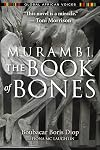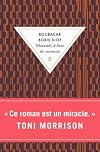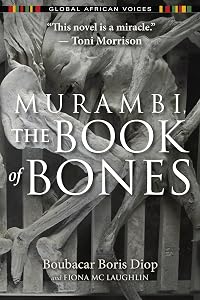
Murambi, the Book of Bones
by Boubacar Boris Diop
On This Page
Description
""[W]hat is true of Rwanda is true in each of us; we all share in Africa."" -- L'Harmattan""[This novel] comes closer than have many political scientists or historians to trying to understand why this small country... sank in such appalling violence."" -- Radio France InternationalIn April of 1994, nearly a million Rwandans were killed in what would prove to be one of the swiftest, most terrifying killing sprees show more of the 20th century. In Murambi, The Book of Bones, Boubacar Boris Diop comes show lessTags
Recommendations





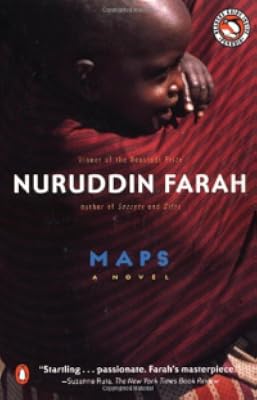
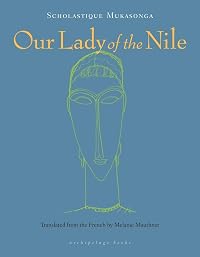
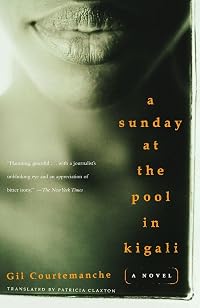

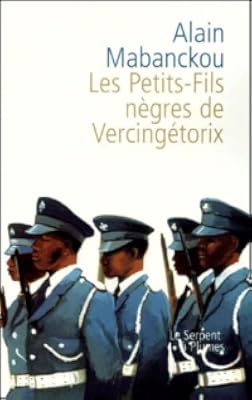



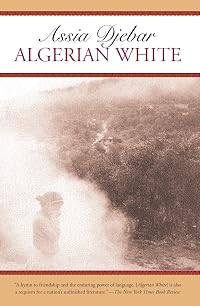
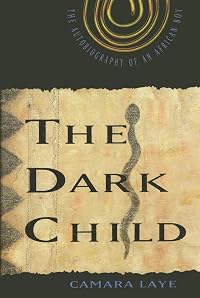



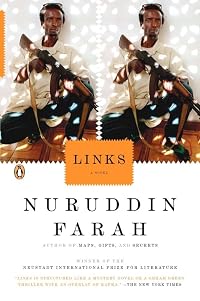

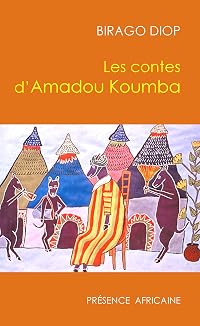


Member Recommendations
Member Reviews
Theodor Adorno’s omnipresent injunction against writing about the Holocaust (“Writing poetry after Auschwitz is barbaric”) is logical and even possibly understandable. And yet doing so (or, more precisely, not doing so) might well result in generations of ignorance, in forgetting what happened, in forgetting individuals, and in forgetting lives. This flies in the face of what so many of its victims did: inscribe their names, their initials, their lives, in graffiti in the barracks at places like Auschwitz. They wanted to be remembered. They wanted the world to witness that they had lived. The central story of Murambi tells about the return of Cornelius Uvimana to Rwanda several years after the genocide in 1994, knowing remarkably show more little about what happened or about his family. This tale is both preceded and followed by a collection of brief first-person narratives from victims, rebels, survivors, and even perpetrators. Cornelius comes back with the stated intention of writing a play about the genocide. He learns, however, that his father—a man he had incorrectly presumed dead – was not only the “Butcher of Murambi” but had in fact ordered the murder of his own wife and children because they were Tutsi. Uvimana visits the memorial at Murambi and speaks with survivors, all of which affords Diop opportunities to describe what took place. Yet, he routinely chooses to do so obliquely, with carefully chosen exceptions: “each time events seemed too cruel or unbelievable, I avoided talking about them.” His decision was meant to prevent readers from seeing his book as “mere” fiction because he believed that fiction tended to provoke disbelief (based, in part, on readers’ lack of knowledge of what “really” happened). Diop wanted to discourage “voyeurism” and to avoid encouraging an appetite for violence (which he thought would happen if readers we exposed to graphic imagery). He wanted to make clear that the reader’s experience, no matter how harrowing, could not even approach the lived experience. I found his technique powerful and, of all Diop’s books available in English, the “simplest” and easiest to read. But make no mistake: it will haunt you. (I would also encourage those who are interested to read Diop’s Neustadt Prize lecture in 2022, “How Do We Say ‘Genocide’ in Wolof?”) show less
You think we've learned our lessons about humanity and genocide from WWII? This book about the Rwandan genocides (nearly half a century after the end of WWII, by the way) might teach you a little differently--in fact the moving simplicity of it would make it great to read in schools.
While the book itself is fiction, it is based on real events--and if you don't believe it, I'm sure the selection of pictures in the middle (which I'm almost positive my copy had) might convince you otherwise.
Simple, moving, and a great documentation--although, again, not purely non-fiction--of an event that, sadly, we do not get much documentation on, considering the area of the world in which it took place. If only there were more multilingual writers show more like Boubacar Boris Diop--and more aspirational translators like Fiona McLaughlin--to help bring these stories from the far reaches of the world to light. show less
While the book itself is fiction, it is based on real events--and if you don't believe it, I'm sure the selection of pictures in the middle (which I'm almost positive my copy had) might convince you otherwise.
Simple, moving, and a great documentation--although, again, not purely non-fiction--of an event that, sadly, we do not get much documentation on, considering the area of the world in which it took place. If only there were more multilingual writers show more like Boubacar Boris Diop--and more aspirational translators like Fiona McLaughlin--to help bring these stories from the far reaches of the world to light. show less
Ce que j'en pense est ici http://perruchenautomne.eu/wordpress/?p=2749
Oct 18, 2014French
Ratings
Members
- Recently Added By
Lists

Books Read in 2018
4,360 works; 110 members
Author Information

14+ Works 258 Members
Awards and Honors
Notable Lists
Series
Belongs to Publisher Series
Common Knowledge
- Canonical title
- Murambi, the Book of Bones
- Original title
- Murambi, le livre des ossements
- Important places
- Rwanda
- Important events
- Rwandan Genocide
Classifications
- Genres
- Fiction and Literature, General Fiction
- DDC/MDS
- 843.914 — Literature & rhetoric French Literature French fiction 1900- 20th Century 1945-1999
- LCC
- PQ3989.2 .D553 .M8713 — Language and Literature French, Italian, Spanish and Portuguese literatures French literature Provincial, local, colonial, etc.
- BISAC
Statistics
- Members
- 128
- Popularity
- 255,222
- Reviews
- 4
- Rating
- (3.86)
- Languages
- 5 — English, French, German, Italian, Portuguese (Portugal)
- Media
- Paper, Ebook
- ISBNs
- 13
- ASINs
- 2