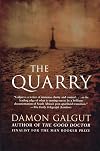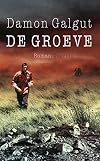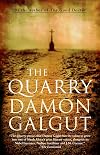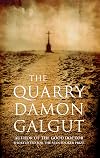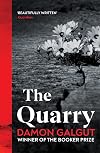
The Quarry
by Damon Galgut
On This Page
Description
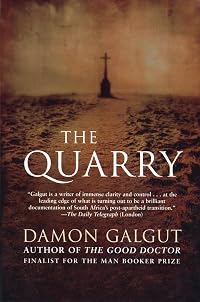
On a lonely stretch of road a nameless man commits a murder. The victim is a religious minister on his way to take up a post in a nearby town. The murderer decides to steal the dead man's identity only to discover that one of his first duties as the new minister is to bury a body that has just been found near the quarry.Tags
Recommendations











Member Reviews
Written in a minimalist style that's somewhat reminiscent of Hemingway, this is a quiet tale that, at the same time, carries with it an urgency and a weight. Even now, I'm finding it hard to know what to say about it. On one hand, I feel unfinished--though the story is done and the ending chapter was gorgeous, and finishing, I still want to know more of what the characters were thinking, feeling, experiencing, and where they'd come from. I want to know what was going on between the lines, between the chapters, and more of what drove the inertia that seemed so inevitable, and so incredibly simple, though it was anything but the last. At the same time, much of the beauty of this small book comes in Galgut's paring down of a world to show more moments and to small decisions and interactions, and in his careful language, simple and straightforward and minimalist as it is.
I'll read more by Galgut. I may re-read this one, even. show less
I'll read more by Galgut. I may re-read this one, even. show less
Damon Galgut's genius is stunningly developed and on full display in rich and complex novels like The Imposter and The Good Doctor. In these books he creates compelling drama by placing a protagonist, whose moral compass drifts as circumstances change, into a situation that is morally ambiguous to start with and becomes more so as the story progresses. The Quarry is similar but the characters and situations remain sketchy throughout. The novel begins with an unnamed man wandering along a road in a harsh, unforgiving landscape. Whatever quest he is on is left unspecified, though we learn before too long that he is a criminal on the run from the authorities. When he encounters a minister who is driving to a town to take up a new post, we show more can almost predict what is going to happen. He murders the minister, buries the body in a disused quarry and assumes the man's identity (and ministry). From this point the story mostly concerns itself with retribution, and when events conspire to expose him, the man once again goes on the run. The primary weakness of this book is glaring. Galgut never attempts to place his characters in a broader emotional context. The outpost town where the central action takes place is filled with loners and misfits, all of whom remain shadowy and emotionally distant from the reader. The only hints of human empathy arise between Valentine and Small, two petty thieves who are brothers. If the novel is compelling at all, it is because of the terse language that Galgut employs to effectively evoke a uniquely desolate South African landscape. That said, even a second tier novel by Damon Galgut is more interesting than most other writer's successful novels. The Quarry, impeccably written and maddeningly enigmatic, is a confident work by a writer who knows how to use story and language in painterly fashion to create the effect he wants. The problem is that in this case the effect he wants is one that will leave some readers cold. show less
"The Quarry" is an early novel by South African writer Damon Galgut. Originally published in 1995, it was only issued in the UK in 2004 on the back of the Booker and Commonwealth Writers' Prize nominated "The Good Doctor".
I read the latter a couple of years ago and was hugely impressed, especially by Galgut's prose and his ability to build tension. "The Quarry" is darker and more stylised than its successor, and perhaps also not as accessible as a result.
The focus of the novel is a nameless man, who appears to be on the run from an unspecified crime. He is picked up in the rural high veld by a minister, Frans Niemand, on his way to a new posting in a township church. In the grip of drink, he kills the minister and hides the body in a show more quarry, stripping it of its vestments and assuming Niemand's identity.
Arriving in the township, the man is unquestioningly assumed to be the new minister, and proves to be surprisingly good at his job. Only the local police captain, Mong, suspects the new minister is not what he seems, especially when the body is recovered from the quarry. The crime is initially, however, pinned on two local brothers, Valentine and Small, who are tried while the circus is in town (rather heavy handed imagery there!). Valentine, however, manages to escape before a verdict is reached and, his conscience getting the better of him, the fake minister also confesses and leaves, pursued by the policeman during a solar eclipse.
As I hope you can tell from that precis, "The Quarry" is not a naturalistic novel. Images such as the bloodstain on the man's shirt and the fact the case is tried in the church suggest the author's primary concern is to give the story a mythic quality. However, description is kept to a minimum - this is tough, lean prose with page long chapters. Even so, I was able to imagine filmic images in my head for this book more strongly than for many I read, a testament to the power of Galgut's writing to do a lot with a little.
Galgut handles the legacy of apartheid in an elliptical way; it hangs over his novels without being their central focus necessarily. Here, the colour of most of the characters is not made explicit; it is easy to assume the murderer and the police captain are white and that Valentine and Small are black but the brothers' speech is peppered with phrases in Afrikaans, where the murderer and the captain speak only English.
Galgut's approach reminded me strongly of Cormac McCarthy's most recent work, in terms of the setting in stifling rural heat similar to "No Country for Old Men", the punctuation (Galgut uses more than McCarthy did in "The Road" but seems to have an aversion to commas in particular), the dark, almost apocolyptic tone and the elemental simplicity of his story. If you liked those two novels, as I did, you'll find "The Quarry" a satisfying, powerful read. show less
I read the latter a couple of years ago and was hugely impressed, especially by Galgut's prose and his ability to build tension. "The Quarry" is darker and more stylised than its successor, and perhaps also not as accessible as a result.
The focus of the novel is a nameless man, who appears to be on the run from an unspecified crime. He is picked up in the rural high veld by a minister, Frans Niemand, on his way to a new posting in a township church. In the grip of drink, he kills the minister and hides the body in a show more quarry, stripping it of its vestments and assuming Niemand's identity.
Arriving in the township, the man is unquestioningly assumed to be the new minister, and proves to be surprisingly good at his job. Only the local police captain, Mong, suspects the new minister is not what he seems, especially when the body is recovered from the quarry. The crime is initially, however, pinned on two local brothers, Valentine and Small, who are tried while the circus is in town (rather heavy handed imagery there!). Valentine, however, manages to escape before a verdict is reached and, his conscience getting the better of him, the fake minister also confesses and leaves, pursued by the policeman during a solar eclipse.
As I hope you can tell from that precis, "The Quarry" is not a naturalistic novel. Images such as the bloodstain on the man's shirt and the fact the case is tried in the church suggest the author's primary concern is to give the story a mythic quality. However, description is kept to a minimum - this is tough, lean prose with page long chapters. Even so, I was able to imagine filmic images in my head for this book more strongly than for many I read, a testament to the power of Galgut's writing to do a lot with a little.
Galgut handles the legacy of apartheid in an elliptical way; it hangs over his novels without being their central focus necessarily. Here, the colour of most of the characters is not made explicit; it is easy to assume the murderer and the police captain are white and that Valentine and Small are black but the brothers' speech is peppered with phrases in Afrikaans, where the murderer and the captain speak only English.
Galgut's approach reminded me strongly of Cormac McCarthy's most recent work, in terms of the setting in stifling rural heat similar to "No Country for Old Men", the punctuation (Galgut uses more than McCarthy did in "The Road" but seems to have an aversion to commas in particular), the dark, almost apocolyptic tone and the elemental simplicity of his story. If you liked those two novels, as I did, you'll find "The Quarry" a satisfying, powerful read. show less
On a lonely stretch of road a nameless man commits a murder. The victim is a religious minister on his way to take up a post in a nearby town. The murderer decides to steal the dead man's identity only to discover that one of his first duties as the new minister is to bury a body that has just been found close to the quarry... The head of the local police, the Captain, takes a keen interest in the minister's work, although there is evidence linking young petty criminals to the crime. The Captain knows it is the new minister who is guilty. But he bides his time, watching, listening, slowly circling his prey. Building to a climax that is almost too much to bear, the Captain is compelled to pursue the murderer across the veld, while his show more exhausted quarry struggles to make good his escape. In The Quarry, Galgut brings the power of myth to his tender prose to create a devastating drama, alive with tension.
Atmospheric morality tale set in South Africa, beautifully written and full of emotional power. The finale, a tense game of cat and mouse, between hunter and prey is remarkable. The Quarry was made into a feature film, which went on to win prizes on the international film festival circuit http://www.imdb.com/title/tt0169156/?ref_=fn_al_tt_1 show less
Atmospheric morality tale set in South Africa, beautifully written and full of emotional power. The finale, a tense game of cat and mouse, between hunter and prey is remarkable. The Quarry was made into a feature film, which went on to win prizes on the international film festival circuit http://www.imdb.com/title/tt0169156/?ref_=fn_al_tt_1 show less
This book is reminiscent of Cormac McCarthy's 'The Road. The writer employs short, spare sentences which seem appropriate to the hot, arid setting in rural South Africa.
We follow an unnamed man, on a lonely stretch of road, where he commits a murder and adopts the victims identity. The local police captain is however suspicious, and when the victims body is discovered and two brothers wrongly arrested our unnamed man starts feeling guilty. He departs in haste but is pursued by the captain with alarming determination. This story is deftly wrought. It's short chapters make for a page turning quick read.
I highly recommend this book.
We follow an unnamed man, on a lonely stretch of road, where he commits a murder and adopts the victims identity. The local police captain is however suspicious, and when the victims body is discovered and two brothers wrongly arrested our unnamed man starts feeling guilty. He departs in haste but is pursued by the captain with alarming determination. This story is deftly wrought. It's short chapters make for a page turning quick read.
I highly recommend this book.
This is the strangest book by Damon Galgut that I have read so far. It is strong in its atmosphere of oppression, fear, strangeness. But I found the story hard to grasp and I can't really figure out what Galgut wants to say with it. Then again, I love the way Galgut uses the English language, the beautiful sentences and the images the novel evokes.
Update: Oh, I clean forgot to ask if anybody on goodreads gets the thing about the moles. I'm DESPERATE, please explan it to me.
I’m with Jessica on this one. The Guardian review at the time said shades of Hardy, Steinbeck, Faulkner, but it isn’t. It is existential, for Jessica it evokes Camus, I’d say Frisch too. The facile description, as the Guardian review goes on, of this as a ‘crime story’ beggars belief. Well, unless that’s how you’d label The Outsider too. Or The Bible.
Rest here:
http://alittleteaalittlechat.wordpress.com/2014/04/05/the-quarry-by-damon-galgut...
I’m with Jessica on this one. The Guardian review at the time said shades of Hardy, Steinbeck, Faulkner, but it isn’t. It is existential, for Jessica it evokes Camus, I’d say Frisch too. The facile description, as the Guardian review goes on, of this as a ‘crime story’ beggars belief. Well, unless that’s how you’d label The Outsider too. Or The Bible.
Rest here:
http://alittleteaalittlechat.wordpress.com/2014/04/05/the-quarry-by-damon-galgut...
Members
- Recently Added By
Author Information

14+ Works 3,861 Members
Awards and Honors
Notable Lists
Common Knowledge
- Canonical title*
- De groeve
- Original publication date
- 2010
- Related movies
- The Quarry (1998 | IMDb)
- Dedication
- Dank ook aan Wendy Searle en Robert Hill voor hun hulp.
This book was completed
with the financial support of
the Foundation for the Creative Arts.
Thanks also to
Wendy Searle and Robert Hill
for their help. - First words
- Toen kwam hij uit het gras aan de kant van de weg en bleef daar roerloos staan.
Then he came out of the grass at the side of the road and stood without moving. - Last words*
- (Click to show. Warning: May contain spoilers.)Hij zou bodemloos kunnen zijn.
- Disambiguation notice*
- original title: The Quarry
*Some information comes from Common Knowledge in other languages. Click "Edit" for more information.
Classifications
Statistics
- Members
- 182
- Popularity
- 180,893
- Reviews
- 11
- Rating
- (3.36)
- Languages
- Dutch, English, German
- Media
- Paper, Ebook
- ISBNs
- 19
- ASINs
- 5