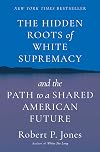
The Hidden Roots of White Supremacy and the Path to a Shared American Future
by Robert P. Jones
On This Page
Description
"The story of three locations in the United States -- in Mississippi, Minnesota, and Oklahoma -- where the indigenous people were driven out by European colonists, where vicious racial killings took place in the last century, and how these places are coming to terms with the past, creating new organizations dedicated to racial repair and reconciliation as they aspire to a more inclusive, more promising future"--Tags
Recommendations



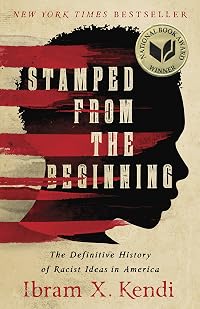

































Member Recommendations

M_Clark Ghosts of Berlin talks about how the people of Berlin have dealt with their darker history and the debates they had about everything from the preservation of buildings to the renaming of streets. The book, therefore, had direct parallels to the White Supremacy book of Jones.
Member Reviews
After Christopher Columbus returned from his voyages, the Pope issued a Papal Bull proclaiming the Doctrine of Discovery which provided a legal and moral justification for seizing lands in the New World from the indigenous people already inhabiting the lands. The right to take the land was rooted in the superiority of European culture and Christianity. Robert Jones traces the roots of White Supremacy to this Doctrine of Discovery. He then traces the use of the doctrine to justify the injustices done to Native Americans as well as to Blacks throughout American history. Particularly interesting is his chapter tracing the use of the Doctrine of Discovery in Court rulings up to current times.
There have already been a number of books show more talking about the injustices done of Native Americans and Blacks. This book provides a different approach that I found very valuable:
- Jones introduces the Doctrine of Discovery to a broader audience. This is particularly valuable since it is rarely if ever mentioned in normal history classes although it's assertions appear regularly throughout history.
- Jones combines to history of oppression of Native Americans and Blacks into a single story in order to show that the oppression of Blacks was often just a continuation of the oppression of Native Americans. As part of this, Jones discusses the 1619 Project and criticizes it for focusing only on Blacks and ignoring Native Americans.
- Instead of painting a broad brush across all of America, Jones focuses on the history of three specific areas: Tallahatchie County in Mississippi, Duluth in Minnesota, and both Tulsa and Osage County in Oklahoma. This allows him to go into much more depth than would have been the case with a broader brush approach and allows him to tell the stories of many of the direct participants.
- As a student of theology who regularly writes about religious topics, Jones takes a close look at how the religious figures in each community acted at the time the injustices were committed as well as how they reacted as the stories came to light decades later.
- Jones reveals that the story of the events in these three areas remained suppressed and unknown to the people who grew up and lived in those areas. He also explained the challenges of digging out the truth about what had happened and the stories of how local people reacted as they learned what had happened in their community.
- For each of the three areas, Jones tells the deeply personal stories of how local people worked together across racial lines to provide a truer accounting of what happened in those areas. He emphasizes that "racial reconciliation begins with telling the truth." He also tells the stories of many people who wanted to keep the truth under wraps and opposed recognizing what happened.
- The book provides a detailed accounting about how each community decided to recognize these events and to provide memorials remembering what happened.
- The book provides many inciteful quotes from the people involved. One quote that stands out from a dedication ceremony at a memorial said that the "lesson that true shame is not in the discovery of a terrible event such as this, but in the refusal to acknowledge and learn from that event."
- The book provides reasons to hope that the truth can be acknowledged and that reconciliation is possible.
The book is well worth reading. show less
There have already been a number of books show more talking about the injustices done of Native Americans and Blacks. This book provides a different approach that I found very valuable:
- Jones introduces the Doctrine of Discovery to a broader audience. This is particularly valuable since it is rarely if ever mentioned in normal history classes although it's assertions appear regularly throughout history.
- Jones combines to history of oppression of Native Americans and Blacks into a single story in order to show that the oppression of Blacks was often just a continuation of the oppression of Native Americans. As part of this, Jones discusses the 1619 Project and criticizes it for focusing only on Blacks and ignoring Native Americans.
- Instead of painting a broad brush across all of America, Jones focuses on the history of three specific areas: Tallahatchie County in Mississippi, Duluth in Minnesota, and both Tulsa and Osage County in Oklahoma. This allows him to go into much more depth than would have been the case with a broader brush approach and allows him to tell the stories of many of the direct participants.
- As a student of theology who regularly writes about religious topics, Jones takes a close look at how the religious figures in each community acted at the time the injustices were committed as well as how they reacted as the stories came to light decades later.
- Jones reveals that the story of the events in these three areas remained suppressed and unknown to the people who grew up and lived in those areas. He also explained the challenges of digging out the truth about what had happened and the stories of how local people reacted as they learned what had happened in their community.
- For each of the three areas, Jones tells the deeply personal stories of how local people worked together across racial lines to provide a truer accounting of what happened in those areas. He emphasizes that "racial reconciliation begins with telling the truth." He also tells the stories of many people who wanted to keep the truth under wraps and opposed recognizing what happened.
- The book provides a detailed accounting about how each community decided to recognize these events and to provide memorials remembering what happened.
- The book provides many inciteful quotes from the people involved. One quote that stands out from a dedication ceremony at a memorial said that the "lesson that true shame is not in the discovery of a terrible event such as this, but in the refusal to acknowledge and learn from that event."
- The book provides reasons to hope that the truth can be acknowledged and that reconciliation is possible.
The book is well worth reading. show less
In this difficult, but thoughful and necessary book, Jones explores how the original Doctrine of Discovery allowed for the virtual genocide of native peoples and laid a foundation of for racism and abuse of all people of color.
The use of 3 locations allows for a focused and sustained history while providing systemic perspective.
In Mississippi, we see the removal of Native American's tied to the death of Emmett Till. In Duluth, the mass lynching of black men based on a single suspicious accusation ties to the disenfranchisement of the Dakota people. In Tulsa, the destruction of Black Wall Street echoes the history of betrayal of the treaties made with Native Americans.
While heartbreaking to see the dark history of the US, Jones does show more provide a way forward through recognition, repetenance, and reconciliation. An important book in our current times show less
The use of 3 locations allows for a focused and sustained history while providing systemic perspective.
In Mississippi, we see the removal of Native American's tied to the death of Emmett Till. In Duluth, the mass lynching of black men based on a single suspicious accusation ties to the disenfranchisement of the Dakota people. In Tulsa, the destruction of Black Wall Street echoes the history of betrayal of the treaties made with Native Americans.
While heartbreaking to see the dark history of the US, Jones does show more provide a way forward through recognition, repetenance, and reconciliation. An important book in our current times show less
This was an important book for me to read to learn about the Christian roots of systemic racism in this country. About a third of the book details the lynching on 3 Black men in Duuth in 1921, which I found especially interesting. The author is somewhat hopeful that many citizens are now more aware of the importance of a fairly trreated, diverse society. Unfortunately, I am not sure that that progress is permanent. I would have rated it higher, but I found many of the sentences unclear and was uncertain of who was always being quoted. I do appreciate all the work the author and his staff executed.
Set aside two days for this eminently readable MUST-READ history of the efforts of a jealous minority to control the world. I have found it helpful not only for understanding the US situation but the global bully culture as well. I received a copy of the book for attending a lecture and this is my voluntary review.
From a review of the Texas Observer. Not sure if I'm up to this right now, from Roofstaat I got some sense of the horrors this book might cover. Put it on my list for later though
Ratings
Members
- Recently Added By
Lists

US White Christian Nationalism
24 works; 1 member
Author Information
11 Works 827 Members
Robert P. Jones is the CEO and founder of Public Religion Research Institute (PRRI) and a leading scholar and commentator on religion and politics. Jones writes regularly on politics, culture, and religion for The Atlantic online, NBC Think, and other outlets. He holds a PhD in religion from Emory University and a MDiv from Southwestern Baptist show more Theological Seminary. He is the author of The End of White Christian America, which won the 2019 Grawemeyer Award in Religion. show less
Common Knowledge
- Canonical title
- The Hidden Roots of White Supremacy and the Path to a Shared American Future
Classifications
- Genres
- Anthropology, Nonfiction, History
- DDC/MDS
- 305.800973 — Society, government, & culture Social sciences, sociology & anthropology Social group - Age, Gender, Ethnicity Ethnic and national groups standard subdivisions / Ethnic and national groups with ethnic origins from more than one continent, of European descent standard subdivisions Biography And History North America United States
- LCC
- E185.615 .J635 — History of the United States United States
- BISAC
Statistics
- Members
- 143
- Popularity
- 228,990
- Reviews
- 5
- Rating
- (4.22)
- Languages
- English
- Media
- Paper, Audiobook, Ebook
- ISBNs
- 7
- ASINs
- 2