
Tim Alberta
Author of The Kingdom, the Power, and the Glory: American Evangelicals in an Age of Extremism
Works by Tim Alberta
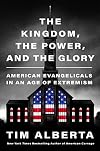
The Kingdom, the Power, and the Glory: American Evangelicals in an Age of Extremism (2023) 645 copies, 19 reviews
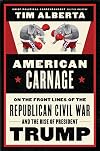
American Carnage: On the Front Lines of the Republican Civil War and the Rise of President Trump (2019) 296 copies, 11 reviews
Tagged
Common Knowledge
- Birthdate
- 1986-01-26
- Gender
- male
- Education
- Michigan State University (Journalism and political science|2008)
- Occupations
- journalist
nonfiction author - Short biography
- Tim Alberta (born January 26, 1986) is an American journalist and author. He has written articles for The Hotline, the Wall Street Journal, National Journal, National Review, Politico, and The Atlantic.
Wikipedia - Nationality
- USA
- Places of residence
- Brighton, Michigan, USA
Fairfax, Virginia, USA - Associated Place (for map)
- USA
Members
Reviews
Can you imagine being approached at your father's funeral and being accosted about your political views? That happened to Tim Alberta.
Alberta is a fearless man. He takes on the insidious milieu of Christian nationalism that has drenched the modern church. For the most part, he does so with a firm and orthodox understanding of Scripture. This book is needed in the confused climate of American evangelicalism. So many have begun to look for salvation in a political outcome that they have missed show more the true nature of the Kingdom of God. Alberta takes this ideology to task.
If this book has shortfalls, they come in the realm of overstating one's case. Alberta takes up the most heinous of examples to cover. He devotes chapters to Greg Locke (a certifiable nutcase who has baptized Christian nationalism with a few hijacked bible verses), Charlie Kirk, Robert Jeffers, and Jerry Falwell Jr. Don't misunderstand me - all of these characters need the attention that Alberta shines upon them. My fear is that he paints the totality of the church in the hues of their error. For example, in chapter twelve he seems to indicate that the church is following the pattern of Vladimir Putin and how he used the Russian Orthodox Church to solidify his autocratic government. Does anyone besides me think this is an argument that is a bridge too far?
Another part of this book that is confusing to me are the two chapters that cover sexual abuse allegations and investigations in the Southern Baptist Convention. In no way am I saying that these issues should be hidden. I am, however, questioning what role they play in a book on Christian nationalism. It seems that Alberta wants to air all of the church's dirty laundry, whether it is pertinent to his topic or not. I think he even senses this tendency. In the Epilogue, he writes, "To be clear, there are still thousands of healthy, vibrant churches across this country, places that have their gospel priorities straight and lean into the tradition of discipling with hard truths" (444). And then he goes on to say that most American christians are not interested in this type of discipleship. I suppose I share his concern over Christian nationalism and its insidious effects upon the Gospel, but perhaps I disagree with how pervasive the problem is.
Regardless of my critique, Tim Alberta has authored a fine book. It sheds light on issues that the church must address. It points to a more historical and robust understanding of Scripture. And it, in the end, roots any hope we have in Jesus. show less
Alberta is a fearless man. He takes on the insidious milieu of Christian nationalism that has drenched the modern church. For the most part, he does so with a firm and orthodox understanding of Scripture. This book is needed in the confused climate of American evangelicalism. So many have begun to look for salvation in a political outcome that they have missed show more the true nature of the Kingdom of God. Alberta takes this ideology to task.
If this book has shortfalls, they come in the realm of overstating one's case. Alberta takes up the most heinous of examples to cover. He devotes chapters to Greg Locke (a certifiable nutcase who has baptized Christian nationalism with a few hijacked bible verses), Charlie Kirk, Robert Jeffers, and Jerry Falwell Jr. Don't misunderstand me - all of these characters need the attention that Alberta shines upon them. My fear is that he paints the totality of the church in the hues of their error. For example, in chapter twelve he seems to indicate that the church is following the pattern of Vladimir Putin and how he used the Russian Orthodox Church to solidify his autocratic government. Does anyone besides me think this is an argument that is a bridge too far?
Another part of this book that is confusing to me are the two chapters that cover sexual abuse allegations and investigations in the Southern Baptist Convention. In no way am I saying that these issues should be hidden. I am, however, questioning what role they play in a book on Christian nationalism. It seems that Alberta wants to air all of the church's dirty laundry, whether it is pertinent to his topic or not. I think he even senses this tendency. In the Epilogue, he writes, "To be clear, there are still thousands of healthy, vibrant churches across this country, places that have their gospel priorities straight and lean into the tradition of discipling with hard truths" (444). And then he goes on to say that most American christians are not interested in this type of discipleship. I suppose I share his concern over Christian nationalism and its insidious effects upon the Gospel, but perhaps I disagree with how pervasive the problem is.
Regardless of my critique, Tim Alberta has authored a fine book. It sheds light on issues that the church must address. It points to a more historical and robust understanding of Scripture. And it, in the end, roots any hope we have in Jesus. show less
As a person of faith, the evangelical allegiance to a a politician who represents the worst in humanity in his behavior, speech, and thought is extremely difficult to understand. Alberta felt the same way, examining the 2016 election with his book, [American Carnage]. When his father dies, Alberta returns home for the funeral. During the service, several members from the congregation his father presided over, and where Alberta grew up, approach him and openly shun him for his work. Looking show more around the congregation, Alberta senses a problem in the ranks and decides to research the shift toward white/Christian nationalism.
There are fewer books on politics in general, and its current state specifically, more illuminating than Alberta's. He traces the seeds of the current malaise in religious America back to the moral majority in the 80's and shoot-from-the-hip Ronnie's use of it to rise to power. I've often told friends that they need look no further back than the Reagan years to better explain the current state of cage-match politics. It's nice to have an exegesis of the history supporting that notion from Alberta. Reagan's family values was little more than trigger words to get Sunday church attenders to pull the lever for the extreme right in the voting booth.
Highly recommended for anyone wanting to better understand the pairing of religion to extreme politics, and for anyone who wonders where religious America went off the rails. I really can't recommend this book highly enough.
5+ bones!!!!! show less
There are fewer books on politics in general, and its current state specifically, more illuminating than Alberta's. He traces the seeds of the current malaise in religious America back to the moral majority in the 80's and shoot-from-the-hip Ronnie's use of it to rise to power. I've often told friends that they need look no further back than the Reagan years to better explain the current state of cage-match politics. It's nice to have an exegesis of the history supporting that notion from Alberta. Reagan's family values was little more than trigger words to get Sunday church attenders to pull the lever for the extreme right in the voting booth.
Highly recommended for anyone wanting to better understand the pairing of religion to extreme politics, and for anyone who wonders where religious America went off the rails. I really can't recommend this book highly enough.
5+ bones!!!!! show less
Having grown up attending church regularly in a denomination that's main message was 'God is love', I've been perplexed to witness the amount of support that evangelical churches have been giving to a political candidate who, from my viewpoint, is dishonest, immoral, untrustworthy and self-serving, and whose behavior is in every way un-Christian. This confusion on my part led me to this book, purportedly a conservative Christian's study of the politicization of modern American churches. I'm show more very glad I did.
Tim Alberta is clearly more conservative than I am and did explain his views on occasion in the book, often views that I disagree with. I have no problem with that. People can disagree with each other and can still respect their opinions. But where Alberta and I strongly agree is on the roll of the church in society. He sees the rise of Christian Nationalism as an evolutionary process, having arisen largely in the past few decades. Per Alberta,
While much of his book focuses on the church, he does make sure to express his views on politicians who try to use the church’s influence to further their agendas. He described Colorado congresswoman Lauren Boebert as
Alberta ultimately holds out hope that the church will come to its senses and return to the rock on which it was founded. I took some comfort that on the day I finished this book, I read a Bloomberg article headlined Trumpism Is Emptying Churches that laid ‘the drop in the percentage of Americans saying religion is important in their lives’ largely at the feet of the MAGA movement and the gaudy corruption of Trumpism.
Alberta condemns the very notion of Christian nationalism by quoting scripture.
FYI: On a 5-point scale I assign stars based on my assessment of what the book needs in the way of improvements:
*5 Stars – Nothing at all. If it ain’t broke, don’t fix it.
*4 Stars – It could stand for a few tweaks here and there but it’s pretty good as it is.
*3 Stars – A solid C grade. Some serious rewriting would be needed in order for this book to be considered great or memorable.
*2 Stars – This book needs a lot of work. A good start would be to change the plot, the character development, the writing style and the ending.
*1 Star – The only thing that would improve this book is a good bonfire. show less
Tim Alberta is clearly more conservative than I am and did explain his views on occasion in the book, often views that I disagree with. I have no problem with that. People can disagree with each other and can still respect their opinions. But where Alberta and I strongly agree is on the roll of the church in society. He sees the rise of Christian Nationalism as an evolutionary process, having arisen largely in the past few decades. Per Alberta,
There was a reason Christian views writ large were now summarily dismissed as “inherently intolerant and undemocratic.” for generations, white evangelicals had been overwhelmingly supportive of both immigrants and refugees entering the United States; by 2020 they were, far and away, the least likely of any religious subgroup to advocate for either one. And this was not some outlying development. In the year after Trump left office, polling repeatedly showed there was one demographic group most likely to believe that the election had been stolen, that vaccines were dangerous, that globalists were controlling the U.S. population, that liberal celebrities were feasting on the blood of infants, that resorting to violence might be necessary to save the country: white evangelicals.But he still holds out hope that these radical elements are the exception, rather than the rule. I’m not sure I believe this but I’ll grant that he has an insider’s vantage point that I lack. In his opinion,
None of this justified the sweeping censure of tens of millions of people. Having spent Trump’s presidency traveling the country, meeting religious voters in small towns and big cities alike, I knew how many serious, sane evangelicals were still out there. These people have no place in the left-wing fever dreams that inform cable news punditry and op-ed pages. They are reasonable and realistic, making prudential political judgments that often reflect something quite limited about their core values, their commitment to others, their complex set of religious convictions. They are dismayed by the hysteria and hyperbole that has captured their movement and want nothing more than to reclaim it.
While much of his book focuses on the church, he does make sure to express his views on politicians who try to use the church’s influence to further their agendas. He described Colorado congresswoman Lauren Boebert as
"A small-town restaurant owner who’d been arrested four times in the decade before seeking political office, Boebert was fond of boasting that God told her to run for Congress because her unlikely victory 'would be a sign and a wonder to the unbeliever.' If the unbeliever paid attention to Boebert, the only signs they saw were of psychosis. "He called Florida Governor Ron DeSantis to account for
frequently invoked the Book of Ephesians while traveling the country in 2022 to raise money and rally the conservative base. “Put on the full armor of God,” DeSantis would say, “and take a stand against the left’s schemes.” In substituting “the left” for “the devil,” DeSantis wasn’t just counting on the biblical illiteracy of his listeners. He was banking on a nationalist fervor that rendered scriptural restraint irrelevant. He was confident that evangelicals in the audience would agree that he knew better than Paul; that the real enemy is the left; that the real struggle is against flesh and blood; that the real power belongs to a politician who can ignore Anthony Fauci’s coronavirus protocols and eliminate Disney World’s tax exemptions.He also spoke at length about how the Christian Nationalists were “glorifying Donald Trump like he was an idol.”
Alberta ultimately holds out hope that the church will come to its senses and return to the rock on which it was founded. I took some comfort that on the day I finished this book, I read a Bloomberg article headlined Trumpism Is Emptying Churches that laid ‘the drop in the percentage of Americans saying religion is important in their lives’ largely at the feet of the MAGA movement and the gaudy corruption of Trumpism.
Alberta condemns the very notion of Christian nationalism by quoting scripture.
Champions of Christian nationalism would have you believe that these efforts to rule the country are inherently theological; that they are in service of a broader effort to reclaim America for God. This is a lie. Christian nationalism is a contradiction in terms: Paul told the Galatians, “There is neither Jew nor Gentile, neither slave nor free, nor is there male and female, for you are all one in Christ Jesus. This assurance—transcends all known racial, ethnic, and national identities.
FYI: On a 5-point scale I assign stars based on my assessment of what the book needs in the way of improvements:
*5 Stars – Nothing at all. If it ain’t broke, don’t fix it.
*4 Stars – It could stand for a few tweaks here and there but it’s pretty good as it is.
*3 Stars – A solid C grade. Some serious rewriting would be needed in order for this book to be considered great or memorable.
*2 Stars – This book needs a lot of work. A good start would be to change the plot, the character development, the writing style and the ending.
*1 Star – The only thing that would improve this book is a good bonfire. show less
American Carnage: On the Front Lines of the Republican Civil War and the Rise of President Trump by Tim Alberta
This is an insightful and complex look at what has happened to the Republican Party since the era of George W. Bush. The author attributes many of the changes to the core beliefs of this party to Bush - and not in a positive manner. It was always my belief that Bush was the worst president in our history, though now with Trump he moves up one notch. However, the author lays out a compelling case that Trump was the result of the changes made during Bush's tenure, so perhaps a tie for worst? I show more found the book both fascinating and frightening, because unless major changes are made, the future might even be more difficult than today. This is a great book for anyone interested in politics, government and the future of our country. show less
Lists
Awards


You May Also Like


Associated Authors
Statistics
- Works
- 2
- Members
- 941
- Popularity
- #27,308
- Rating
- 4.2
- Reviews
- 30
- ISBNs
- 15