On This Page
Description
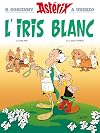
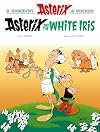
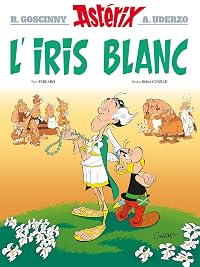
A strange new philosophy is gaining popularity amongst the Roman soldiers, spearheaded by the charismatic Isivertuus. When its enchanting influence reaches the Gauls, everything they once held dear is turned upside down. As news of the dire situation reaches Asterix and Obelix, they embark on a thrilling quest to confront Isivertuus and restore the indomitable spirit of the Gauls. Armed with their trademark humour, bravery, and trusty magic potion, can our heroic duo save the Chief's wife show more and break the spell of the White Iris? show lessTags
Recommendations

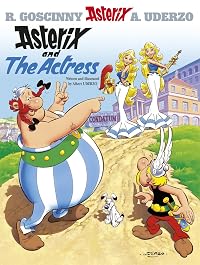
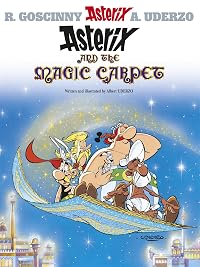
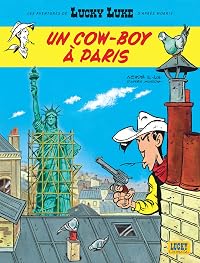
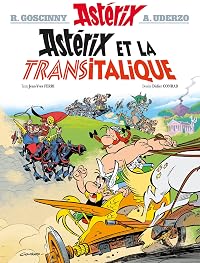
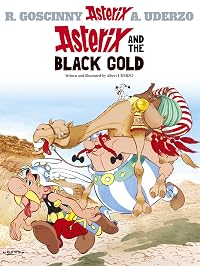


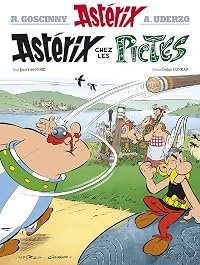

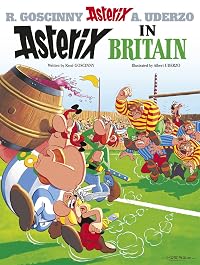
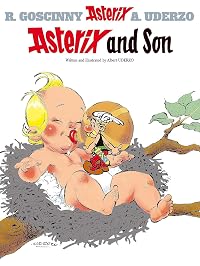













Member Recommendations
memeweaver The White Iris inverts the earlier and more successful comic narrative of Goscinny. Where the Roman Agent has a provocateur sowing discord in the village, the White Iris has another Roman seeking to upset things with positive thinking.
Member Reviews
I've not enjoyed an Asterix adventure this much since I was a kid. As a grown adult I've been reading the new post-Uderzo Asterix albums mostly as a brief rush of nostalgia, but Asterix and the White Iris is a genuinely entertaining story. The French comic writer Fabcaro has taken over from Jean-Yves Ferri, author of all the previous post-Uderzo albums, and he's decided to announce himself with a bang. Ferri's Asterix and the Missing Scroll had a good idea, and Asterix and the Griffin a good adventure, but this new White Iris is one of the best-realised ideas for an Asterix album in many years.
The Romans, you see, have decided to engage in their most insidious villainy yet: 'positive thinking'. A motivational speaker has been sent by show more Caesar to the Roman camps encircling our Gaulish village, and pretty soon the legionnaires are saying things like "our worst enemy is ourselves" and "nobody can hurt me without my permission" even as Asterix and Obelix throw them through the air. This is unnerving enough for our heroes, but pretty soon the Gaulish villagers themselves are talking about "circulating energies" and finding their "best self". As Asterix says, they've "lost all notion of critical thinking and resistance" (pg. 19). The village is being softened up for a smooth takeover; it's magic potion vs. snake oil…
The book is a riot to read, and there's a joke (usually a good one) every couple of panels. The 'positive thinking' stuff is deliciously done and fantastically cringeworthy; it's a humour that is knowing for an adult audience but also simple enough to be accessible to younger readers. When I was a kid, there were only jokes that I understood when I got older, and I imagine it would be the same in White Iris for kids today. The premise leads to a lot of funny scenarios, particularly for poor Obelix, who is bemused as to why the smiling Romans, fresh from their roleplay seminars, aren't running away, and is indignant at the paltry, plant-based portions of "boar" on offer at a trendy Lutetian restaurant. As Obelix asks, can't we "go back to arguing, thrashing each other and blocking our arteries like in the good old days?" (pg. 16).
Happily, we can. Not only does Asterix and the White Iris recall the wit and intelligence of the Goscinny adventures of the good old days, but our Gaulish heroes are, at the end of White Iris, as indomitably unreconstructed as ever. There's none of that modern trend for 're-examining' or 'updating' our heroes of yesteryear. The 'positive thinking' guff of modern society is skewered mercilessly, with the story tapping into that rebellious, revivifying, and slightly cantankerous nature of the originals. Quite frankly, this feels like an Asterix adventure. To be fair, some of the other books have too, but it's so effortless here that it rekindles a lot of that old magic and affection. Existing characters are used well: Unhygienix is now catching fresh fish to provide a 'healthier option' for his more discerning customers; Fulliautomatix's blacksmith anvil is ringing with 'soothing vibrations'; and Asterix himself is using his cunning, rather than just his fists, in combating the snake oil salesman's charms. There's wordplay, adventure, satire and genuine cleverness (see Asterix's "all the world's a stage" quip towards the end) and I was put in such a good mood that I even laughed at groan-worthy puns like the 'Banksix' joke. Nostalgia's always been easy to reach for the new Asterix albums, but Asterix and the White Iris did something more. For 48 pages, I was a kid again, curled up on a quiet afternoon and completely engrossed in an Asterix adventure. show less
The Romans, you see, have decided to engage in their most insidious villainy yet: 'positive thinking'. A motivational speaker has been sent by show more Caesar to the Roman camps encircling our Gaulish village, and pretty soon the legionnaires are saying things like "our worst enemy is ourselves" and "nobody can hurt me without my permission" even as Asterix and Obelix throw them through the air. This is unnerving enough for our heroes, but pretty soon the Gaulish villagers themselves are talking about "circulating energies" and finding their "best self". As Asterix says, they've "lost all notion of critical thinking and resistance" (pg. 19). The village is being softened up for a smooth takeover; it's magic potion vs. snake oil…
The book is a riot to read, and there's a joke (usually a good one) every couple of panels. The 'positive thinking' stuff is deliciously done and fantastically cringeworthy; it's a humour that is knowing for an adult audience but also simple enough to be accessible to younger readers. When I was a kid, there were only jokes that I understood when I got older, and I imagine it would be the same in White Iris for kids today. The premise leads to a lot of funny scenarios, particularly for poor Obelix, who is bemused as to why the smiling Romans, fresh from their roleplay seminars, aren't running away, and is indignant at the paltry, plant-based portions of "boar" on offer at a trendy Lutetian restaurant. As Obelix asks, can't we "go back to arguing, thrashing each other and blocking our arteries like in the good old days?" (pg. 16).
Happily, we can. Not only does Asterix and the White Iris recall the wit and intelligence of the Goscinny adventures of the good old days, but our Gaulish heroes are, at the end of White Iris, as indomitably unreconstructed as ever. There's none of that modern trend for 're-examining' or 'updating' our heroes of yesteryear. The 'positive thinking' guff of modern society is skewered mercilessly, with the story tapping into that rebellious, revivifying, and slightly cantankerous nature of the originals. Quite frankly, this feels like an Asterix adventure. To be fair, some of the other books have too, but it's so effortless here that it rekindles a lot of that old magic and affection. Existing characters are used well: Unhygienix is now catching fresh fish to provide a 'healthier option' for his more discerning customers; Fulliautomatix's blacksmith anvil is ringing with 'soothing vibrations'; and Asterix himself is using his cunning, rather than just his fists, in combating the snake oil salesman's charms. There's wordplay, adventure, satire and genuine cleverness (see Asterix's "all the world's a stage" quip towards the end) and I was put in such a good mood that I even laughed at groan-worthy puns like the 'Banksix' joke. Nostalgia's always been easy to reach for the new Asterix albums, but Asterix and the White Iris did something more. For 48 pages, I was a kid again, curled up on a quiet afternoon and completely engrossed in an Asterix adventure. show less
An enjoyable installment bringing everything one might reasonably ask for in a new "Astérix" story: A fresh and yet familiar type of premise, amusing interactions, an exciting conclusion and artwork that makes facial expressions and mannerisms many times funnier than they have any right being. That said, to me, this is smile pleasantly-funny, rarely chuckling-funny, and never laugh out loud-funny -- so a perfectly respectable entry to the canon, but sadly not one I'm likely to remember specifically all that well a couple of years hence.
In places it felt a little strained with the names and the jokes but it also felt like early versions of the series and it had a good poke at some of the wellness gurus you see around.
Los últimos álbumes de Astérix se pueden resumir en "No tan buenos como los de Goscinny y Uderzo pero mejores que los de Uderzo en solitario" y este no es una excepción. Destaca especialmente el desarrollo de los personajes de Karabella y Abraracúrcix y la sátira de los gurús del "coaching" y la autoayuda (Aparte de cunas cuantas puyas bien dirigidas al esnobismo en el arte y la cocina) En la parte mala, el nivel del dibujo me parece que ha ido a menos en comparación con [b:Astérix tras las huellas del Grifo|59406808|Astérix tras las huellas del Grifo (Asterix, #39)|Jean-Yves Ferri|https://i.gr-assets.com/images/S/compressed.photo.goodreads.com/books/1634576487l/59406808._SX50_.jpg|90370273] Una historia entretenida y con show more buenos golpes de humor. show less
Los últimos álbumes de Astérix se pueden resumir en "No tan buenos como los de Goscinny y Uderzo pero mejores que los de Uderzo en solitario" y este no es una excepción. Destaca especialmente el desarrollo de los personajes de Karabella y Abraracúrcix y la sátira de los gurús del "coaching" y la autoayuda (Aparte de cunas cuantas puyas bien dirigidas al esnobismo en el arte y la cocina) En la parte mala, el nivel del dibujo me parece que ha ido a menos en comparación con [b:Astérix tras las huellas del Grifo|59406808|Astérix tras las huellas del Grifo (Asterix, #39)|Jean-Yves Ferri|https://i.gr-assets.com/images/S/compressed.photo.goodreads.com/books/1634576487l/59406808._SX50_.jpg|90370273] Una historia entretenida y con show more buenos golpes de humor. show less
Middling entry in the Asterix canon with the humour coming mostly from over-forced wordplay, perhaps a bit of lazy thesaurus-based translation.*
It's better than most of the late Uderzo solo efforts but is pretty unmemorable.
*Translation error: page 30, the druid is referred to by his French name Panoramix, rather than by the English version Getafix.
It's better than most of the late Uderzo solo efforts but is pretty unmemorable.
*Translation error: page 30, the druid is referred to by his French name Panoramix, rather than by the English version Getafix.
ASTERIX ET OBELIX
Members
- Recently Added By
Author Information

57 Works 1,144 Members
All Editions
Some Editions
Awards and Honors
Awards
Series

Belongs to Publisher Series
Common Knowledge
- Canonical title
- Asterix and the White Iris
- Original title
- L'Iris blanc
- Original publication date
- 2023
- People/Characters
- Astérix; Obélix; Getafix; Vitalstatistix; Impedimenta
- Important places
- Roman Empire; Gaul; Indomitable Village
- Important events
- Roman Empire; 1st century BCE
- First words*
- Keine Gnade für die Goten!
- Last words*
- (Click to show. Warning: May contain spoilers.)Das nenne ich ein Wildschwein, das sich tummelt!
- Original language*
- Französisch
*Some information comes from Common Knowledge in other languages. Click "Edit" for more information.
Classifications
- Genre
- Graphic Novels & Comics
- DDC/MDS
- 741.5 — Arts & recreation Drawing & decorative arts Drawing Comic books, graphic novels, fotonovelas, cartoons, caricatures, comic strips
- LCC
- PN6700 — Language and Literature Literature (General) Literature (General) Collections of general literature Comic books, strips, etc.
- BISAC
Statistics
- Members
- 345
- Popularity
- 91,311
- Reviews
- 13
- Rating
- (3.72)
- Languages
- 13 — Catalan, Czech, Danish, Dutch, English, Finnish, French, German, Galician, Italian, Portuguese, Spanish, Swedish
- Media
- Paper, Ebook
- ISBNs
- 20
- ASINs
- 3