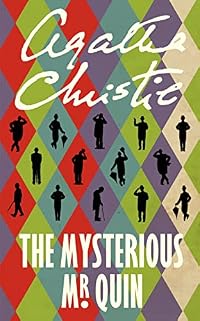
The Mysterious Mr. Quin
by Agatha Christie
On This Page
Description
It had been a typical New Year's Eve party. But as midnight approaches, Mr. Satterthwaite-a keen observer of human nature-senses that the real drama of the evening is yet to unfold. And so it proves when a mysterious stranger knocks on the door. Who is this Mr. Quin? Mr. Satterthwaite's new friend is an enigma. He seems to appear and disappear almost like a trick of the light. In fact, the only consistent thing about him is that his presence is always an omen-sometimes good, but sometimes show more deadly. . . . show lessTags
Recommendations


















Member Recommendations

Member Reviews
A volte in letteratura accadono cose strane e inaspettate, di quelle che, nelle scuole di scrittura, sicuramente insegneranno a evitare per non correre rischi: la possibilità che un personaggio del quale una scrittrice non sapeva bene cosa fare diventi così intrigante da reggere da solo una raccolta di racconti di per sé non entusiasmante.
Il signor Quin è davvero una bella idea: un uomo misterioso che compare e scompare solo quando il suo amico – se si amicizia si può parlare – Sattertwaithe si trova davanti a un caso da risolvere. Un vero e proprio deus ex machina, che arriva solo per indirizzare Sattertwaithe verso il filo giusto da tirare per sbrogliare la matassa, per poi andarsene senza lasciare traccia. Un espediente da show more teatro classico, rafforzato dalla posizione di spettatore di succosi drammi della vita quale si definisce Sattertwaithe e dalla presentazione dei personaggi e del loro ruolo in apertura di ogni racconto.
Tutto meraviglioso se non fosse che la naturale evoluzione di un personaggio come il signor Quin fosse il rivelarlo come una creatura sovrannaturale dalle tinte diaboliche. Agatha Christie gioca molto con la sua (possibile) natura ultraterrena e in alcuni racconti sembra quasi pronta a virare verso il fantastico; eppure alla fine non supera mai quel confine. Il che può risultare molto frustrante per moltə lettorə, ma secondo me ha finito per dare una sfumatura tutta particolare al signor Quin: è il tipo di ambiguità che oggi darebbe la stura a un milione di fanfiction.
Quindi riesco a capire chi dice che è una raccolta malriuscita: a livello strettamente tecnico ha ragione. Ma la lettrice che è in me non vuole sentire ragioni: fanculo la tecnica. Ce ne fossero di incertezze di questo tipo! Lunga vita ai personaggi involontariamente liminali! show less
Il signor Quin è davvero una bella idea: un uomo misterioso che compare e scompare solo quando il suo amico – se si amicizia si può parlare – Sattertwaithe si trova davanti a un caso da risolvere. Un vero e proprio deus ex machina, che arriva solo per indirizzare Sattertwaithe verso il filo giusto da tirare per sbrogliare la matassa, per poi andarsene senza lasciare traccia. Un espediente da show more teatro classico, rafforzato dalla posizione di spettatore di succosi drammi della vita quale si definisce Sattertwaithe e dalla presentazione dei personaggi e del loro ruolo in apertura di ogni racconto.
Tutto meraviglioso se non fosse che la naturale evoluzione di un personaggio come il signor Quin fosse il rivelarlo come una creatura sovrannaturale dalle tinte diaboliche. Agatha Christie gioca molto con la sua (possibile) natura ultraterrena e in alcuni racconti sembra quasi pronta a virare verso il fantastico; eppure alla fine non supera mai quel confine. Il che può risultare molto frustrante per moltə lettorə, ma secondo me ha finito per dare una sfumatura tutta particolare al signor Quin: è il tipo di ambiguità che oggi darebbe la stura a un milione di fanfiction.
Quindi riesco a capire chi dice che è una raccolta malriuscita: a livello strettamente tecnico ha ragione. Ma la lettrice che è in me non vuole sentire ragioni: fanculo la tecnica. Ce ne fossero di incertezze di questo tipo! Lunga vita ai personaggi involontariamente liminali! show less
I’ve come to adore these stories, but I never for a single second imagine them in my head as Mr. Quin stories. He is a mysterious, enigmatic figure who adds a touch of the supernatural to each story, righting past wrongs, averting tragedy at times, but also with the ability to bring mortal justice. Mr. Quin, who appears almost magically, brings clarity to events through Satterthwaite, a fairly wealthy older man whom life has passed by in a way.
There is wonderful atmosphere in Christie’s “Mr. Quin” stories, but anyone who has read them knows full well these should be considered the Satterthwaite and Mr. Quin stories. We know very little about Mr. Quin throughout the series of short stories, other than he is part of the show more supernatural world in some capacity. This is as it should be, holding something mysterious back from the reader. Satterthwaite, however, we learn a great deal about, and come to enjoy his company and his growth throughout the stories. It is poignant how much Mr. Quin’s appearances transform Satterthwaite, adding meaning to his life, adding enjoyment and purpose as he becomes an important catalyst in untangling matters.
There are two important takeaways from reading this collection. The first is that Christie wrote far too few of them. The second is that they should definitely — it isn’t even arguable — be called The Satterthwaite & Mr. Quin mysteries. Whatever you want to call them, you’ll rarely run across a collection of short stories more enjoyable than The Mysterious Mr. Quin.
Here is a quick take on the stories included —
AT THE BELLS AND MOTLEY :
For fans of Satterthwaite and the supernatural and mysterious Mr. Quin, there is some wonderful interaction between the two in this one. There is a compelling back and forth over a meal while Satterthwaite is stranded somewhere due to car trouble, and happens upon his mysterious old friend, Mr. Quin.
Satterthwaite comes alive as always when urged on by Mr. Quin, expounding on the mysterious disappearance for which the Bells and Motley is famous. Christie deftly weaves the unraveling of an old mystery, which has at its edge, like a faint echo, the heart of a young girl. There exists a promise of romance if Satterthwaite, urged on by the mysterious Mr. Quin, can figure out what happened. Only then can the suspicion haunting a young man's life — much to the distress of a girl obviously in love with him — finally be removed.
The Bells and Motley, by the way, also plays a part in Agatha Christie's Murder is Easy. Highly recommended.
THE SOUL OF THE CROUPIER :
A really special story involving Satterthwaite and Mr. Quin. At the conclusion of this gem it is left up to the reader’s heart and sensibilities whether it contains two happy endings, or only one. Agatha Christie is at her absolute finest here.
HARLEQUIN’S LANE :
This Saterthwaite and Mr. Quin is dripping with a very strange, otherworldly atmosphere. The story is memorably haunting in its own fashion. Excellent.
THE BIRD WITH THE BROKEN WING :
Agatha Christie’s Mr. Quin stories, which I’ve noted are really the Satterthwaite and Mr. Quin stories, rank among her best, and there is ample evidence of that here in this story.
Sattethwaite is shown to be an odd little man who appreciates the finer things in life, but he also possesses a very good heart. Satterthwaite’s friendship with the lightly supernatural Mr. Quin breathes new life into his existence over the course of these stories, no more so than in The Bird with the Broken Wing.
The Bird with the Broken Wing is both an atmospheric and enthralling example of the Mr. Quin stories. It is not a traditional mystery at all, though there may have been a murder. I almost feel like I read a completely different story from many others, because there are deep and subtle things to glean from this story. Yes, there’s someone who commits a crime and they’re off their gourd, but the story is really not about that at all, it is about the underscore.
When The Bird with the Broken Wing begins, Satterthwaite is feeling a little old and pathetic. Bird with the Broken Wing is in fact a sad and quietly moving story of lost love, lifestyle choices, and the tragic consequences when comfort becomes more paramount than love. In the end, it’s about happiness and enchantment, represented by a lovely girl, and the gift Mr. Quin leaves for his old friend Satterthwaite before disappearing once again into the mysterious world from which he came.
Another great story from Agatha Christie that will have you lamenting there aren’t far more Mr. Quin stories left behind to enjoy.
THE VOICE IN THE DARK :
Another good one, though I found the ending a bit too tidy, compared to some of the others. Still very good though.
THE WORLD’S END :
“I happened to bring some biscuits and a stick of chocolate on board with me…When I found there was no dinner to be got, I gave the lot to her. The lower classes always make such a fuss about going without their meals.” — The Duchess
There is wonderful atmosphere in Christie’s Mr. Quin stories, but anyone who has read them knows full well these should be considered the Satterthwaite and Mr. Quin stories. We discover very little about Mr. Quin throughout the short stories, other than he is part of the supernatural world in some undefined capacity. Christie smartly withholds this information, making it more mysterious for the reader.
Mr. Satterthwaite, however, we learn a great deal about. We come to enjoy Satterthwaite’s company and embrace his growth throughout the stories. It is poignant in fact how much Mr. Quin’s appearances transform Satterthwaite, adding meaning and enjoyment and purpose to his life as he becomes an important catalyst in untangling matters.
Needless to say, I adore the stories featuring Satterthwaite and Mr. Quin, and this one is magnificent; it may in fact be my all-time favorite. The World’s End is more atmospheric than most of the Mr. Quin stories in that it is more resonating.
Satterthwaite’s acquaintance with a rather stingy and irritating Duchess leads to him meeting a charming yet unconventional artist named Miss Carlton Smith. A sadness surrounds her, because her love, Alec Gerard has been imprisoned for a year, convicted of theft.
A twisty, dangerous road up a mountain to a place called World’s End, and a sudden snowfall, strands her at the top with a very unexpected group. Among the group is the mysterious Mr. Quin. There is some wonderfully descriptive prose by Christie helping create atmosphere. Her skillful creation of mood makes for a truly memorable short story. Sublime, and for me, perhaps my favorite in the series.
THE SHADOW ON THE GLASS :
A wonderful and atmospheric buildup about a glass haunted by a shadow of former deeds. And then new murders occur after a woman’s arrival and interacts with others. It’s all very well done, the method of murder ingenious. Very good, if not great like a few others.
THE SIGN IN THE SKY :
“You are, I believe, a rich man, Mr. Satterthwaite. Not a millionaire, but a man able to indulge in a hobby without counting the expense. You have looked on at the dramas of other people. Have you never contemplated stepping in and playing a part? Have you never seen yourself for a minute as the arbiter of other people’s destinies — standing at the center of the stage with life and death in your hands?” — Mr. Quin
A train, a young woman desperate to break free from a marriage that was a mistake, a sign in the sky, and a girl perhaps not too bright leads Satterthwaite, urged on by the ever mysterious Mr. Quin, to Canada in search of a maid/servant to save a man’s life.
Great Satterthwaite and Mr. Quin story, with an especially wonderful ending; Christie makes the centerpiece an empty table. Highly recommended, as are all the Mr. Quin stories.
THE COMING OF MR. QUIN :
On New Year’s Eve, Satterthwaite finds himself among a group that includes Alex Portal and his wife, Eleanor. Satterthwaite finds Eleanor somehow strange — a blonde who has died her hair black — it’s so often the reverse. Eleanor Portal also appears to possess a hold of some nature which frightens her husband.
Mention of a New Year’s Eve superstition, and a tale of suicide by a man whom they all knew brings about the entrance of Mr. Quin. Our mysterious Mr. Quin is supposedly stranded. But is he really?
When Mr. Quin draws out those present into recalling events surrounding the aforementioned person’s suicide, an entirely different picture begins to emerge. Whether it will be a condemning one, or give a second chance for happiness to two people isn’t clear until the final moments of this splendid Satterthwaite and Mr. Quin story.
THE DEAD HARLEQUIN :
The Dead Harlequin is actually a painting in this tale from Agatha Christie featuring Mr. Satterthwaite and the mysterious Mr. Quin. Quin is connected to the supernatural world in ways never explained in any of the stories.
The artist of the aforementioned painting is soon to be famous. Satterthwaite is fascinated by him because the man in the painting bears a striking resemblance to his old acquaintance, Mr. Quin. Satterthwaite of course purchases the painting, and in an effort to get the background of its origins, has dinner with the artist and another man.
Like more than one of the Satterthwaite and Mr. Quin stories, the mystery of the room where the dead man lies involves an apparent suicide, with seemingly no other explanation. It is a tragedy which still haunts one woman. Through Satterthwaite’s efforts, aided by the sudden appearance of Mr. Quin, the truth is finally revealed.
Another outstanding Mr. Quin story, this one involving the legend of the Weeping Lady, a rug that moves from one room to another, and a tale of two women. Wonderful stuff.
THE FACE OF HELEN :
I love the Satterthwaite and Mr. Quin stories, and this is a particularly good one. The Face of Helen is an exciting story in which the reader finally gets a glimpse of Satterthwaite’s poignant missteps with romance, when he briefly recalls a heartbreaking moment. But that comes later.
One of those “chance” meetings with Mr. Quin — this time at the opera — leads to Satterthwaite’s introduction to the beguiling Gillian West. Her young beauty is so extraordinary it causes Saterthwaite and Mr. Quin to note how others like her throughout history, such as Cleopatra and Helen of Troy, inspired passions which left a trail of violence and tragedy in their wake.
Two very different types of men vying for Gillian’s love, a parting gift and request, and an opera singer said to be the next Caruso spell more violence and tragedy if Satterthwaite, inspired by the sense that the absent Mr. Quin is somehow walking side by side with him in a corporeal way, cannot put the jigsaw together in time to prevent a deadly plan from being executed.
Just wonderful stuff from Agatha Christie which will make you wish she’d written a hundred Mr. Quin stories.
THE MAN FROM THE SEA :
Finally a story which for my taste wasn’t on a par with the others. I’d classify it as good, rather than Very Good or Great. On the surface, the length and introspective delving into how we face death is weighty and substantive, and there is an ending for a couple of people filled with hope rather than gloom and doom, but there’s just something slightly off about the execution.
Christie used the sudden and tragic end for a dog, in real time, early on, to contrast the way animals and humans face the end, and I found it unpleasant and heartbreaking; yes, we are supposed to find it so, but it was a point she could have made just as easily some other way. There is a feeling of Christie meandering some in this story, with a few too many diverse thoughts she wanted to include. There are a few background things whose inclusion has only the slightest connection to the larger story in fact.
If Christie had focused solely on the single story of the man Satterthwaite temporarily talks out of committing suicide, and the vibrant Spanish woman behind the shutters, that past moment of love waiting for a second chance, The Man From the Sea would have still afforded an exploration of the same themes without the much too winding road getting there, and the startling death of the dog.
That being said, if read on its own this would probably read much better, but because this happened to be the last story I picked to read, it suffered somewhat within the collection because of all that had preceded it for me.
SUMMATION :
If like me you have never tackled these, preferring only Poirot or only Miss Marple, or both, you are truly missing out. Christie is at her best in the Satterthwaite and Mr. Quin mysteries. If you appreciate well executed short stories, especially those a bit mysterious, touched but not smothered in the supernatural, you will devour these, and lament there were not more of them. Highly recommended. show less
There is wonderful atmosphere in Christie’s “Mr. Quin” stories, but anyone who has read them knows full well these should be considered the Satterthwaite and Mr. Quin stories. We know very little about Mr. Quin throughout the series of short stories, other than he is part of the show more supernatural world in some capacity. This is as it should be, holding something mysterious back from the reader. Satterthwaite, however, we learn a great deal about, and come to enjoy his company and his growth throughout the stories. It is poignant how much Mr. Quin’s appearances transform Satterthwaite, adding meaning to his life, adding enjoyment and purpose as he becomes an important catalyst in untangling matters.
There are two important takeaways from reading this collection. The first is that Christie wrote far too few of them. The second is that they should definitely — it isn’t even arguable — be called The Satterthwaite & Mr. Quin mysteries. Whatever you want to call them, you’ll rarely run across a collection of short stories more enjoyable than The Mysterious Mr. Quin.
Here is a quick take on the stories included —
AT THE BELLS AND MOTLEY :
For fans of Satterthwaite and the supernatural and mysterious Mr. Quin, there is some wonderful interaction between the two in this one. There is a compelling back and forth over a meal while Satterthwaite is stranded somewhere due to car trouble, and happens upon his mysterious old friend, Mr. Quin.
Satterthwaite comes alive as always when urged on by Mr. Quin, expounding on the mysterious disappearance for which the Bells and Motley is famous. Christie deftly weaves the unraveling of an old mystery, which has at its edge, like a faint echo, the heart of a young girl. There exists a promise of romance if Satterthwaite, urged on by the mysterious Mr. Quin, can figure out what happened. Only then can the suspicion haunting a young man's life — much to the distress of a girl obviously in love with him — finally be removed.
The Bells and Motley, by the way, also plays a part in Agatha Christie's Murder is Easy. Highly recommended.
THE SOUL OF THE CROUPIER :
A really special story involving Satterthwaite and Mr. Quin. At the conclusion of this gem it is left up to the reader’s heart and sensibilities whether it contains two happy endings, or only one. Agatha Christie is at her absolute finest here.
HARLEQUIN’S LANE :
This Saterthwaite and Mr. Quin is dripping with a very strange, otherworldly atmosphere. The story is memorably haunting in its own fashion. Excellent.
THE BIRD WITH THE BROKEN WING :
Agatha Christie’s Mr. Quin stories, which I’ve noted are really the Satterthwaite and Mr. Quin stories, rank among her best, and there is ample evidence of that here in this story.
Sattethwaite is shown to be an odd little man who appreciates the finer things in life, but he also possesses a very good heart. Satterthwaite’s friendship with the lightly supernatural Mr. Quin breathes new life into his existence over the course of these stories, no more so than in The Bird with the Broken Wing.
The Bird with the Broken Wing is both an atmospheric and enthralling example of the Mr. Quin stories. It is not a traditional mystery at all, though there may have been a murder. I almost feel like I read a completely different story from many others, because there are deep and subtle things to glean from this story. Yes, there’s someone who commits a crime and they’re off their gourd, but the story is really not about that at all, it is about the underscore.
When The Bird with the Broken Wing begins, Satterthwaite is feeling a little old and pathetic. Bird with the Broken Wing is in fact a sad and quietly moving story of lost love, lifestyle choices, and the tragic consequences when comfort becomes more paramount than love. In the end, it’s about happiness and enchantment, represented by a lovely girl, and the gift Mr. Quin leaves for his old friend Satterthwaite before disappearing once again into the mysterious world from which he came.
Another great story from Agatha Christie that will have you lamenting there aren’t far more Mr. Quin stories left behind to enjoy.
THE VOICE IN THE DARK :
Another good one, though I found the ending a bit too tidy, compared to some of the others. Still very good though.
THE WORLD’S END :
“I happened to bring some biscuits and a stick of chocolate on board with me…When I found there was no dinner to be got, I gave the lot to her. The lower classes always make such a fuss about going without their meals.” — The Duchess
There is wonderful atmosphere in Christie’s Mr. Quin stories, but anyone who has read them knows full well these should be considered the Satterthwaite and Mr. Quin stories. We discover very little about Mr. Quin throughout the short stories, other than he is part of the supernatural world in some undefined capacity. Christie smartly withholds this information, making it more mysterious for the reader.
Mr. Satterthwaite, however, we learn a great deal about. We come to enjoy Satterthwaite’s company and embrace his growth throughout the stories. It is poignant in fact how much Mr. Quin’s appearances transform Satterthwaite, adding meaning and enjoyment and purpose to his life as he becomes an important catalyst in untangling matters.
Needless to say, I adore the stories featuring Satterthwaite and Mr. Quin, and this one is magnificent; it may in fact be my all-time favorite. The World’s End is more atmospheric than most of the Mr. Quin stories in that it is more resonating.
Satterthwaite’s acquaintance with a rather stingy and irritating Duchess leads to him meeting a charming yet unconventional artist named Miss Carlton Smith. A sadness surrounds her, because her love, Alec Gerard has been imprisoned for a year, convicted of theft.
A twisty, dangerous road up a mountain to a place called World’s End, and a sudden snowfall, strands her at the top with a very unexpected group. Among the group is the mysterious Mr. Quin. There is some wonderfully descriptive prose by Christie helping create atmosphere. Her skillful creation of mood makes for a truly memorable short story. Sublime, and for me, perhaps my favorite in the series.
THE SHADOW ON THE GLASS :
A wonderful and atmospheric buildup about a glass haunted by a shadow of former deeds. And then new murders occur after a woman’s arrival and interacts with others. It’s all very well done, the method of murder ingenious. Very good, if not great like a few others.
THE SIGN IN THE SKY :
“You are, I believe, a rich man, Mr. Satterthwaite. Not a millionaire, but a man able to indulge in a hobby without counting the expense. You have looked on at the dramas of other people. Have you never contemplated stepping in and playing a part? Have you never seen yourself for a minute as the arbiter of other people’s destinies — standing at the center of the stage with life and death in your hands?” — Mr. Quin
A train, a young woman desperate to break free from a marriage that was a mistake, a sign in the sky, and a girl perhaps not too bright leads Satterthwaite, urged on by the ever mysterious Mr. Quin, to Canada in search of a maid/servant to save a man’s life.
Great Satterthwaite and Mr. Quin story, with an especially wonderful ending; Christie makes the centerpiece an empty table. Highly recommended, as are all the Mr. Quin stories.
THE COMING OF MR. QUIN :
On New Year’s Eve, Satterthwaite finds himself among a group that includes Alex Portal and his wife, Eleanor. Satterthwaite finds Eleanor somehow strange — a blonde who has died her hair black — it’s so often the reverse. Eleanor Portal also appears to possess a hold of some nature which frightens her husband.
Mention of a New Year’s Eve superstition, and a tale of suicide by a man whom they all knew brings about the entrance of Mr. Quin. Our mysterious Mr. Quin is supposedly stranded. But is he really?
When Mr. Quin draws out those present into recalling events surrounding the aforementioned person’s suicide, an entirely different picture begins to emerge. Whether it will be a condemning one, or give a second chance for happiness to two people isn’t clear until the final moments of this splendid Satterthwaite and Mr. Quin story.
THE DEAD HARLEQUIN :
The Dead Harlequin is actually a painting in this tale from Agatha Christie featuring Mr. Satterthwaite and the mysterious Mr. Quin. Quin is connected to the supernatural world in ways never explained in any of the stories.
The artist of the aforementioned painting is soon to be famous. Satterthwaite is fascinated by him because the man in the painting bears a striking resemblance to his old acquaintance, Mr. Quin. Satterthwaite of course purchases the painting, and in an effort to get the background of its origins, has dinner with the artist and another man.
Like more than one of the Satterthwaite and Mr. Quin stories, the mystery of the room where the dead man lies involves an apparent suicide, with seemingly no other explanation. It is a tragedy which still haunts one woman. Through Satterthwaite’s efforts, aided by the sudden appearance of Mr. Quin, the truth is finally revealed.
Another outstanding Mr. Quin story, this one involving the legend of the Weeping Lady, a rug that moves from one room to another, and a tale of two women. Wonderful stuff.
THE FACE OF HELEN :
I love the Satterthwaite and Mr. Quin stories, and this is a particularly good one. The Face of Helen is an exciting story in which the reader finally gets a glimpse of Satterthwaite’s poignant missteps with romance, when he briefly recalls a heartbreaking moment. But that comes later.
One of those “chance” meetings with Mr. Quin — this time at the opera — leads to Satterthwaite’s introduction to the beguiling Gillian West. Her young beauty is so extraordinary it causes Saterthwaite and Mr. Quin to note how others like her throughout history, such as Cleopatra and Helen of Troy, inspired passions which left a trail of violence and tragedy in their wake.
Two very different types of men vying for Gillian’s love, a parting gift and request, and an opera singer said to be the next Caruso spell more violence and tragedy if Satterthwaite, inspired by the sense that the absent Mr. Quin is somehow walking side by side with him in a corporeal way, cannot put the jigsaw together in time to prevent a deadly plan from being executed.
Just wonderful stuff from Agatha Christie which will make you wish she’d written a hundred Mr. Quin stories.
THE MAN FROM THE SEA :
Finally a story which for my taste wasn’t on a par with the others. I’d classify it as good, rather than Very Good or Great. On the surface, the length and introspective delving into how we face death is weighty and substantive, and there is an ending for a couple of people filled with hope rather than gloom and doom, but there’s just something slightly off about the execution.
Christie used the sudden and tragic end for a dog, in real time, early on, to contrast the way animals and humans face the end, and I found it unpleasant and heartbreaking; yes, we are supposed to find it so, but it was a point she could have made just as easily some other way. There is a feeling of Christie meandering some in this story, with a few too many diverse thoughts she wanted to include. There are a few background things whose inclusion has only the slightest connection to the larger story in fact.
If Christie had focused solely on the single story of the man Satterthwaite temporarily talks out of committing suicide, and the vibrant Spanish woman behind the shutters, that past moment of love waiting for a second chance, The Man From the Sea would have still afforded an exploration of the same themes without the much too winding road getting there, and the startling death of the dog.
That being said, if read on its own this would probably read much better, but because this happened to be the last story I picked to read, it suffered somewhat within the collection because of all that had preceded it for me.
SUMMATION :
If like me you have never tackled these, preferring only Poirot or only Miss Marple, or both, you are truly missing out. Christie is at her best in the Satterthwaite and Mr. Quin mysteries. If you appreciate well executed short stories, especially those a bit mysterious, touched but not smothered in the supernatural, you will devour these, and lament there were not more of them. Highly recommended. show less
Supposedly her favorite creations, Mr Quin and Mr Satterthwaite are kind of a mash up of Holmes and Watson, with Harlequin and Clown from the traditional Harlequinade theater. I'm not sure it works as a character design, but that only adds to the over all weirdness of the proceedings. Supernatural themes abound in this short story collection. Some are better than others. Good or bad (and I can see arguments to be made either way) - "The Man From the Sea" is a striking example from this collection..
Dame Agatha Christie pens a collection of short stories very different than her works featuring the precise, foppish Hercule Poirot or the intuitive but circumlocutious Miss Marple. The stories deal with the interaction between a mysterious dark, saturnine stranger using the pseudonym of Harley Quin and a 69-year-old meek, wizened bachelor named Mr. Satterthwaite, a man sometimes sentimental and a bit of a fop but perceptive and a shrewd judge of character. In the story titled “The Soul of the Croupier,” Satterthwaite is described as “an earnest student of the drama called life” — a very accurate description, indeed, as is Satterthwaite’s name, as it describes the old man’s attitude before encountering Mr. Quin, someone show more who sat and waited for life to pass him by, a mere observer. However, under Mr. Quin’s guidance, Satterthwaite begins to use his perceptiveness to ensure justice is served.
Unlike his namesake, the harlequin, Mr. Quin appears sad and world weary rather than mischievous and lustful. By midway through the book, Satterthwaite begins to have his suspicions as to the nature of Harley Quin, who always appears on the scene just in time to prod Satterthwaite and prevent a miscarriage of justice.His suspicions are more than confirmed later on in “The Dead Harlequin” and “Harlequin's Lane.”
As The New York Times noted when the book first appeared in 1930, the short stories are more like fairy tales than Poirot- or Miss Marple-like detective stories. Yet, they’re, for the most part, pretty entertaining for Christie fans or lovers of paranormal mysteries. The exceptions are the farfetched “The Voice in the Dark” and the ridiculous “The World’s End.” Readers will particularly savor the poignant “Harlequin's Lane.” Be sure to make a date with The Mysterious Mr. Quin. show less
Unlike his namesake, the harlequin, Mr. Quin appears sad and world weary rather than mischievous and lustful. By midway through the book, Satterthwaite begins to have his suspicions as to the nature of Harley Quin, who always appears on the scene just in time to prod Satterthwaite and prevent a miscarriage of justice.
As The New York Times noted when the book first appeared in 1930, the short stories are more like fairy tales than Poirot- or Miss Marple-like detective stories. Yet, they’re, for the most part, pretty entertaining for Christie fans or lovers of paranormal mysteries. The exceptions are the farfetched “The Voice in the Dark” and the ridiculous “The World’s End.” Readers will particularly savor the poignant “Harlequin's Lane.” Be sure to make a date with The Mysterious Mr. Quin. show less
This collection of short stories featuring the elderly, bachelor connaissor, Mr. Satterwaite, and the appearing and disappearing Mr. Harley Quin were written and published over a period of years early in Christie's career. In this collection they almost work as a novel, as Mr. Satterwaite seems to develop as a character as he solves more curious situations brought to his attention by Quin and as Quin becomes more clearly a supernatural figure. The supernatural element disqualifies them as classic Golden Age mysteries, with it's humorous injunction against ghosts and Oriental villains.
The Mysterious Mr. Quin - Christie
Audio performance by Hugh Fraser
3 stars
This collection of short stories was originally published in 1930. They are not the usual Agatha Christie. They are the only stories to feature Mr. Quinn, a strange paranormal character who appears without warning to point the socialite Mr. Satterthwaite in the correct direction to solve or occasionally prevent a murder. The stories were entertaining, but not Dame Agatha’s best puzzles. I could see the solutions before the denouement in most of the stories even though they were so short. I thought the partnership of the effeminate Mr. Satterthwaite and the enigmatic Mr. Quin was interesting. Between them, they seemed to split the characteristics of the more show more successful Poirot. Mr. Q had all the little grey cells and Mr. S had the fastidious personal quirks. I do wonder what might have happened if she had expanded these characters into a longer series. show less
Audio performance by Hugh Fraser
3 stars
This collection of short stories was originally published in 1930. They are not the usual Agatha Christie. They are the only stories to feature Mr. Quinn, a strange paranormal character who appears without warning to point the socialite Mr. Satterthwaite in the correct direction to solve or occasionally prevent a murder. The stories were entertaining, but not Dame Agatha’s best puzzles. I could see the solutions before the denouement in most of the stories even though they were so short. I thought the partnership of the effeminate Mr. Satterthwaite and the enigmatic Mr. Quin was interesting. Between them, they seemed to split the characteristics of the more show more successful Poirot. Mr. Q had all the little grey cells and Mr. S had the fastidious personal quirks. I do wonder what might have happened if she had expanded these characters into a longer series. show less
According to me, this is one of the underrated gems of Agatha Christie, where she flirts with fantasy. Even though none of the stories except the last one (Harlequin's Lane) cross over into fantasy territory, they are always on the borderline. That Christie does this without straining our credibility speaks volumes for her mastery of the medium.
Mr. Harley Quin is a thinly disguised Harlequin, transported into modern England. His specialty: he allows one to solve mysteries by stripping away the unnecessary details. He does this by asking one to imagine that the events happened in the remote past, to strangers: this removes the personal element from the equation and allows one to see clearer. Mr. Satterthwaite, an elderly bachelor who is show more interested in human beings and their affairs, is the usual beneficiary of Quin's method.
Most of the mysteries in the volume are dark and brooding. The first story, The Coming of Mr. Quin, sets the tone for the whole book when Quin appears at the doorstep of the country house where Mr. Satterthwaite happens to be spending his New Year's Eve, as the first visitor of the year. As he steps across the threshold, a queer trick of the light appears to give the impression that the visitor is dressed in motley and is wearing a mask. Then Quin sets out to make his presence felt by enabling the house-guests to solve the mystery of a suicide that happened in that house a year ago! In the process, he helps two lovers reunite.
This is Quin's trademark - love...and violent death. As Satterthwaite says, his friend seem to be interested in the welfare of lovers more than solving crimes. But in a Christie story, they often go hand in hand.
This book is a personal favourite of mine, read over and over countless number of times; especially on wet June nights, in the cavernous rooms of my ancestral home in Kerala, as the monsoon rages outside. I half expect Quin to step over the threshold every time, saying: "Damnable weather outside. Can I wait inside till it clears?" show less
Mr. Harley Quin is a thinly disguised Harlequin, transported into modern England. His specialty: he allows one to solve mysteries by stripping away the unnecessary details. He does this by asking one to imagine that the events happened in the remote past, to strangers: this removes the personal element from the equation and allows one to see clearer. Mr. Satterthwaite, an elderly bachelor who is show more interested in human beings and their affairs, is the usual beneficiary of Quin's method.
Most of the mysteries in the volume are dark and brooding. The first story, The Coming of Mr. Quin, sets the tone for the whole book when Quin appears at the doorstep of the country house where Mr. Satterthwaite happens to be spending his New Year's Eve, as the first visitor of the year. As he steps across the threshold, a queer trick of the light appears to give the impression that the visitor is dressed in motley and is wearing a mask. Then Quin sets out to make his presence felt by enabling the house-guests to solve the mystery of a suicide that happened in that house a year ago! In the process, he helps two lovers reunite.
This is Quin's trademark - love...and violent death. As Satterthwaite says, his friend seem to be interested in the welfare of lovers more than solving crimes. But in a Christie story, they often go hand in hand.
This book is a personal favourite of mine, read over and over countless number of times; especially on wet June nights, in the cavernous rooms of my ancestral home in Kerala, as the monsoon rages outside. I half expect Quin to step over the threshold every time, saying: "Damnable weather outside. Can I wait inside till it clears?" show less
Members
- Recently Added By
Lists

Best Crime Fiction
262 works; 39 members

Crime and Mysteries to Read
746 works; 31 members

British Mystery
469 works; 14 members

Agatha Christie story collections
19 works; 1 member

Detective Stories
343 works; 5 members

Books Read in 2013
1,630 works; 51 members

Books Read in 2017
4,249 works; 130 members

Books Read in 2010
631 works; 10 members

Books Read in 2022
5,164 works; 113 members

TBR
77 works; 1 member
Must Read Detective Stories (Nick Fuller)
278 works; 2 members

Agatha Christie Chronology
93 works; 1 member
Author Information

2,144+ Works 439,245 Members
One of the most successful and beloved writer of mystery stories, Agatha Mary Clarissa Christie was born in 1890 in Torquay, County Devon, England. She wrote her first novel, The Mysterious Affair at Styles, in 1920, launching a literary career that spanned decades. In her lifetime, she authored 79 crime novels and a short story collection, 19 show more plays, and six novels written under the name of Mary Westmacott. Her books have sold over a billion copies in the English language with another billion in 44 foreign languages. Some of her most famous titles include Murder on the Orient Express, Mystery of the Blue Train, And Then There Were None, 13 at Dinner and The Sittaford Mystery. Noted for clever and surprising twists of plot, many of Christie's mysteries feature two unconventional fictional detectives named Hercule Poirot and Miss Jane Marple. Poirot, in particular, plays the hero of many of her works, including the classic, The Murder of Roger Ackroyd (1926), and Curtain (1975), one of her last works in which the famed detective dies. Over the years, her travels took her to the Middle East where she met noted English archaeologist Sir Max Mallowan. They married in 1930. Christie accompanied Mallowan on annual expeditions to Iraq and Syria, which served as material for Murder in Mesopotamia (1930), Death on the Nile (1937), and Appointment with Death (1938). Christie's credits also include the plays, The Mousetrap and Witness for the Prosecution (1953; film 1957). Christie received the New York Drama Critics' Circle Award for 1954-1955 for Witness. She was also named Dame Commander of the Order of the British Empire in 1971. Christie died in 1976. (Bowker Author Biography) show less
Some Editions
Series
Belongs to Publisher Series
Work Relationships
Is contained in
Contains
Is abridged in
Common Knowledge
- Canonical title
- The Mysterious Mr. Quin
- Original title
- The Mysterious Mr. Quin
- Alternate titles
- The Passing of Mr. Quin; De geheimzinnige Mr. Quin; Le mystérieux Mr Quinn
- Original publication date
- 1930-04-14
- People/Characters
- Harley Quin; Mr. Satterthwaite; Alec Portal; Eleanor Portal
- Important places
- London, England, UK; Corsica, France
- Important events
- New Year
- Related movies
- The Passing of Mr. Quin (1928 | IMDb)
- Epigraph
- [None]
- Dedication
- To Harlequin the invisible
- First words
- It was New Year's Eve.
- Last words
- (Click to show. Warning: May contain spoilers.)But Mr. Quin had vanished.
- Original language
- English
- Disambiguation notice
- Note that this is not a complete collection of Harley Quin stories, as it omits "The Love Detectives" and "The Harlequin Tea Set".
All of the stories contained in this anthology, plus "The Love Detectives" appear in
Mas... (show all)terpieces in Miniature.
In addition, Mr. Satterthwaite appears in the novel Three Act Tragedy without Mr. Quin.
All these were collected into The Complete Quin and Satterthwaite: Love Detectives
Classifications
Statistics
- Members
- 2,800
- Popularity
- 6,475
- Reviews
- 63
- Rating
- (3.61)
- Languages
- 22 — Arabic, Bulgarian, Czech, Danish, Dutch, English, Estonian, Finnish, French, German, Hungarian, Italian, Japanese, Lithuanian, Norwegian (Bokmål), Norwegian, Polish, Portuguese, Serbian, Spanish, Swedish, Turkish
- Media
- Paper, Audiobook, Ebook
- ISBNs
- 109
- UPCs
- 2
- ASINs
- 73