On This Page
Description
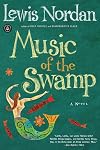
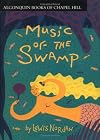
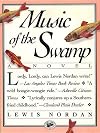
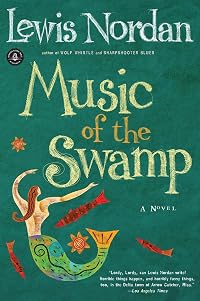
"This is not merely a stellar book. It is absolute ballad put to page." —Southern LivingLewis Nordan's fiction invents its own world—always populated by madly heroic misfits. In Music of the Swamp, he focuses his magic and imagination on a boy's utterly helpless love for his utterly hopeless father—a man who attracts bad luck like a magnet. Nordan evokes ten-year-old Sugar Mecklin's world with dazzling clarity: the smells, the tastes, and most surely the sounds of life in this show more peculiar, somewhat bizarre, Delta town. Sugar discovers that what his daddy says is true: "The Delta is filled up with death"; but he also finds an endless supply of hope.
An ALA Notable Book
Mississippi Institute of Arts and Letters Fiction Award
. show less
Tags
Recommendations
















Member Reviews
The Publisher Says: Lewis Nordan’s fiction invents its own world—always populated by madly heroic misfits. In Music of the Swamp, he focuses his magic and imagination on a boy’s utterly helpless love for his utterly hopeless father—a man who attracts bad luck like a magnet. Nordan evokes ten-year-old Sugar Mecklin’s world with dazzling clarity: the smells, the tastes, and most surely the sounds of life in this peculiar, somewhat bizarre, Delta town. Sugar discovers that what his daddy says is true: “The Delta is filled up with death”; but he also finds an endless supply of hope.
I RECEIVED AN ARC FROM THE PUBLISHER. THANK YOU.
My Review: This book was such a joy to find, to get from the publisher, to read...it has been a show more perfect experience. It's the twentieth anniversary of the original edition, so I suppose the publisher of all Nordan's work saw a need to fulfill. They've brought out Wolf Whistle and Lightning Song, so why stop now?
The sheer gorgeousness of the book's prose is no surprise to anyone already familiar with Author Nordan's work. Sugar, our kid narrator, isn't the artificial kind of kid that infests family stories. He's got the fire of a smart, frustrated kid, one who understands just enough to know he's not getting all the story. In the 1950s Mississippi Delta, there's more subtext than anywhere outside Japan.
Above all else, though, is the subject matter...the drunken daddy whose life has kicked him in the balls one too many times...the wearied, nibbled-at soul of a man who didn't get far and couldn't see where else to go. There's a good reason he doesn't really connect with anyone in his family. It's not one you'll find out early in the tales (these are braided stories telling a novel-sized plot) and, when you do find it out, you won't entirely understand the why of some things. I'll say this for Author Nordan's choice here: If these are lightly fictionalized autobiographical sketches there's a darn good reason he drew that veil.
The whole of a person's life is set in childhood, much though we resist that knowledge. The way Sugar loved his Daddy and was not loved in return is the way his own family will turn out. Anyone who's had that kind of family pattern blast its way through our own lives recognizes the unstoppable force of Family History. It takes intentionality, focus, powerful motivation, and a pile of luck to keep the past from repeating itself.
I would recommend this book to anyone who feels hemmed in, pecked at, torn, or simply needs a respite from daily life. The book is pretty much a perfect meditation on the cost of living an unexamined life!
I RECEIVED AN ARC FROM THE PUBLISHER. THANK YOU.
My Review: This book was such a joy to find, to get from the publisher, to read...it has been a show more perfect experience. It's the twentieth anniversary of the original edition, so I suppose the publisher of all Nordan's work saw a need to fulfill. They've brought out Wolf Whistle and Lightning Song, so why stop now?
Daddy said, "It's funny how you end up somewhere, and then that's your life."
The sheer gorgeousness of the book's prose is no surprise to anyone already familiar with Author Nordan's work. Sugar, our kid narrator, isn't the artificial kind of kid that infests family stories. He's got the fire of a smart, frustrated kid, one who understands just enough to know he's not getting all the story. In the 1950s Mississippi Delta, there's more subtext than anywhere outside Japan.
Above all else, though, is the subject matter...the drunken daddy whose life has kicked him in the balls one too many times...the wearied, nibbled-at soul of a man who didn't get far and couldn't see where else to go. There's a good reason he doesn't really connect with anyone in his family. It's not one you'll find out early in the tales (these are braided stories telling a novel-sized plot) and, when you do find it out, you won't entirely understand the why of some things. I'll say this for Author Nordan's choice here: If these are lightly fictionalized autobiographical sketches there's a darn good reason he drew that veil.
A thousand times, when the train slowed or stopped, I thought of jumping off. I wanted to die in a ditch. I wanted to disappear. I wanted a different history and geography. In rhythm with the wheels I said I want I want I want I want I stayed on the train.
The whole of a person's life is set in childhood, much though we resist that knowledge. The way Sugar loved his Daddy and was not loved in return is the way his own family will turn out. Anyone who's had that kind of family pattern blast its way through our own lives recognizes the unstoppable force of Family History. It takes intentionality, focus, powerful motivation, and a pile of luck to keep the past from repeating itself.
The sound of the rain was without thunder. It was as constant as the feeling of loss that suddenly I felt inside me, that now I knew had been with me all along, a familiar part of me since the beginning of memory.
I would recommend this book to anyone who feels hemmed in, pecked at, torn, or simply needs a respite from daily life. The book is pretty much a perfect meditation on the cost of living an unexamined life!
I wish this story ended more happily than it actually does. All this happened a long time ago, and now I'm middle-aged and have been going to Don't Drink meetings for a good long while myself. There is a good deal of wreckage in my own past, a family I hurt in the same way my father hurt me, and the same way his father hurt him. I tore my children up as fine as cat's hair, you might say.show less
 This review was written for LibraryThing Early Reviewers.
A very good collection of short stories united around the character of the tween-age Sugar Mecklin as he grows up in a small town of the Mississippi delta, with the primary emphasis being on his relationship with his father. As for myself, I have a strong bias in favor of Maine regionalism – Sarah Orne Jewett, Mary Ellen Chase, Carolyn Chute, Elizabeth Strout – and if my interest in Southern regionalism were equally as great I might have rated Music of the Swamp a bit higher. One quarrel that I have with the book, though, is that its "coming of age" element, such as it is, does not develop within the plot of the stories so much as it is presented as a fact in an epilogue (and then further in a post-epilogue authorial "Essay about show more Life in Fiction–and Vice Versa"). Show, don't tell.
Still and all, though, a very worthwhile read. show less
Still and all, though, a very worthwhile read. show less
This review was written for LibraryThing Early Reviewers.There is great pain in all love, but we don’t care, it’s worth it.
At times I was at a loss to know how to feel about this collection of interrelated short stories that center around the life of Sugar Mecklin, a boy from the Mississippi delta. The first story was rather funny, I particularly liked that Sugar’s friend was named Sweet Austin. I mean, only in the Delta would you find kids named “Sugar” and “Sweet”. But as the book progressed, the humor gave way to a kind of poignant sadness, and a feeling of the desperate hopelessness of a life in this town at the edge of the swamp.
By the time I reached the epilogue, I felt the sunny hopeful life of this boy had been drowned in the rising waters that come in the aftermath of show more the hurricane Sugar and his mother endure. It seemed a metaphor for their life with Sugar’s unpredictable and sometimes violent father. I was left with the fear and conviction that Sugar had indeed become his father or his blind grandfather, a spiteful and sinister old man.
There is something deeply disturbing about two young boys sitting at the top of a staircase that leads into the cellar and watching the rats swimming in the flood waters. There is something terribly troubling about a mother telling her four year old son that he will “always be white trash.” There is something sad and crippling about a young girl whose mother spends far more than she has to throw a birthday party that no one shows up for.
In the end, I felt this book was far and away more sorrowful than uplifting and the music coming from the swamp would have been more mournful than sweet. By the end, I was casting back to the beginning, the joy of life that Sugar was experiencing when he heard his first Elvis song and the songs of the black church members that floated up from the river baptism. shall we gather at the river, the beautiful, beautiful river, but this is indeed not a river, this is a swamp.
Perhaps the pain was worth it, but I kept thinking the miracle was that there was any love to recall. show less
At times I was at a loss to know how to feel about this collection of interrelated short stories that center around the life of Sugar Mecklin, a boy from the Mississippi delta. The first story was rather funny, I particularly liked that Sugar’s friend was named Sweet Austin. I mean, only in the Delta would you find kids named “Sugar” and “Sweet”. But as the book progressed, the humor gave way to a kind of poignant sadness, and a feeling of the desperate hopelessness of a life in this town at the edge of the swamp.
By the time I reached the epilogue, I felt the sunny hopeful life of this boy had been drowned in the rising waters that come in the aftermath of show more the hurricane Sugar and his mother endure. It seemed a metaphor for their life with Sugar’s unpredictable and sometimes violent father. I was left with the fear and conviction that Sugar had indeed become his father or his blind grandfather, a spiteful and sinister old man.
There is something deeply disturbing about two young boys sitting at the top of a staircase that leads into the cellar and watching the rats swimming in the flood waters. There is something terribly troubling about a mother telling her four year old son that he will “always be white trash.” There is something sad and crippling about a young girl whose mother spends far more than she has to throw a birthday party that no one shows up for.
In the end, I felt this book was far and away more sorrowful than uplifting and the music coming from the swamp would have been more mournful than sweet. By the end, I was casting back to the beginning, the joy of life that Sugar was experiencing when he heard his first Elvis song and the songs of the black church members that floated up from the river baptism. shall we gather at the river, the beautiful, beautiful river, but this is indeed not a river, this is a swamp.
Perhaps the pain was worth it, but I kept thinking the miracle was that there was any love to recall. show less
Quirky and colorful, with an endearing central character -- a boy whose eyes see beyond surface of the small delta town in which he lives, and dips into the magic and mystery of the imagination. Descriptions of the everyday that will knock your socks off. Stories that will have you smiling one moment, before piercing your heart with poignancy. This was the kind of book that captures the mystery of the swamp's edge and transports you there (minus the miasma and mosquitoes). It gives a glimpse of a recently bygone era through the eyes of a ordinary, sensitive, imaginative child.
I grew up around storytellers, many within my family, so it was a gentle homecoming to fall into the rhythms of the tales Lewis Nordan tells in Music of the Swamp. show more His central character, Sugar Mecklin, tells stories of his life, which overlap, change, grow, and explode, like that remarkable Pinto, which may or may not have blown up in two or three of tales. There is tragedy; there is hope. There is so much beautiful writing, that my heart wept, while my eyes smiled. As much as I loved the novel, I think my favorite part of the book was The Invention of Sugar: An Essay about Life in Fiction -- and Vice Versa, written by the author. The Delta is a magical place, filled with life, death, hope, and thankfully, storytellers such as Lewis Nordan.
Many thanks to LibraryThing and the publisher for sending a copy of this book my way. show less
I grew up around storytellers, many within my family, so it was a gentle homecoming to fall into the rhythms of the tales Lewis Nordan tells in Music of the Swamp. show more His central character, Sugar Mecklin, tells stories of his life, which overlap, change, grow, and explode, like that remarkable Pinto, which may or may not have blown up in two or three of tales. There is tragedy; there is hope. There is so much beautiful writing, that my heart wept, while my eyes smiled. As much as I loved the novel, I think my favorite part of the book was The Invention of Sugar: An Essay about Life in Fiction -- and Vice Versa, written by the author. The Delta is a magical place, filled with life, death, hope, and thankfully, storytellers such as Lewis Nordan.
Many thanks to LibraryThing and the publisher for sending a copy of this book my way. show less
This review was written for LibraryThing Early Reviewers.Seems Arrow Catcher, Mississippi has lots of Southern sadness but fortunately Sugar Mecklin lives there. He is smart, optimistic, curious, and loves his family especially his father. Sugar tries to help his family and friends but their problems are many and complex. This causes him anxiety and anguish.
Themes of music and death are interwoven into each chapter. I believe Nordan is not only suggesting music can help us process evil and death, but also it can also provide a hiding space or refuge for someone like Sugar’s father from dealing with life’s responsibilities and his issues.
This novel is a strong blend of positive and negative, blurring childhood innocence with life’s demoralization. Some chapters were difficult to read show more but Sugar’s tenacity and love kept me going. show less
Themes of music and death are interwoven into each chapter. I believe Nordan is not only suggesting music can help us process evil and death, but also it can also provide a hiding space or refuge for someone like Sugar’s father from dealing with life’s responsibilities and his issues.
This novel is a strong blend of positive and negative, blurring childhood innocence with life’s demoralization. Some chapters were difficult to read show more but Sugar’s tenacity and love kept me going. show less
This review was written for LibraryThing Early Reviewers.In affairs of the heart, you never forget your first kiss.
In affairs of literature, you never forget the moment you discover a great writer and he plants a big ole wet one on your lips. You sit there holding the book, staring at the page, your heart racing and you just know it’s gotta be love. The swoony, cartoon-birds-fluttering-around-your-head variety. It may be a short story, a memoir or a novel—doesn’t matter. It’s the words on the page that have set you all a-flutter and made you want to run to the nearest rooftop and sing a mini-opera: “I’m in love! I’m in L-O-V-E!âÂ?
I can remember the exact moment my heart went pit-a-pat. It was the winter of 1992. In my hands, I held a book by a writer IâÂÂd never show more heard of. His name? Lewis Nordan. The book? Music of the Swamp.
âÂÂHmm,âÂ? I thought, âÂÂsounds like the title from a really bad 1950s monster movie.âÂ? Then I opened the collection of short stories and started reading:
The instant Sugar Mecklin opened his eyes on that Sunday morning, he believed that this was a special day and that something new and completely different from anything he had ever known before was about to jump out at him from somewhere unexpected, a willow shade, a beehive, a birdâÂÂs nest, the bream beds in Roebuck Lake, a watermelon patch, the bray of the icemanâÂÂs mule, the cry of herons in the swamp, he did not know from where, but wherever it came from he believed it would be transforming, it would open up worlds to him that before today had been closed. In fact, worlds seemed already to be opening to him.
In fact, it was my world that had just opened. I'd discovered the nationâÂÂs most overlooked, under-read and under-appreciated literary gem. Which is not to say that Nordan does not have fans; they are legion and they are rabid (like me). Just go to his fan club website (www.algonquin.com/nordan/) and see for yourself. But he has never gotten the national literary attention he deserves. HeâÂÂll probably never be Oprah-ed (perish the thought) and IâÂÂve yet to see him interviewed on Good Morning, America, but surely a big ole display at the front entrance of Barnes and Noble wouldnâÂÂt be out of line.
On with the opera roof-singingâ¦
And sing is exactly what Nordan does on every page of Music of the Swamp. The cover of the book calls it a âÂÂnovel,âÂ? but itâÂÂs only a novel in the same way that Sherwood AndersonâÂÂs Winesburg, Ohio is a novel. ItâÂÂs really a collection of short stories, each a rollickingly funny self-contained capsule that can be read one at a time. And, though youâÂÂll want to read Nordan all in one big gulp, youâÂÂll need to sip it slow--youâÂÂll be laughing so hard you need to catch your breath between stories. (IâÂÂve often thought NordanâÂÂs books should come with a Surgeon GeneralâÂÂs WARNING: Reading this could be hazardous to your health. If you experience dizzy spells, a sore abdomen or shortness of breath, put the book down and sit a spell.)
In Music of the Swamp, the stories relate the oddball childhood of NordanâÂÂs most frequently-used character, Sugar Mecklin, an 11-year-old narrator who, I suspect, serves as a funnel for all of NordanâÂÂs own boyhood experiences growing up in Itta Bena, Mississippi. Sugar lives in Arrow Catcher (NordanâÂÂs Yoknapatawpha), a Mississippi Delta community populated with Southern-fried characters straight from NordanâÂÂs literary predecessors (Flannery OâÂÂConnor, William Faulkner and Carson McCullers). Here, youâÂÂll meet folks like Sweet Austin, who takes Sugar out to the swamp and shows him a manâÂÂs corpse caught upside down in a tangle of brush; Gilbert Mecklin, SugarâÂÂs lovable, whiskey-drinking, no-good daddy who listens to Bessie Smith records (âÂÂwrist-cutting musicâÂ?), who advises his son, âÂÂThe Delta is filled up with deathâÂ? and whose life is filled with âÂÂbenign bad luck;âÂ? Dixie Dawn McNeer, who âÂÂwas overweight and wore heavy makeup and had a pathetically angelic look about herâÂ? and who dreams of singing soprano at the Met someday (the heartbreaking story of her birthday party is the best in the whole collection); and the white-trash family named Conroy, whose next-to-youngest member, Roy Dale, is SugarâÂÂs best friend. The mini-portrait of the family is classic Nordan:
There was a passel of Conroy children, all red-haired and sunken-cheeked. I was never really sure how many. There were the twin girls, Cloyce and Joyce, children who spoke in unison. There was a misfit child named Jeff Davis who believed his pillow was on fire. And, of course, there was the boy near my age, Roy Dale, and a very young child, about four, named Douglas, whose only ambition when he grew up was to become an apple.
Nordan is the only writer I know who can break your heart while busting your gut with laughter. In this all-too-short collection of stories, there is sweetness, there is sadness, there is laughter. But most of all, there is the music of words. NordanâÂÂs prose tumbles off the page in a breathless rush not unlike FaulknerâÂÂs. And, just like that distinguished Southern gentleman, Nordan cares deeply about his characters. Every one of them is described in a compact portraitâÂÂoften riotously funny, but always deeply-felt.
I would wholeheartedly recommend Nordan to everyone I meet [in fact, IâÂÂve been known to chase strangers down the street, beating them about the head with softcover copies of his novels until they relent and either a) snatch the book from my hands and agree to read it, or b) give me a quarter for my troubles.] But, if youâÂÂre new to Nordan, then Music of the Swamp is as good a place as any to start. Lord knows, I did and I havenâÂÂt been the same since.
And now, if youâÂÂll excuse me, I have to go up to the roof and start warming up. show less
In affairs of literature, you never forget the moment you discover a great writer and he plants a big ole wet one on your lips. You sit there holding the book, staring at the page, your heart racing and you just know it’s gotta be love. The swoony, cartoon-birds-fluttering-around-your-head variety. It may be a short story, a memoir or a novel—doesn’t matter. It’s the words on the page that have set you all a-flutter and made you want to run to the nearest rooftop and sing a mini-opera: “I’m in love! I’m in L-O-V-E!âÂ?
I can remember the exact moment my heart went pit-a-pat. It was the winter of 1992. In my hands, I held a book by a writer IâÂÂd never show more heard of. His name? Lewis Nordan. The book? Music of the Swamp.
âÂÂHmm,âÂ? I thought, âÂÂsounds like the title from a really bad 1950s monster movie.âÂ? Then I opened the collection of short stories and started reading:
The instant Sugar Mecklin opened his eyes on that Sunday morning, he believed that this was a special day and that something new and completely different from anything he had ever known before was about to jump out at him from somewhere unexpected, a willow shade, a beehive, a birdâÂÂs nest, the bream beds in Roebuck Lake, a watermelon patch, the bray of the icemanâÂÂs mule, the cry of herons in the swamp, he did not know from where, but wherever it came from he believed it would be transforming, it would open up worlds to him that before today had been closed. In fact, worlds seemed already to be opening to him.
In fact, it was my world that had just opened. I'd discovered the nationâÂÂs most overlooked, under-read and under-appreciated literary gem. Which is not to say that Nordan does not have fans; they are legion and they are rabid (like me). Just go to his fan club website (www.algonquin.com/nordan/) and see for yourself. But he has never gotten the national literary attention he deserves. HeâÂÂll probably never be Oprah-ed (perish the thought) and IâÂÂve yet to see him interviewed on Good Morning, America, but surely a big ole display at the front entrance of Barnes and Noble wouldnâÂÂt be out of line.
On with the opera roof-singingâ¦
And sing is exactly what Nordan does on every page of Music of the Swamp. The cover of the book calls it a âÂÂnovel,âÂ? but itâÂÂs only a novel in the same way that Sherwood AndersonâÂÂs Winesburg, Ohio is a novel. ItâÂÂs really a collection of short stories, each a rollickingly funny self-contained capsule that can be read one at a time. And, though youâÂÂll want to read Nordan all in one big gulp, youâÂÂll need to sip it slow--youâÂÂll be laughing so hard you need to catch your breath between stories. (IâÂÂve often thought NordanâÂÂs books should come with a Surgeon GeneralâÂÂs WARNING: Reading this could be hazardous to your health. If you experience dizzy spells, a sore abdomen or shortness of breath, put the book down and sit a spell.)
In Music of the Swamp, the stories relate the oddball childhood of NordanâÂÂs most frequently-used character, Sugar Mecklin, an 11-year-old narrator who, I suspect, serves as a funnel for all of NordanâÂÂs own boyhood experiences growing up in Itta Bena, Mississippi. Sugar lives in Arrow Catcher (NordanâÂÂs Yoknapatawpha), a Mississippi Delta community populated with Southern-fried characters straight from NordanâÂÂs literary predecessors (Flannery OâÂÂConnor, William Faulkner and Carson McCullers). Here, youâÂÂll meet folks like Sweet Austin, who takes Sugar out to the swamp and shows him a manâÂÂs corpse caught upside down in a tangle of brush; Gilbert Mecklin, SugarâÂÂs lovable, whiskey-drinking, no-good daddy who listens to Bessie Smith records (âÂÂwrist-cutting musicâÂ?), who advises his son, âÂÂThe Delta is filled up with deathâÂ? and whose life is filled with âÂÂbenign bad luck;âÂ? Dixie Dawn McNeer, who âÂÂwas overweight and wore heavy makeup and had a pathetically angelic look about herâÂ? and who dreams of singing soprano at the Met someday (the heartbreaking story of her birthday party is the best in the whole collection); and the white-trash family named Conroy, whose next-to-youngest member, Roy Dale, is SugarâÂÂs best friend. The mini-portrait of the family is classic Nordan:
There was a passel of Conroy children, all red-haired and sunken-cheeked. I was never really sure how many. There were the twin girls, Cloyce and Joyce, children who spoke in unison. There was a misfit child named Jeff Davis who believed his pillow was on fire. And, of course, there was the boy near my age, Roy Dale, and a very young child, about four, named Douglas, whose only ambition when he grew up was to become an apple.
Nordan is the only writer I know who can break your heart while busting your gut with laughter. In this all-too-short collection of stories, there is sweetness, there is sadness, there is laughter. But most of all, there is the music of words. NordanâÂÂs prose tumbles off the page in a breathless rush not unlike FaulknerâÂÂs. And, just like that distinguished Southern gentleman, Nordan cares deeply about his characters. Every one of them is described in a compact portraitâÂÂoften riotously funny, but always deeply-felt.
I would wholeheartedly recommend Nordan to everyone I meet [in fact, IâÂÂve been known to chase strangers down the street, beating them about the head with softcover copies of his novels until they relent and either a) snatch the book from my hands and agree to read it, or b) give me a quarter for my troubles.] But, if youâÂÂre new to Nordan, then Music of the Swamp is as good a place as any to start. Lord knows, I did and I havenâÂÂt been the same since.
And now, if youâÂÂll excuse me, I have to go up to the roof and start warming up. show less
Perfect title: Nordan makes me hear the sounds of the stories as if I was there. The writing is very lyrical and easy to read, the details are just right and stimulate all my senses (not just the sense of sound), and the stories are so absorbing that I forgot the outside world while I was transported to Sugar Mecklin's. One of the reviewers here called it 'magical realism' -- well, sort of, but firmly rooted in the South, or more specifically, in Mississippi. After I finished the book, I thought of the film 'O Brother, Where Art Thou?' -- in both, I felt as if Mississippi was another character in the story, and the sound of music -- whether man-made or sung by frogs in the swamp -- is also like another character in both this book and show more that film. And like the film, this book has the feel of an epic story, although Sugar's journey throughout the story is a subtle one with past and present braided together.
My review doesn't do the book justice. It's no wonder this book has won awards! I'm definitely going to re-read this one, which I don't often do with my books just because I don't have that much time on my hands.
~bint show less
My review doesn't do the book justice. It's no wonder this book has won awards! I'm definitely going to re-read this one, which I don't often do with my books just because I don't have that much time on my hands.
~bint show less
This review was written for LibraryThing Early Reviewers.Members
- Recently Added By
Author Information

12+ Works 1,063 Members
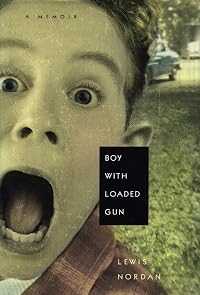
Lewis Nordan was born in Forest, Mississippi on August 23, 1939. He received a bachelor's degree from Millsaps College, a master's degree from Mississippi State University, and a Ph.D. from Auburn University. He taught at the University of Arkansas and elsewhere before joining the faculty at the University of Pittsburgh. He retired from there in show more 2005. His first book, Welcome to the Arrow-Catcher Fair, was published in 1983. His other works include Wolf Whistle, Lightning Song, Sugar among the Freaks, and Boy with Loaded Gun. He died due to complications of pneumonia on April 13, 2012 at the age of 72. (Bowker Author Biography) show less
Awards and Honors
Distinctions
Series

Common Knowledge
- Canonical title
- Music of the Swamp
- Original publication date
- 1991
- People/Characters
- Sugar Mecklin; Gilbert Mecklin; Mrs. Mecklin; Roy Dale Conroy; Fortunata Conroy; Runt Conroy (show all 10); Douglas Conroy; Sweet Austin; Dixie Dawn McNeer; John Wesley McNeer
- Important places
- Arrow Catcher, Mississippi, USA
- Epigraph
- Take away the arrogance, the battery, and the alcohol, and down comes innocence.
- Judy Grahn - Dedication
- For Alicia
- First words
- The instant Sugar Mecklin opened his eyes on that Sunday morning, he believed that this was a special day and that something new and completely different from anything he had ever known before was about to jump out at him fro... (show all)m somewhere unexpected, a willow shade, a beehive, a bird's nest, the bream beds in Roebuck Lake, a watermelon patch, the bray of the iceman's mule, the cry of herons in the swamp, he did not know from where, but wherever it came from he believed it would be transforming, it would open up worlds to him that before today had been closed.
- Last words
- (Click to show. Warning: May contain spoilers.)Or maybe together we said, "There is great pain in all love, but we don't care, it's worth it."
Classifications
Statistics
- Members
- 200
- Popularity
- 164,274
- Reviews
- 36
- Rating
- (3.94)
- Languages
- English
- Media
- Paper, Ebook
- ISBNs
- 3
- ASINs
- 1