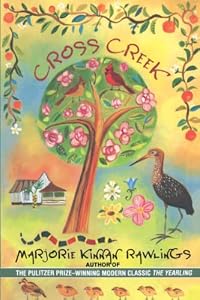
Cross Creek
by Marjorie Kinnan Rawlings
On This Page
Description
American author Marjorie Kinnan Rawlings recounts her experiences dealing with farmhands and wildlife while managing an orange grove for thirteen years in rural Florida.Tags
Recommendations
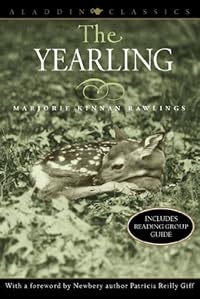



















Member Recommendations
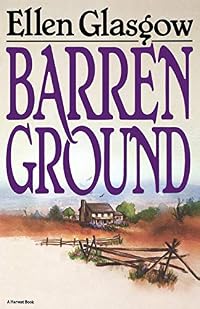
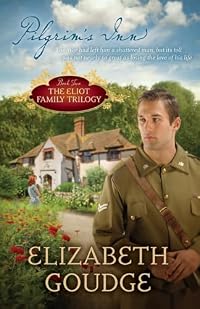
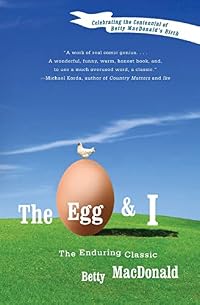
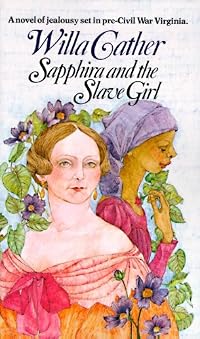
John_Vaughan JT was 'mentored' by Rawlings and encouraged in his education and art.

Member Reviews
Cross Creek is one of the finest memoirs ever written, filled with grace and beauty from one of America's greatest writers, Marjorie Kinnan Rawlings. Perhaps no other writer has so perfectly and honestly captured a place and time like Rawlings did in Cross Creek. It will transport you to that small acreage of backwoods Florida and cause you to wish for a life such as this.
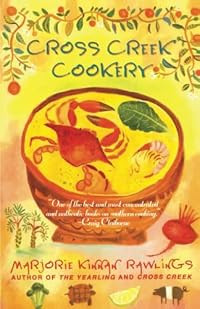
Marjorie Kinnan Rawlings purchased a seventy-two acre orange grove in this remote area and fled her aristocratic life in the city to perfect her craft and get published. It is here that all her beloved books would be written, including this memoir covering the years of hardships and beauty at Cross Creek. Rawlings was in many ways reborn in Cross Creek, and she would show more leave behind literary achievements such as "South Moon Under," "Golden Apples," "When the Whippoorwill," "Cross Creek Cookery," and of course, her Pulitzer winning, "The Yearling."
Her close relationships with her neighbors at the creek, both black and white, are told with humor and humanity. Their lives were often filled with hardships but serenity as well, for all of them had chosen to live this kind of life rather than conform to society. Especially poignant are Rawlings's observations of a young destitute couple who would later be portrayed so movingly in Jacob's Ladder.
Rawlings's recollections of her friendships with Moe and his daughter Mary, who was Moe's reason for living, and the only one in his family who cared whether he came or went, are told with such beauty we feel pain ourselves when he takes his last breath at the creek. Rawlings's deep friendships over the years with Tom and Old Martha are told with humor, honesty and a gift for description few have ever captured on paper.
Tinged with sadness is Marjorie's relationship both as employer and friend to 'Geechee. Rawlings would attempt to help her, but to no avail, as this sweet personality slowly became an unemployable alcoholic. Her mistreatment at the hands of a womanizer unworthy of her love was at the heart of her problem. It is perhaps also at the bottom of some bitter comments from Rawlings.
But Cross Creek is about the earth and our relationship to it. Rawlings came to believe over time that when we lose our connection to the earth, we lose a part of ourselves. The great and wondrous beauty of nature, from magnolia blossoms and rare herbs to Hayden mangos and papaya, are as much a part of this memoir as the people. Particularly hilarious are this gifted writer's descriptions of a pet racoon of such mischievous nature and cantankerous disposition that it almost seems human.
Rawlings's world at the creek is perhaps her legacy, a gift given to the reader we can never forget. In order to enjoy this memoir, however, one must take into consideration a number of factors. Published in 1942 and covering many years prior in a backwoods area of Florida, this was a time when racial equality was a distant dream. Some may be offended by Rawlings's casual - though never mean spirited - observations.
Rawlings honestly relates actual conversations from this time and place between blacks and whites, and blacks to other blacks. While Rawlings herself treated everyone fairly, a long string of farmhands prone to drink and violence - including the man who would destroy her friend and employee 'Geechee - prompted Rawlings to lump an entire race into one group, her friends at the creek being rare exceptions. I do not feel this caveat should keep anyone from reading this most beautiful and heartwarming of memoirs, as this is an unflinchingly honest look at a time and a place, as well as attitudes - warts and all.
Rawlings's graceful prose, whether describing a chorus of frogs singing at night as a Brahms waltz, the scent of hibiscus drifting through the air at dusk or myriad of dishes meticulously prepared and labored over for hours, is delightful and unforgettable. Cross Creek will make you hungry for succulent fruits, cornbread and hot biscuits with wild plum jelly, and the living of life itself.
Reading this lovingly written memoir will leave you with a wistful desire to walk away from society as Rawlings did, and live the life we crave in our very being, even if that life can only be lived in our hearts.
"Cross Creek belongs to the wind and the rain, to the sun and the seasons, to the cosmic secrecy of seed, and beyond all, to time."
Marjorie Kinnan Rawlings
(1896-1953) show less
Marjorie Kinnan Rawlings purchased a seventy-two acre orange grove in this remote area and fled her aristocratic life in the city to perfect her craft and get published. It is here that all her beloved books would be written, including this memoir covering the years of hardships and beauty at Cross Creek. Rawlings was in many ways reborn in Cross Creek, and she would show more leave behind literary achievements such as "South Moon Under," "Golden Apples," "When the Whippoorwill," "Cross Creek Cookery," and of course, her Pulitzer winning, "The Yearling."
Her close relationships with her neighbors at the creek, both black and white, are told with humor and humanity. Their lives were often filled with hardships but serenity as well, for all of them had chosen to live this kind of life rather than conform to society. Especially poignant are Rawlings's observations of a young destitute couple who would later be portrayed so movingly in Jacob's Ladder.
Rawlings's recollections of her friendships with Moe and his daughter Mary, who was Moe's reason for living, and the only one in his family who cared whether he came or went, are told with such beauty we feel pain ourselves when he takes his last breath at the creek. Rawlings's deep friendships over the years with Tom and Old Martha are told with humor, honesty and a gift for description few have ever captured on paper.
Tinged with sadness is Marjorie's relationship both as employer and friend to 'Geechee. Rawlings would attempt to help her, but to no avail, as this sweet personality slowly became an unemployable alcoholic. Her mistreatment at the hands of a womanizer unworthy of her love was at the heart of her problem. It is perhaps also at the bottom of some bitter comments from Rawlings.
But Cross Creek is about the earth and our relationship to it. Rawlings came to believe over time that when we lose our connection to the earth, we lose a part of ourselves. The great and wondrous beauty of nature, from magnolia blossoms and rare herbs to Hayden mangos and papaya, are as much a part of this memoir as the people. Particularly hilarious are this gifted writer's descriptions of a pet racoon of such mischievous nature and cantankerous disposition that it almost seems human.
Rawlings's world at the creek is perhaps her legacy, a gift given to the reader we can never forget. In order to enjoy this memoir, however, one must take into consideration a number of factors. Published in 1942 and covering many years prior in a backwoods area of Florida, this was a time when racial equality was a distant dream. Some may be offended by Rawlings's casual - though never mean spirited - observations.
Rawlings honestly relates actual conversations from this time and place between blacks and whites, and blacks to other blacks. While Rawlings herself treated everyone fairly, a long string of farmhands prone to drink and violence - including the man who would destroy her friend and employee 'Geechee - prompted Rawlings to lump an entire race into one group, her friends at the creek being rare exceptions. I do not feel this caveat should keep anyone from reading this most beautiful and heartwarming of memoirs, as this is an unflinchingly honest look at a time and a place, as well as attitudes - warts and all.
Rawlings's graceful prose, whether describing a chorus of frogs singing at night as a Brahms waltz, the scent of hibiscus drifting through the air at dusk or myriad of dishes meticulously prepared and labored over for hours, is delightful and unforgettable. Cross Creek will make you hungry for succulent fruits, cornbread and hot biscuits with wild plum jelly, and the living of life itself.
Reading this lovingly written memoir will leave you with a wistful desire to walk away from society as Rawlings did, and live the life we crave in our very being, even if that life can only be lived in our hearts.
"Cross Creek belongs to the wind and the rain, to the sun and the seasons, to the cosmic secrecy of seed, and beyond all, to time."
Marjorie Kinnan Rawlings
(1896-1953) show less
This book is more like a collection of essays or short stories than a memoir; it doesn't really have a plotline or story arc. It's a deep reflection on the time Rawlings spent living on a farm at Cross Creek in central Florida, most of her neighbors being very poor and the majority of them black. It's very much about place, local culture and backwoods Florida cuisine- in fact there's an entire lengthy chapter just about food- I didn't know Rawlings was so ambitious in the kitchen (and proud of it!)
Her writing is lovely, and of course I especially liked the parts about the weather and changing seasons, the local wildlife and flora. She describes keeping a garden, tending to fruit trees, going river boating or hunting with friends- and show more often as not she was glad to miss her shot, admiring the beauty of the animals instead- even though she also liked cooking up squirrels and quail and one time as an experiment shot a bunch of red-winged blackbirds and made a pie (before she knew they were a protected species). She describes the keeping of animals- her milk cow and an old mule, a succession of dogs; and dealing with the neighbors' cattle, half-wild hogs and hounds that roam onto the property at will. Most of all though, the book is about people, her hard-working poverty stricken neighbors and the various people she hires to take care of her house or work in her orange grove. Her attitude towards the black servants is sometimes deplorable- you can tell she tried hard to be kindly, often gave gifts and assistance to those around her, sent for the doctor when needed, etc. But the words she uses to describe them are offensive, and one incident in particular when her visiting brother became angry seeing how her home had been neglected by the servants when she was away and accosted them in the middle of the night- well, that really made me cringe. I also didn't like reading how she and a companion treated a sea turtle they encountered on the beach- although they were conscientious enough to leave half the clutch behind when taking turtle eggs to eat.
Aside from many colorful characters and interesting stories about the author's dealings with them, there's plenty about the raccoons and alligators, the deer and wild birds as well. I particularly admired how the author dealt with snakes- she wrote a whole chapter about snakes and deliberately went on a rattlesnake hunt with someone in order to make herself get over her fear of them. Many times she had to dispatch dangerous snakes found in the house; one time she cornered a snake and hit it first with a thick catalog and then with her own copy of The Yearling!
In spite of the discomfort some things in this book give me, it's one I'm definitely keeping on my shelf to read again. It inspires me to look for more of her fiction, especially after reading about some of the real-life incidents and people who inspired her to write.
from the Dogear Diary show less
Her writing is lovely, and of course I especially liked the parts about the weather and changing seasons, the local wildlife and flora. She describes keeping a garden, tending to fruit trees, going river boating or hunting with friends- and show more often as not she was glad to miss her shot, admiring the beauty of the animals instead- even though she also liked cooking up squirrels and quail and one time as an experiment shot a bunch of red-winged blackbirds and made a pie (before she knew they were a protected species). She describes the keeping of animals- her milk cow and an old mule, a succession of dogs; and dealing with the neighbors' cattle, half-wild hogs and hounds that roam onto the property at will. Most of all though, the book is about people, her hard-working poverty stricken neighbors and the various people she hires to take care of her house or work in her orange grove. Her attitude towards the black servants is sometimes deplorable- you can tell she tried hard to be kindly, often gave gifts and assistance to those around her, sent for the doctor when needed, etc. But the words she uses to describe them are offensive, and one incident in particular when her visiting brother became angry seeing how her home had been neglected by the servants when she was away and accosted them in the middle of the night- well, that really made me cringe. I also didn't like reading how she and a companion treated a sea turtle they encountered on the beach- although they were conscientious enough to leave half the clutch behind when taking turtle eggs to eat.
Aside from many colorful characters and interesting stories about the author's dealings with them, there's plenty about the raccoons and alligators, the deer and wild birds as well. I particularly admired how the author dealt with snakes- she wrote a whole chapter about snakes and deliberately went on a rattlesnake hunt with someone in order to make herself get over her fear of them. Many times she had to dispatch dangerous snakes found in the house; one time she cornered a snake and hit it first with a thick catalog and then with her own copy of The Yearling!
In spite of the discomfort some things in this book give me, it's one I'm definitely keeping on my shelf to read again. It inspires me to look for more of her fiction, especially after reading about some of the real-life incidents and people who inspired her to write.
from the Dogear Diary show less
Cross Creek is an examination of place, first and foremost. The early pages remind me of conversations tourists have had with us Islanders; as natives who have stubbornly defended our "inconvenient" and "curious" ways of life. Cross Creek is a rural parse of Florida where alligator, snake and toad hunting is the norm. The bugs bite more than the snakes and Marjorie Kinnan Rawlings is in the thick of it all. Set in the early 1940s when racial inequality was at an all-time low Rawlings's story is cringe inducing and belly splitting. Her employees are one step away from slaves and she views them as such. Poverty is a way of life in Cross Creek and yet Rawlings embraces it. Her humor outweighs the poor and the prejudice. If you need proof, show more read the chapter called "A Pig is Paid For" (p 97). How Rawlings blithely explains the pleasure of shooting her neighbor's pig is funny. show less
Great description. some stories make me think I have read this before, others are horrifying in these times. An accurate picture of a time gone by. Full characters.
Appallingly racist. Far, far more so than can be excused 'for the times.' One old gentleman who picked oranges for her is compared to a chimpanzee. All n*s are compared to children. MKR wants a "Negro" maid because she doesn't want to have to be polite to a white maid. Etc. etc.
Also classist, for example, forgiving of a white drunkard layabout because he's descended from a richer family, for example. And claiming, for example, that she can see in the flight of the eagle an aristocrat and in that of the buzzard a lazy scavenger.
But in between all that some beautiful descriptions of life in wetlands of old rural Florida, and some interesting history of the attempts to bring public health, education, and proven farming techniques to the show more Crackers, the n*s, and the others. I did get through it. Somehow. show less
Also classist, for example, forgiving of a white drunkard layabout because he's descended from a richer family, for example. And claiming, for example, that she can see in the flight of the eagle an aristocrat and in that of the buzzard a lazy scavenger.
But in between all that some beautiful descriptions of life in wetlands of old rural Florida, and some interesting history of the attempts to bring public health, education, and proven farming techniques to the show more Crackers, the n*s, and the others. I did get through it. Somehow. show less
. It amazes me every time i read this wonderful book that I find new reasons to enjoy it. This is at least the fourth time around and it just keeps getting better. I consider myself a good writer, but Ms. Rawlings is way beyond me. Her nuances make me smile ande sometimes laugh out loud. It doesn't hurt that I have lived in her country, just six miles as the crow flies from her house on Little Orange Lake, and I probably will get back there if was youinger. Her descriptions of Cross Creek in 1942 are almost identical to those of mine in 1996. She had many redbirds however, and I do not remember one about my cabin.
I loved this book, but please be warned: it's shockingly racist. Rawlings' attitude towards her black employees - made especially clear in Chapter 16, "Black shadows" - is quite chilling at times.
Members
- Recently Added By
Lists

Armed Services Editions
150 works; 1 member

Newbery Adjacent
747 works; 3 members

Publisher's Weekly NON-Fiction list - 1912 - 1975
486 works; 4 members

Club Read's Recommended Nonfiction Written by Women
618 works; 30 members
Author Information

39+ Works 7,527 Members
Some Editions
Awards and Honors
Distinctions
Notable Lists
Series
Belongs to Publisher Series
Work Relationships
Has the adaptation
Common Knowledge
- Canonical title
- Cross Creek
- Original publication date
- 1942
- Important places
- Cross Creek, Florida, USA
- Related movies
- Cross Creek (1983 | IMDb)
- First words
- Cross Creek is a bend in a country road, by land, and the flowing of Lochloosa Lake into Orange Lake, by water.
- Quotations
- We were bred of earth before we were born of our mothers. Once born, we can live without mother or father, or any other kin, or any friend, or any human love. We cannot live without the earth or apart from it, and something... (show all) is shriveled in a man's heart when he turns away from it and concerns himself only with the affairs of men.
- Last words
- (Click to show. Warning: May contain spoilers.)Cross Creek belongs to the wind and the rain, to the sun and the seasons, to the cosmic secrecy of seed, and beyond all, to time.
Classifications
Statistics
- Members
- 828
- Popularity
- 32,968
- Reviews
- 17
- Rating
- (3.93)
- Languages
- English, Swedish
- Media
- Paper, Ebook
- ISBNs
- 20
- UPCs
- 1
- ASINs
- 28