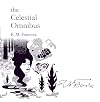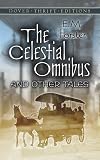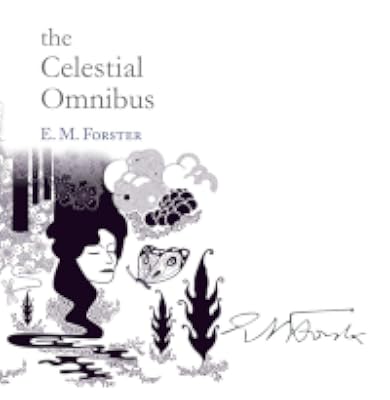
The Celestial Omnibus and Other Stories
by E. M. Forster
On This Page
Description
Fans of fantasy and science fiction will delight in this collection of imaginative tales from influential British author E. M. Forster. Though best known for his nuanced look at class distinctions in English society in acclaimed novels such as Howards End, Forster's prodigious imagination is on full display in these fascinating fantasy and science fiction tales..
Tags
Recommendations




























Member Reviews
I came to this collection after reading two stories online and finding them charming. After a closer reading of all six stories, their charm is undeniable but Forster offers much more than pleasant diversion.
Forster's achievement is two-fold: on one hand, the peculiar truth treated by all six stories, triangulated upon rather than addressed squarely; and on the other hand, a distinctive tone used to impressive effect.
The tone first, as it is somewhat tricky. The collection overall is droll and wistful, individual stories playing variations on that theme. The overarching effect is of distance, as though observing events and finding some lesson in them beyond the specific plot. Set against that contemplative mood, however, is each story's show more narrative voice, which in many cases is pompous and disagreeable. (Only one story uses a sympathetic narrator.)
This tension is apparent in each story, a wistful tone (of story) offset by a pompous and domineering voice (of character). It's remarkable that Forster sustains that lighthearted feel --a large factor in the charm so apparent on first reading-- when it's clear through all six stories that certain characters border on repugnant. Forster plainly sets up these irritating characters to point the reader elsewhere. They have strong opinions, they display a reasonable and modern outlook, and they clearly and confidently articulate how life is best lived. It's just as clear that for Forster, these characters are also completely wrong.
And that's the tricky bit: that tone so inviting, gently shepherding the reader along, even as that pompous voice clangs and alarums, warning the reader away from certain ideas.
Which leads to the second achievement, the implicit instruction in these Weird tales. In responding to that tone, considering what might be meant by steering us away from a genteel, sensible, modern life, readers do not find a clear answer. Forster provides very strong hints (the counter-example of an odious character is just one technique, he also employs recurring imagery and Classical allusion), but nowhere does he state it explicitly. Rather, both within a story and through reflection upon all of them, Forster seems to be gently nudging us toward something, rather than frightening or amusing with his little fantasies.
Forster's truth in these stories is delicate and frankly obtuse to anyone pursuing a typically modern and rational life, and Forster chooses to convey his point primarily through careful and particular representations of what it is not. He leaves the rest unsaid, trusting readers to work it out -- or not.
Poking around online convinces me that many readers find a rational and, yes, charming answer to the question of what Forster is getting on about, an answer suitable for fans of Peter Pan and Mary Poppins. I don't share that view. I believe Forster's truth is weightier than that, and also more specific, and altogether less rational. One's view comes down to whether Forster's appeal to Pan is symbolic or allegoric, or something more. For my part, I think something more. But I concede that Forster's stories support either interpretation equally well.
"The Story of a Panic" 1P
"For I saw nothing and heard nothing and felt nothing, since all the channels of sense and reason were blocked." (11)
"The Other Side of the Hedge" 1P
"In normal conditions everything works. Science and the spirit of emulation -- those are the forces that have made us what we are." (47-48)
"The Celestial Omnibus" 3P
"Truth in the depth, truth on the height." (69)
"Other Kingdom" 1P
"The bridge is built, the fence finished, and Other Kingdom lies tethered by a ribbon of asphalt to our front door." (119)
"The Curate's Friend" 1P
"How I came to see him is a more difficult question. For to see him there is required a certain quality, for which truthfulness is too cold a name and animal spirits too coarse a one, and he alone knows how this quality came to be in me." (129-130)
"The Road from Colonus" 3P
"It was his last hope of contradicting that logic of experience, and it was failing." (146)
A brilliant little book. show less
Forster's achievement is two-fold: on one hand, the peculiar truth treated by all six stories, triangulated upon rather than addressed squarely; and on the other hand, a distinctive tone used to impressive effect.
The tone first, as it is somewhat tricky. The collection overall is droll and wistful, individual stories playing variations on that theme. The overarching effect is of distance, as though observing events and finding some lesson in them beyond the specific plot. Set against that contemplative mood, however, is each story's show more narrative voice, which in many cases is pompous and disagreeable. (Only one story uses a sympathetic narrator.)
This tension is apparent in each story, a wistful tone (of story) offset by a pompous and domineering voice (of character). It's remarkable that Forster sustains that lighthearted feel --a large factor in the charm so apparent on first reading-- when it's clear through all six stories that certain characters border on repugnant. Forster plainly sets up these irritating characters to point the reader elsewhere. They have strong opinions, they display a reasonable and modern outlook, and they clearly and confidently articulate how life is best lived. It's just as clear that for Forster, these characters are also completely wrong.
And that's the tricky bit: that tone so inviting, gently shepherding the reader along, even as that pompous voice clangs and alarums, warning the reader away from certain ideas.
Which leads to the second achievement, the implicit instruction in these Weird tales. In responding to that tone, considering what might be meant by steering us away from a genteel, sensible, modern life, readers do not find a clear answer. Forster provides very strong hints (the counter-example of an odious character is just one technique, he also employs recurring imagery and Classical allusion), but nowhere does he state it explicitly. Rather, both within a story and through reflection upon all of them, Forster seems to be gently nudging us toward something, rather than frightening or amusing with his little fantasies.
Forster's truth in these stories is delicate and frankly obtuse to anyone pursuing a typically modern and rational life, and Forster chooses to convey his point primarily through careful and particular representations of what it is not. He leaves the rest unsaid, trusting readers to work it out -- or not.
Poking around online convinces me that many readers find a rational and, yes, charming answer to the question of what Forster is getting on about, an answer suitable for fans of Peter Pan and Mary Poppins. I don't share that view. I believe Forster's truth is weightier than that, and also more specific, and altogether less rational. One's view comes down to whether Forster's appeal to Pan is symbolic or allegoric, or something more. For my part, I think something more. But I concede that Forster's stories support either interpretation equally well.
"The Story of a Panic" 1P
"For I saw nothing and heard nothing and felt nothing, since all the channels of sense and reason were blocked." (11)
"The Other Side of the Hedge" 1P
"In normal conditions everything works. Science and the spirit of emulation -- those are the forces that have made us what we are." (47-48)
"The Celestial Omnibus" 3P
"Truth in the depth, truth on the height." (69)
"Other Kingdom" 1P
"The bridge is built, the fence finished, and Other Kingdom lies tethered by a ribbon of asphalt to our front door." (119)
"The Curate's Friend" 1P
"How I came to see him is a more difficult question. For to see him there is required a certain quality, for which truthfulness is too cold a name and animal spirits too coarse a one, and he alone knows how this quality came to be in me." (129-130)
"The Road from Colonus" 3P
"It was his last hope of contradicting that logic of experience, and it was failing." (146)
A brilliant little book. show less
Review of just the title story:
The allegory here is in the beat-'em-over-the-head-with-it school, but I still really enjoyed this tale of a small boy who discovers a carriage that conveys him to the Heaven that all true lovers of literature can find (the return ticket is free). Yes, the story is 100% about the wonders of reading and scathing about both those who disrespect the sense of wonder, and those who treat literature as a didactic tool to be put on a pedestal - and that's just wonderful. Very clever.
The allegory here is in the beat-'em-over-the-head-with-it school, but I still really enjoyed this tale of a small boy who discovers a carriage that conveys him to the Heaven that all true lovers of literature can find (the return ticket is free). Yes, the story is 100% about the wonders of reading and scathing about both those who disrespect the sense of wonder, and those who treat literature as a didactic tool to be put on a pedestal - and that's just wonderful. Very clever.
I have to admit that I am still getting used to Forster's style. He's not especially descriptive, which can be a good thing. I've read books that take pages upon pages to describe something as inconsequential as the front porch of a random building, down to the individual hues and intricate pattern of the wood grain. Um, no thanks. That's when I start skimming, in an attempt to keep my eyes from glazing over and drooping shut. However. Forster, in my opinion, goes too far in the opposite direction. Although I did notice it here and there in A Room With a View, it was much more obvious in this collection, probably due to the short story form. It was a bit disconcerting to begin a story and find myself plopped in mid-conversation amongst show more characters who are completely indistinguishable from one another (I am thinking specifically of Other Kingdom). Forster eventually gets around to sorting them out and the stories' backdrops and characters become clearer, but it does make for slightly uncomfortable reading in the first few pages.
I feel like the above is making it seem as if I didn't like his stories, but I did. I loved them. I loved the weaving together of Edwardian era characters and sensibilities with fantasy and fable. The Story of a Panic, The Celestial Omnibus, Other Kingdom, and The Road from Colonus were standouts, but honestly there's not a bad one in the bunch. show less
I feel like the above is making it seem as if I didn't like his stories, but I did. I loved them. I loved the weaving together of Edwardian era characters and sensibilities with fantasy and fable. The Story of a Panic, The Celestial Omnibus, Other Kingdom, and The Road from Colonus were standouts, but honestly there's not a bad one in the bunch. show less
This small collection of stories is described by the author in his introduction as fantasies written before the first world war. They date to 1904-1911. Forster became famous for his later novels such as Howard's End and A Passage to India. These stories are something quite different. The first tale, "The Story of a panic," is more than a little odd and I wondered what I had gotten into. I will say that I liked these stories and fables but I did not love them as many people seem to do. There is some cuteness and cleverness in here. They rather seduce the reader in a variety of ways.
The Celestial Omnibus and Other Stories is a collection of short stories by E. M. Forster. The stories were written over a period of some ten years before the book’s original publication in the year 1911.
This is a collection of fantasy short stories. One may even call them modern day fables.
The Celestial Omnibus and Other Stories contains six short stories: The Story of a Panic, The Other Side of the Hedge, The Celestial Omnibus, Other Kingdom, The Curate's Friend, and The Road from Colonus.
In the first story The Story of a Panic, a rather spoiled boy called Eustace goes on a trip to Italy with his aunts and there his life takes a strange turn when he encounters something unearthly in the woods. The narrator of this story is one of show more his traveling companions, a disapproving, strict (and not to mention racist) older gentleman. This pattern of letting fairly unpleasant persons narrate the stories reoccurs throughout the book.
The Other Side of the Hedge, is a highly symbolic tale about the long journey along the path of life. It asks the question, ‘Do you want to join the rat race or do you want to live the quiet life?’
In the The Celestial Omnibus a little boy, who is constantly belittled by his family and others, buys a ticket to an otherworldly omnibus that takes him ‘To Heaven’. This heaven is the world of imagination where the soul is set free.
In Other Kingdom a somewhat pompous rich man buys a plot of wooded land for his fiancée. It sets off a chain of events that leaves everyone dazed. This is another story with an unpleasant narrator.
A clergyman is befriended by a faun in The Curate's Friend.
And finally in The Road from Colonus, an elderly gentleman visits Greece and wants to stay behind in an isolated place to recapture the freedom of his youth. This story contains some very racist remarks made by some of the characters. But that is probably intentional as they are shown to be unpleasant and materialistic people.
What can I say about this book? This is a weird, astonishing assortment of stories. I don’t know how to describe these strange tales. They are all very complex, surreal and somewhat difficult to fathom.
The best story of The Celestial Omnibus and Other Stories, is the eponymous The Celestial Omnibus. The heaven described in the story will seem especially wonderful to any book lover. The Story of a Panic is also good.
E. M. Forster makes liberal use of pagan mythology in this collection. His writing is as usual good but complex.
This is a strange book that is definitely hard to understand. Still there is something about these stories. I can’t quite put my finger to it but it is something beautiful.
A strange but beautiful book. Definitely a cut above the rest. show less
This is a collection of fantasy short stories. One may even call them modern day fables.
The Celestial Omnibus and Other Stories contains six short stories: The Story of a Panic, The Other Side of the Hedge, The Celestial Omnibus, Other Kingdom, The Curate's Friend, and The Road from Colonus.
In the first story The Story of a Panic, a rather spoiled boy called Eustace goes on a trip to Italy with his aunts and there his life takes a strange turn when he encounters something unearthly in the woods. The narrator of this story is one of show more his traveling companions, a disapproving, strict (and not to mention racist) older gentleman. This pattern of letting fairly unpleasant persons narrate the stories reoccurs throughout the book.
The Other Side of the Hedge, is a highly symbolic tale about the long journey along the path of life. It asks the question, ‘Do you want to join the rat race or do you want to live the quiet life?’
In the The Celestial Omnibus a little boy, who is constantly belittled by his family and others, buys a ticket to an otherworldly omnibus that takes him ‘To Heaven’. This heaven is the world of imagination where the soul is set free.
In Other Kingdom a somewhat pompous rich man buys a plot of wooded land for his fiancée. It sets off a chain of events that leaves everyone dazed. This is another story with an unpleasant narrator.
A clergyman is befriended by a faun in The Curate's Friend.
And finally in The Road from Colonus, an elderly gentleman visits Greece and wants to stay behind in an isolated place to recapture the freedom of his youth. This story contains some very racist remarks made by some of the characters. But that is probably intentional as they are shown to be unpleasant and materialistic people.
What can I say about this book? This is a weird, astonishing assortment of stories. I don’t know how to describe these strange tales. They are all very complex, surreal and somewhat difficult to fathom.
The best story of The Celestial Omnibus and Other Stories, is the eponymous The Celestial Omnibus. The heaven described in the story will seem especially wonderful to any book lover. The Story of a Panic is also good.
E. M. Forster makes liberal use of pagan mythology in this collection. His writing is as usual good but complex.
This is a strange book that is definitely hard to understand. Still there is something about these stories. I can’t quite put my finger to it but it is something beautiful.
A strange but beautiful book. Definitely a cut above the rest. show less
I first read the short story "The Celestial Omnibus" in junior high for a class assignment, and thought it was the most beautiful story at the time...it was a good feeling to read it today many years later and still find the magic that so sweetly set my imagination on fire...
In the ways I enjoyed "A Room with a View" I liked each of Forster's different kinds of stories in this collection.
Members
- Recently Added By
Lists

Best public-transport fiction
72 works; 17 members

Lovecraft's 'Supernatural Horror in Literature' Reading List
216 works; 8 members

Books Read in 2009
464 works; 11 members

Recommended Reading : 600 Classics Reviewed, Editors of Salem Press, 2015
634 works; 6 members
Author Information

188+ Works 56,931 Members
Edward Morgan Forster was born on January 1, 1879, in London, England. He never knew his father, who died when Forster was an infant. Forster graduated from King's College, Cambridge, with B.A. degrees in classics (1900) and history (1901), as well as an M.A. (1910). In the mid-1940s he returned to Cambridge as a professor, living quietly there show more until his death in 1970. Forster was named to the Order of Companions of Honor to the Queen in 1953. Forster's writing was extensively influenced by the traveling he did in the earlier part of his life. After graduating from Cambridge, he lived in both Greece and Italy, and used the latter as the setting for the novels Where Angels Fear to Tread (1905) and A Room with a View (1908). The Longest Journey was published in 1907. Howard's End was modeled on the house he lived in with his mother during his childhood. During World War I, he worked as a Red Cross Volunteer in Alexandria, aiding in the search for missing soldiers; he later wrote about these experiences in the nonfiction works Alexandria: A History and Guide and Pharos and Pharillon. His two journeys to India, in 1912 and 1922, resulted in A Passage to India (1924), which many consider to be Forster's best work; this title earned the James Tait Black Memorial Prize. Forster wrote only six novels, all prior to 1925 (although Maurice was not published until 1971, a year after Forster's death, probably because of its homosexual theme). For much of the rest of his life, he wrote literary criticism (Aspects of the Novel) and nonfiction, including biographies (Goldsworthy Lowes Dickinson), histories, political pieces, and radio broadcasts. Howard's End, A Room with a View, and A Passage to India have all been made into successful films. (Bowker Author Biography) show less
Work Relationships
Contains
Common Knowledge
- Canonical title
- The Celestial Omnibus and Other Stories
- Original publication date
- 1911
- First words
- Eustace's career - if career it can be called - certainly dates from that afternoon in the chestnut woods above Ravello. (The Story of a Panic)
- Last words
- (Click to show. Warning: May contain spoilers.)Mr. Lucas, who was still composing his letter to the landlord, did not reply. (The Road from Colonus)
Classifications
- Genres
- Fiction and Literature, General Fiction, Fantasy
- DDC/MDS
- 823.912 — Literature & rhetoric English & Old English literatures English fiction 1900- 1901-1999 1901-1945
- LCC
- PZ3 .F7735 — Language and Literature Fiction and juvenile belles lettres Fiction and juvenile belles lettres Fiction in English
- BISAC
Statistics
- Members
- 328
- Popularity
- 97,143
- Reviews
- 7
- Rating
- (3.72)
- Languages
- Dutch, English, Italian, Spanish
- Media
- Paper, Ebook
- ISBNs
- 41
- UPCs
- 1
- ASINs
- 15