On This Page
Description
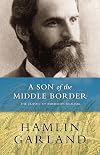
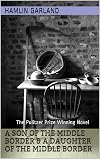
A classic of American realism, A Son of the Middle Border (1917) is the true coming-of-age odyssey of a farm boy who—informed by the full brute force of a homesteaders' life on the vast unbroken prairie—would become a preeminent American writer of the early twentieth century. Pulitzer Prize-winner Hamlin Garland's captivating autobiography recounts his journey from a rural childhood to the study of literature and the sciences in Boston, his vital connections with such inspirations as show more William Dean Howell, and eventually his reclaimed sense of identity as a writer of the Midwest's beautiful yet hard land. This definitive book placed Garland among such regionalist writers as Willa Cather, Sherwood Anderson, and Theodore Dreiser.. show less
Tags
Recommendations























Member Reviews
My fond memories of growing up in Wisconsin create a warm place in my heart for this memoir about growing up in a Wisconsin of the previous century; then as the mid-western frontier. Hamlin Garland captures the essence of the place and time that was already a distant memory during my boyhood. He does this through advocacy of a form of realism that blended the realist's insistence upon verisimilitude of detail with the impressionist's tendency to paint objects as they appear to his individual eye.
He begins in a tremendously moving fashion with the first time he met his father who was returning home from the Civil War in 1864, as he was a baby when his father went off to war.
""Come here , my little man," my father said.--"My little show more man!" Across the space of a half-a-century I can still hear the sad reproach in his voice. "Won't you come and see your poor old father when he comes home from the war?"
"My little man!" How significant that phrase seems to me now! The war had in very truth come between this patriot and his sons. I had forgotten him--the baby had never known him."(p 6)
Garland narrates his memoir in chronological fashion tracing the events of his boyhood, first in Wisconsin and later in Iowa, and continuing into adulthood with his own travels and development as a writer. He uses a first person narrator but, he has two different "I"s telling the story. Using a "double angle of vision" Garland frequently shifts from telling his story from a youthful perspective to viewing the events and commenting on their significance as an adult. It is a very personal narrative where he does not claim to be telling the literal truth but only his personal or interior truth. The story is shaped by his own reminiscences and recollections of the past forming a sort of literary impressionism that Garland called "veritism". The veritist differed from the realist, Garland claimed, in his insistence upon the centrality of the artist's individual vision: the artist should paint life as he sees it. In doing this he brings his world alive for the reader.
The stories of his family life, with his brother on the farm and in school, his uncle David playing the fiddle, and the life of the prairie with its flora and fauna were the sections that I enjoyed the most. In later life he would go on to write short stories that were gathered in the collection Main-Travelled Roads and, four years after Son of the Middle Border he wrote Daughter of the Middle Border for which he was awarded the Pulitzer Prize for Biography. I think the depiction of a warm family life on the prairie, a region's characters, customs, and textures of life creates an interesting read even for those who do not share a personal connection with the beauty of Midwestern life. show less
He begins in a tremendously moving fashion with the first time he met his father who was returning home from the Civil War in 1864, as he was a baby when his father went off to war.
""Come here , my little man," my father said.--"My little show more man!" Across the space of a half-a-century I can still hear the sad reproach in his voice. "Won't you come and see your poor old father when he comes home from the war?"
"My little man!" How significant that phrase seems to me now! The war had in very truth come between this patriot and his sons. I had forgotten him--the baby had never known him."(p 6)
Garland narrates his memoir in chronological fashion tracing the events of his boyhood, first in Wisconsin and later in Iowa, and continuing into adulthood with his own travels and development as a writer. He uses a first person narrator but, he has two different "I"s telling the story. Using a "double angle of vision" Garland frequently shifts from telling his story from a youthful perspective to viewing the events and commenting on their significance as an adult. It is a very personal narrative where he does not claim to be telling the literal truth but only his personal or interior truth. The story is shaped by his own reminiscences and recollections of the past forming a sort of literary impressionism that Garland called "veritism". The veritist differed from the realist, Garland claimed, in his insistence upon the centrality of the artist's individual vision: the artist should paint life as he sees it. In doing this he brings his world alive for the reader.
The stories of his family life, with his brother on the farm and in school, his uncle David playing the fiddle, and the life of the prairie with its flora and fauna were the sections that I enjoyed the most. In later life he would go on to write short stories that were gathered in the collection Main-Travelled Roads and, four years after Son of the Middle Border he wrote Daughter of the Middle Border for which he was awarded the Pulitzer Prize for Biography. I think the depiction of a warm family life on the prairie, a region's characters, customs, and textures of life creates an interesting read even for those who do not share a personal connection with the beauty of Midwestern life. show less
A SON opens with a vivid memory of his Father returning from The War.
Father's military discipline soon changed the house rules, fomenting Hamlin's quiet and long lasting rebellion.
Inspiring descriptions of West Salem nature and birdsong everywhere in his travels alternate with repetitive and depressing death orations.
Hamlin's father did not consult his wife in any major decisions, like where to live.
This oppressive attitude unfortunately carried on in Hamlin's marriage.
He moved from ultimately loathed farming and ranching into carpentry and,
once adopted into Boston's literary circles, into becoming a prolific author
who could finally help his Mother to enjoy the decent and relaxed life back in Wisconsin
that she had earned,
despite his show more father's ongoing objections to leaving The Dakotas.. show less
Father's military discipline soon changed the house rules, fomenting Hamlin's quiet and long lasting rebellion.
Inspiring descriptions of West Salem nature and birdsong everywhere in his travels alternate with repetitive and depressing death orations.
Hamlin's father did not consult his wife in any major decisions, like where to live.
This oppressive attitude unfortunately carried on in Hamlin's marriage.
He moved from ultimately loathed farming and ranching into carpentry and,
once adopted into Boston's literary circles, into becoming a prolific author
who could finally help his Mother to enjoy the decent and relaxed life back in Wisconsin
that she had earned,
despite his show more father's ongoing objections to leaving The Dakotas.. show less
1686 A Son of the Middle Border, by Hamlin Garland (read 10 Jan 1982) This book, which I remember hearing a lot about in my youth, is the story of Garland's life, told from the beginning of his consciousness in about 1865 (he was born in 1860) until 1893, when he is settling his parents into a house in Wisconsin. His family left Wisconsin when he was under ten and they moved to a farm near Osage, Iowa. Later they went on to Brown County, S.D. Hamlin went east when he was 21, and wrote, etc. What can I say? The writing is florid and over-ripe--he is over-dramatic, and also excessively pessimistic. And every ending is sad. I have very mixed feelings about this book--in some ways it is awfully naive, but some of the lines about life are show more strikingly beautiful: "The flash and ripple and glimmer of the tall sunflowers, the myriad voices of gleeful bobolinks, the chirp and gurgle of red-winged blackbirds swaying on the willows, the meadow-larks piping from grassy bogs, the peep of the prairie chick, and the wailing call of plover on the flowery green slopes of the uplands made it all an ecstatic world to me." show less
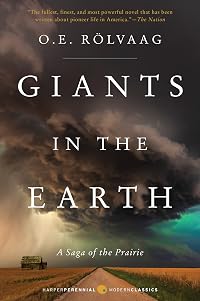
As a midwesterner I knew the early pioneers had it tough but it was really very bleak. It is comparable to Giants in the Earth.
A classic of American realism, A Son of the Middle Border (1917) is the true coming-of-age odyssey of a farm boy who—informed by the full brute force of a homesteaders’ life on the vast unbroken prairie—would become a preeminent American writer of the early twentieth century. Pulitzer Prize–winner Hamlin Garland’s captivating autobiography recounts his journey from a rural childhood to the study of literature and the sciences in Boston, his vital connections with such inspirations as William Dean Howell, and eventually his reclaimed sense of identity as a writer of the Midwest’s beautiful yet hard land. This definitive book placed Garland among such regionalist writers as Willa Cather, Sherwood Anderson, and Theodore show more Dreiser. (Product Description) show less
Ratings
Members
- Recently Added By
Lists

Used books to buy next
565 works; 1 member

Trinity College Booklist (1951): Class Six, Biography
119 works; 4 members
Author Information

66+ Works 1,063 Members
Hamlin Garland was born and raised on pioneer farms in the upper Midwest, and his earliest and best fiction (most of it collected in Main Travelled Roads, 1891) deals with the unremitting hardship of frontier life---angry, realistic stories about the toil and abuses to which farmers of the time were subjected. As his fiction became more popular show more and romantic, its quality seriously declined, and Garland is remembered today chiefly for a handful of stories, such as "Under the Lion's Paw" and "Rose of Dutcher's Coolly." His only contribution to literary theory is Crumbling Idols (1894), in which he argued for an art that was truthful, humanitarian, and rooted in a specific locale. The first volume of his autobiography, A Son of the Middle Border (1917), was followed by the much-admired second volume, A Daughter of the Middle Border (1921), which was awarded a Pulitzer Prize. He published several other volumes of reminiscence, all of which are once more available with the reprinting of the 45-volume collection of his works. (Bowker Author Biography) show less
Series

Work Relationships
Is abridged in
Common Knowledge
- Original publication date
- 1914
Classifications
Statistics
- Members
- 170
- Popularity
- 192,014
- Reviews
- 5
- Rating
- (3.93)
- Languages
- English
- Media
- Paper, Audiobook, Ebook
- ISBNs
- 29
- ASINs
- 16