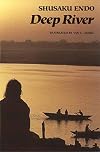
Deep River
by Shusaku Endo
On This Page
Description
In India, four Japanese tourists converge on the River Ganges in search of absolution. The novel probes their consciences, from Isobe, grieving the death of the wife he ignored in life, to Kugachi, haunted by wartime memories of a man who saved his life by eating human flesh, then drank himself to death to forget. An analysis of the importance of religion.Tags
Recommendations





















Member Reviews
Shusaku Endo offers a rare perspective, that of a Japanese Catholic. He traces a small cast of tourists to India, concentrating on their experiences at Varanasi at the Ganges. In this setting he widens the perceived Western Christian tradition through an Asian viewpoint; one that does not necessarily place good and evil as opposites, but which understands that good and evil are sometimes common to the pursuit of God. He uses the example of the Hindu deity Chamunda, who despite being a mother goddess like Mary dispensing good, is also a bringer of awful suffering and pain.
Endo offers us a pantheistic variation on the person of Jesus who himself undertook the burden of human suffering with our redemption as its purpose.
Endo offers us a pantheistic variation on the person of Jesus who himself undertook the burden of human suffering with our redemption as its purpose.
show more 遠藤周作的深河。講幾位年齡、經歷各不相同的日本人,去印度恆河邊「朝聖」,思考生死、宗教與自己人生的關聯。故事藉由多重視角陳述,可以看到每個人的心路歷程,每個人的故事都滿好看的。其中最受讀者注目的應該是原本是天主教修士,後來因為認為每個宗教裡都有耶穌,所以脫離天主教,去恆河邊服務印度教朝聖者的大津。我覺得大津(以及小說中也佔了重要地位的印度教女神查姆達)的愛人、為人服務、無佳形美容、被人厭棄的理念,應該也就是作者想要提倡的信仰之路。但我認同女主角的質疑,大津其人其行雖然動人(真的很動人!),但是一人之力有限,無法改變世界。(我覺得救贖之路一定要由耶穌來走才行得通,因為耶穌是完全的人也是完全的神,能受苦、能被厭棄、能背負人的罪而死,但也能復活、能贖罪、能升天為人預備地方,不是你我這樣凡人。)可惜小說結局戛然而止,有句重要的話說出來了之後,身為讀者很想看到起碼一句關於女主角如何反應的描寫。 show less
This books was one of the strangest reading experiences I've had in a while.
The story concerns a group of Japanese tourists, visiting Buddhist holy sites on a tour of India. It's a bit like one of those 1970's movies that featured a disparate cast of characters thrown together and then forced to confront each other through facing a common hardship. Their tour is not a very good one.
One couple is on their honeymoon--she's unhappy that she didn't get to go to Europe while he wants only to take pictures of the strange sights he sees. One man is looking for the reincarnation of his wife who died from cancer years before. He has heard of a child who claims to be a reincarnated Japanese woman. Another is a World War II veteran hoping to have show more prayers said for his fallen comrades who did not make it home from their time in South Asia. Yet another is a woman traveling in search of a college acquaintance, a failed priest rumored to be working among the impoverished Hindu pilgrims on the banks of the Ganges river.
The author is Japanese, the concerns of the characters are both universal and specific to Japanese culture. I come to the story as an outsider, just as the book's characters come to India as outsiders, putting me at a doubly removed distance from the events described. That religion and spirituality play such important roles in the book also served to distance me from the book as I have little to do with either. The characters end up spending a great deal of time on the banks of the Ganges River where Hindu pilgrims go to die or to spread the ashes of their departed family members. Some very devote people drink the water of the Ganges as they bathe in it. The customs around these rituals are difficult for a Westerner to understand, again putting me at further distance from the narrative.
But in spite of the distance between my own experience and that of the characters, I came to care for all of them and to understand if not partake in their spiritual journey. Mr. Endo works some magic here, because by rights I should never have made it all the way through this book. At one point, during a discussion about the nature of God, I even began to suspect that I had picked up a piece of Christian fiction by accident somehow, though by the end of the novel it's clear that Mr. Endo's message is greater than any one religious point of view can contain.
I still don't know quite what to make of the experience I had reading Deep River. How is it that Mr. Endo has made me consider the intermingling of life and death experienced by those who bathe in the Ganges among the ashes of the dead as something wonderful? Something I might consider doing?
That's quite an accomplishment.
I recommend Deep River and look forward to reading more by Shusaku Endo. show less
The story concerns a group of Japanese tourists, visiting Buddhist holy sites on a tour of India. It's a bit like one of those 1970's movies that featured a disparate cast of characters thrown together and then forced to confront each other through facing a common hardship. Their tour is not a very good one.
One couple is on their honeymoon--she's unhappy that she didn't get to go to Europe while he wants only to take pictures of the strange sights he sees. One man is looking for the reincarnation of his wife who died from cancer years before. He has heard of a child who claims to be a reincarnated Japanese woman. Another is a World War II veteran hoping to have show more prayers said for his fallen comrades who did not make it home from their time in South Asia. Yet another is a woman traveling in search of a college acquaintance, a failed priest rumored to be working among the impoverished Hindu pilgrims on the banks of the Ganges river.
The author is Japanese, the concerns of the characters are both universal and specific to Japanese culture. I come to the story as an outsider, just as the book's characters come to India as outsiders, putting me at a doubly removed distance from the events described. That religion and spirituality play such important roles in the book also served to distance me from the book as I have little to do with either. The characters end up spending a great deal of time on the banks of the Ganges River where Hindu pilgrims go to die or to spread the ashes of their departed family members. Some very devote people drink the water of the Ganges as they bathe in it. The customs around these rituals are difficult for a Westerner to understand, again putting me at further distance from the narrative.
But in spite of the distance between my own experience and that of the characters, I came to care for all of them and to understand if not partake in their spiritual journey. Mr. Endo works some magic here, because by rights I should never have made it all the way through this book. At one point, during a discussion about the nature of God, I even began to suspect that I had picked up a piece of Christian fiction by accident somehow, though by the end of the novel it's clear that Mr. Endo's message is greater than any one religious point of view can contain.
I still don't know quite what to make of the experience I had reading Deep River. How is it that Mr. Endo has made me consider the intermingling of life and death experienced by those who bathe in the Ganges among the ashes of the dead as something wonderful? Something I might consider doing?
That's quite an accomplishment.
I recommend Deep River and look forward to reading more by Shusaku Endo. show less
There is death. Yet, there is also life. There are long emotionally dead passages. Yet, there are also moments so charged with feeling they consume all in their path, carry them along for a bit and then leave behind ones willing to do anything to catch up. You have the search for reincarnated love ones, the search for emotional fulfillment, the search to reconcile death with life, the search for atonement, each person ever searching for something omnipresent in its never clearly defined state. And on it goes, this one period of time accepting all parts of life into its midst; the river mentioned in the pages embodies this, and will take everything in without spitting out any straightforward conclusions of its own. This is definitely a show more novel that won't get very far with a reader without some interpretation on their part; it is only fully enjoyed if one can see their own life experiences within the pages, and leave with a new understanding of just what it means to exist. show less
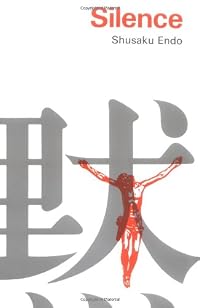
Like Silence by the same author, this novel explores religious belief, this time taking a group of more or less contemporary Japanese men and women on a trip to the Ganges where, for varying reasons, they hope to fill some of the holes and resolve the darkness they feel in their lives. Interestingly, the title comes from an African-American spiritual which Endō uses as an epigraph for the book.
Much of the novel focuses on Christianity, and it is filled with what I take to be Christian imagery and Christ figures (in the sense of dying for others), but Endō definitely explores, in this later work, the question of how a western religion like Christianity can or cannot be adapted to an eastern Asian sensibility. There is a lot about Hindu show more gods (and especially goddesses) and how they incorporate both good and evil, and about mother figures and how Hindu goddesses who are mother figures, especially one known as Chamunda, exemplify giving despite unspeakable suffering in a way that Mary, in Christianity, does not. A recurring character, not one of the travelers, is a Japanese man who traveled to Europe to become a Christian priest, was rejected because he had too many (Asian) ideas which were troubling to his superiors, and ends up, still a Christian in his mind, living near the banks of the Ganges and helping dying people reach it; in this work, he explicitly compares himself to Jesus, who in this book is noted primarily for taking on the suffering of others. Poverty and class also play a role.
I had a little difficulty getting into this book, as I found some of the initial portraits of the Japanese travelers a little schematic, and it was clear that each of the main characters would be changed in some way by the trip, although not necessarily in the way he or she expected. As I read more, I realized this was not so much a book about the characters but a book about different approaches to life, suffering, and death. The Ganges is, both literally and symbolically, the embodiment of both life and death As Endō writes:
The river took in his cry and silently flowed away. But he felt a power of some kind in that silvery silence. Just as the river had embraced the deaths of countless people over the centuries and carried them into the next world, so too it picked up and carried away the cry of life from this man sitting on a rock on its bank. p. 189
In the end, I found the novel thought-provoking, although I'm not sure exactly what Endō hoped readers would take away from it. show less
Much of the novel focuses on Christianity, and it is filled with what I take to be Christian imagery and Christ figures (in the sense of dying for others), but Endō definitely explores, in this later work, the question of how a western religion like Christianity can or cannot be adapted to an eastern Asian sensibility. There is a lot about Hindu show more gods (and especially goddesses) and how they incorporate both good and evil, and about mother figures and how Hindu goddesses who are mother figures, especially one known as Chamunda, exemplify giving despite unspeakable suffering in a way that Mary, in Christianity, does not. A recurring character, not one of the travelers, is a Japanese man who traveled to Europe to become a Christian priest, was rejected because he had too many (Asian) ideas which were troubling to his superiors, and ends up, still a Christian in his mind, living near the banks of the Ganges and helping dying people reach it; in this work, he explicitly compares himself to Jesus, who in this book is noted primarily for taking on the suffering of others. Poverty and class also play a role.
I had a little difficulty getting into this book, as I found some of the initial portraits of the Japanese travelers a little schematic, and it was clear that each of the main characters would be changed in some way by the trip, although not necessarily in the way he or she expected. As I read more, I realized this was not so much a book about the characters but a book about different approaches to life, suffering, and death. The Ganges is, both literally and symbolically, the embodiment of both life and death As Endō writes:
The river took in his cry and silently flowed away. But he felt a power of some kind in that silvery silence. Just as the river had embraced the deaths of countless people over the centuries and carried them into the next world, so too it picked up and carried away the cry of life from this man sitting on a rock on its bank. p. 189
In the end, I found the novel thought-provoking, although I'm not sure exactly what Endō hoped readers would take away from it. show less
I liked this book more and more as I read it. Each of the 5 characters' stories was engaging and poignant in a different way, but it really grabbed me after they arrived in India. Although Endo was a Christian, I didn't find find this story to be predominantly Christian. In fact, it strives to be much more than that-- the story of the journey to salvation and love that is common to several religions (Christianity, Buddhism, and Hinduism.) I think Endo even makes a point that individual religions trying to own or constrain that journey is what leads to strife, poverty, war.
There are several Christ figures in the story: the myna, Otsu, Indira Gandhi, Isobe's wife, Kiguchi's war buddy, but then there's the Hindu goddess to balance it all show more out. I think this book would make excellent material for a comparative religion discussion. Even if it is a Christian story, it is definitely an Eastern interpretation.
Endo's writing was interesting to me. Having just completed three other Japanese novels, this book does read differently. It could be because it is more contemporary, but I realized I was not picturing Japanese characters in my mind while reading. Somehow, very subtly, his European affinity and influences come out in his writing. Could be the translation too. I look forward to reading more of his novels so I can compare them. show less
There are several Christ figures in the story: the myna, Otsu, Indira Gandhi, Isobe's wife, Kiguchi's war buddy, but then there's the Hindu goddess to balance it all show more out. I think this book would make excellent material for a comparative religion discussion. Even if it is a Christian story, it is definitely an Eastern interpretation.
Endo's writing was interesting to me. Having just completed three other Japanese novels, this book does read differently. It could be because it is more contemporary, but I realized I was not picturing Japanese characters in my mind while reading. Somehow, very subtly, his European affinity and influences come out in his writing. Could be the translation too. I look forward to reading more of his novels so I can compare them. show less
Compliment sandwich review.
The good. Endō is exceptionally skilled in his simplicity as a writer. The chapters move quickly. The characters are well fleshed out. The dialogue works. And he can tell an ensemble story with remarkable clarity and the ability to cross cut between scenarios well.
The bad. Boy howdy does he lay on the Christian symbolism in a thick way. It was like watching a bad Christian movie like Left Behind at times. The arguments about faith can be silly. The villains are cartoonish. And the book stops rather than end.
The good. While I know he considered himself a Catholic this book has a different theological approach. It reads a the practical application of Universalist Unitarian thought as he shows a firm middle show more ground in the understanding of a life's journey from Christian, Buddhist, Hindu, atheist, and agnostic beliefs. I could see this being read in a church group and appreciated on that level.
Still, it's wonderfully well written, can be read quickly, and got a nice shoutout in the tv show Lost as one of the characters was reading it in the final season. Recommended. show less
The good. Endō is exceptionally skilled in his simplicity as a writer. The chapters move quickly. The characters are well fleshed out. The dialogue works. And he can tell an ensemble story with remarkable clarity and the ability to cross cut between scenarios well.
The bad. Boy howdy does he lay on the Christian symbolism in a thick way. It was like watching a bad Christian movie like Left Behind at times. The arguments about faith can be silly. The villains are cartoonish. And the book stops rather than end.
The good. While I know he considered himself a Catholic this book has a different theological approach. It reads a the practical application of Universalist Unitarian thought as he shows a firm middle show more ground in the understanding of a life's journey from Christian, Buddhist, Hindu, atheist, and agnostic beliefs. I could see this being read in a church group and appreciated on that level.
Still, it's wonderfully well written, can be read quickly, and got a nice shoutout in the tv show Lost as one of the characters was reading it in the final season. Recommended. show less
Members
- Recently Added By
Lists

1001 Books You Must Read Before You Die
1,448 works; 1,132 members

Japanese Literature
230 works; 40 members

A Novel Cure
742 works; 23 members

My TBR
371 works; 3 members

Favorite Books in Translation
320 works; 133 members
Talk Discussions
Past Discussions
Deep River by Shusaku Endo in Author Theme Reads (December 2012)
Author Information

164+ Works 9,043 Members
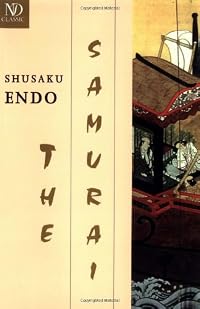
Shusaku Endo was born in Tokyo in 1923 and, with his family, converted to Catholicism while he was still a child. Much of his writing centers on the conflict this conversion engendered as he struggled to develop faith in a deity foreign to Japanese culture. His writings also reflect on his experiences during World War II during the bombings and show more the subsequent shortage of basic human necessities for the Japanese people. He explores the suffering endured and the inevitable shock wave upon human relationships and the human psyche. Endo graduated from Keio University and then journeyed to France after the war to continue his studies, but was forced to return to Japan because of illness. After a period of convalescence Endo decided on a writing career, publishing his first novel, Shiroihito, in 1955. His novel The Samurai, published in the United States in 1996, is considered one of his finest works. His novel Silence, was made into a major motion picture and premiered in November 2016. Endo's reputation is due in part to his exploration of moral dilemma as it relates to divergent cultures. Endo has won many literary awards. In 1982 he was elected to the Japan Arts Academy. Shusaku Endo died in 1996. (Bowker Author Biography) show less
Some Editions
Awards and Honors
Series
Belongs to Publisher Series
Gallimard, Folio (3353)
Common Knowledge
- Canonical title
- Deep River
- Original title
- 深い河
- Original publication date
- 1993 (original Japanese) (original Japanese); 1994 (English: Gessel) (English: Gessel)
- People/Characters
- Mitsuko Naruse; Isobe; Kiguchi; Numanda; Otsu
- Important places
- Japan
- Important events
- Assassination of Indira Gandhi (1984-10-31)
- Epigraph
- Deep river, Lord: I want to cross over into campground.
Negro Spiritual - First words
- Yaki imo-o. Yaki imo. Piping hot yaki imo-o.
- Last words
- (Click to show. Warning: May contain spoilers.)About an hour ago he took a sudden turn for the worse.
- Original language
- Japanese
- Disambiguation notice
- Original title: 深い河
Classifications
- Genres
- General Fiction, Fiction and Literature
- DDC/MDS
- 895.635 — Literature & rhetoric Asian Literature Literatures of East and Southeast Asia Japanese Japanese fiction 1945–2000
- LCC
- PL849 .N4 .D5613 — Language and Literature Languages and literatures of Eastern Asia, Africa, Oceania Languages of Eastern Asia, Africa, Oceania Japanese language and literature Japanese literature Individual authors and works
- BISAC
Statistics
- Members
- 690
- Popularity
- 41,257
- Reviews
- 25
- Rating
- (3.67)
- Languages
- 10 — Chinese, Dutch, English, French, German, Japanese, Korean, Norwegian (Bokmål), Portuguese, Spanish
- Media
- Paper
- ISBNs
- 23
- ASINs
- 5