On This Page
Description
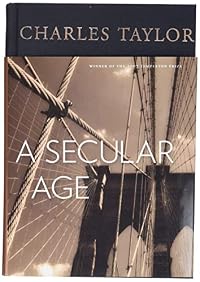
"What does it mean to say that we live in a secular age? Almost everyone would agree that we - in the West, at least - largely do. And clearly the place of religion in our societies has changed profoundly in the last few centuries. Charles Taylor takes up the question of what these changes mean - of what, precisely, happens when a society in which it is virtually impossible not to believe in God becomes one in which faith, even for the staunchest believer, is only one human possibility among show more others." "Taylor offers a historical perspective. He examines the development in "Western Christendom" of those aspects of modernity which we call secular. What he describes is in fact not a single, continuous transformation, but a series of new departures, in which earlier forms of religious life have been dissolved or destabilized and new ones have been created." "What this means for the world - including the new forms of collective religious life it encourages, with their tendency to a mass mobilization that breeds violence - is what Charles Taylor grapples with, in a book as timely as it is timeless."--Jacket. show lessTags
Recommendations








Member Reviews
OK, I think Taylor gives Nietzsche short shrift; his mentioning of thinkers without explaining their work means that readers should optimally have a good knowledge of Western philosophy (and probably religion) already in place; and what felt like a blow of Christian apologetics at the end grew tiresome—but the book is remarkable for all the strands it brings together in really revealing ways I'd not seen before. A mammoth and hugely needed effort that leaves you amazed at what one person can do (and how little the rest of us really can say we know).
An immense, sweeping, magisterial exploration of Western civilization, primarily over the past 500 years, as a quest to answer the question: how come in 1500 everyone believed in God and took it for granted, but by 2000 unbelief was seen as a valid option?
Taylor identifies all sorts of inter-related trends which have led to the present secular age: disenchantment, the development of the "buffered self" (as opposed to one porous to other people and spiritual forces around oneself; the ability to see oneself as an individual, independent unit, as if from above), the loss of an understanding of one's place in the cosmos replaced by random existence in the void known as the universe, and the constant agitation toward Reform in "Latin show more Christendom" which has marked most of the last millennium. Taylor then traces these trends over a 500 year period: the Reformation and the critique of "good magic," the rise of neo-Stoicism and the ordering of the elite, leading to a more ordered view of things, getting to the idea of "providential Deism" by the 18th century, God as setting up a system and operating according to these fixed ideas of order, all preparing the ground for the tumults of the 19th and 20th centuries. In these ways a highly communal, enchanted culture has become highly individualistic and secularized.
Such is a gross oversimplification of Taylor's narrative and does not give justice to the account. He does well at showing how the Reformation argumentation against various tenets of Catholicism not only go back to the Reform movement concept but even to the critique of the "Axial" age against the "pre-Axial" age, the shift away from pagan idolatry toward monotheism, and how many aspects of primal, "pagan" spirituality were maintained for quite a long time...and all of this reform paved the way for the same argumentation to be used against Protestant Christianity and the idea of Christianity itself. Neither modernity nor secularity are portrayed as downward spirals into the abyss; for most of the narrative Taylor is content to tell the story without providing judgment, and when he does render his own judgments, they prove nuanced, attempting to find the good, absorb the legitimate critiques, but also show the failings of the present synthesis. He spoke of the resurgence of Christianity in the 18th and 19th centuries as the age of mobilization; he sees many of the same animating trends within it in the drive for reform in culture itself.
His chapters on the state of religion and secularity today are quite insightful, as are the discussions of the dilemmas faced by all the inheritors of the Western tradition. He does well to see three real disputants, traditional religious belief, secular humanism, and a Nietzschean "post-humanism", all at times allying against another, all uneasily seeking the way forward.
He does well at expressing the dangers of moralism as replacing the grace and power found in Christianity as well.
A work to be read, grappled with, and digested. Truly indeed a monumental and epochal work. show less
Taylor identifies all sorts of inter-related trends which have led to the present secular age: disenchantment, the development of the "buffered self" (as opposed to one porous to other people and spiritual forces around oneself; the ability to see oneself as an individual, independent unit, as if from above), the loss of an understanding of one's place in the cosmos replaced by random existence in the void known as the universe, and the constant agitation toward Reform in "Latin show more Christendom" which has marked most of the last millennium. Taylor then traces these trends over a 500 year period: the Reformation and the critique of "good magic," the rise of neo-Stoicism and the ordering of the elite, leading to a more ordered view of things, getting to the idea of "providential Deism" by the 18th century, God as setting up a system and operating according to these fixed ideas of order, all preparing the ground for the tumults of the 19th and 20th centuries. In these ways a highly communal, enchanted culture has become highly individualistic and secularized.
Such is a gross oversimplification of Taylor's narrative and does not give justice to the account. He does well at showing how the Reformation argumentation against various tenets of Catholicism not only go back to the Reform movement concept but even to the critique of the "Axial" age against the "pre-Axial" age, the shift away from pagan idolatry toward monotheism, and how many aspects of primal, "pagan" spirituality were maintained for quite a long time...and all of this reform paved the way for the same argumentation to be used against Protestant Christianity and the idea of Christianity itself. Neither modernity nor secularity are portrayed as downward spirals into the abyss; for most of the narrative Taylor is content to tell the story without providing judgment, and when he does render his own judgments, they prove nuanced, attempting to find the good, absorb the legitimate critiques, but also show the failings of the present synthesis. He spoke of the resurgence of Christianity in the 18th and 19th centuries as the age of mobilization; he sees many of the same animating trends within it in the drive for reform in culture itself.
His chapters on the state of religion and secularity today are quite insightful, as are the discussions of the dilemmas faced by all the inheritors of the Western tradition. He does well to see three real disputants, traditional religious belief, secular humanism, and a Nietzschean "post-humanism", all at times allying against another, all uneasily seeking the way forward.
He does well at expressing the dangers of moralism as replacing the grace and power found in Christianity as well.
A work to be read, grappled with, and digested. Truly indeed a monumental and epochal work. show less
Summary: How Western society moved from a shared belief in God to a secular age in which belief was one option of many.
Charles Taylor’s book, A Secular Age, has become a primary source of sorts for anyone trying to understand our present time. On a regular basis, I come across writers invoking “disenchantment, “social imaginaries,” “the buffered self,” and “the immanent frame.” All of these concepts come out of Taylor.
Like many primary sources, reading Charles Taylor is daunting for most of us. There are 776 pages of dense text that introduce us not only to a breadth of intellectual and cultural history spanning 500 years. We also encounter a truly erudite mind, who quotes literature in several European languages show more (usually offering translations and weaves a number of people, events and schools of thought in an analysis that seeks to answer one question: how did we move from a world, indeed a cosmos, of shared belief in God to a secular age where belief in God was merely one option of many?
I’ll be honest. I don’t have the learning to offer a detailed analysis of this book. What I will try to do is offer a summary of the major contours of his argument. Following this, I will comment on what I thought the most significant contributions of the book. I’ll note a few questions I have. And I’ll make several suggestions for intrepid souls who want to tackle this book.
Summary
Charles Taylor makes the case that secularization is not a matter of subtracting religion from society. Rather, he traces the beginnings to the Reformation that removed hierarchy, elevating the individual. With this comes the disciplinary society, using practices to elevate the spiritual and moral life of all. In time, discipline was separated from devotion to God to stand on its own as a form of incipient humanism. Belief in God wasn’t jettisoned but relegated to a providential Deism. In turn, enlightenment science reduced a cosmos filled with God’s grandeur to an impersonal mechanism and this way of thinking spread to different aspects of society. A shift occurred from the “porous self” exposed to the workings of God and the cosmos to the “buffered self” insulated from such supernatural forces.
These developments created the conditions for what Taylor calls “the nova effect,” an explosion of different ways of believing (or not believing). They range from a theistic or deistic humanism, to a humanism without God, embracing moral virtues. Nietzsche and his followers rejected the quest for truth and morality as camouflages for the will to power. For others, the disconnect of the material world from the supernatural led to the embrace of materialist and atheist belief.
This hardly led to the eradication of belief in God. Taylor describes the era from 1800 to 1960 as “The Age of Mobilization” where movements like Catholic Action in France and Methodists and revivalists in England and North America succeeded in recruiting large numbers of people. Taylor believes that the cultural revolution of the 1960’s introduced an “Age of Authenticity” introducing a variety of religious experiences, designer belief, and the celebration of bodily pleasure.
Having lost connection with the transcendent, we live in the immanent frame, and yet we struggle to find a basis in it for some of our deepest longings, and to deal with the ultimate reality of death. We live amid cross pressures and dilemmas, including the troubling presence of human violence. He concludes the work with narratives of those who believe, often out of some sense of the transcendent. He has strong words to say about the church’s rediscovery of an incarnational life and connects this to an re-consideration of the erotic and its connection to divine love.
Significant Insights
Perhaps the most significant insight is that secularization does not mean the subtraction of religion from our view of the world. Instead, belief in God and Christianity, once shared by all, becomes one of many options.
Second, science isn’t the enemy, according to Taylor. The Reformation created the milieu leading to the eclipse of the transcendent. It’s fascinating that Taylor doesn’t think much of the atheist scientists who challenge belief.
He helps us see how radically our world has shifted, including the eclipse of the supernatural and the rise of the autonomous self.
He shows the inadequacy of humanism to address many of our deepest questions and the challenge of Nietzsche as an alternative that seems to be attractive to many embracing authoritarian leaders in our day.
Questions
While we cannot return to pre-modern times, can believing people find a way to live in a supernatural, transcendent frame? It seems that the church, pre-Christendom, and perhaps in parts of the world outside the West, faced or faces the same conditions.
This raises the question of the nearly exclusive focus on the West. What might be learned from other societies and cultures? By the same token, it could be argued that secularization has become a global phenomenon.
His comments on incarnation versus excarnation and sexuality come at the very end. I would love to know if he has developed these further.
Reading Taylor
For most of us, Taylor is a tough read. I read most books in about a week. It took me nearly three months to read A Secular Age. At the suggestion of my reading buddy, I reduced my pace to 10 pages of a day, which is about all I felt I could absorb. I wish I had kept some notes along the way, which would have made tracking Taylor’s thought easier.
Read this with a reading buddy or group. It helped me keep going and we helped each other understand Taylor’s dense prose. I had this book for years, collecting dust. I wouldn’t have finished it without my friend.
It also helps to read this along with a commentary. Several, including my reading buddy recommended, James K. A. Smith’s How (Not) to Be Secular: Reading Charles Taylor.
This seems to be one of those books where one reading isn’t enough. Yet, I find myself wondering if I want to set aside that much time. Ah…time will tell. show less
Charles Taylor’s book, A Secular Age, has become a primary source of sorts for anyone trying to understand our present time. On a regular basis, I come across writers invoking “disenchantment, “social imaginaries,” “the buffered self,” and “the immanent frame.” All of these concepts come out of Taylor.
Like many primary sources, reading Charles Taylor is daunting for most of us. There are 776 pages of dense text that introduce us not only to a breadth of intellectual and cultural history spanning 500 years. We also encounter a truly erudite mind, who quotes literature in several European languages show more (usually offering translations and weaves a number of people, events and schools of thought in an analysis that seeks to answer one question: how did we move from a world, indeed a cosmos, of shared belief in God to a secular age where belief in God was merely one option of many?
I’ll be honest. I don’t have the learning to offer a detailed analysis of this book. What I will try to do is offer a summary of the major contours of his argument. Following this, I will comment on what I thought the most significant contributions of the book. I’ll note a few questions I have. And I’ll make several suggestions for intrepid souls who want to tackle this book.
Summary
Charles Taylor makes the case that secularization is not a matter of subtracting religion from society. Rather, he traces the beginnings to the Reformation that removed hierarchy, elevating the individual. With this comes the disciplinary society, using practices to elevate the spiritual and moral life of all. In time, discipline was separated from devotion to God to stand on its own as a form of incipient humanism. Belief in God wasn’t jettisoned but relegated to a providential Deism. In turn, enlightenment science reduced a cosmos filled with God’s grandeur to an impersonal mechanism and this way of thinking spread to different aspects of society. A shift occurred from the “porous self” exposed to the workings of God and the cosmos to the “buffered self” insulated from such supernatural forces.
These developments created the conditions for what Taylor calls “the nova effect,” an explosion of different ways of believing (or not believing). They range from a theistic or deistic humanism, to a humanism without God, embracing moral virtues. Nietzsche and his followers rejected the quest for truth and morality as camouflages for the will to power. For others, the disconnect of the material world from the supernatural led to the embrace of materialist and atheist belief.
This hardly led to the eradication of belief in God. Taylor describes the era from 1800 to 1960 as “The Age of Mobilization” where movements like Catholic Action in France and Methodists and revivalists in England and North America succeeded in recruiting large numbers of people. Taylor believes that the cultural revolution of the 1960’s introduced an “Age of Authenticity” introducing a variety of religious experiences, designer belief, and the celebration of bodily pleasure.
Having lost connection with the transcendent, we live in the immanent frame, and yet we struggle to find a basis in it for some of our deepest longings, and to deal with the ultimate reality of death. We live amid cross pressures and dilemmas, including the troubling presence of human violence. He concludes the work with narratives of those who believe, often out of some sense of the transcendent. He has strong words to say about the church’s rediscovery of an incarnational life and connects this to an re-consideration of the erotic and its connection to divine love.
Significant Insights
Perhaps the most significant insight is that secularization does not mean the subtraction of religion from our view of the world. Instead, belief in God and Christianity, once shared by all, becomes one of many options.
Second, science isn’t the enemy, according to Taylor. The Reformation created the milieu leading to the eclipse of the transcendent. It’s fascinating that Taylor doesn’t think much of the atheist scientists who challenge belief.
He helps us see how radically our world has shifted, including the eclipse of the supernatural and the rise of the autonomous self.
He shows the inadequacy of humanism to address many of our deepest questions and the challenge of Nietzsche as an alternative that seems to be attractive to many embracing authoritarian leaders in our day.
Questions
While we cannot return to pre-modern times, can believing people find a way to live in a supernatural, transcendent frame? It seems that the church, pre-Christendom, and perhaps in parts of the world outside the West, faced or faces the same conditions.
This raises the question of the nearly exclusive focus on the West. What might be learned from other societies and cultures? By the same token, it could be argued that secularization has become a global phenomenon.
His comments on incarnation versus excarnation and sexuality come at the very end. I would love to know if he has developed these further.
Reading Taylor
For most of us, Taylor is a tough read. I read most books in about a week. It took me nearly three months to read A Secular Age. At the suggestion of my reading buddy, I reduced my pace to 10 pages of a day, which is about all I felt I could absorb. I wish I had kept some notes along the way, which would have made tracking Taylor’s thought easier.
Read this with a reading buddy or group. It helped me keep going and we helped each other understand Taylor’s dense prose. I had this book for years, collecting dust. I wouldn’t have finished it without my friend.
It also helps to read this along with a commentary. Several, including my reading buddy recommended, James K. A. Smith’s How (Not) to Be Secular: Reading Charles Taylor.
This seems to be one of those books where one reading isn’t enough. Yet, I find myself wondering if I want to set aside that much time. Ah…time will tell. show less
I read this book because it was referenced in Rod Dreher’s Living in Wonder. When I saw the reference , it struck me that I have seen Taylor’s book referenced in a good many other places, generally in terms that suggest that it is an important, “foundational” publication. It has an interesting and plausible thesis, but I find it hard to believe that this really required these hundreds of overwritten pages of academic-speak. I also suspect it may be more referenced than read. The citation to it given by Dreher did not appear to me to support his point with any specificity.
Like many sociology or philosophical examinations this is grotesquely and unnecessarily wordy as if to impress fellow academics while simultaneously being fairly shallow analysis. For example, instead of the author devoting five pages in his attempt to describe subjective religious experiences he could have just said, "numinous experiences," and been done with it. Instead he uses abstract terms like "senses of fullness," and included long unnecessary quotes from Gurus no one has ever heard of. Instead of simply saying "present cultural bias" which everyone understands, he goes on at length using the descriptor, "the unacknowledged shape of the background." The pretentiousness is staggering! Then he views depth psychology as exclusively show more Freudian, dismisses the post-Freudian understanding of the religious function and fails to even mention Jung who has contributed more understanding to human religiosity than probably anyone in any field. Then the author fails to give much appreciation to the environmental movement as a widespread moral religious expression of Earth Goddess worship because of its inherent materialist nature and lack of focus on the sky-deity which he assumes renders it secular. It seems his understanding of religiosity is generally constrained to the Judeo-Christian idea of a transcendent sky-God and thus lacks any comprehensive anthropological understanding of religion as well. This is a heady topic for sure, but it could have easily been done in 500 pages instead of 850 and it would have been far better if he understood social psychology better and the function of the religious psyche. His excessive writing does not clarify his points to readers but confounds and overwhelms them. show less
A painful exacting description of the gradual displacement of a religious world with the scientific viewpoint enjoyed today. This is not easy reading, or clear. View it as an extensive conversation with an acquaintance, who is not happy when meeting with the question "What exactly do you mean by that?" His responses are somewhat catty and lead to even more involved responses. While I came to understand what he was getting at, none-the-less there was more exasperation than exhilaration in the discovery.
The Path to Exclusive Humanism
One can see the development of the western societies as a road to progressive secularization, a way that leads to a social organization in with religious beliefs are no more necessary to explain the human life. This narrative, Charles Taylor convincingly argues, is questionable and has alternatives. The development of science and the reinvention of the individual aren't incompatible with the desire of transcendency. Modern societies show the revival of religious beliefs - the author refers the examples of the United States and Latin American countries - and entertain ideas and institutions based in a conception of the human that is not exclusively naturalistic. This is a most read book by whom wants to show more understand postmodern human society. show less
One can see the development of the western societies as a road to progressive secularization, a way that leads to a social organization in with religious beliefs are no more necessary to explain the human life. This narrative, Charles Taylor convincingly argues, is questionable and has alternatives. The development of science and the reinvention of the individual aren't incompatible with the desire of transcendency. Modern societies show the revival of religious beliefs - the author refers the examples of the United States and Latin American countries - and entertain ideas and institutions based in a conception of the human that is not exclusively naturalistic. This is a most read book by whom wants to show more understand postmodern human society. show less
Members
- Recently Added By
Lists

Fake Top 100 Nonfiction
79 works; 3 members

Recommendations by Tim Keller
50 works; 1 member

In Our Time books
4,934 works; 2 members
Author Information

56+ Works 6,497 Members
Charles Taylor works creatively with material drawn from both analytical and Continental sources. He was born in Montreal, educated at McGill and Oxford universities, and has taught political science and philosophy at McGill since 1961. He describes himself as a social democrat, and he was a founder and editor of the New Left Review. Taylor's work show more is an example of renewed interest in the great traditional questions of philosophy. It is informed by a vast scope of literature, ranging from Plato to Jacques Derrida. More accessible to the average reader than most recent original work in philosophy, Taylor's oeuvre centers on questions on philosophical anthropology, that is, on how human nature relates to ethics and society. Taylor develops his themes with an engaging, historically accurate insight. (Bowker Author Biography) show less
Some Editions
Awards and Honors
Awards
Distinctions
Notable Lists
Series

Work Relationships
Common Knowledge
- Canonical title
- A Secular Age
- Original publication date
- 2007
- People/Characters
- Abraham (Religious figure); Aristotle; Matthew Arnold; Georges Bataille; Charles Baudelaire; Bede Griffiths (show all 100); Robert Bellah; Walter Benjamin; Jeremy Bentham; Isaiah Berlin; Jacques-Bénigne Bossuet; Philippe Boutry; Steve Bruce; Michael Buckley; Buddha; Edmund Burke; Thomas Burner; John Calvin; Jacques Derrida; René Descartes; Fyodor Dostoevsky; Mircea Eliade; Norbert Elias; Thomas Stearns Eliot; Mikhaïl Epstein; Desiderius Erasmus; Luc Ferry; Ludwig Feuerbach; Michel Foucault; Sigmund Freud; Marcel Gauchet; Edward Gibbon; Johann Wolfgang von Goethe; Hugo Grotius; Jürgen Habermas; Johann Georg Hamann; Thomas Hardy; Georg Wilhelm Friedrich Hegel; Martin Heidegger; Johann Gottfried Herder; Danièle Hervieu-Léger; Friedrich Hölderlin; Gerard Manley Hopkins; David Hume; William James; Cornelius Jansen (1585-1638); Jesus Christ; Ernst Jünger; Kali (Deity); Immanuel Kant; David Herbert Lawrence; Justus Lipsius; John Locke; Louis XIV, King of France; Lucretius; Martin Luther; Stéphane Mallarmé; Jacques Maritain; David Martin; Karl Marx; Charles Maurras; John Staurt Mill; Isaac Newton; Friedrich Nietzsche; Martha Nussbaum; Blaise Pascal; Charles Peguy; Pius X, Pope (Saint, born Giuseppe Melchiorre Sarto, 1835-1914); Plato; Alexander Pope; Marcel Proust; John Rawls; Ernest Renan; Maximilien Robespierre; Jean-Jacques Rousseau; Bertrand Russell; Augustine of Hippo (Saint); Teresa of Ávila (Saint); Francis of Assisi (Saint); Francis or François de Sales (Saint); Friedrich Schiller; Arthur Schopenhauer; Anthony Ashley Cooper, 3rd Earl of Shaftesbury; William Shakespeare; Adam Smith; Baruch Spinoza (Benedictus de Spinoza); Matthew Tindal; Alexis de Tocqueville; George Macaulay Trevelyan; Victor Turner; Jean Vanier; Voltaire (Franç | ois-Marie Arouet); Mary Augusta Ward (Mrs. Humphrey Ward); Michael Warner; Max Weber; John Wesley; William of Ockham (ca. 1280 to ca. 1349); Andrew Norman Wilson (A. N. Wilson); Ludwig Wittgenstein; William Wordsworth
- Important places
- the West
- Important events
- secularism
- Dedication
- To my daughter Gretta
- First words
- This book emerges from my Gifford Lectures at Edinburgh in the spring of 1999, entitled "Living in a Secular Age?". It's been quite some time since then, and in fact the scope of the work has expanded. (Preface)
What does it mean to say that we live in a secular age? Almost everyone would agree that is some sense we do: I mean the "we" who live in the West, or perhaps the Northwest, or otherwise put, the North Atlantic world -- alth... (show all)ough secularity extends also partially, and in different ways, beyond this world. (Introduction)
One way to put the question that I want to answer here is this: why was it virtually impossible not to believe in God in, say, 1500 in our Western society, while in 2000 many of us find this not only easy, by even inescapable... (show all). - Last words
- (Click to show. Warning: May contain spoilers.)Thus we need both ID [the Intellectual Deviation story] and RMN [the Reform Master Narrative] to explain religion today.
- Blurbers
- MacIntyre, Alasdair; Bellah, Robert N.; Martin, David
Classifications
- Genres
- Philosophy, Religion & Spirituality, Nonfiction, History, General Nonfiction
- DDC/MDS
- 211.6 — Religion Philosophy & theory of religion Concepts of God Secularism
- LCC
- BL2747.8 .T39 — Philosophy, Psychology and Religion Religions. Mythology. Rationalism Religions. Mythology. Rationalism Rationalism
- BISAC
Statistics
- Members
- 1,705
- Popularity
- 12,944
- Reviews
- 10
- Rating
- (4.03)
- Languages
- 8 — Dutch, English, French, German, Italian, Spanish, Turkish, Portuguese (Portugal)
- Media
- Paper, Audiobook, Ebook
- ISBNs
- 17
- ASINs
- 3