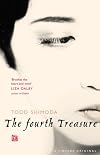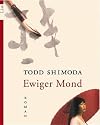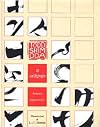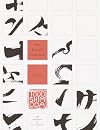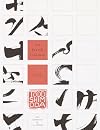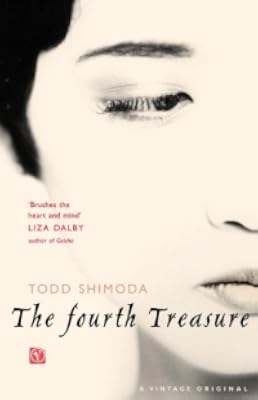
The Fourth Treasure
by Todd Shimoda, L. J. C. Shimoda (Illustrator)
On This Page
Description
Illustrated throughout with beautiful calligraphy,The Fourth Treasureis an original, surprising novel that weaves a suspenseful love story across and through two very different countries, cultures, and generations. Tina Suzuki has just begun her first year of graduate study at the UC Berkeley Institute for Brain and Behavior Studies. Born and raised in San Francisco by her Japanese immigrant mother, Tina knows nothing about the rest of her family, and very little about her cultural heritage. show more But when her boyfriend’s Japanese calligraphy teacher suffers a stroke and loses his ability to communicate but continues to create magnificent calligraphic art, Tina knows she has stumbled across an ideal research subject. However, getting the sensei to participate in her study poses a series of uncomfortable obstacles for Tina: the jealous opposition of her boyfriend, the political and (romantic) minefield of dealing with her professors and fellow students, and the willful reticence of her ailing mother. It seems that the blank personal history her mother had always presented is in fact a tightly wound scroll full of scandalous secrets. In ways she could have never expected, Tina’s studies will inevitably lead to revelations about her own family. Juxtaposed with Tina’s story is that of the stricken sensei as a younger man, in Kyoto, and the history of the ancient inkstone he carries with him. The inkstone’s history, and the sensei’s art, reach back hundreds of years into a Japanese culture that no longer exists but that continues to reverberate on both sides of the Pacific. As the dual narratives unfold, they are enhanced by intriguing marginalia that illuminate both the sensei’s Japanese calligraphy and Tina’s studies of the brain. The result is a unique, unusually satisfying literary experience. show lessTags
Recommendations










Member Reviews
This is a wonderful, wandering novel about many things and many human beings, but at its core it explores Japanese calligraphy/shodo (its history, formation, competions and disciplines) and the neuroscience/neuroanatomy between language, understanding and communication. It involves an accomplished sensei at Berkely who has a stroke and can no longer do traditional kanji - but creates his own hybrid symbols in an effort to either ease his mind or communicate. He connects the other characters, including a Japanese woman (recently diagnosed with MS) who moved from Japan in the 70s, her daughter (a neuroscience Phd student) and their various friends. The writing, artwork and excerpts from other sources are beautiful and thought provoking. show more Although there is a pretty structured plot, this is more an exploration of the mind, the art of shodo and neuroscience/neuroanatomy, so it wanders quite a bit. The language centers of the brain are so complex and not well understood, so there are many theories, guesses and ideas of what a person goes through when communicating and feeling. That said, I loved it. If you are up for just sitting back and soaking up a new subject, you will really enjoy it. I did not give it five stars because the plot defies reason, but that said, it is a bit fable-like, so it did not bother me all that much. Highly recommended for something mystical and off the beaten path. show less
So this Japanese calligraphy teacher (living in America) has a stroke, and loses the ability to communicate - he still draws characters, but they just aren't actual Japanese kanji any more, just... shapes that look as though they could mean something. And this neuroscience (I think?) postgrad student decides she wants to use him as a case study, because - well. Because it's interesting, I guess.
And it has the story of the teacher's past, and the student's mother's past, and the student's life outside of studying all mixed up in there, to make it into an actual book rather than 'ooh neuroscience is shiny! The End.', which is all good too. The student's boyfriend is American, but he knows more about Japanese culture and language and show more things like that than she does, even though she's Japanese-American.
So yeah. Good book :) show less
And it has the story of the teacher's past, and the student's mother's past, and the student's life outside of studying all mixed up in there, to make it into an actual book rather than 'ooh neuroscience is shiny! The End.', which is all good too. The student's boyfriend is American, but he knows more about Japanese culture and language and show more things like that than she does, even though she's Japanese-American.
So yeah. Good book :) show less
This novel takes readers from Japan to the San Francisco Bay Area, from 1655 to 1998, with a significant pause in 1975.
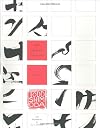
The book is illustrated by calligraphy (which in Japan, is regarded as both art and a means of communication). Many pages also contain sidebars: these are not footnotes since they are not clued to any specific points in the text. One can choose to scan them simultaneously with the text or read them at the end of the chapter ~~~ they should not be missed!
The Daizen Inkstone is an inanimate object with a long history, and is of great value. All the people we meet in the book are affected by its presence.
The book is illustrated by calligraphy (which in Japan, is regarded as both art and a means of communication). Many pages also contain sidebars: these are not footnotes since they are not clued to any specific points in the text. One can choose to scan them simultaneously with the text or read them at the end of the chapter ~~~ they should not be missed!
The Daizen Inkstone is an inanimate object with a long history, and is of great value. All the people we meet in the book are affected by its presence.
Ratings
Members
- Recently Added By
Author Information
7 Works 306 Members
Todd Shimoda currently teaches in the journalism department at Colorado State University. He and his wife live in Denver, Colorado.

Todd A. Shimoda is a LibraryThing Author, an author who lists their personal library on LibraryThing.
L. J. C. (Linda) Shimoda is an artist, illustrator, and graphic designer
Common Knowledge
- Canonical title
- The Fourth Treasure
- Original publication date
- 2002
- First words
- Kiichi Shimano, founder and sensei of the Zenzen School of Japanese Calligraphy, dipped a brush into the well of black _sumi_ ink. He gently pressed the brush against the inkstone until a precise droplet of excess ink had oo... (show all)zed back into the well. Then, with a fluid motion of brush on paper, he drew a simple horizontal stroke.
- Last words
- (Click to show. Warning: May contain spoilers.)Holding the brush unwaveringly with all of her _ki,_ the surge of power, of fullness, of being, that she had experienced when she first used the Daizen Inkstone welled up from her subconscious. As she dipped the brush into the inkstone, the pain, all of it, began to wash away.
Classifications
Statistics
- Members
- 143
- Popularity
- 228,723
- Reviews
- 4
- Rating
- (3.76)
- Languages
- English, German, Italian
- Media
- Paper, Ebook
- ISBNs
- 7
- ASINs
- 2