
Rahna Reiko Rizzuto
Author of Why She Left Us: A Novel
About the Author
Rahna Reiko Rizzuto's highly acclaimed first novel, Why She Left Us, won an American Book Award in 2000. She is a faculty member in the MFA in Creative Writing Program at Goddard College, and lives in Brooklyn, NY.
Works by Rahna Reiko Rizzuto
Tagged
Common Knowledge
- Birthdate
- 20th Century
- Gender
- female
- Nationality
- USA
- Associated Place (for map)
- USA
Members
Reviews
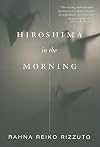
In the Spring of 2001, author Rahna Reiko Rizzuto packed up her bags and moved to Japan on a six month research grant, leaving behind her husband Brian and her two young sons. At the time, her intent was to gather interviews and information for a new novel revolving around the 1945 US bombing of Hiroshima. What she did not know, is that her journey was to open doors to much deeper issues: her marriage, her role as mother, her memories of her own family…and ultimately her own vision of show more herself.
Early on, Rizzuto faced difficulties with the Japanese language and culture. It was hard to get interviews set up and when she did talk to the survivors of Hiroshima (the hibakusha) the stories felt rote and practiced. Something was missing. And then September 11, 2001 arrived, and everything changed.
How we tell our stories makes all the difference. They are where we store our tears, where the eventual healing lies. If “we” are talking, then we are safe in our group perspective; we do not have to own our experience alone, nor do we have to feel it. What September 11 gave to the hibakusha, and what they gave in turn to me, is a way to re-enter memory. As scary, and painful, as it is to claim our pronouns, “we” cannot inhabit our own lives until “I” begins to speak. - from Hiroshima in the Morning, page 239 -
Hiroshima in the Morning is a stunning, deeply felt, and brave memoir. Rizzuto was drawn to Hiroshima from a very personal place – her aunt Molly lived in Hiroshima shortly after the bomb dropped, working for a government organization whose public goal was to assist the survivors, but whose actual role was to research the effects of the atomic bomb; and members of Rizzuto’s family had been interned in the United States as part of the knee-jerk reaction to imprison U.S. citizens who were of Japanese descent. Rizzuto thought that what she was seeking was a question of how war impacts individuals; about how Japanese-Americans had no home after the bomb – they were not welcome in the United States, and those who returned to Japan quickly discovered they were not considered Japanese either.
What makes Hiroshima in the Morning special is not the questions which Rizzuto first set out to answer, but the very personal growth and discovery that becomes the central theme of the book. Woven through the narrative are Rizzuto’s memories of her mother – a woman who was without question a wonderful mother, and who now was losing her memories to dementia. As Rizzuto struggles with her own role as mother, she begins to see her mother in a different way. The journey for Rizzuto becomes that of uncovering her own identity, separate from her role as mother.
How, in a life that always seemed defined by all she didn’t do, could my mother have also been a woman? And what kind? How can it be only now, at age thirty-seven, that I am learning that a mother is also a woman? A female adult, with her own name? – from Hiroshima in the Morning, page 190 -
By the time I had turned the last page of this elegant memoir, I had grown to respect the author…especially because of her brutal self-honesty and her courage to reveal things about herself which many people would not. Here was a mother who had left behind her three and five year old sons in order to pursue her dreams, who must have recognized she would be judged by others for that choice. Yet, Rizzuto bravely puts forth her experience, showing us that perhaps there are multiple definitions of what it means to be a mother…that identity is more than a role which we play, but instead is something that evolves and changes and is made up of many aspects: our heritage, our common experience, the choices we make, our view of the world.
Rizzuto’s prose is breathtaking, poetic, and insightful. I loved this book on so many levels, but especially for its wisdom. What Rizzuto does in Hiroshima in the Morning is to place the individual within the context of the community, to show that we are all connected through our stories and experiences, and that self-discovery is to be found in our relationships with others as well as through our unique view of the world.
Hiroshima in the Morning is a book which I highly recommend. Women, especially, will be drawn to Rizzuto’s story. This is a story which transcends the average memoir, a story which is both personal and universal. show less
Early on, Rizzuto faced difficulties with the Japanese language and culture. It was hard to get interviews set up and when she did talk to the survivors of Hiroshima (the hibakusha) the stories felt rote and practiced. Something was missing. And then September 11, 2001 arrived, and everything changed.
How we tell our stories makes all the difference. They are where we store our tears, where the eventual healing lies. If “we” are talking, then we are safe in our group perspective; we do not have to own our experience alone, nor do we have to feel it. What September 11 gave to the hibakusha, and what they gave in turn to me, is a way to re-enter memory. As scary, and painful, as it is to claim our pronouns, “we” cannot inhabit our own lives until “I” begins to speak. - from Hiroshima in the Morning, page 239 -
Hiroshima in the Morning is a stunning, deeply felt, and brave memoir. Rizzuto was drawn to Hiroshima from a very personal place – her aunt Molly lived in Hiroshima shortly after the bomb dropped, working for a government organization whose public goal was to assist the survivors, but whose actual role was to research the effects of the atomic bomb; and members of Rizzuto’s family had been interned in the United States as part of the knee-jerk reaction to imprison U.S. citizens who were of Japanese descent. Rizzuto thought that what she was seeking was a question of how war impacts individuals; about how Japanese-Americans had no home after the bomb – they were not welcome in the United States, and those who returned to Japan quickly discovered they were not considered Japanese either.
What makes Hiroshima in the Morning special is not the questions which Rizzuto first set out to answer, but the very personal growth and discovery that becomes the central theme of the book. Woven through the narrative are Rizzuto’s memories of her mother – a woman who was without question a wonderful mother, and who now was losing her memories to dementia. As Rizzuto struggles with her own role as mother, she begins to see her mother in a different way. The journey for Rizzuto becomes that of uncovering her own identity, separate from her role as mother.
How, in a life that always seemed defined by all she didn’t do, could my mother have also been a woman? And what kind? How can it be only now, at age thirty-seven, that I am learning that a mother is also a woman? A female adult, with her own name? – from Hiroshima in the Morning, page 190 -
By the time I had turned the last page of this elegant memoir, I had grown to respect the author…especially because of her brutal self-honesty and her courage to reveal things about herself which many people would not. Here was a mother who had left behind her three and five year old sons in order to pursue her dreams, who must have recognized she would be judged by others for that choice. Yet, Rizzuto bravely puts forth her experience, showing us that perhaps there are multiple definitions of what it means to be a mother…that identity is more than a role which we play, but instead is something that evolves and changes and is made up of many aspects: our heritage, our common experience, the choices we make, our view of the world.
Rizzuto’s prose is breathtaking, poetic, and insightful. I loved this book on so many levels, but especially for its wisdom. What Rizzuto does in Hiroshima in the Morning is to place the individual within the context of the community, to show that we are all connected through our stories and experiences, and that self-discovery is to be found in our relationships with others as well as through our unique view of the world.
Hiroshima in the Morning is a book which I highly recommend. Women, especially, will be drawn to Rizzuto’s story. This is a story which transcends the average memoir, a story which is both personal and universal. show less
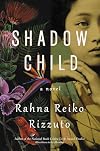
“Shadow Child” might have more accurately been named “Shadow Plot.” One is never quite sure who the characters really are or even what really happens to them.
The story is ostensibly about twin sisters, Hana and Kei, born in Hawaii. Their mother, Miya, is laughed at by the community as “the town’s crazy lady who had breakdowns in public and talked to ghosts.” With the narration periodically switching to the years during World War II, we gradually learn how she got to be that show more way.
Much of the story takes place in the past - not only of the mother but of the twins. When the book begins, however, it is the present day; the twins are grown, and Hana has an apartment in New York City. She lives a mostly solitary life, explaining: “When you have no one, no one can hurt you.” Something traumatic had happened to her six years earlier, and she left her family in Hawaii soon afterward, barely in communication with them since. But her mother and stepfather died recently, and Kei called and said she was coming to New York to bring Hana her “inheritance.”
On the day of Kei’s arrival, things take an unexpected turn. When Hana comes back to her apartment after work, expecting to see Kei, she finds Kei unconscious in the shower with strangulation marks on her neck. She calls the police, and then accompanies Kei, now in a coma, to the hospital. The possibility of her recovery is uncertain, and Hana feels increasingly desperate not to lose her only surviving family member.
Discussion: We get to know a bit about the life of the mother, but her children know virtually nothing about it. Do the girls ever ask? Is the stepfather aware of it? We have no idea. Nor are the characters of the girls very clear. We can’t even always tell which is which, as sometimes the narration claims to be by “Koko” which is a single nickname for both of them. As for the two central events that drive Hana’s life - the trauma six years ago, and the attack on Kei - we don’t really get satisfying explanations of those either.
Evaluation: Half the time I did not know what was going on in this book, including when I finished it. It might just be me, but because of the murkiness of the story I didn’t enjoy it much. "Shadows" seemed to be a theme of the book, but I thought it could have used quite a bit more illumination. show less
The story is ostensibly about twin sisters, Hana and Kei, born in Hawaii. Their mother, Miya, is laughed at by the community as “the town’s crazy lady who had breakdowns in public and talked to ghosts.” With the narration periodically switching to the years during World War II, we gradually learn how she got to be that show more way.
Much of the story takes place in the past - not only of the mother but of the twins. When the book begins, however, it is the present day; the twins are grown, and Hana has an apartment in New York City. She lives a mostly solitary life, explaining: “When you have no one, no one can hurt you.” Something traumatic had happened to her six years earlier, and she left her family in Hawaii soon afterward, barely in communication with them since. But her mother and stepfather died recently, and Kei called and said she was coming to New York to bring Hana her “inheritance.”
On the day of Kei’s arrival, things take an unexpected turn. When Hana comes back to her apartment after work, expecting to see Kei, she finds Kei unconscious in the shower with strangulation marks on her neck. She calls the police, and then accompanies Kei, now in a coma, to the hospital. The possibility of her recovery is uncertain, and Hana feels increasingly desperate not to lose her only surviving family member.
Discussion: We get to know a bit about the life of the mother, but her children know virtually nothing about it. Do the girls ever ask? Is the stepfather aware of it? We have no idea. Nor are the characters of the girls very clear. We can’t even always tell which is which, as sometimes the narration claims to be by “Koko” which is a single nickname for both of them. As for the two central events that drive Hana’s life - the trauma six years ago, and the attack on Kei - we don’t really get satisfying explanations of those either.
Evaluation: Half the time I did not know what was going on in this book, including when I finished it. It might just be me, but because of the murkiness of the story I didn’t enjoy it much. "Shadows" seemed to be a theme of the book, but I thought it could have used quite a bit more illumination. show less
This novel was strange, sorrowful, and beautiful in its own way. The story of twin sisters intertwined with a tragic family history, moments of happiness were rare for the characters in this book. The sorrow in this novel left me feeling hollowed out by the tragedies visited upon this family and with a deep sadness for the characters. It's good, but there's little relief from tragedy, so be prepared.
Shadow Child by Rahna Reiko Rizzuto is a beautifully written tale about the struggles of a set of twins.
When I sat down and started this book, I was absolutely floored. The writing style was so stunningly beautiful, I couldn't help but metaphorically describe it as fine wine. Rahna has a wonderful sense of story and her word choice is magnificent. I didn't want to put the book down.
But then I got to the meat and plot of this story.
I didn't fully know what was going on and my questions show more weren't answered. So many parts of this story were hinted at but then just fell through. There's also four different story lines going on so it required a lot of brain power to keep track of what was going on. On top of that, Koko is a nickname of both girls, so those sections had me using extra brain power to try to figure out if this was one or both girls or neither.
I liked learning about their Mother's back story, but I didn't think she was the main protagonist of this story. I was far more interested in the twins' stories than hers. While their Mother's narrative was interesting to follow, I just didn't care as much. I wanted to know what was going on now since there was a lot more drama during the present time in the story. Hana and Kei had such a thrilling narrative that I needed that story more.
This book felt more like a novel I'd read in an English class than one I would enjoy in my hobby reading. I seriously want someone to pick apart this novel and explain it to me. Is there a reason why we didn't get all of the information about what happened? Is there a reason why we needed to know so much about the Mother and not the girls? I'd absolutely love if the author even explained the themes. I think I'd appreciate this book more if I could pick it apart and analyze it.
Honestly, I have the feeling that there is a piece of this book missing somewhere. The two halves of this book don't intertwine perfectly and it just gives me this strange feeling. The story isn't finished so I don't totally feel satisfied. While I think the writing is beautiful and Rayna's talent is obvious, I'm not one for cliffhangers or non-endings. I need to know what happened, so I don't feel strongly about this book.
Overall, this book is interesting. I'd love to see it in an English class setting or have a BookTuber explain all the ins and outs so I can appreciate it more.
Two out of five stars.
I received this book for free through Goodreads First Reads. show less
When I sat down and started this book, I was absolutely floored. The writing style was so stunningly beautiful, I couldn't help but metaphorically describe it as fine wine. Rahna has a wonderful sense of story and her word choice is magnificent. I didn't want to put the book down.
But then I got to the meat and plot of this story.
I didn't fully know what was going on and my questions show more weren't answered. So many parts of this story were hinted at but then just fell through. There's also four different story lines going on so it required a lot of brain power to keep track of what was going on. On top of that, Koko is a nickname of both girls, so those sections had me using extra brain power to try to figure out if this was one or both girls or neither.
I liked learning about their Mother's back story, but I didn't think she was the main protagonist of this story. I was far more interested in the twins' stories than hers. While their Mother's narrative was interesting to follow, I just didn't care as much. I wanted to know what was going on now since there was a lot more drama during the present time in the story. Hana and Kei had such a thrilling narrative that I needed that story more.
This book felt more like a novel I'd read in an English class than one I would enjoy in my hobby reading. I seriously want someone to pick apart this novel and explain it to me. Is there a reason why we didn't get all of the information about what happened? Is there a reason why we needed to know so much about the Mother and not the girls? I'd absolutely love if the author even explained the themes. I think I'd appreciate this book more if I could pick it apart and analyze it.
Honestly, I have the feeling that there is a piece of this book missing somewhere. The two halves of this book don't intertwine perfectly and it just gives me this strange feeling. The story isn't finished so I don't totally feel satisfied. While I think the writing is beautiful and Rayna's talent is obvious, I'm not one for cliffhangers or non-endings. I need to know what happened, so I don't feel strongly about this book.
Overall, this book is interesting. I'd love to see it in an English class setting or have a BookTuber explain all the ins and outs so I can appreciate it more.
Two out of five stars.
I received this book for free through Goodreads First Reads. show less
Lists
Feminist Press (1)
Fiction: Asia (1)
Awards


You May Also Like


Statistics
- Works
- 4
- Members
- 298
- Popularity
- #78,714
- Rating
- 3.3
- Reviews
- 15
- ISBNs
- 15
- Languages
- 1
