
Yoshiko Uchida (1921–1992)
Author of A Jar of Dreams
About the Author
Series
Works by Yoshiko Uchida
New friends for Susan 2 copies
Associated Works
The Young Folks' Shelf of Books, Volume 02: Once Upon a Time (1993) — Contributor — 213 copies, 1 review
"The Skeleton in Grandpa's Barn": And Other Stories of Growing Up in Utah (2008) — Contributor — 1 copy
Utah Historical Quarterly - Vol. 48, No. 3, Summer 1980 - Growing Up in Utah (1980) — Contributor — 1 copy
Tagged
Common Knowledge
- Other names
- 内田, 淑子
内田淑子 - Birthdate
- 1921-11-24
- Date of death
- 1992-06-21
- Gender
- female
- Education
- University of California, Berkeley (BA|1942)
Smith College (M.Ed.|1944) - Occupations
- teacher
- Awards and honors
- Commonwealth Club of California Medals (1972, 1982)
- Nationality
- USA
- Birthplace
- Alameda, California, USA
- Places of residence
- Berkeley, California, USA
Topaz Relocation camp, Utah, USA
Pennsylvania, USA
New York, New York, USA
Japan - Place of death
- Berkeley, California, USA
- Associated Place (for map)
- USA
Members
Reviews

Big, fierce Daizo, a fat polydactyl cat who liked to hunt mice, and small, skinny Suki, a slender cat with a talent for catching birds, live together in harmony in this picture book adaptation of a traditional Japanese folktale. Then one day, having no luck catching mice or birds, and coming upon two rice cakes of unequal size, the pair fall to quarreling, each determined to have the larger cake. Irritated at their noise, a badger counsels them to seek the help of the old monkey in the show more mountains, which they do. This figure, full of as much mischief as wisdom, finds a way to give them each equal parts, teaching them a lesson in the process...
Published in 1987, The Two Foolish Cats is the second folkloric retelling I have read from Japanese American author Yoshiko Uchida, following upon her 1993 The Magic Purse. It is illustrated by Caldecott Medal and Honor-winning artist Margot Zemach, whose work I have encountered many times before, both in her own books and in those she has illustrated for other authors. In any case, I found this one enjoyable, and appreciated the humor of both the tale and the artwork. I suspected that monkey would teach our felines a lesson, and was not disappointed. Of course, as a cat lover I did feel sorry for Big Daizo and Little Suki, but it looks like they lived a happy life in the end. After reading this and Uchida's other retelling, I think I'd like to seek out more of her work in this vein, including her 1949 collection, The Dancing Kettle and Other Japanese Folk Tales. Recommended to young folklore lovers, and to picture book readers looking for tales with a Japanese cultural background. show less
Published in 1987, The Two Foolish Cats is the second folkloric retelling I have read from Japanese American author Yoshiko Uchida, following upon her 1993 The Magic Purse. It is illustrated by Caldecott Medal and Honor-winning artist Margot Zemach, whose work I have encountered many times before, both in her own books and in those she has illustrated for other authors. In any case, I found this one enjoyable, and appreciated the humor of both the tale and the artwork. I suspected that monkey would teach our felines a lesson, and was not disappointed. Of course, as a cat lover I did feel sorry for Big Daizo and Little Suki, but it looks like they lived a happy life in the end. After reading this and Uchida's other retelling, I think I'd like to seek out more of her work in this vein, including her 1949 collection, The Dancing Kettle and Other Japanese Folk Tales. Recommended to young folklore lovers, and to picture book readers looking for tales with a Japanese cultural background. show less

A poor young farmer gets lost on his way to the nearby Iseh shrine one spring, finding himself at the fearsome Black Swamp instead in this picture book retelling of a traditional Japanese folktale from author Yoshiko Uchida and illustrator Keiko Narahashi. Here he encounters an ethereal and sorrowful young woman, who asks him to deliver a letter to her parents in the Red Swamp near Osaka, offering him a magic coin purse that always refills itself. Despite his fear, the farmer pities her show more sadness, delivering a letter and receiving a second reward from the woman's parents. With this new fortune, he sets up a more prosperous farm, employing many of his neighbors, and helping the poor. Every spring, at cherry blossom season, the farmer again visits the Black Swamp, to leave a gift for the young woman, remembering her and her parents for the rest of his life...
Published in 1993, The Magic Purse is the first book I have read from either Uchida or Narahashi, but I will certainly be seeking out more of their work! I was familiar with Uchida before, because of her many children's books about the Japanese American experience, but I didn't realize she had also written a number of folkloric retellings and collections, which I will now seek out. I found the story here engaging, with the classic theme of the kindhearted young man who is rewarded for his goodness and bravery. The narrative never explores who or what the young woman and her parents are, but it's clear they're not mortals, but some kind of supernatural being. In any case, I particularly appreciated that the book closed with the young farmer always remembering the young woman and her parents, as so many stories of this kind close with the reward, rather than the recollection of the source of the hero's blessings. The watercolor artwork was lovely, capturing the beautiful but eerie atmosphere of the two swamps particularly well. Recommended to young folklore enthusiasts, particularly those interested in Japanese tales. show less
Published in 1993, The Magic Purse is the first book I have read from either Uchida or Narahashi, but I will certainly be seeking out more of their work! I was familiar with Uchida before, because of her many children's books about the Japanese American experience, but I didn't realize she had also written a number of folkloric retellings and collections, which I will now seek out. I found the story here engaging, with the classic theme of the kindhearted young man who is rewarded for his goodness and bravery. The narrative never explores who or what the young woman and her parents are, but it's clear they're not mortals, but some kind of supernatural being. In any case, I particularly appreciated that the book closed with the young farmer always remembering the young woman and her parents, as so many stories of this kind close with the reward, rather than the recollection of the source of the hero's blessings. The watercolor artwork was lovely, capturing the beautiful but eerie atmosphere of the two swamps particularly well. Recommended to young folklore enthusiasts, particularly those interested in Japanese tales. show less
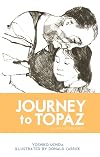
Journey to Topaz by Yoshiko Uchida is a YA story of the experiences of an 11 year old Japanese-American girl and her family from the bombing of Pearl Harbor and their eventual evacuation and incarceration at Topaz, Utah. There are probably many books that detail these events in much greater detail, but considering the target audience, I think this book would have a lot of impact on the younger reader by the fact that it simply tells the story of one girl and what happened to her and her show more loved ones.
I thought that Yuki came across as a typical eleven year old, she really had no understanding of why Japan attacked or how this was going to impact her life. First the FBI show up on their doorstep, just hours after the bombing and take her father away. Then Yuki, her mother and brother are uprooted from their Berkeley, California home and temporarily housed in a horse stall at Tanforan Racetrack while more permanent arrangements could be make for the thousands of West Coast Japanese. As bad as conditions were at the Racetrack, they get even worse when they are relocated to the harsh desert climate of Topaz.
Yuki’s story is both thought-provoking and interesting as it explores it’s theme of racial prejudice with insight and dignity. The author based her story on her own family’s experiences and as she put it, “We were told to demonstrate our loyalty by doing as our country asked, we had no choice but to trust our government leaders. We did not know then, as we do now, that they had acceded to political and economic pressure groups and imprisoned us with full knowledge that their action was not only unconstitutional, but totally unnecessary.” I believe Journey To Topaz would be a good introduction to this period of history for 10 to 12 year olds. show less
I thought that Yuki came across as a typical eleven year old, she really had no understanding of why Japan attacked or how this was going to impact her life. First the FBI show up on their doorstep, just hours after the bombing and take her father away. Then Yuki, her mother and brother are uprooted from their Berkeley, California home and temporarily housed in a horse stall at Tanforan Racetrack while more permanent arrangements could be make for the thousands of West Coast Japanese. As bad as conditions were at the Racetrack, they get even worse when they are relocated to the harsh desert climate of Topaz.
Yuki’s story is both thought-provoking and interesting as it explores it’s theme of racial prejudice with insight and dignity. The author based her story on her own family’s experiences and as she put it, “We were told to demonstrate our loyalty by doing as our country asked, we had no choice but to trust our government leaders. We did not know then, as we do now, that they had acceded to political and economic pressure groups and imprisoned us with full knowledge that their action was not only unconstitutional, but totally unnecessary.” I believe Journey To Topaz would be a good introduction to this period of history for 10 to 12 year olds. show less
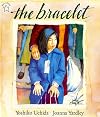
Emi, a young Japanese girl in second grade, receives a gold bracelet from her friend just before she, her mother, and her sister leave their home for an internment camp. War is raging across the sea, and because Japanese-Americans look like the enemy, they are the enemy. Emi's father has already been removed to a P.O.W. camp in Montana because he worked for a Japanese company. When Emi loses the bracelet, she discovers that it is not necessary to have objects to remember important people and show more places; they live in one's mind.
The Bracelet is a simple text that introduces young students to the internment of Japanese-Americans that occurred during World War II. It is informative and accessible (and includes a helpful author's note), but it lacks significant incident. I prefer Baseball Saved Us by Ken Mochizuki, which is for slightly older children. Still, this is a lovely book. The author's description of the empty rooms, stripped of all personal belongings and furniture (where did all these items go?) will certainly remind readers of homes the have loved and left, and the sensory details the author provides about the "barracks" Emi and her family are forced to live in--actually barely refurbished horse stalls, with the lingering odor of the animals, as well as bugs, and dust--go a long way to underscore all that has been lost. show less
The Bracelet is a simple text that introduces young students to the internment of Japanese-Americans that occurred during World War II. It is informative and accessible (and includes a helpful author's note), but it lacks significant incident. I prefer Baseball Saved Us by Ken Mochizuki, which is for slightly older children. Still, this is a lovely book. The author's description of the empty rooms, stripped of all personal belongings and furniture (where did all these items go?) will certainly remind readers of homes the have loved and left, and the sensory details the author provides about the "barracks" Emi and her family are forced to live in--actually barely refurbished horse stalls, with the lingering odor of the animals, as well as bugs, and dust--go a long way to underscore all that has been lost. show less
Lists
Sonlight Books (1)
Awards


You May Also Like


Associated Authors
Statistics
- Works
- 40
- Also by
- 8
- Members
- 4,242
- Popularity
- #5,928
- Rating
- 3.8
- Reviews
- 72
- ISBNs
- 123
- Languages
- 3
- Favorited
- 2