
Cynthia Kadohata
Author of Kira-Kira
About the Author
Cynthia Kadohata was born on July 2, 1956. She is a Japanese American author of children's books. Kadohata won the Newbery Medal in 2005 for her title, Kira-Kira. She also won a PEN award in 2006 for Weedflower and in 2013 she won the U.S. National Book Award for The Thing About Luck. Kadohata was show more born in Chicago, Illinois, and was a high school drop out. She attained a BA in Journalism from the University of Southern California and went on to attend graduate programs at the University of Pittsburgh and Columbia University. (Bowker Author Biography) show less
Image credit: By Slowking4 - Own work, GFDL 1.2, https://commons.wikimedia.org/w/index.php?curid=35041230
Works by Cynthia Kadohata
Associated Works
Charlie Chan Is Dead: An Anthology of Contemporary Asian American Fiction (1993) — Contributor — 169 copies, 3 reviews
American Eyes: New Asian-American Short Stories for Young Adults (1994) — Introduction; Contributor — 98 copies, 1 review
Tagged
Common Knowledge
- Birthdate
- 1956
- Gender
- female
- Education
- University of Southern California (BA| Journalism)
University of Pittsburgh
Columbia University - Awards and honors
- Whiting Writers' Award (1991)
- Agent
- Gail Hochman (Hochman and Brandt)
- Nationality
- USA
- Birthplace
- Chicago, Illinois, USA
- Places of residence
- West Covina, California, USA
- Associated Place (for map)
- USA
Members
Discussions
Found: Sci fi novel: girl flees war with her dog, most of her village dies in Name that Book (November 2021)
National Book Award Winners 2013 in Book talk (December 2013)
Reviews
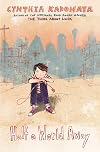
I admire the unflinching depiction of Jaden, who is an adopted child that personifies all the horror stories that adoptive parents fear: attachment issues, fire starting, anger, and kleptomania. He is at war with himself, torn between gratitude for living in a place with electricity and food and furious resentment about being taken out of his country away from any possible reunification with his mother.
I like books that confront our less than stellar natures, and I really like that this book show more offers hope in the end, on a realistic level.
My copy provided by Edelweiss. show less
I like books that confront our less than stellar natures, and I really like that this book show more offers hope in the end, on a realistic level.
My copy provided by Edelweiss. show less
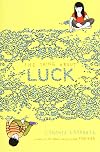
Summer’s had some rotten luck.
She’s on a long trip with her brother and grandparents, working for a wheat harvesting company for the season so they can pay the rent while her parents are in Japan with a sick friend. Bad luck.
Her temperamental brother Jaz can’t seem to make a friend anywhere he goes. Bad luck.
Her grandma’s back pain is getting worse, and her grandpa’s getting sick. Bad luck.
And no matter how hard she tries, her grandmother acts like everything that goes wrong is show more Summer’s fault. Talk about bad luck.
Every time it looks like something good is going to happen, bad luck strikes somewhere else. But when things get really awful, Summer starts to realize something she didn’t know her grandmother was teaching her all along: not everything is up to luck.
This book was so. good. And Summer’s narration is funny, even when she’s talking about something serious.
Newbery, anyone?
Grown-up portion of review:
I love finding a children's book that deals with a rarely-touched topic in a nuanced, relevant-to-kids way. In this one, Kadohata does some good work with guilt.
Summer tries really hard to do what she thinks is right and, for the most part, does very well. She's a hard worker and she's compassionate. So when those evil thoughts come (you know, the kind that pop into everybody's head every hour of every day), and when her grandmother insinuates that things are her fault, she does a thorough job of beating herself up. Part of her journey in the novel is how she learns to recognize the value of her own good choices and derive from them a healthy counter to her guilt.
Also? The character of her grandmother is gold. She's tough and even mean and simultaneously full of love and wisdom. show less
She’s on a long trip with her brother and grandparents, working for a wheat harvesting company for the season so they can pay the rent while her parents are in Japan with a sick friend. Bad luck.
Her temperamental brother Jaz can’t seem to make a friend anywhere he goes. Bad luck.
Her grandma’s back pain is getting worse, and her grandpa’s getting sick. Bad luck.
And no matter how hard she tries, her grandmother acts like everything that goes wrong is show more Summer’s fault. Talk about bad luck.
Every time it looks like something good is going to happen, bad luck strikes somewhere else. But when things get really awful, Summer starts to realize something she didn’t know her grandmother was teaching her all along: not everything is up to luck.
This book was so. good. And Summer’s narration is funny, even when she’s talking about something serious.
Newbery, anyone?
Grown-up portion of review:
I love finding a children's book that deals with a rarely-touched topic in a nuanced, relevant-to-kids way. In this one, Kadohata does some good work with guilt.
Summer tries really hard to do what she thinks is right and, for the most part, does very well. She's a hard worker and she's compassionate. So when those evil thoughts come (you know, the kind that pop into everybody's head every hour of every day), and when her grandmother insinuates that things are her fault, she does a thorough job of beating herself up. Part of her journey in the novel is how she learns to recognize the value of her own good choices and derive from them a healthy counter to her guilt.
Also? The character of her grandmother is gold. She's tough and even mean and simultaneously full of love and wisdom. show less
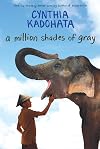
War has never been far from Y’Tin’s life. He’d grown fond of the jovial American soldiers his father had helped over the years, and now, in 1973, the North Vietnamese army is menacing South Vietnam—even his isolated Montagnard village. Still, “[a]ll his father thought about was the war, and all Y’Tin thought about was elephants.” While it’s true that Y’Tin, a matter-of-fact 13-year-old with an easy confidence, obsesses about Lady, his hardworking elephant charge, she show more becomes only one of his many concerns. In a clear-as-a-bell third-person voice, with warmth and humor, Kadohata fully rounds out the character of Y’Tin—the way he loves and thinks, often measuring his own responses to the world with those of his ever-deliberating, never-wrong father. As he and Lady escape from the massacre that kills half the village, Y’Tin sees that between right and wrong are “a million shades of gray,” like the elephant’s hide, like the jungle in the dim light. A fascinating window into post–Vietnam War history and a wonderfully intimate character study. (author’s note) (Historical fiction. 10-14)
-Kirkus Review show less
-Kirkus Review show less
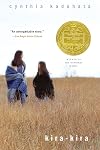
"Katie loves and admires her older sister, Lynn, only to lose her in this story that reads like a memoir about a Japanese-American family in the 1950s.
Built around the loss of Lynn to lymphoma, it belongs to Katie and stays true to her perspective. The supporting cast of extended family and friends also fits within Katie’s vision of life. Humor keeps the depth of sadness at bay as Katie reports events: “If a robber came to our apartment, I would hit him over the head with a lamp. So I show more didn’t need a bank, personally.” Starting out in Iowa, the family moves to Georgia; both parents work long hours in the poultry industry to buy and then pay for a house of their own. Kadohata weaves details of life for a Japanese-American family into the narrative along with Lynn and Katie’s gradual acquirement of understanding of the dominant culture around them. The vivid writing and the portrayal of a most loving and honorable father lift this above the norm.
“Kira-kira” is Japanese for glittering, and Kadohata’s Katie sparkles. (Fiction. 10-14)" From Kirkus Reviews, www.kirkusreviews.com show less
Built around the loss of Lynn to lymphoma, it belongs to Katie and stays true to her perspective. The supporting cast of extended family and friends also fits within Katie’s vision of life. Humor keeps the depth of sadness at bay as Katie reports events: “If a robber came to our apartment, I would hit him over the head with a lamp. So I show more didn’t need a bank, personally.” Starting out in Iowa, the family moves to Georgia; both parents work long hours in the poultry industry to buy and then pay for a house of their own. Kadohata weaves details of life for a Japanese-American family into the narrative along with Lynn and Katie’s gradual acquirement of understanding of the dominant culture around them. The vivid writing and the portrayal of a most loving and honorable father lift this above the norm.
“Kira-kira” is Japanese for glittering, and Kadohata’s Katie sparkles. (Fiction. 10-14)" From Kirkus Reviews, www.kirkusreviews.com show less
Lists
Awards


You May Also Like


Associated Authors
Statistics
- Works
- 15
- Also by
- 6
- Members
- 7,760
- Popularity
- #3,139
- Rating
- 3.8
- Reviews
- 360
- ISBNs
- 160
- Languages
- 8
- Favorited
- 8
