
Kathy Wang
Author of Impostor Syndrome
About the Author
Image credit: via Audible
Works by Kathy Wang
Tagged
Common Knowledge
- Gender
- female
- Nationality
- USA
- Birthplace
- California, USA
- Associated Place (for map)
- California, USA
Members
Reviews
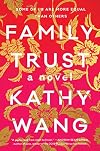
This book appealed to me for several reasons.
– it’s set in the San Francisco Bay Area and perhaps more importantly, not just the city itself but also the rest of the Bay Area. Don’t get me wrong, I like the city (well parts of it at least), the husband works there and all, but we live in the East Bay and it’s nice to see other parts of the area talked about.
– it’s a story about East Asian immigrants. They are originally from Taiwan, as are many of those in the Bay Area and I’m show more always interested in stories about immigration, particularly from Asia.
Also it opens with a whopper of a first sentence.
“Stanley Huang sat, naked but for the thing cotton dressing gown crumpled against the sterile white paper in the hospital room, and listened to the young doctor describe how he would die.”
He’s been diagnosed with pancreatic cancer and this is the story of how he and his family deal with it.
He has a son, Fred, Harvard Business School grad, who’s been trying to make it big in the fintech industry but hasn’t quite yet. His daughter Kate is doing well at a well-known Silicon Valley company but is struggling with the balance of home and work. Also something seems to be up with her husband who is trying to get his start-up going.
Then there is their mother, Stanley’s ex-wife, Linda, perhaps a less-than-usual Asian woman of her time, one who continued working for decades, and yes, even divorced her husband. She’s even been thinking of dating again!
“What was one supposed to say, when one’s now-ex-husband of thirty-four years was struck with such a diagnosis?”
Stanley’s current wife Mary is 28 years younger than him. She’s a former waitress and has devoted her new life to caring for Stanley but now with Stanley dying, his family is suspicious of her motives.
For Stanley has often hinted at his riches – in the millions! Who deserves it more, the one who’s been caring for him in recent years? His children? Linda is determined to make sure her kids get their fair share.
Family Trust is a Silicon Valley story. It is also an Asian family story. It is also an American story. It’s a story about the pursuit of success, about money, about family obligation. There probably will be Crazy Rich Asians comparisons but as someone not a fan of that series, let me just say that Family Trust is better. Its characters are complex yet relatable, its observations of Silicon Valley life and family relationships are astute and witty. A great debut!
Honestly, Linda has some of the best lines.
“The woman likely didn’t even think she spoke English, regarding her as just another sexless Asian dotting her periphery – someone who could be ignored at will, like a houseplant.”
And here’s another – apparently there are differences according to where you landed up as an immigrant.
“Everyone knew that the best Chinese immigrants of their generation were settled in California, and mostly in the Bay Area. There were some in Los Angeles, but then you ran the risk of ending up with some sleazy import/exporter. And Linda had no intention of being matched with some grocery store operator in, say, Reno.”
“She knew exactly how Americans saw women like the Mercedes driver – as indistinguishable from herself. An Asian lady consumed with the creation and consumption of money, who neglected to hug her children. Why did white people like to pick and choose from cultures with such zealous judgment? Of course they just loved Szechuan cuisine served by a young waitress in a cheap cheongsam, but as soon as you proved yourself just as adept at the form of capitalism they had invented? Then you were obsessed. Money crazed. Unworthy of sympathy.” show less
– it’s set in the San Francisco Bay Area and perhaps more importantly, not just the city itself but also the rest of the Bay Area. Don’t get me wrong, I like the city (well parts of it at least), the husband works there and all, but we live in the East Bay and it’s nice to see other parts of the area talked about.
– it’s a story about East Asian immigrants. They are originally from Taiwan, as are many of those in the Bay Area and I’m show more always interested in stories about immigration, particularly from Asia.
Also it opens with a whopper of a first sentence.
“Stanley Huang sat, naked but for the thing cotton dressing gown crumpled against the sterile white paper in the hospital room, and listened to the young doctor describe how he would die.”
He’s been diagnosed with pancreatic cancer and this is the story of how he and his family deal with it.
He has a son, Fred, Harvard Business School grad, who’s been trying to make it big in the fintech industry but hasn’t quite yet. His daughter Kate is doing well at a well-known Silicon Valley company but is struggling with the balance of home and work. Also something seems to be up with her husband who is trying to get his start-up going.
Then there is their mother, Stanley’s ex-wife, Linda, perhaps a less-than-usual Asian woman of her time, one who continued working for decades, and yes, even divorced her husband. She’s even been thinking of dating again!
“What was one supposed to say, when one’s now-ex-husband of thirty-four years was struck with such a diagnosis?”
Stanley’s current wife Mary is 28 years younger than him. She’s a former waitress and has devoted her new life to caring for Stanley but now with Stanley dying, his family is suspicious of her motives.
For Stanley has often hinted at his riches – in the millions! Who deserves it more, the one who’s been caring for him in recent years? His children? Linda is determined to make sure her kids get their fair share.
Family Trust is a Silicon Valley story. It is also an Asian family story. It is also an American story. It’s a story about the pursuit of success, about money, about family obligation. There probably will be Crazy Rich Asians comparisons but as someone not a fan of that series, let me just say that Family Trust is better. Its characters are complex yet relatable, its observations of Silicon Valley life and family relationships are astute and witty. A great debut!
Honestly, Linda has some of the best lines.
“The woman likely didn’t even think she spoke English, regarding her as just another sexless Asian dotting her periphery – someone who could be ignored at will, like a houseplant.”
And here’s another – apparently there are differences according to where you landed up as an immigrant.
“Everyone knew that the best Chinese immigrants of their generation were settled in California, and mostly in the Bay Area. There were some in Los Angeles, but then you ran the risk of ending up with some sleazy import/exporter. And Linda had no intention of being matched with some grocery store operator in, say, Reno.”
“She knew exactly how Americans saw women like the Mercedes driver – as indistinguishable from herself. An Asian lady consumed with the creation and consumption of money, who neglected to hug her children. Why did white people like to pick and choose from cultures with such zealous judgment? Of course they just loved Szechuan cuisine served by a young waitress in a cheap cheongsam, but as soon as you proved yourself just as adept at the form of capitalism they had invented? Then you were obsessed. Money crazed. Unworthy of sympathy.” show less
Money. And the expectation of future money. There's probably nothing else in this world more easily able to tear apart a family, at least a wealthy family. Children want their (unearned) inheritance. First wives and second wives are at odds. First (ex)wives want their children to come into the cash while second wives want compensation for the time they spent catering to the dying. It all sounds so privileged and crass. But that's what makes for such fascinating reading, right? The low, show more grubbiness of it all. Kathy Wang has certainly captured this, and so much more, in her new novel, Family Trust.
Stanley Huang is dying of pancreatic cancer. His ex-wife Linda, who spent more than three decades with Stanley and is the mother of his children, wants to make sure that Fred and Kate inherit Stanley's wealth, a wealth she spent a lot of time building up for Stanley through shrewd investments and the like. Mary, Stanley's second, much younger wife, has no knowledge of his financial situation other than that they have money. With Stanley actively dying, she now has to worry what she will do once he's gone. Kate and Fred want to have some idea how much they each stand to inherit so they know how much their lives will be eased, especially once those lives descend into turmoil. But Stanley's cagey, not wanting to disclose anything to anyone. He just wants everyone to be there for him, doing his bidding whenever he wants. With who knows how much money on the line, Stanley's family tries, at least half-heartedly and sometimes more than a little grudgingly, to give him what he wants in the few months he has left.
Before his diagnosis, Stanley was self-involved, possessed of a nasty temper, and desirous of being seen as a successful and smart man. First wife Linda is financially savvy, emotionally remote, and generally content in her life post-divorce, even if divorce is still a little scandalous in her group of friends. She has washed her hands of Stanley as best she can but their shared children and this terminal diagnosis mean she cannot completely walk away from him. Along with tending her garden, occasionally babysitting her grandchildren, and astutely managing her money, she is discovering the appeal of online dating for the first time. Fred is a Harvard Business School grad who bemoans his mediocrity, at least as measured by Silicon Valley culture. He is dating an attractive, blonde, Bulgarian woman who works in sales at Saks and he is generally content with her except when she pressures him about marriage and blithely spends money he can't really (or doesn't want to) afford to spend. Kate is a director at a highly successful tech company. Having gotten in on the ground floor of the business before it took off, ala Google and Apple, means that she can afford to support her husband after he quits his job to attempt his own start-up, even if his presence in his attic home office doesn't translate into a bigger role in raising their two young children. In fact, Kate doesn't have any idea what Denny does up in the attic all day anyway. She is afraid to want more for herself than the life she's settled for. Mary, Stanley's second wife, speaks very little English and her step-children don't seem to like her very much although it is clear that Stanley dotes on her. She has been devoted to his care and comfort for the nine years of their marriage but the months after his diagnosis are the most pressure filled and fraught of all as she faces her own family's interest in her future financial situation and her step-children's interests being diametrically opposed to hers.
Wang carefully draws each of these characters and all of the factors going on in their lives as the novel progresses, slowly revealing what each character's ultimate desire is. The chapters alternate between the five main characters, although Mary doesn't have a chapter from her point of view until quite late in the novel, leaving her motives murky and subject to interpretation by the others for a long time. Because the reader sees each character's circumstances, Stanley's diagnosis is almost an after thought and the greedy need to know Stanley's intentions and the size of their bequests comes across as grasping and selfish. Of course, Silicon Valley, as portrayed here doesn't come off much better, nor does the insular, wealthy Taiwanese-American community. The Huang family's strained dynamic is on full display, only complimented by professional pressure and presumed, or sometimes very real, racism, sexism, nepotism, and cronyism. The novel starts off quite slowly and somewhat less than engagingly but it does eventually pick up, with the reader interested in finding out just how much money Stanley has, what Kate's husband is doing and whether she'll finally have the push to go after what she really wants, the truth about Linda's new online beau, and how Fred is going to improve his business standing and where his relationship is headed. Yes, there really are that many plot threads, and a few more besides. None of the characters are particularly sympathetic but their status seeking, family loyalty, and reactions to cultural pressures are interesting to watch as an outsider. This is very definitely a novel of "rich people problems" but don't we all sometimes fantasize about having these sorts of problems? Spending a few hours between the covers of this one will deliver just that, and maybe an appreciation for your own problems instead. show less
Stanley Huang is dying of pancreatic cancer. His ex-wife Linda, who spent more than three decades with Stanley and is the mother of his children, wants to make sure that Fred and Kate inherit Stanley's wealth, a wealth she spent a lot of time building up for Stanley through shrewd investments and the like. Mary, Stanley's second, much younger wife, has no knowledge of his financial situation other than that they have money. With Stanley actively dying, she now has to worry what she will do once he's gone. Kate and Fred want to have some idea how much they each stand to inherit so they know how much their lives will be eased, especially once those lives descend into turmoil. But Stanley's cagey, not wanting to disclose anything to anyone. He just wants everyone to be there for him, doing his bidding whenever he wants. With who knows how much money on the line, Stanley's family tries, at least half-heartedly and sometimes more than a little grudgingly, to give him what he wants in the few months he has left.
Before his diagnosis, Stanley was self-involved, possessed of a nasty temper, and desirous of being seen as a successful and smart man. First wife Linda is financially savvy, emotionally remote, and generally content in her life post-divorce, even if divorce is still a little scandalous in her group of friends. She has washed her hands of Stanley as best she can but their shared children and this terminal diagnosis mean she cannot completely walk away from him. Along with tending her garden, occasionally babysitting her grandchildren, and astutely managing her money, she is discovering the appeal of online dating for the first time. Fred is a Harvard Business School grad who bemoans his mediocrity, at least as measured by Silicon Valley culture. He is dating an attractive, blonde, Bulgarian woman who works in sales at Saks and he is generally content with her except when she pressures him about marriage and blithely spends money he can't really (or doesn't want to) afford to spend. Kate is a director at a highly successful tech company. Having gotten in on the ground floor of the business before it took off, ala Google and Apple, means that she can afford to support her husband after he quits his job to attempt his own start-up, even if his presence in his attic home office doesn't translate into a bigger role in raising their two young children. In fact, Kate doesn't have any idea what Denny does up in the attic all day anyway. She is afraid to want more for herself than the life she's settled for. Mary, Stanley's second wife, speaks very little English and her step-children don't seem to like her very much although it is clear that Stanley dotes on her. She has been devoted to his care and comfort for the nine years of their marriage but the months after his diagnosis are the most pressure filled and fraught of all as she faces her own family's interest in her future financial situation and her step-children's interests being diametrically opposed to hers.
Wang carefully draws each of these characters and all of the factors going on in their lives as the novel progresses, slowly revealing what each character's ultimate desire is. The chapters alternate between the five main characters, although Mary doesn't have a chapter from her point of view until quite late in the novel, leaving her motives murky and subject to interpretation by the others for a long time. Because the reader sees each character's circumstances, Stanley's diagnosis is almost an after thought and the greedy need to know Stanley's intentions and the size of their bequests comes across as grasping and selfish. Of course, Silicon Valley, as portrayed here doesn't come off much better, nor does the insular, wealthy Taiwanese-American community. The Huang family's strained dynamic is on full display, only complimented by professional pressure and presumed, or sometimes very real, racism, sexism, nepotism, and cronyism. The novel starts off quite slowly and somewhat less than engagingly but it does eventually pick up, with the reader interested in finding out just how much money Stanley has, what Kate's husband is doing and whether she'll finally have the push to go after what she really wants, the truth about Linda's new online beau, and how Fred is going to improve his business standing and where his relationship is headed. Yes, there really are that many plot threads, and a few more besides. None of the characters are particularly sympathetic but their status seeking, family loyalty, and reactions to cultural pressures are interesting to watch as an outsider. This is very definitely a novel of "rich people problems" but don't we all sometimes fantasize about having these sorts of problems? Spending a few hours between the covers of this one will deliver just that, and maybe an appreciation for your own problems instead. show less
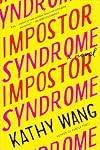
Imagine a book about Russian spies in present-day America written by someone who knows nothing about world politics or international politi-social relationships. Imagine if someone tried to give Black Widow the Fifty Shades of Gray treatment.
This book is ridiculous. It imagines all Russians are idiots and incapable of maintaining their spy network. Like the KGB suddenly turned into McDonald’s. The main conceit of the plot is that this orphan is trained to become a Russian spy and inserted show more as the vice-CEO of a Facebook/Google company. They give her a rich house, rich family, rich husband, everything anyone could ever want. And then they expect her to betray all that by slipping secrets to them. And you wonder why she doesn’t want to?
Besides that, the book is so negative. I mean, I hate rich people too, but even I’m not this bitter about it. Everything out of this author’s narration is so acerbic, so disdainful, so resentful that it’s no fun to read. There are zero people to root for. This Russian spy woman has a gorgeous house, gorgeous status in life, position of power, doctor husband, beautiful baby, goes to huge billionaire parties–basically the American dream–and there’s nothing she can’t find to disparage about. Everything is a power struggle. If it’s not the people at the bottom trying to eat you up, it’s the people at the top who’d sooner crap on you than take a look at you. And men! Men, men, men. Men are so evil. Men are such devious jackasses. Men are always trying to keep women down. Men have no respect for women. Men! What a bunch of bastards.
So the combination of an author with no knowledge of the subject matter she’s writing about, plus a style that brings no joy to the table (you can’t call it satire, that’s a cheap excuse). And I haven’t mentioned the poor pacing, the poor plotting. Nothing happens in this book, and if it does happen, it’s off-screen. Would you rather read a book about two people staring at a chessboard, or about the actual movement of the chess piece? Throw this one away. show less
This book is ridiculous. It imagines all Russians are idiots and incapable of maintaining their spy network. Like the KGB suddenly turned into McDonald’s. The main conceit of the plot is that this orphan is trained to become a Russian spy and inserted show more as the vice-CEO of a Facebook/Google company. They give her a rich house, rich family, rich husband, everything anyone could ever want. And then they expect her to betray all that by slipping secrets to them. And you wonder why she doesn’t want to?
Besides that, the book is so negative. I mean, I hate rich people too, but even I’m not this bitter about it. Everything out of this author’s narration is so acerbic, so disdainful, so resentful that it’s no fun to read. There are zero people to root for. This Russian spy woman has a gorgeous house, gorgeous status in life, position of power, doctor husband, beautiful baby, goes to huge billionaire parties–basically the American dream–and there’s nothing she can’t find to disparage about. Everything is a power struggle. If it’s not the people at the bottom trying to eat you up, it’s the people at the top who’d sooner crap on you than take a look at you. And men! Men, men, men. Men are so evil. Men are such devious jackasses. Men are always trying to keep women down. Men have no respect for women. Men! What a bunch of bastards.
So the combination of an author with no knowledge of the subject matter she’s writing about, plus a style that brings no joy to the table (you can’t call it satire, that’s a cheap excuse). And I haven’t mentioned the poor pacing, the poor plotting. Nothing happens in this book, and if it does happen, it’s off-screen. Would you rather read a book about two people staring at a chessboard, or about the actual movement of the chess piece? Throw this one away. show less
Family Trust is a story of how a Silicon Valley Chinese family behave when the patriarch is diagnosed with terminal pancreatic cancer. When Stanley Huang discovers that he only has a few months to live, his adult children, ex-wife and wife all react to the news differently. Stanley has had a successful career and has been lavish with his spending, so everyone is eagerly anticipating a possible windfall. But will all the money go to Mary, the new wife? What about the kids? And shouldn't show more grandchildren count for something? With abundant dark humor, the story of a greedy dysfunctional family unfolds.
Although it's hard to really like any of the characters, I found the descriptions of Silicon Valley and my home town, to be amazingly accurate. Yes our Whole Foods really does have a local craft beer section, dosa bar and more varieties of hummus than you can imagine. And it has the tiniest parking lot for any supermarket in the area. The descriptions of greed and the constant drive for success and wealth was also scarily accurate. Maybe I have my Pollyanna glasses on, but I do think that most people aren't as heartless as the Huang family, which made it difficult for me to really connect or care about their lives, but I still found myself not being able to put the book down.
There are many human flaws discussed in this book which would make for a fascinating book club discussion. show less
Although it's hard to really like any of the characters, I found the descriptions of Silicon Valley and my home town, to be amazingly accurate. Yes our Whole Foods really does have a local craft beer section, dosa bar and more varieties of hummus than you can imagine. And it has the tiniest parking lot for any supermarket in the area. The descriptions of greed and the constant drive for success and wealth was also scarily accurate. Maybe I have my Pollyanna glasses on, but I do think that most people aren't as heartless as the Huang family, which made it difficult for me to really connect or care about their lives, but I still found myself not being able to put the book down.
There are many human flaws discussed in this book which would make for a fascinating book club discussion. show less
Lists
Awards


You May Also Like


Associated Authors
Statistics
- Works
- 3
- Members
- 919
- Popularity
- #27,916
- Rating
- 3.2
- Reviews
- 57
- ISBNs
- 40
- Favorited
- 1
