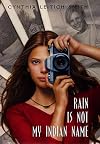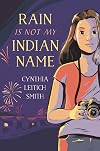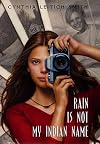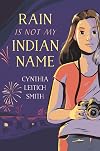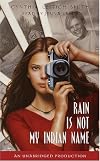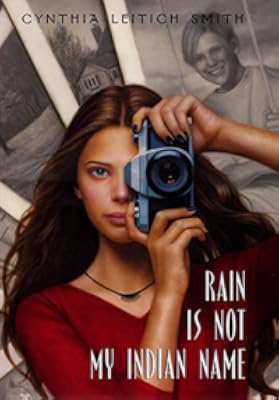
Rain Is Not My Indian Name
by Cynthia Leitich Smith
On This Page
Description
In a voice that resonates with insight and humor, New York Times bestselling author Cynthia Leitich Smith tells the story of a teenage girl who must face down her grief and reclaim her place in the world with the help of her intertribal community.It's been six months since Cassidy Rain Berghoff's best friend, Galen, died, and up until now she has succeeded in shutting herself off from the world. But when controversy arises around Aunt Georgia's Indian Camp in their mostly white midwestern show more community, Rain decides to face the outside world again, with a new job photographing the campers for her town's newspaper.
Soon, Rain has to decide how involved she wants to become in Indian Camp. Does she want to keep a professional distance from her fellow Native teens? And, though she is still grieving, will she be able to embrace new friends and new beginnings?
In partnership with We Need Diverse Books
. show less
Tags
Recommendations



Member Reviews
After her first kiss with her best friend Galen in the first minutes of the New Year, and her birthday, Cassidy Rain goes home, only to learn the next morning that Galen is dead. Six months later, Rain is still grieving, having shut herself off from former friends. Reluctantly, she agrees to take photos for her soon-to-be sister-in-law's newspaper, teaming up with a college student known as "the Flash" to write and shoot a story on a Native American heritage program for youth. Rain is surprised to see her ex-second-best-friend and only Black girl in their small Kansas town; Queenie has just discovered her own Native American heritage. Rain started out impartial about the summer program, but when Galen's mom wants to cut it (partly to show more make the current mayor look bad), she comes to its defense.
At home, Rain's older brother Fynn and his white girlfriend Natalie have gotten engaged, and Rain realizes that Natalie is pregnant. Rain's mother was killed by a lightning strike six years ago, her father works on an air force base in Guam, and her grandpa is vacationing in Las Vegas.
Quotes
Mom had always said to consider new opportunities carefully, even if they might make me uncomfortable at first. (43)
I felt ashamed by how much I didn't know [about my family heritage]. (73)
It was as close as I had come to what everyone said was the right ritual, the right thing to do, but it didn't feel right to me. (85)
When I'd finally picked up my camera again, I'd used it as a wall instead of as a window. (126) show less
At home, Rain's older brother Fynn and his white girlfriend Natalie have gotten engaged, and Rain realizes that Natalie is pregnant. Rain's mother was killed by a lightning strike six years ago, her father works on an air force base in Guam, and her grandpa is vacationing in Las Vegas.
Quotes
Mom had always said to consider new opportunities carefully, even if they might make me uncomfortable at first. (43)
I felt ashamed by how much I didn't know [about my family heritage]. (73)
It was as close as I had come to what everyone said was the right ritual, the right thing to do, but it didn't feel right to me. (85)
When I'd finally picked up my camera again, I'd used it as a wall instead of as a window. (126) show less
"Being a Native girl is no big deal. Really. It seems weird to have to say this, but after a lifetime of experience, I'm used to being me. Dealing with the rest of the world and its ideas, now that frustrates me sometimes."
Rain is Not My Indian Name by Cynthia Leitich Smith was my first read this month and I breezed right through it. It is a short, light hearted read about Cassidy Rain dealing with the death of her best friend and her process of grief. I loved that the story was told with a mix of storytelling and journal entries. The characters really set the tone in this one and the protagonist's growth is the star of the novel. I wish the story was longer because I totally fell in love with Rain and wanted to know more about Indian show more Camp and the kids. I also loved that she was allowed the space to work out her grief on her own terms and by reconnecting with her passion for photography. It allowed her to see the world through a new lens and change her perspective about certain things.
When it ended I felt like it was a great beginning to bigger journey. I recommend this one if you want to start some conversations with youth about grief and feeling different.
The key themes in this one are:
📷 grief and first love
📷 the ways that society "others" Native children, especially girls
📷 how feeling different affects your ability to be vulnerable and ask for help
📷 the importance of allowing youth space to grieve and work through the process in their own way with support
📷 the importance of reconnecting with ancestral ways and culture
📷 the importance of specific cultural programs
📷 the sexualization of teen girls, especially Native ones
📷 family support is vital
📷 the importance of allowing youth to pursue passions
📷 teaching culture in collaborative ways
📷 assimilation and surviving looks different among members of the same family
📷 positive sibling relationships
📷 xenophobia of small towns
📷 ascribed identities and beliefs show less
Rain is Not My Indian Name by Cynthia Leitich Smith was my first read this month and I breezed right through it. It is a short, light hearted read about Cassidy Rain dealing with the death of her best friend and her process of grief. I loved that the story was told with a mix of storytelling and journal entries. The characters really set the tone in this one and the protagonist's growth is the star of the novel. I wish the story was longer because I totally fell in love with Rain and wanted to know more about Indian show more Camp and the kids. I also loved that she was allowed the space to work out her grief on her own terms and by reconnecting with her passion for photography. It allowed her to see the world through a new lens and change her perspective about certain things.
When it ended I felt like it was a great beginning to bigger journey. I recommend this one if you want to start some conversations with youth about grief and feeling different.
The key themes in this one are:
📷 grief and first love
📷 the ways that society "others" Native children, especially girls
📷 how feeling different affects your ability to be vulnerable and ask for help
📷 the importance of allowing youth space to grieve and work through the process in their own way with support
📷 the importance of reconnecting with ancestral ways and culture
📷 the importance of specific cultural programs
📷 the sexualization of teen girls, especially Native ones
📷 family support is vital
📷 the importance of allowing youth to pursue passions
📷 teaching culture in collaborative ways
📷 assimilation and surviving looks different among members of the same family
📷 positive sibling relationships
📷 xenophobia of small towns
📷 ascribed identities and beliefs show less
I love the writing in this book -- Rain's voice is so effortlessly believable and engaging. Her story is a hard one, but she's finding ways past tragedy. She's sophisticated, intriguing, and a talented photographer. She's also eloquent about what life is like in a small town for (in this case) the handful of Native Americans that live there. Packs a lot of punch in a short book. Fine for kids, but probably
more appealing for tweens and teens.
advanced reader's copy for new edition provided by Edelweiss.
more appealing for tweens and teens.
advanced reader's copy for new edition provided by Edelweiss.
I might or might not have read or skimmed the book blurb back when I first came across this novel. Don't remember.
But, because I started it without any knowledge (or remembrance) about the plot, I was able to step in and just take the story as it came.
Granted, it required a little patience on my part. I admittedly started the novel with work deadlines and other stuff looming in front of my psyche. And this isn't a loud read to grab your brain and pull you through the pages at breakneck speed.
Still, as I let this thoughtfully delivered, ultimately poignant story of grief and healing come to me, it became something rather beautiful.
Note:
• no profanity
• no graphic violence
• no explicit sexual content
But, because I started it without any knowledge (or remembrance) about the plot, I was able to step in and just take the story as it came.
Granted, it required a little patience on my part. I admittedly started the novel with work deadlines and other stuff looming in front of my psyche. And this isn't a loud read to grab your brain and pull you through the pages at breakneck speed.
Still, as I let this thoughtfully delivered, ultimately poignant story of grief and healing come to me, it became something rather beautiful.
Note:
• no profanity
• no graphic violence
• no explicit sexual content
This was a really quick middle-grade read, a snapshot in a short moment in the life of Rain, a native girl living in small town USA. Her best friend died a few months ago, and since then, has been withdrawn and cut-off from others, including her family. With the in politics surrounding her aunt's summer camp for Indian youth and her brother's new engagement, Rain is forced to reconnect with the world again, and come to terms with Galen's death and moving on with her life.
This is a deceptively simple book; not much happens. There isn't a big climax or an aha moment for Rain. Instead, it's slow and ordinary.
This is a deceptively simple book; not much happens. There isn't a big climax or an aha moment for Rain. Instead, it's slow and ordinary.
This is one of the few if not the only YA book to deal with a contemporary Native teen realistically. The author disproves Indian stereotypes and presents a witty, smart, tech-savvy, confident, not-ethnically-confused character instead, with a non-reservation family like many I know personally. The cost of presenting an Indian reality is that non-Indians may occasionally be left behind, in terms of not getting the humor or the references, but this is much more preferable than conforming to non-Indians’ ideas of what Indians should be. This book presents urban Indian reality, free of mysticism or romanticism, yet the story is not even about ethnicity. The story is really about grieving the loss of a loved one. This is a book to be show more enjoyed by all and should be required reading for anyone interested in contemporary Native teens. I hope more Native authors will write more contemporary literature for teens. show less
The first book that only got three stars from me so first I have to say that its not because I didn't like it as much of several of my four star books. It's more that I want to begin to be a little more specific and critical and I have more to compare to than I did when I began this. So this is supposed to be a point of progression in my ratings. It's also been nearly a month since I read it. I think I'm going to make it a habit of waiting a little while (although hopefully not this long) before writing my reaction to a book to see how I think its going to stick with me.
I did like this. It's closer to a 3-1/2. I think it would have topped a 3-1/2 and received 4 stars if it were longer and there was an opportunity to get more involved show more with the characters. On the other hand it wasn't a big time investment and was very worthwhile. I had feelings for Rain and an interest in a couple other characters and would liked to have come to know them better. There's an argument for taking the length into account and raising the rating but I'm going to stick with my reaction - how much the book affected me and not try to over think this.
This was a very good if limited look at cultural interaction with realistic characters in realistic circumstances in a real place. I believe that's exactly what it was meant to be rather then an exciting story. There was what I saw as a side theme of Rain's overcoming a traumatic event that immediately preceded the main story and was much less addressed or developed but was nevertheless present throughout the book as a conflict in the process of resolution.
A worthwhile if not totally memorable read. If a sequel came out I would definitely read it but it wouldn't be immediately placed at the top of my list. show less
I did like this. It's closer to a 3-1/2. I think it would have topped a 3-1/2 and received 4 stars if it were longer and there was an opportunity to get more involved show more with the characters. On the other hand it wasn't a big time investment and was very worthwhile. I had feelings for Rain and an interest in a couple other characters and would liked to have come to know them better. There's an argument for taking the length into account and raising the rating but I'm going to stick with my reaction - how much the book affected me and not try to over think this.
This was a very good if limited look at cultural interaction with realistic characters in realistic circumstances in a real place. I believe that's exactly what it was meant to be rather then an exciting story. There was what I saw as a side theme of Rain's overcoming a traumatic event that immediately preceded the main story and was much less addressed or developed but was nevertheless present throughout the book as a conflict in the process of resolution.
A worthwhile if not totally memorable read. If a sequel came out I would definitely read it but it wouldn't be immediately placed at the top of my list. show less
Members
- Recently Added By
Lists

Top 100 books by Indigenous Masters
134 works; 7 members

Indigenous America Reader
145 works; 12 members
Author Information

26+ Works 6,298 Members
Awards and Honors
Common Knowledge
- Original publication date
- 2001
Classifications
- Genres
- Fiction and Literature, Teen, Young Adult
- DDC/MDS
- 823.914 — Literature & rhetoric English & Old English literatures English fiction 1900- 1901-1999 1945-1999
- LCC
- PZ7 .S64465 .R — Language and Literature Fiction and juvenile belles lettres Fiction and juvenile belles lettres Juvenile belles lettres
- BISAC
Statistics
- Members
- 329
- Popularity
- 96,700
- Reviews
- 12
- Rating
- (3.55)
- Languages
- English
- Media
- Paper, Audiobook, Ebook
- ISBNs
- 12
- ASINs
- 2