
Tim Tingle
Author of Crossing Bok Chitto: A Choctaw Tale of Friendship and Freedom
About the Author
Image credit: By Slowking4 - Own work, GFDL 1.2, https://commons.wikimedia.org/w/index.php?curid=35041344
Series
Works by Tim Tingle
Texas Christmas stories 1 copy
Associated Works
Trickster: Native American Tales, A Graphic Collection (2010) — Contributor — 620 copies, 31 reviews
Tagged
Common Knowledge
- Gender
- male
Members
Reviews
How I Became A Ghost — A Choctaw Trail of Tears Story (Book 1 in the How I Became A Ghost Series) by Tim Tingle
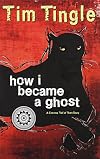
A10-year-old Choctaw boy recounts the beginnings of the forced resettlement of his people from their Mississippi-area homelands in 1830.
He begins his story with a compelling hook: “Maybe you have never read a book written by a ghost before. I am a ghost. I am not a ghost when this book begins, so you have to pay very close attention.” Readers meet Isaac, his family and their dog, Jumper, on the day that Treaty Talk changes everything. Even as the Choctaw prepare to leave their homes, show more Isaac begins to have unsettling visions: Some elders are engulfed in flames, and others are covered in oozing pustules. As Isaac and his family set out on the Choctaw Trail of Tears, these visions begin to come true, as some are burned to death by the Nahullos and others perish due to smallpox-infested blankets distributed on the trail. But the Choctaw barrier between life and death is a fluid one, and ghosts follow Isaac, providing reassurance and advice that allow him to help his family and others as well as to prepare for his own impending death. Storyteller Tingle’s tale unfolds in Isaac’s conversational voice; readers “hear” his story with comforting clarity and are plunged into the Choctaw belief system, so they can begin to understand it from the inside out.
The beginning of a trilogy, this tale is valuable for both its recounting of a historical tragedy and its immersive Choctaw perspective . (Historical fiction. 8-12)
-Kirkus Review show less
He begins his story with a compelling hook: “Maybe you have never read a book written by a ghost before. I am a ghost. I am not a ghost when this book begins, so you have to pay very close attention.” Readers meet Isaac, his family and their dog, Jumper, on the day that Treaty Talk changes everything. Even as the Choctaw prepare to leave their homes, show more Isaac begins to have unsettling visions: Some elders are engulfed in flames, and others are covered in oozing pustules. As Isaac and his family set out on the Choctaw Trail of Tears, these visions begin to come true, as some are burned to death by the Nahullos and others perish due to smallpox-infested blankets distributed on the trail. But the Choctaw barrier between life and death is a fluid one, and ghosts follow Isaac, providing reassurance and advice that allow him to help his family and others as well as to prepare for his own impending death. Storyteller Tingle’s tale unfolds in Isaac’s conversational voice; readers “hear” his story with comforting clarity and are plunged into the Choctaw belief system, so they can begin to understand it from the inside out.
The beginning of a trilogy, this tale is valuable for both its recounting of a historical tragedy and its immersive Choctaw perspective . (Historical fiction. 8-12)
-Kirkus Review show less
How I Became A Ghost - A Choctaw Trail of Tears Story (Book 1 in the How I Became A Ghost Series) by Tim Tingle
"A 10-year-old Choctaw boy recounts the beginnings of the forced resettlement of his people from their Mississippi-area homelands in 1830.
He begins his story with a compelling hook: “Maybe you have never read a book written by a ghost before. I am a ghost. I am not a ghost when this book begins, so you have to pay very close attention.” Readers meet Isaac, his family and their dog, Jumper, on the day that Treaty Talk changes everything. Even as the Choctaw prepare to leave their homes, show more Isaac begins to have unsettling visions: Some elders are engulfed in flames, and others are covered in oozing pustules. As Isaac and his family set out on the Choctaw Trail of Tears, these visions begin to come true, as some are burned to death by the Nahullos and others perish due to smallpox-infested blankets distributed on the trail. But the Choctaw barrier between life and death is a fluid one, and ghosts follow Isaac, providing reassurance and advice that allow him to help his family and others as well as to prepare for his own impending death. Storyteller Tingle’s tale unfolds in Isaac’s conversational voice; readers “hear” his story with comforting clarity and are plunged into the Choctaw belief system, so they can begin to understand it from the inside out.
The beginning of a trilogy, this tale is valuable for both its recounting of a historical tragedy and its immersive Choctaw perspective . (Historical fiction. 8-12)" A Kirkus Starred Review, www.kirkusreviews.com show less
He begins his story with a compelling hook: “Maybe you have never read a book written by a ghost before. I am a ghost. I am not a ghost when this book begins, so you have to pay very close attention.” Readers meet Isaac, his family and their dog, Jumper, on the day that Treaty Talk changes everything. Even as the Choctaw prepare to leave their homes, show more Isaac begins to have unsettling visions: Some elders are engulfed in flames, and others are covered in oozing pustules. As Isaac and his family set out on the Choctaw Trail of Tears, these visions begin to come true, as some are burned to death by the Nahullos and others perish due to smallpox-infested blankets distributed on the trail. But the Choctaw barrier between life and death is a fluid one, and ghosts follow Isaac, providing reassurance and advice that allow him to help his family and others as well as to prepare for his own impending death. Storyteller Tingle’s tale unfolds in Isaac’s conversational voice; readers “hear” his story with comforting clarity and are plunged into the Choctaw belief system, so they can begin to understand it from the inside out.
The beginning of a trilogy, this tale is valuable for both its recounting of a historical tragedy and its immersive Choctaw perspective . (Historical fiction. 8-12)" A Kirkus Starred Review, www.kirkusreviews.com show less

Tim Tingle - a Choctaw storyteller and children's author, whose Crossing Bok Chitto won an American Indian Youth Literature Award - tells the story of Mawmaw, his grandmother, in this moving autobiographical picture-book. With her sweet smile, and her "quiet funny laugh, like there was so much more to laugh at than you would ever know," gentle Mawmaw was the heart of young Tim's family: the one to whom he would run, when stung by a bee, the one who really knew how to listen. He grew up show more hearing the stories of his family's move from Choctaw country to Texas: of the rock thrown at Mawmaw, when she was a young woman, because she was an Indian; and of the invention of the word "Saltypie" by his own father, in response to the rock-throwing incident, and the injury it caused - a word that would come, in the Tingle family, to stand for the hardships of life. It wasn't until he was six, that young Tim even realized that Mawmaw was blind...
Like his grandmother, Tim Tingle has a gentle and deeply affecting style, making Saltypie: A Choctaw Journey from Darkness into Light one of those books that really creeps up on you, emotionally speaking. One minute you're reading a fairly simple picture-book about a modern Choctaw family's experiences, and then suddenly you're starting to tear up, as all the Tingles rush to the hospital, when Mawmaw must have an operation, or to really think about how we communicate with one another, and how we confront the wrongs done in the past, when reading Tingle's afterword. The accompanying illustrations by Karen Clarkson, also a member of the Choctaw nation, really capture the various people in the story - particularly Mawmaw, both young and old.
As the narrator says at one point: "At Mawmaw's, it always seemed that if you waited quietly, you could know things that ought to be known, hidden in the sounds." And that's what this book is like: it tells you things you ought to know - about racism, about family, about healing - in a quiet, compassionate way that is all the more effective, for its lack of sensationalism. Well done, Tim Tingle and Karen Clarkson! show less
Like his grandmother, Tim Tingle has a gentle and deeply affecting style, making Saltypie: A Choctaw Journey from Darkness into Light one of those books that really creeps up on you, emotionally speaking. One minute you're reading a fairly simple picture-book about a modern Choctaw family's experiences, and then suddenly you're starting to tear up, as all the Tingles rush to the hospital, when Mawmaw must have an operation, or to really think about how we communicate with one another, and how we confront the wrongs done in the past, when reading Tingle's afterword. The accompanying illustrations by Karen Clarkson, also a member of the Choctaw nation, really capture the various people in the story - particularly Mawmaw, both young and old.
As the narrator says at one point: "At Mawmaw's, it always seemed that if you waited quietly, you could know things that ought to be known, hidden in the sounds." And that's what this book is like: it tells you things you ought to know - about racism, about family, about healing - in a quiet, compassionate way that is all the more effective, for its lack of sensationalism. Well done, Tim Tingle and Karen Clarkson! show less

Beautifully illustrated and powerfully told, Crossing Bok Chitto is a moving tale of friendship - a friendship that traverses, not just the geographical boundary of the Bok Chitto River (also spelled "Bogue Chitto"), but the boundaries of culture and race as well. When Martha Tom, a young Chocktaw girl living in the Mississippi of the early 1800s - before the time of the Trail of Tears, or the coming of the Civil War - wanders across the forbidden Bok Chitto while searching for some show more blueberries, she is befriended by the members of an underground slave church, and guided back to the river by Little Mo, an African-American boy her own age. A friendship develops as the two children go back and forth across Bok Chitto, and when Little Mo's family is faced with a brutal separation, after his mother is sold away, he turns to Martha Tom and her community for help...
This story of a Chocktaw community that aids a runaway slave family in antebellum Mississippi is inspirational, and, according to Tim Tingle's afterword, has been passed down through the generations, in the oral tradition of that community. The illustrations by Cherokee artist Jeanne Rorex Bridges are lovely, with a distinctive folk sensibility that reminded me, at times, of a quilt. Many of the scenes are dominated by somber browns and muted lavenders, but the effect is intense, rather than drab, and makes the appearance of lighter shades - as when the white-garbed Chocktaw women guide Little Mo's family across the river - all the more striking. All in all, Crossing Bok Chitto is an outstanding book, one with strong narrative and aesthetic appeal, and one which explores an important aspect of American history - the interaction between Native American and African-American communities in the South.
That said, while I understand that Tingle is telling a particular story - one in which runaway slaves are sheltered by the Chocktaw - I found myself wondering how all of this this squares, historically speaking, with the fact that some Chocktaw people owned African slaves themselves. The narrative clearly states that, once slaves crossed the Bok Chitto, they were free. Should the reader assume that this only applied to slaves owned by whites? Or perhaps that this particular Chocktaw community didn't include any slave-owners? It's disappointing to see that Tingle's informative afterword, while it does discuss the subsequent Trail of Tears, doesn't mention the more complicated historical record of Chocktaw slave-owning (or the Chocktaw alliance with the Confederacy). It's not that I expect those aspects of the history to take center stage - that isn't the story being told here, after all - but the fact that they were entirely left out of an afterword meant to give historical and cultural background makes me uncomfortable. I don't know that the absence of this more complicated history "ruins" the book (I still gave it four stars, after all!), but it's something I think readers should be aware of... show less
This story of a Chocktaw community that aids a runaway slave family in antebellum Mississippi is inspirational, and, according to Tim Tingle's afterword, has been passed down through the generations, in the oral tradition of that community. The illustrations by Cherokee artist Jeanne Rorex Bridges are lovely, with a distinctive folk sensibility that reminded me, at times, of a quilt. Many of the scenes are dominated by somber browns and muted lavenders, but the effect is intense, rather than drab, and makes the appearance of lighter shades - as when the white-garbed Chocktaw women guide Little Mo's family across the river - all the more striking. All in all, Crossing Bok Chitto is an outstanding book, one with strong narrative and aesthetic appeal, and one which explores an important aspect of American history - the interaction between Native American and African-American communities in the South.
That said, while I understand that Tingle is telling a particular story - one in which runaway slaves are sheltered by the Chocktaw - I found myself wondering how all of this this squares, historically speaking, with the fact that some Chocktaw people owned African slaves themselves. The narrative clearly states that, once slaves crossed the Bok Chitto, they were free. Should the reader assume that this only applied to slaves owned by whites? Or perhaps that this particular Chocktaw community didn't include any slave-owners? It's disappointing to see that Tingle's informative afterword, while it does discuss the subsequent Trail of Tears, doesn't mention the more complicated historical record of Chocktaw slave-owning (or the Chocktaw alliance with the Confederacy). It's not that I expect those aspects of the history to take center stage - that isn't the story being told here, after all - but the fact that they were entirely left out of an afterword meant to give historical and cultural background makes me uncomfortable. I don't know that the absence of this more complicated history "ruins" the book (I still gave it four stars, after all!), but it's something I think readers should be aware of... show less
Lists
Diverse Horror (1)
Awards


You May Also Like


Associated Authors
Statistics
- Works
- 30
- Also by
- 4
- Members
- 2,570
- Popularity
- #9,995
- Rating
- 4.0
- Reviews
- 172
- ISBNs
- 80
- Favorited
- 1
