

Eric Gansworth
Author of If I Ever Get Out of Here
About the Author
Eric Gansworth, a member of the Onondaga Nation, was born and raised in western New York. The author of seven books, including A Half-Life of Cardio-Pulmonary Function, which was included on the National Book Critics' Cricle's "Good Reads" List for Spring 2008, and Mending Skins, which won the PEN show more Oakland Award in 2006, Gansworth teaches at Canisius College and lives in Niagara Falls, New York. show less
Image credit: By George Quasha
Works by Eric Gansworth
Associated Works
When the Light of the World Was Subdued, Our Songs Came Through: A Norton Anthology of Native Nations Poetry (2020) — Contributor — 378 copies, 4 reviews
Living Nations, Living Words: An Anthology of First Peoples Poetry (2021) — Contributor — 113 copies, 3 reviews
Nothing But the Truth: An Anthology of Native American Literature (2000) — Contributor — 54 copies, 2 reviews
Tagged
Common Knowledge
- Other names
- Sˑha-weñ na-saeˀ
- Birthdate
- 1965
- Gender
- male
- Education
- The State University of New York College, Buffalo
- Nationality
- Onondaga
- Places of residence
- Buffalo, New York, USA
Tuscarora Nation, New York, USA - Map Location
- USA
Members
Reviews
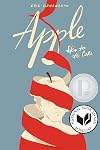
Native American identity issues are explored in this ambitiously structured memoir in verse.
Gansworth (Onondaga) grew up among Tuscaroras. A minority on his reservation, his identity was further complicated by tribal intermarriage and the fact that three of his grandparents suffered forced assimilation in Indian boarding schools. Fascinated with Batman and masks, his boyhood was spent looking for a costume that would reveal his true self. His mother warned “it’s a white man’s world” show more while also acknowledging that Gansworth himself seemed destined for more. The memoir is high concept, structured like a palimpsest over the Beatles’ oeuvre. The title alludes to the Beatles’ Apple Records as well as the Native slur that implies someone is “red on the outside, white on the inside.” Written in a nostalgic tone, the book emphasizes cultural dislocation: “So much of my culture feels on the verge of vanishing. I wonder what part of that I’m contributing to with my own lack of knowledge.” Gansworth’s take on his great-uncles’ “erasing themselves too fully to ever come home” complicates his efforts to reclaim the pejorative. From his childhood to his life as a college student and writer, the book skims over a lifetime; feelings of intimacy and emotional intensity are variable even as the elliptical voice is unique. Black-and-white reproductions of Gansworth’s paintings and family photographs enhance and extend the text in a work originally conceived of as a visual arts project.
A rare and special read. (liner notes, section notes, note about the art) (Verse memoir. 12-18)
-Kirkus Review show less
Gansworth (Onondaga) grew up among Tuscaroras. A minority on his reservation, his identity was further complicated by tribal intermarriage and the fact that three of his grandparents suffered forced assimilation in Indian boarding schools. Fascinated with Batman and masks, his boyhood was spent looking for a costume that would reveal his true self. His mother warned “it’s a white man’s world” show more while also acknowledging that Gansworth himself seemed destined for more. The memoir is high concept, structured like a palimpsest over the Beatles’ oeuvre. The title alludes to the Beatles’ Apple Records as well as the Native slur that implies someone is “red on the outside, white on the inside.” Written in a nostalgic tone, the book emphasizes cultural dislocation: “So much of my culture feels on the verge of vanishing. I wonder what part of that I’m contributing to with my own lack of knowledge.” Gansworth’s take on his great-uncles’ “erasing themselves too fully to ever come home” complicates his efforts to reclaim the pejorative. From his childhood to his life as a college student and writer, the book skims over a lifetime; feelings of intimacy and emotional intensity are variable even as the elliptical voice is unique. Black-and-white reproductions of Gansworth’s paintings and family photographs enhance and extend the text in a work originally conceived of as a visual arts project.
A rare and special read. (liner notes, section notes, note about the art) (Verse memoir. 12-18)
-Kirkus Review show less
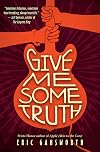
A1980s Native American coming-of-age story grapples with the day-to-day details of teenagers’ lives on and off the reservation.
Wannabe musician Carson Mastick is approaching his senior year of high school, vacillating about whether to stay at home on the Tuscarora Reservation in upstate New York or pursue his dream of using his band as a way to get out. Fifteen-year-old Magpie Bokoni is dealing with the opposite situation: Her mother, who sells traditional souvenirs to tourists, decides to show more uproot the family from the city and move them back to the reservation. Magpie joins Carson’s band as a way of settling back into rez life, and her love for the Beatles, John Lennon, and Yoko Ono is infused throughout the story. While Magpie’s sister, Marie, is secretly dating an older guy she calls “Mystery Man,” Magpie is dating her co-worker at the garage, a 30-year-old white man (although her conscience wrestles with the illegal relationship). As they gear up for the Battle of the Bands competition, Carson leads the group in an impromptu protest of a Gen. Custer–themed restaurant located just off the reservation, run by a racist man who shot and injured Carson’s brother. As Carson’s and Magpie’s lives—narrated in alternating chapters—intersect, their stories will capture a wide audience.
A classic teen novel, especially for Native youth and Beatles fans. (Fiction. 14-adult)
-Kirkus Review show less
Wannabe musician Carson Mastick is approaching his senior year of high school, vacillating about whether to stay at home on the Tuscarora Reservation in upstate New York or pursue his dream of using his band as a way to get out. Fifteen-year-old Magpie Bokoni is dealing with the opposite situation: Her mother, who sells traditional souvenirs to tourists, decides to show more uproot the family from the city and move them back to the reservation. Magpie joins Carson’s band as a way of settling back into rez life, and her love for the Beatles, John Lennon, and Yoko Ono is infused throughout the story. While Magpie’s sister, Marie, is secretly dating an older guy she calls “Mystery Man,” Magpie is dating her co-worker at the garage, a 30-year-old white man (although her conscience wrestles with the illegal relationship). As they gear up for the Battle of the Bands competition, Carson leads the group in an impromptu protest of a Gen. Custer–themed restaurant located just off the reservation, run by a racist man who shot and injured Carson’s brother. As Carson’s and Magpie’s lives—narrated in alternating chapters—intersect, their stories will capture a wide audience.
A classic teen novel, especially for Native youth and Beatles fans. (Fiction. 14-adult)
-Kirkus Review show less

Poetry, I feel, is something that should be approached with great caution. Its ability to worm its way past all our pre-conceptions, to navigate through defenses which seem so impregnable that we have forgotten to think of them as defenses, make it dangerous. I have never been entirely sure whether this is owing to its fluidity of form - that it is not required to move in a linear fashion - or to the fact that it evokes a response through a process of association whose workings are not show more always immediately apparent. However that may be, the unsuspecting reader sometimes finds herself in for a surprise...
And so it was that I found myself unexpectedly moved to tears late one evening, staring blindly out the train window at the scenery rushing past. There I sat, Eric Gansworth's A Half-Life of Cardio-Pulmonary Function in my lap - a title I don't fully understand, containing poems I don't really understand, written by a man I'll most likely never meet (or understand) - and the tears just started rolling silently down my face. At a complete loss to understand the overwhelming sense of loss and grief rolling through me, the deep sense of connection I suddenly felt, to the larger world, and to a stranger with whom I share little, I did something I have not done in a long time... I picked up a pen and paper, and began furiously scribbling a poem of my own...
Gansworth, a member of the Onondaga nation, writes of life on and off the reservation, of the death of his older brother and the death of John Lennon, and of betrayal - cultural, personal, and bodily - and his words either leap right off the page at me, or seem curiously mute. Like the author, I have no idea what voice trees use to speak to young Mohawk men - I hardly know in what voice the author speaks to me. But when I am able to hear him, I am transfixed. Consider the following excerpt from This Is Also Just to Say:
and though
William Carlos Williams did
not know you or me
or the way I wanted
to give you the world
he knew of the failures
within any life
that we are incapable
of being what we should
be for others
and can only
give away these fragments
of our desires stopping
short again like measuring
spoons falling, catching light,
and shining on
their way down.
Or the following, from Are These the Moments Eastman Was Thinking Of?:
And here you are
fifteen years before
on the nights shortly after you
arrived home, shouting for your rifle
every morning at 3:00 A.M. and on the days
distributing the hats you brought
with you across the world, letting
us play with them but keeping their histories
mute as you pose all of us
our eyes hidden beneath
the brims' shadows on the front
porch and I wonder, if you have
the urge to mail them back
across the world, address
them to that piece
of you left behind in the jungles
(where it rained every day for a year)
that none of us even knows is missing.
Addendum: Six months after writing the review above, I finally stumbled upon an understanding of the strength of my reaction to Gansworth's work. Shortly before picking up this collection, in May of 2008, my childhood home burnt to the ground. Although I hadn't lived in that house for many years, its destruction raised all manner of complicated and contradictory memories and feelings, not least of which was the sense (a persistent theme in my adult life) of my past slipping away from me. It may seem difficult to credit that I didn't make the connection before, but one of Gansworth's poems addresses the fiery destruction of his childhood home, and I cannot believe that this is unrelated to my (at the time) inexplicable feelings of grief, when reading it.
Why did it take me so long to discover this connection? Well, I imagine that I wasn't ready, at the time I was reading A Half-Life of Cardio-Pulmonary Function, to really examine my feelings about the fire that destroyed that beautiful old house on the hill. If you'd asked me then, I probably would have professed (very sincerely) little more than casual sadness. But although I wasn't entirely privy to the contents of my own heart, Gansworth's words still spoke to me, in a language I understood on a deeper level. I've said it before, and I'll say it again: poetry is damn sneaky! It's dangerous! That must be why I read it so infrequently... show less
And so it was that I found myself unexpectedly moved to tears late one evening, staring blindly out the train window at the scenery rushing past. There I sat, Eric Gansworth's A Half-Life of Cardio-Pulmonary Function in my lap - a title I don't fully understand, containing poems I don't really understand, written by a man I'll most likely never meet (or understand) - and the tears just started rolling silently down my face. At a complete loss to understand the overwhelming sense of loss and grief rolling through me, the deep sense of connection I suddenly felt, to the larger world, and to a stranger with whom I share little, I did something I have not done in a long time... I picked up a pen and paper, and began furiously scribbling a poem of my own...
Gansworth, a member of the Onondaga nation, writes of life on and off the reservation, of the death of his older brother and the death of John Lennon, and of betrayal - cultural, personal, and bodily - and his words either leap right off the page at me, or seem curiously mute. Like the author, I have no idea what voice trees use to speak to young Mohawk men - I hardly know in what voice the author speaks to me. But when I am able to hear him, I am transfixed. Consider the following excerpt from This Is Also Just to Say:
and though
William Carlos Williams did
not know you or me
or the way I wanted
to give you the world
he knew of the failures
within any life
that we are incapable
of being what we should
be for others
and can only
give away these fragments
of our desires stopping
short again like measuring
spoons falling, catching light,
and shining on
their way down.
Or the following, from Are These the Moments Eastman Was Thinking Of?:
And here you are
fifteen years before
on the nights shortly after you
arrived home, shouting for your rifle
every morning at 3:00 A.M. and on the days
distributing the hats you brought
with you across the world, letting
us play with them but keeping their histories
mute as you pose all of us
our eyes hidden beneath
the brims' shadows on the front
porch and I wonder, if you have
the urge to mail them back
across the world, address
them to that piece
of you left behind in the jungles
(where it rained every day for a year)
that none of us even knows is missing.
Addendum: Six months after writing the review above, I finally stumbled upon an understanding of the strength of my reaction to Gansworth's work. Shortly before picking up this collection, in May of 2008, my childhood home burnt to the ground. Although I hadn't lived in that house for many years, its destruction raised all manner of complicated and contradictory memories and feelings, not least of which was the sense (a persistent theme in my adult life) of my past slipping away from me. It may seem difficult to credit that I didn't make the connection before, but one of Gansworth's poems addresses the fiery destruction of his childhood home, and I cannot believe that this is unrelated to my (at the time) inexplicable feelings of grief, when reading it.
Why did it take me so long to discover this connection? Well, I imagine that I wasn't ready, at the time I was reading A Half-Life of Cardio-Pulmonary Function, to really examine my feelings about the fire that destroyed that beautiful old house on the hill. If you'd asked me then, I probably would have professed (very sincerely) little more than casual sadness. But although I wasn't entirely privy to the contents of my own heart, Gansworth's words still spoke to me, in a language I understood on a deeper level. I've said it before, and I'll say it again: poetry is damn sneaky! It's dangerous! That must be why I read it so infrequently... show less
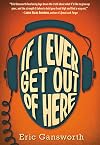
Cited in Hearts Unbroken
Set in upstate New York in 1976-1977, If I Ever Get Out Of Here is the story of Lewis, a member of the Tuscarora tribe, who attends junior high with mostly white kids. As the only Indian on the "smart" track, he's alone, and the white kids mostly ignore him. So when a new student, George Haddonfield, appears, Lewis seizes the opportunity to make friends with him. George's father is in the military, so he floats between the two worlds: friendship with Lewis, and show more friendship with the other military kids. Lewis is accepted into George's home life, but refuses to let George visit his house on the reservation, because he's ashamed of the condition it's in. And Lewis' situation gets worse when bully Evan Reiniger chooses him as a target, and everyone ignores it, because the Reiniger family donates so much money to the school. Lewis tries fighting back; he tries avoiding Evan; he tries telling teachers and school administrators; and when no one helps him, he decides he's not coming back to school until something changes.
Woven throughout the story is the music of the Beatles and Wings (and Queen); Lewis is a huge fan of Paul McCartney, something he has in common with George and Mr. Haddonfield. Mr. Haddonfield has his own connection to Indians, as his parents were teachers at a reservation school. Lewis worries that it might have been one of the boarding schools, but George doesn't know the details.
Lewis navigates the challenges and obstacles in his life with integrity, getting support from different people at different times: his mother, his Uncle Albert, George and the Haddonfields, Caroline Tunny at school.
See also: New Kid by Jerry Craft, The Absolutely True Diary of a Part-Time Indian by Sherman Alexie
Quotes
"Kids are like planets. They go around the sun and then wind up exactly where they used to be. Every day is a repeat of an earlier day." (Lewis' ma, 94)
Invariably, if you pay too much attention to someone else's troubles, it's like they sneezed their trouble onto you. The disruption to your life starts off minor, like a stuffy nose, but it can easily escalate into catastrophe, like full-blown pneumonia, an oxygen-tent-in-the-hospital kind of difficulty. (125)
"Someone at this school has to operate by rules instead of connections." (Lewis to George, 130)
It wasn't logical, but panic was making it hard to decide what a good plan would be. (197)
I'd been dumped off every day among the white people and forced to find my own way out, encountering indifferent teachers, isolation, and now active violence....Wild Indians on a reservation had nothing on a mostly white junior high in the way of scariness. (207)
I could believe all I wanted that offering a reasonable explanation to someone in power would set the world right, that rules were in place so everyone was treated equally. But the truth was, no one was ever treated all that equally. (224)
[George] had some way of just accepting the end of things when it came, drawing a line between before and after. (265)
"Some things, son, take care of themselves. You trust that the right things happened. The rules are in place to keep us functioning as a society, and sometimes, people find their ways around the rules, but it always catches up with them at some point. That is the beauty of order. Things work out one way or another." (Mr. Haddonfield to Lewis, 267)
"People don't believe you about something, even when they should, because the truth involves them too." (George to Lewis, 293)
I wanted to try to navigate both planets, make choices within both worlds, not have to choose one to love and one to hate. (311)
He said memory was sometimes unreliable, and made things better or worse than they really were. (349)
From the Acknowledgements:
Thanks to my old college friend Melisa Holden, librarian extraordinaire, who, despite her irrational hatred of the Beatles, pointed me in some very useful directions early on. show less
Set in upstate New York in 1976-1977, If I Ever Get Out Of Here is the story of Lewis, a member of the Tuscarora tribe, who attends junior high with mostly white kids. As the only Indian on the "smart" track, he's alone, and the white kids mostly ignore him. So when a new student, George Haddonfield, appears, Lewis seizes the opportunity to make friends with him. George's father is in the military, so he floats between the two worlds: friendship with Lewis, and show more friendship with the other military kids. Lewis is accepted into George's home life, but refuses to let George visit his house on the reservation, because he's ashamed of the condition it's in. And Lewis' situation gets worse when bully Evan Reiniger chooses him as a target, and everyone ignores it, because the Reiniger family donates so much money to the school. Lewis tries fighting back; he tries avoiding Evan; he tries telling teachers and school administrators; and when no one helps him, he decides he's not coming back to school until something changes.
Woven throughout the story is the music of the Beatles and Wings (and Queen); Lewis is a huge fan of Paul McCartney, something he has in common with George and Mr. Haddonfield. Mr. Haddonfield has his own connection to Indians, as his parents were teachers at a reservation school. Lewis worries that it might have been one of the boarding schools, but George doesn't know the details.
Lewis navigates the challenges and obstacles in his life with integrity, getting support from different people at different times: his mother, his Uncle Albert, George and the Haddonfields, Caroline Tunny at school.
See also: New Kid by Jerry Craft, The Absolutely True Diary of a Part-Time Indian by Sherman Alexie
Quotes
"Kids are like planets. They go around the sun and then wind up exactly where they used to be. Every day is a repeat of an earlier day." (Lewis' ma, 94)
Invariably, if you pay too much attention to someone else's troubles, it's like they sneezed their trouble onto you. The disruption to your life starts off minor, like a stuffy nose, but it can easily escalate into catastrophe, like full-blown pneumonia, an oxygen-tent-in-the-hospital kind of difficulty. (125)
"Someone at this school has to operate by rules instead of connections." (Lewis to George, 130)
It wasn't logical, but panic was making it hard to decide what a good plan would be. (197)
I'd been dumped off every day among the white people and forced to find my own way out, encountering indifferent teachers, isolation, and now active violence....Wild Indians on a reservation had nothing on a mostly white junior high in the way of scariness. (207)
I could believe all I wanted that offering a reasonable explanation to someone in power would set the world right, that rules were in place so everyone was treated equally. But the truth was, no one was ever treated all that equally. (224)
[George] had some way of just accepting the end of things when it came, drawing a line between before and after. (265)
"Some things, son, take care of themselves. You trust that the right things happened. The rules are in place to keep us functioning as a society, and sometimes, people find their ways around the rules, but it always catches up with them at some point. That is the beauty of order. Things work out one way or another." (Mr. Haddonfield to Lewis, 267)
"People don't believe you about something, even when they should, because the truth involves them too." (George to Lewis, 293)
I wanted to try to navigate both planets, make choices within both worlds, not have to choose one to love and one to hate. (311)
He said memory was sometimes unreliable, and made things better or worse than they really were. (349)
From the Acknowledgements:
Thanks to my old college friend Melisa Holden, librarian extraordinaire, who, despite her irrational hatred of the Beatles, pointed me in some very useful directions early on. show less
Lists
Youth: DEI (1)
Awards


You May Also Like


Associated Authors
Statistics
- Works
- 14
- Also by
- 12
- Members
- 1,236
- Popularity
- #20,767
- Rating
- 4.0
- Reviews
- 45
- ISBNs
- 52
- Languages
- 1