
Sherman Alexie
Author of The Absolutely True Diary of a Part-Time Indian
About the Author
Sherman J. Alexie Jr. was born on October 7, 1966. His mother was Spokane Indian and his father was Coeur d'Alene Indian. Alexie grew up on the Spokane Indian Reservation in Wellpinit, Washington. He decided to attend high school off the reservation where he knew he would get a better education. He show more was the only Indian at the school, and excelled academically as well as in sports. After high school, he attended Gonzaga University for two years before transferring to Washington State University, where he graduated with a degree in American studies. He received the Washington State Arts Commission Poetry Fellowship in 1991 and the National Endowment for the Arts Poetry Fellowship in 1992. His collections of poetry included The Business of Fancydancing, First Indian on the Moon, The Summer of Black Widows, One Stick Song, and Face. His first collection of short stories, The Lone Ranger and Tonto Fistfight in Heaven, received a PEN/Hemingway Award for Best First Book of Fiction and a Lila Wallace-Reader's Digest Writers' Award. His other short story collections included The Toughest Indian in the World, Ten Little Indians, and War Dances. His first novel, Reservation Blues, received the Before Columbus Foundation's American Book Award and the Murray Morgan Prize. His other novels included Indian Killer, The Absolutely True Diary of a Part-Time Indian, and Flight. He won the Andrew Carnegie Medal for Excellence in Nonfiction in 2018 for You Don't Have to Say You Love Me: A Memoir. Alexie and Jim Boyd, a Colville Indian, collaborated on the album Reservation Blues, which contains the songs from the book of the same name. In 1997, Alexie collaborated with Chris Eyre, a Cheyenne/Arapaho Indian, on a film project inspired by Alexie's work, This is What it Means to Say Phoenix, Arizona, from the short story collection The Lone Ranger and Tonto Fistfight in Heaven. Smoke Signals debuted at the Sundance Film Festival in January 1998, winning two awards: the Audience Award and the Filmmakers Trophy. In 1999 the film received a Christopher Award. (Bowker Author Biography) show less
Works by Sherman Alexie
The Lone Ranger and Tonto Fistfight in Heaven [20th anniversary edition] (1993) 2,726 copies, 65 reviews
The toughest indian in the world 18 copies
Ghost Dance [Short Story] 5 copies
Distances [short story] 3 copies
Indian Education 2 copies
Three Poems 1 copy
What Sacagawea Means to Me 1 copy
Axe: Stories That Cut Deep 1 copy
20+1 short stories: Une anthologie des meilleures nouvelles de Terres d'Amériques (A.M. TER.AMER.) (French Edition) (2016) 1 copy
“Captivity” 1 copy
Sherman Alexie class 1 copy
Happy Trails 1 copy
Superman and Me 1 copy
Clean, Cleaner, Cleanest 1 copy
Fire with Fire 1 copy
Associated Works
The Story and Its Writer: An Introduction to Short Fiction (1976) — Contributor — 1,218 copies, 3 reviews
The Chronicles of Harris Burdick: Fourteen Amazing Authors Tell the Tales (2011) — Contributor — 983 copies, 48 reviews
The Scribner Anthology of Contemporary Short Fiction: Fifty North American American Stories Since 1970 (1999) — Contributor — 586 copies, 4 reviews
When the Light of the World Was Subdued, Our Songs Came Through: A Norton Anthology of Native Nations Poetry (2020) — Contributor — 380 copies, 4 reviews
The Year's Best Fantasy and Horror: Seventh Annual Collection (1994) — Contributor — 283 copies, 3 reviews
Walking the Clouds: An Anthology of Indigenous Science Fiction (2012) — Contributor — 218 copies, 3 reviews
Light the Dark: Writers on Creativity, Inspiration, and the Artistic Process (2017) — Contributor — 165 copies, 5 reviews
The Ecco Anthology of Contemporary American Short Fiction (2008) — Contributor — 140 copies, 2 reviews
Adaptations: From Short Story to Big Screen: 35 Great Stories That Have Inspired Great Films (2005) — Contributor — 136 copies, 1 review
Growing Up Ethnic in America: Contemporary Fiction About Learning to Be American (1999) — Contributor — 120 copies
The Creativity Project: An Awesometastic Story Collection (2018) — Contributor — 114 copies, 3 reviews
These United States: Original Essays by Leading American Writers on Their State within the Union by John Leonard (1995) — Contributor — 102 copies, 1 review
The Best American Poetry 2014 (The Best American Poetry series) (2014) — Contributor — 89 copies, 1 review
The Heath Anthology of American Literature, Concise Edition (2003) — Contributor — 74 copies, 1 review
Song of the Turtle: American Indian Literature 1974-1994 (1996) — Contributor — 69 copies, 2 reviews
Song for the Horse Nation: Horses in Native American Cultures (2006) — Contributor, some editions — 65 copies
Nothing But the Truth: An Anthology of Native American Literature (2000) — Contributor — 54 copies, 2 reviews
Here First: Autobiographical Essays by Native American Writers (Modern Library Paperbacks) (2000) — Contributor — 37 copies, 1 review
Returning the Gift: Poetry and Prose from the First North American Native Writers' Festival (Sun Tracks) (1994) — Contributor — 25 copies
Hebbes 4 — Contributor — 3 copies
Tagged
Common Knowledge
- Canonical name
- Alexie, Sherman
- Legal name
- Alexie, Sherman Joseph, Jr.
- Birthdate
- 1966-10-07
- Gender
- male
- Education
- Gonzaga University
Washington State University - Occupations
- writer
lecturer
songwriter
stage performer
poet
screenwriter - Awards and honors
- American Academy of Arts and Letters (2015)
National Endowment for the Arts Fellowship (1992)
World Heavyweight Poetry Bout Champion (1998-2001)
Washington State University Distinguished Alumni Award (1994)
Granta's Best Of Young American Novelists (1996)
The Stranger Genius Award (2008) (show all 13)
Western Literature Association's Distinguished Achievement Award (2007)
Lifetime Achievement Award, Native Writers Circle of The Americas (2010)
American Book Award (1996)
National Book Award for Young People's Literature (2007)
Odyssey Award (2008)
John Dos Passos Prize (2013)
Washington State Arts Commission Poetry Fellowship (1991) - Nationality
- USA
- Birthplace
- Spokane, Washington, USA
- Places of residence
- Spokane Indian Reservation, Wellpinit, Washington, USA
Seattle, Washington, USA - Associated Place (for map)
- Washington, USA
Members
Discussions
November 2017: Sherman Alexie in Monthly Author Reads (October 2021)
(M101'12) The Business of Fancydancing, Sherman Alexie in World Reading Circle (January 2013)
Reviews
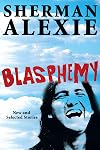
As a reader who prefers long-form fiction, I seldom pick up a short story collection. However, there are a few writers for whom I make an exception, and Sherman Alexie is one of them.
I missed his 2012 collection, Blasphemy, the first time around, but these pieces are still fresh and powerful a decade and more down the road. The 31 entries here, an almost equal mix of reprinted and new material, cover the kind of territory Alexie’s readers have come to expect as he looks at the Indian show more experience in contemporary America. Sometimes darkly funny, sometimes brutal, always honest, he casts his writerly eye over everything from basketball to matrimony, disillusionment to hope, with side trips through drink, dance, and death. Many of the pieces in this collection deal with the kind of long-established marriages where the partners have worn off each other’s sharp corners, comforting and challenging one another in almost equal measure. And a lot of them deal with sexual encounters, explicitly addressed but in such clinical terms that they become the opposite of erotica.
This is not warm fuzzy reading. These characters and their world are often disturbing, yet there are two here which will stay with me for a long time. One is “Salt”, the tale of a young journalism intern shuffled almost by accident into the writing of obituaries, whose confrontation with life, death, and the pervasive longevity of grief make him seriously consider his own mortality for the first time. And the closing piece, “What You Pawn I Will Redeem” burrows into the consciousness with a tenacity that will not let this character go, even as the reader knows his moment of triumph will not last. show less
I missed his 2012 collection, Blasphemy, the first time around, but these pieces are still fresh and powerful a decade and more down the road. The 31 entries here, an almost equal mix of reprinted and new material, cover the kind of territory Alexie’s readers have come to expect as he looks at the Indian show more experience in contemporary America. Sometimes darkly funny, sometimes brutal, always honest, he casts his writerly eye over everything from basketball to matrimony, disillusionment to hope, with side trips through drink, dance, and death. Many of the pieces in this collection deal with the kind of long-established marriages where the partners have worn off each other’s sharp corners, comforting and challenging one another in almost equal measure. And a lot of them deal with sexual encounters, explicitly addressed but in such clinical terms that they become the opposite of erotica.
This is not warm fuzzy reading. These characters and their world are often disturbing, yet there are two here which will stay with me for a long time. One is “Salt”, the tale of a young journalism intern shuffled almost by accident into the writing of obituaries, whose confrontation with life, death, and the pervasive longevity of grief make him seriously consider his own mortality for the first time. And the closing piece, “What You Pawn I Will Redeem” burrows into the consciousness with a tenacity that will not let this character go, even as the reader knows his moment of triumph will not last. show less

Simultaneously hilarious and heartbreaking, this brilliant young adult novel from the talented Sherman Alexie, whose adult output ranges from poetry (The Business of Fancydancing) to prose fiction (The Lone Ranger and Tonto Fistfight in Heaven), not to mention screenwriting (Smoke Signals), marks the author's first foray into the juvenile market. One certainly hopes that it will not be the last! The story of Arnold Spirit, a young Spokane Indian colloquially known as Junior, and his show more incredible freshman year of high school, The Absolutely True Diary of a Part-Time Indian seems to be heavily based upon Alexie's own life story. Like Alexie, Junior - determined to break out of the cycles of poverty and alcoholism gripping so many of his fellow reservation residents - leaves the res school behind, and enrolls at the high school in a nearby all white farming community. Labeled a traitor by many of his fellow Indians, and rejected by his former best friend, Rowdy, Junior must confront a school community where he isn't just a newcomer, but the only Indian (save for the mascot).
I found Junior, whose clear-sighted, but compassionate observation of the people around him, whether Indian or white, produced many a humorous passage, to be a convincing narrator. The 'disappearance' of certain issues from the narrative (something mentioned in other reviews) - from the fact that Junior's lisping, and physical disabilities are never mentioned again, after first being introduced into the story, and seem not to effect his life at Reardon High; to the non-relevance of Penelope's bulimia, despite Junior's relationship with her - never even occurred to me, in the course of my reading. I am constrained to admit, having now read these other reviews, that these are legitimate concerns, but somehow - through the strength of the narrative voice? perhaps because of the emotional immediacy of the story? - they just didn't register with me, or really alter my opinion of the book, after the fact. I think that Alexie's ability to convince me, despite these issues, that his story is realistic and believable, speaks to his skill as a writer, and to the truth of his tale. Sometimes reality can be very unlikely indeed.
I have not contended, as Junior has done, with any physical disabilities in my life, nor have I known, as he has, the experiences of poverty or racism. And yet, in so many ways, his story spoke to me, and I think that this ability - to be both specific in experience, but universal in feeling - is a hallmark of great writing. So many moments in this book moved me, from the heartbreaking death of Junior's dog, Oscar, because his family can't afford veterinary treatment for him (the "worst thing about being poor"); to that astonishing moment of epiphany, toward the close of the story, in which Junior realizes that he has a place, not just in his tribe, but in the wider world as well. That dizzying feeling of connection to larger realities, is one that we have all had, at one time or another, but remains difficult to express, in any meaningful way. I'm glad that I have finally read The Absolutely True Diary of a Part-Time Indian, which has been on my "radar" since it was first published, and thank The Children's Fiction Club to which I belong for making it their December selection. Now I will just have to wait and hope, along with all of Alexie's other readers, that he pens another tale in this vein. Perhaps the story of Junior at college...? show less
I found Junior, whose clear-sighted, but compassionate observation of the people around him, whether Indian or white, produced many a humorous passage, to be a convincing narrator. The 'disappearance' of certain issues from the narrative (something mentioned in other reviews) - from the fact that Junior's lisping, and physical disabilities are never mentioned again, after first being introduced into the story, and seem not to effect his life at Reardon High; to the non-relevance of Penelope's bulimia, despite Junior's relationship with her - never even occurred to me, in the course of my reading. I am constrained to admit, having now read these other reviews, that these are legitimate concerns, but somehow - through the strength of the narrative voice? perhaps because of the emotional immediacy of the story? - they just didn't register with me, or really alter my opinion of the book, after the fact. I think that Alexie's ability to convince me, despite these issues, that his story is realistic and believable, speaks to his skill as a writer, and to the truth of his tale. Sometimes reality can be very unlikely indeed.
I have not contended, as Junior has done, with any physical disabilities in my life, nor have I known, as he has, the experiences of poverty or racism. And yet, in so many ways, his story spoke to me, and I think that this ability - to be both specific in experience, but universal in feeling - is a hallmark of great writing. So many moments in this book moved me, from the heartbreaking death of Junior's dog, Oscar, because his family can't afford veterinary treatment for him (the "worst thing about being poor"); to that astonishing moment of epiphany, toward the close of the story, in which Junior realizes that he has a place, not just in his tribe, but in the wider world as well. That dizzying feeling of connection to larger realities, is one that we have all had, at one time or another, but remains difficult to express, in any meaningful way. I'm glad that I have finally read The Absolutely True Diary of a Part-Time Indian, which has been on my "radar" since it was first published, and thank The Children's Fiction Club to which I belong for making it their December selection. Now I will just have to wait and hope, along with all of Alexie's other readers, that he pens another tale in this vein. Perhaps the story of Junior at college...? show less

Legendary (isn’t he dead?) blues player Robert Johnson brings his accursed guitar to the Spokane Indian reservation. Although he has tried to abandon it several times before, it has always returned to him. This time however, it latches onto young Thomas Builds-the-Fire who finds himself the lead guitar player of a native band called Coyote Springs, under the tutelage of a mysterious woman called Big Mama. Big Mama says she taught Elvis how to sing and also watched the massacre of her show more people at Wounded Knee.
The band skyrockets from local to regional success and eventually has the opportunity of a record contract in New York City.
But all is not well on the reservation. People there resent Coyote Springs’ triumphs and failures alike. They are not fond of the band’s two white women groupies or that two of the band members are Salish.
This is an original, searing and sarcastic look at Reservation life, including the white people on the reservation (especially the Catholic church). It’s brutal, honest and original.
It’s also funny as all get out. Because, as the author postulates, if you can’t make fun of your problems, you are not Indian. show less
The band skyrockets from local to regional success and eventually has the opportunity of a record contract in New York City.
But all is not well on the reservation. People there resent Coyote Springs’ triumphs and failures alike. They are not fond of the band’s two white women groupies or that two of the band members are Salish.
This is an original, searing and sarcastic look at Reservation life, including the white people on the reservation (especially the Catholic church). It’s brutal, honest and original.
It’s also funny as all get out. Because, as the author postulates, if you can’t make fun of your problems, you are not Indian. show less
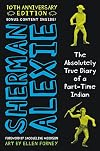
I read the e-book (including drawings) and listened to the audio read (passionately) by the author; both are amazing. Any book that elicits this many simultaneous emotions is a winner. Alexie channels his teen angst voice amazingly well, with great humor, and Ellen Fornie's drawings are the perfect vehicle. It's not about just a kid from the rez, this is all about the human condition with all its cruelty, passion and hope. I wish I'd had this book when I was 15, and I'm so glad I have it show more now. I love reading books that have been banned or challenged, but I must say, the masturbation references were minimal. show less
Lists
Summer Reading (1)
Tom's Bookstore (1)
Yet another list (1)
Read in school (1)
Magic Realism (1)
ethnic history (1)
. (1)
A Novel Cure (1)
Read (1)
Coming of Age (1)
GAL Book Club (1)
Banned Books (1)
Racial identity (1)
Five star books (1)
Books About Boys (1)
Wishlist (1)
Youth: DEI (1)
Best Young Adult (1)
AP Lit (1)
Best of 2017 (1)
Florida (1)
Awards


You May Also Like


Associated Authors
Statistics
- Works
- 60
- Also by
- 60
- Members
- 31,090
- Popularity
- #636
- Rating
- 4.0
- Reviews
- 1,368
- ISBNs
- 287
- Languages
- 14
- Favorited
- 153


