

Vine Deloria, Jr. (1933–2005)
Author of Custer Died for Your Sins: An Indian Manifesto
About the Author
Vine Deloria, Jr. (1933-2005) was born and raised in South Dakota, the son and grandson of Dakota Sioux Indian leaders. In 1965, he began serving as the Executive Director of the National Congress of American Indians, and worked tirelessly to mobilize Indian people toward effective participation in show more the American political process. A noted scholar of American Indian legal, political and religious studies, he is the author of numerous works, including the 1969 bestseller Custer Died for Your Sins: An Indian Manifesto, God is Red (1973) and The Metaphysics of Modern Existence (1979). show less
Disambiguation Notice:
Do not confuse with his father Vine Deloria, 1901-1990.
Image credit: wikipedia.org
Works by Vine Deloria, Jr.
Red Earth, White Lies: Native Americans and the Myth of Scientific Fact (1995) 345 copies, 5 reviews
The World We Used to Live In: Remembering the Powers of the Medicine Men (2006) 195 copies, 1 review
Behind the Trail of Broken Treaties: An Indian Declaration of Independence (1974) 171 copies, 3 reviews
Indians of the Pacific Northwest: From the Coming of the White Man to the Present Day (1977) 65 copies, 2 reviews
Of Utmost Good Faith: The Case of the American Indian Against the Federal Government of the United States (1971) — Editor — 58 copies
Documents of American Indian diplomacy : treaties, agreements, and conventions, 1775-1979 (1999) 17 copies
Stories of the Lakota 1 copy
Indian Tribes 1 copy
Associated Works
Black Elk Speaks: Being the Life Story of a Holy Man of the Oglala Sioux (1932) — Foreword, some editions — 4,281 copies, 56 reviews
Crazy Horse: The Strange Man of the Oglalas (50th Anniversary Edition) (1942) — Introduction, some editions — 833 copies, 10 reviews
Native American Testimony: A Chronicle of Indian-White Relations from Prophecy to the Present (1978) — Foreword, some editions — 552 copies, 1 review
Every Day Is a Good Day: Reflections by Contemporary Indigenous Women (2004) — Foreword, some editions — 147 copies
How Shall I Live My Life? On Liberating the Earth from Civilization (2008) — Contributor — 89 copies
Nothing But the Truth: An Anthology of Native American Literature (2000) — Contributor — 54 copies, 2 reviews
Destroying Dogma: Vine Deloria, Jr. and His Influence on American Society (2006) — Contributor — 22 copies
Tagged
Common Knowledge
- Canonical name
- Deloria, Vine, Jr.
- Legal name
- Delora, Vine Victor, Jr.
- Other names
- Deloria, Vine, Jr.
- Birthdate
- 1933-03-26
- Date of death
- 2005-11-13
- Gender
- male
- Education
- Iowa State University (BA|1958)
Lutheran School of Theology, Illinois (M.Th|1963)
University of Colorado (JD|1970) - Occupations
- historian
theologian
lawyer
activist
professor - Organizations
- University of Arizona College of Law
University of Colorado, Boulder
University of Arizona
Western Washington State College
National Congress of American Indians
Institute of American Indian Law (show all 8)
Institute for the Development of Indian Law
United States Marine Corps - Awards and honors
- National Native American Hall of Fame (2018)
American Indian Festival of Words Author Award (2003)
Wallace Stegner award (2002)
Wordcraft Circle Writer of the Year Award (1999)
Lifetime Achievement Award, Native Writers Circle of The Americas (1996) - Relationships
- Deloria, Vine, Sr. (father)
Deloria, Ella (aunt)
Deloria, Philip J. (son) - Cause of death
- aortic aneurysm
- Nationality
- Standing Rock Sioux
USA - Birthplace
- Martin, South Dakota, USA
- Places of residence
- Golden, Colorado, USA
- Place of death
- Golden, Colorado, USA
- Burial location
- Golden Cemetery, Golden, Colorado, USA
- Disambiguation notice
- Do not confuse with his father Vine Deloria, 1901-1990.
- Associated Place (for map)
- Golden, Colorado, USA
Members
Reviews
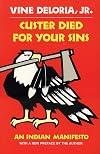
I first found the book Custer Died For Your Sins, fittingly, on a field trip for an Intro to Post-Colonialism class. We went to the Smithsonian Museum of the American Indian where the book was on display. And, you know, it's a fun title, so I got a copy.
Unfortunately, Vine Deloria would probably not be impressed with my field trip or class or the institutionalization of "culture" in general. He spends an entire chapter making fun of the misguided and patronizing work of anthropology, often show more no-holds-barred scathing commentary:
"One workshop discussed the thesis that Indians were in a terrible crisis. They were, in the words of friendly anthro guides, BETWEEN TWO WORLDS. People between two worlds, the students were told, DRANK. For the anthropologists, it was a valid explanation of drinking on the reservation. For the young Indians, it was an authoritative definition of their role as Indians.
So they DRANK.
I lost some good friends who DRANK too much."
The book de-mythologizes the idealized Indian in the minds of many white Americans - e.g., Tonto or the Indians in Peter Pan, written by and for white impressions of the culture. But Deloria is also writing a specifically political manifesto concerning the status and rights of Indian nations at the end of the 1960s. So other chapters delve into the political struggles that American Indians have, both internally and externally. The black civil rights movement has a huge impact on the way that Deloria is thinking about Indians' civil rights. Yet he also resists the inclination to merely copy the success of black civil rights leaders - it wouldn't work, they're different minorities with different issues, and a simplification of different cultures with the status of "minority" is damaging to them all.
The relevance of this book 40 years later is ambiguous - certainly there are different political issues now, but there are still problems of marginalization and the tension between living with an American government and asserting independent nationhood. However, the book remains an interesting piece of history, and a strong voice of dissent on behalf of a group that has struggled to have its own say. show less
Unfortunately, Vine Deloria would probably not be impressed with my field trip or class or the institutionalization of "culture" in general. He spends an entire chapter making fun of the misguided and patronizing work of anthropology, often show more no-holds-barred scathing commentary:
"One workshop discussed the thesis that Indians were in a terrible crisis. They were, in the words of friendly anthro guides, BETWEEN TWO WORLDS. People between two worlds, the students were told, DRANK. For the anthropologists, it was a valid explanation of drinking on the reservation. For the young Indians, it was an authoritative definition of their role as Indians.
So they DRANK.
I lost some good friends who DRANK too much."
The book de-mythologizes the idealized Indian in the minds of many white Americans - e.g., Tonto or the Indians in Peter Pan, written by and for white impressions of the culture. But Deloria is also writing a specifically political manifesto concerning the status and rights of Indian nations at the end of the 1960s. So other chapters delve into the political struggles that American Indians have, both internally and externally. The black civil rights movement has a huge impact on the way that Deloria is thinking about Indians' civil rights. Yet he also resists the inclination to merely copy the success of black civil rights leaders - it wouldn't work, they're different minorities with different issues, and a simplification of different cultures with the status of "minority" is damaging to them all.
The relevance of this book 40 years later is ambiguous - certainly there are different political issues now, but there are still problems of marginalization and the tension between living with an American government and asserting independent nationhood. However, the book remains an interesting piece of history, and a strong voice of dissent on behalf of a group that has struggled to have its own say. show less
The aspect (situation and outlook) of American Indians is so subsumed in popular American consciousness that the history of Native Americans may have well as ended with Custer or, at most, Wounded Knee in the mind of the typical Americans. This incisive & witty account presents a land-based, rooted point of view that suggests something that is neither majority nor minority. It can be unimpressed with Civil Rights movements without being racist. Here is a sample of the mental reboots show more container herein:
"The Republican Party has ostensibly stood for less government as a political philosophical position. But when you listen carefully to the Republicans you do not really hear less government, you hear a strange religion of early Puritan mythology. The Republican Party is in reality the truest expression of America's religion of progress and white respectability. It stands for the white superman who never existed. The peddler's grandson who conquered the unknown by inheriting a department store—such is the basic American religion unmasked. The measure of America's willingness to examine the basis of its existence is to be counted in the number of registered voters who claim to be Republicans.
The measure of truth in the above assertion is the Republican willingness to lose elections rather than depart from cherished doctrines and myths. Only a religion can attract and hold such loyalty.
The other party is something else. Popular conceptions gloss over reality and continue the Rooseveltian myth that the Democrats are the party of the people. The old Roosevelt coalition of labor, minority and ethnic groups, and farmers fails to acknowledge one unpublicized member—the special interests."
- Vine Deloria, Jr., "Custer Died for your Sins"
. show less
"The Republican Party has ostensibly stood for less government as a political philosophical position. But when you listen carefully to the Republicans you do not really hear less government, you hear a strange religion of early Puritan mythology. The Republican Party is in reality the truest expression of America's religion of progress and white respectability. It stands for the white superman who never existed. The peddler's grandson who conquered the unknown by inheriting a department store—such is the basic American religion unmasked. The measure of America's willingness to examine the basis of its existence is to be counted in the number of registered voters who claim to be Republicans.
The measure of truth in the above assertion is the Republican willingness to lose elections rather than depart from cherished doctrines and myths. Only a religion can attract and hold such loyalty.
The other party is something else. Popular conceptions gloss over reality and continue the Rooseveltian myth that the Democrats are the party of the people. The old Roosevelt coalition of labor, minority and ethnic groups, and farmers fails to acknowledge one unpublicized member—the special interests."
- Vine Deloria, Jr., "Custer Died for your Sins"
. show less
Indians of the Pacific Northwest: From the Coming of the White Man to the Present Day by Vine Deloria, Jr.
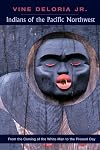
I was a little wary of reading a history of Native Americans written 40 years ago - I was afraid it would be full of imperialist attitudes about a "primitive" people. But the author is also Native American (Sioux), and he treats his subject with empathy and tells the story from the Native American point of view.
The overall theme of the book is the creation of treaties between Indians and whites, and how Indians have had to fight ceaselessly to maintain the rights supposedly granted to them show more by those treaties. In the Pacific Northwest, that battle has mostly been over fishing rights. The book ends on a high note with the creation of the Lummi aquaculture - even though I live just a few miles from the Lummi reservation, I had no idea about this amazing achievement, which would make a great subject for a feel-good movie.
This book might be old, but it does not feel out-dated in any way, and should be required reading for anyone living in the Pacific Northwest, particularly around Tacoma or Bellingham. show less
The overall theme of the book is the creation of treaties between Indians and whites, and how Indians have had to fight ceaselessly to maintain the rights supposedly granted to them show more by those treaties. In the Pacific Northwest, that battle has mostly been over fishing rights. The book ends on a high note with the creation of the Lummi aquaculture - even though I live just a few miles from the Lummi reservation, I had no idea about this amazing achievement, which would make a great subject for a feel-good movie.
This book might be old, but it does not feel out-dated in any way, and should be required reading for anyone living in the Pacific Northwest, particularly around Tacoma or Bellingham. show less
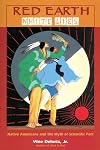
Recommended for those interested in Native issues and those interested in alternative theories of human world population. This is not a perfect book, but it is a thought-provoking one.
I recently read another book on a similar topic, Who Discovered America by Gavin Menzies. Red Earth, White Lies, despite getting so much less attention -- likely because of its focus on Native issues -- is so much better that you should skip Menzies entirely and just read this. Unlike Menzies, Deloria made me show more want to think critically about these claims and have less trust in our archaeological academic institutions. Here's why Deloria's book is so much more effective:
1. Deloria does not allege that the current orthodoxy about the American population through the Bering Strait is a conspiracy against him personally. Rather, he identifies two reasons for its popularity: first, because it is a straightforward explanation that requires little high-level thinking for the lay student learning it in elementary school, and second, because it makes it easier for white people -- of whom academia is predominantly comprised -- to feel less bad about their ancestors taking the Americas from the natives since it isn't like the natives were actually here that long, either. This is an interesting point to me. I think there is this tension among many white people between generically feeling bad about the fact that white people stole the Americas from the Native Americans and knowing with certainty that they don't want to give it back or really do anything to make Native Americans' lives better. Saying to them, "Well, it's not like the natives were actually native -- they only showed up a couple centuries before the Europeans" is a good way to assuage that guilt. This is a much more compelling social point to me than the Menzies style "everybody is out to get me!" idea.
2. Deloria says that he doubts Native Americans came on the land bridge for several reasons, but one is that there are no origin myths among the tribes saying that such a thing happened. However, there are many tribes with origin myths about sailing across giant seas. Historians and archaeologists have said that this is impossible, but he points out that historians and archaeologists said that the native Hawaiians' origin myth -- also of coming to Hawaii on rafts across the Pacific and frequently going from island to island at great distances -- was also disregarded by all historians and archaeologists as impossible until a white person, Thor Heyerdahl, recreated it. In other words, when brown people do a thing, it is impossible; when a white person does a thing, it is real.
3. Deloria gives examples of archeological and historical evidence of his theories like Menzies does; however, where every example Menzies gave was easily googled and debunked, all of Deloria's examples are found online categorized as "history mysteries" and "unexplained mysteries." There are two possible explanations for this in my mind. The first is that Deloria is right and these things are legitimately unexplained by science. The second is that because Menzies gets more attention, scientists have taken the time to debunk his ideas, but no one did so for Deloria's. Either is possible. Now, there are some examples Deloria gives that make me uncomfortable because of the coalitions built behind them. For instance, he describes how a pendant given by Chief Joseph of the Nez Perce upon his defeat by the American military was analyzed many years after the fact and found to be an ancient Mesopotamian tablet dating back thousands of years. This is intriguing because Chief Joseph should have no business owning such a thing, given that interaction between Native Americans and cradle of civilization Mesopotamians should be impossible. I was very interested, and it does turn out to be a "history mystery" of a sort. The issue is that when you google this, the coalition of people who cite this as evidence for their viewpoints, other than Deloria, are creationists who believe the earth is six thousand years old and Mormons who cite it as proof that the Book of Mormon is accurate. Strange bedfellows, to be sure. Perhaps it is my prejudice that these bedfellows make me less likely to think that this is valid. But it is still thought-provoking.
4. Unlike Menzies, who presents a theory that seems self-serving -- that it was all about China, and also everything was about China, so please read all of my other books too -- Deloria presents an alternative theory of American population that could be plausible. (I'll note that I don't find it more plausible than the Bering Strait theory, but on its surface, it isn't less plausible, either.) Deloria proposes that people lived in the Americas as early as 42,000 B.C, arriving by boat to the northwestern part of the continent, and living in the north until a climate catastrophe appearing in several tribes' oral histories forced them to begin moving southward and eastward. It was these people who then went east to Europe and became the Cro-Magnons. He notes that archaeologists do agree that the Cro-Magnons entered Europe from the west, based on the location of their painted caves; and notably, there isn't much that is west of Europe that could sustain a large population. (He notes another ethnologist, Werner Muller, also expounded on these ideas, although I can find very little information in English about this person, so I can't vouch for him either way.) Perhaps most compelling, Deloria notes that we don't know enough to prove this scenario but that there are equal levels of archaeological evidence for both, with lists. Certainly he could be misrepresenting the lists. However, this makes me take the idea of non-Bering Strait population much more seriously than Menzies did.
Deloria also makes a number of geological claims that I don't know enough to understand, and the dense articles I found online about the geology of the Grand Canyon scared me off of trying to understand them, but it certainly was enough to engage with intellectually and make me wonder. The frequent examples of Native Americans' origin myths lining up perfectly with our much later understanding of geology -- for instance, tales in the Pacific Northwest of Cascade eruptions and earthquakes that, after being disbelieved, were located through mudslide geological evidence as happening within the last five thousand years, when these tribes did live there -- was quite compelling. It made me want to read another book that matches these things up more closely rather than as examples.
That said, there are places where Deloria places a little too much trust in oral history. For instance, he cites a claim among a Great Plains tribe that they were periodically seeing dinosaurs in their lands as late as the 18th century. I find it impossible to believe that there were still dinosaurs, even one, hanging out in the Great Plains that recently. But is it more ridiculous than the number of people who believe that the Loch Ness Monster is a dinosaur? No. Both things are impossible. But he is correct in pointing out that the ridicule Native Americans get for saying that they saw a dinosaur a few hundred years ago is huge compared to how white people making a similar claim about Nessie are received.
Similarly, he notes that international tales of great floods similarly timed to the biblical flood of Noah -- he cites examples of North and South American tribes; I recall the same happening with Gilgamesh -- are used as evidence of the bible's historicity, while it is just as likely that the bible's tale supports one of these others or (most likely in my opinion) they are all interpretations of a similar event and none is likelier than another. But because the bible is what the West believes, all other floods support it.
Like any book in this field, Red Earth, White Lies has an agenda. I think the difference is that Deloria's agenda is very clear -- he thinks science disregards Native Americans entirely -- but does not overtake the book by not presenting evidence of the thesis.
Also, I'm sure that Deloria would be absolutely appalled -- as many of us were -- by Menzies titling his book with the word "discovered." show less
I recently read another book on a similar topic, Who Discovered America by Gavin Menzies. Red Earth, White Lies, despite getting so much less attention -- likely because of its focus on Native issues -- is so much better that you should skip Menzies entirely and just read this. Unlike Menzies, Deloria made me show more want to think critically about these claims and have less trust in our archaeological academic institutions. Here's why Deloria's book is so much more effective:
1. Deloria does not allege that the current orthodoxy about the American population through the Bering Strait is a conspiracy against him personally. Rather, he identifies two reasons for its popularity: first, because it is a straightforward explanation that requires little high-level thinking for the lay student learning it in elementary school, and second, because it makes it easier for white people -- of whom academia is predominantly comprised -- to feel less bad about their ancestors taking the Americas from the natives since it isn't like the natives were actually here that long, either. This is an interesting point to me. I think there is this tension among many white people between generically feeling bad about the fact that white people stole the Americas from the Native Americans and knowing with certainty that they don't want to give it back or really do anything to make Native Americans' lives better. Saying to them, "Well, it's not like the natives were actually native -- they only showed up a couple centuries before the Europeans" is a good way to assuage that guilt. This is a much more compelling social point to me than the Menzies style "everybody is out to get me!" idea.
2. Deloria says that he doubts Native Americans came on the land bridge for several reasons, but one is that there are no origin myths among the tribes saying that such a thing happened. However, there are many tribes with origin myths about sailing across giant seas. Historians and archaeologists have said that this is impossible, but he points out that historians and archaeologists said that the native Hawaiians' origin myth -- also of coming to Hawaii on rafts across the Pacific and frequently going from island to island at great distances -- was also disregarded by all historians and archaeologists as impossible until a white person, Thor Heyerdahl, recreated it. In other words, when brown people do a thing, it is impossible; when a white person does a thing, it is real.
3. Deloria gives examples of archeological and historical evidence of his theories like Menzies does; however, where every example Menzies gave was easily googled and debunked, all of Deloria's examples are found online categorized as "history mysteries" and "unexplained mysteries." There are two possible explanations for this in my mind. The first is that Deloria is right and these things are legitimately unexplained by science. The second is that because Menzies gets more attention, scientists have taken the time to debunk his ideas, but no one did so for Deloria's. Either is possible. Now, there are some examples Deloria gives that make me uncomfortable because of the coalitions built behind them. For instance, he describes how a pendant given by Chief Joseph of the Nez Perce upon his defeat by the American military was analyzed many years after the fact and found to be an ancient Mesopotamian tablet dating back thousands of years. This is intriguing because Chief Joseph should have no business owning such a thing, given that interaction between Native Americans and cradle of civilization Mesopotamians should be impossible. I was very interested, and it does turn out to be a "history mystery" of a sort. The issue is that when you google this, the coalition of people who cite this as evidence for their viewpoints, other than Deloria, are creationists who believe the earth is six thousand years old and Mormons who cite it as proof that the Book of Mormon is accurate. Strange bedfellows, to be sure. Perhaps it is my prejudice that these bedfellows make me less likely to think that this is valid. But it is still thought-provoking.
4. Unlike Menzies, who presents a theory that seems self-serving -- that it was all about China, and also everything was about China, so please read all of my other books too -- Deloria presents an alternative theory of American population that could be plausible. (I'll note that I don't find it more plausible than the Bering Strait theory, but on its surface, it isn't less plausible, either.) Deloria proposes that people lived in the Americas as early as 42,000 B.C, arriving by boat to the northwestern part of the continent, and living in the north until a climate catastrophe appearing in several tribes' oral histories forced them to begin moving southward and eastward. It was these people who then went east to Europe and became the Cro-Magnons. He notes that archaeologists do agree that the Cro-Magnons entered Europe from the west, based on the location of their painted caves; and notably, there isn't much that is west of Europe that could sustain a large population. (He notes another ethnologist, Werner Muller, also expounded on these ideas, although I can find very little information in English about this person, so I can't vouch for him either way.) Perhaps most compelling, Deloria notes that we don't know enough to prove this scenario but that there are equal levels of archaeological evidence for both, with lists. Certainly he could be misrepresenting the lists. However, this makes me take the idea of non-Bering Strait population much more seriously than Menzies did.
Deloria also makes a number of geological claims that I don't know enough to understand, and the dense articles I found online about the geology of the Grand Canyon scared me off of trying to understand them, but it certainly was enough to engage with intellectually and make me wonder. The frequent examples of Native Americans' origin myths lining up perfectly with our much later understanding of geology -- for instance, tales in the Pacific Northwest of Cascade eruptions and earthquakes that, after being disbelieved, were located through mudslide geological evidence as happening within the last five thousand years, when these tribes did live there -- was quite compelling. It made me want to read another book that matches these things up more closely rather than as examples.
That said, there are places where Deloria places a little too much trust in oral history. For instance, he cites a claim among a Great Plains tribe that they were periodically seeing dinosaurs in their lands as late as the 18th century. I find it impossible to believe that there were still dinosaurs, even one, hanging out in the Great Plains that recently. But is it more ridiculous than the number of people who believe that the Loch Ness Monster is a dinosaur? No. Both things are impossible. But he is correct in pointing out that the ridicule Native Americans get for saying that they saw a dinosaur a few hundred years ago is huge compared to how white people making a similar claim about Nessie are received.
Similarly, he notes that international tales of great floods similarly timed to the biblical flood of Noah -- he cites examples of North and South American tribes; I recall the same happening with Gilgamesh -- are used as evidence of the bible's historicity, while it is just as likely that the bible's tale supports one of these others or (most likely in my opinion) they are all interpretations of a similar event and none is likelier than another. But because the bible is what the West believes, all other floods support it.
Like any book in this field, Red Earth, White Lies has an agenda. I think the difference is that Deloria's agenda is very clear -- he thinks science disregards Native Americans entirely -- but does not overtake the book by not presenting evidence of the thesis.
Also, I'm sure that Deloria would be absolutely appalled -- as many of us were -- by Menzies titling his book with the word "discovered." show less
Lists
Awards


You May Also Like


Associated Authors
Statistics
- Works
- 39
- Also by
- 19
- Members
- 4,630
- Popularity
- #5,443
- Rating
- 4.0
- Reviews
- 46
- ISBNs
- 119
- Languages
- 5
- Favorited
- 10