
Alvin M. Josephy (1915–2005)
Author of 500 Nations: An Illustrated History of North American Indians
About the Author
Alvin Josephy, Jr., (b. 1915) is best known for his many books on Native Americans and the American West
Image credit: Jerry Bauer
Works by Alvin M. Josephy
The Patriot Chiefs: A Chronicle of American Indian Resistance; Revised Edition (1961) 267 copies, 3 reviews
America in 1492: The World of the Indian Peoples Before the Arrival of Columbus (1992) 170 copies, 2 reviews
Red Power, 2nd Ed: The American Indians' Fight for Freedom, Second Edition (1971) 119 copies, 1 review
The Long and the Short and the Tall: Marines in Combat on Guam and Iwo Jima (Classics of War) (1979) 30 copies
Black Hills, White Sky: Photographs from the collection of the Arvada Center Foundation (1978) 7 copies, 1 review
The American Heritage Book of Indians / The American Heritage History of The Great West (2 volume set). (1965) — Editor — 6 copies
The Adventure of Man's Flight 3 copies
The U.S. Marines on Iwo Jima 1 copy
Associated Works
The Native Americans: An Illustrated History (1993) — Introduction, some editions — 746 copies, 2 reviews
The Pequots in Southern New England: The Fall and Rise of an American Indian Nation (1990) — Contributor — 70 copies
Tagged
Common Knowledge
- Other names
- JOSEPHY, Alvin M., Jr.
- Birthdate
- 1915-05-08
- Date of death
- 2005-10-16
- Gender
- male
- Education
- Harvard University
- Occupations
- historian
foreign correspondent
magazine editor - Organizations
- Time Magazine (Associate editor)
American Heritage (Editor, 1976-1978) - Awards and honors
- Saddleman Award (1966)
- Nationality
- USA
- Birthplace
- Woodmere, New York, USA
- Places of residence
- Joseph, Oregon, USA
Greenwich, Connecticut, USA - Place of death
- Greenwich, Connecticut, USA
- Associated Place (for map)
- USA
Members
Reviews
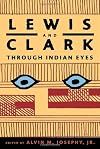
It’s always interesting to see through the eyes of the “other” in any event, whether it’s a mythologized, patriotic event like the Lewis and Clark Expedition, a battle or war or revolution, a protest, or a first date. In some ways, this book reminds me of Howard Zinn’s superb A People’s History of the United States, in that it takes a one-sided textbook event and gives us the other perspective. Of course this book is just focused on one small event in U.S. History while Zinn’s show more book covers Columbus through Clinton. But this small event had huge implications for both the explorers and the explored.
From the U.S. history perspective, there is no doubt that this was an epic and brave journey and achievement for the Americans. But a journey of discovery? Sort of, but the French and other white men had already been in almost all the places the expedition went through. This was not unpopulated wilderness, especially along the Columbia where there were large populations of Native American tribes firmly established.
One of the primary purposes was commercialism. President Jefferson directed the leaders to seek out “…the most direct & practical water communication across this continent for the purposes of commerce. As Bill Yellowtail writes, “Lewis and Clark [were] envoys of free-trade agreements, long prior to NAFTA and CAFTA and the WTO.” And most of the tribes they encountered were happy with the prospects of trade.
But the primary purchase was imperialism. The French did not sell us land in the Louisiana Purchase, they sold us “discover’s rights”. These rights were commonly used legal instruments employed by European colonial powers in their efforts to control resources throughout the world and justify the exploitation and elimination of indigenous peoples and cultures. As Vine Deloria, Jr. points out in the first essay, France claimed that it “owned” a large tract of the North American West simply because Frenchmen were the first white men to set foot there. A similar claim was held by Spain for the North American Southwest. So Jefferson purchased the release of those rights from France and sent his white men through the lands with rituals, gifts, and other activities that were common practice to establish a new “discover” of those lands under the new United States.
One of the most interesting things to me that came through many of the stories is just how un-newsworthy the expedition was to the tribes that encountered it. Stories were of course handed down, and in fact form the basis for some of the essays in this book. But for most of the tribes, it was not news. Most of them did not know the ramifications of this expedition and that soon their way of life would disappear under a subsequent wave of white settlers, soldiers, businessmen, and agents. Some tribes had oracular forebodings about the coming of the white men. That foreboding was well grounded. But the hopeful common thread I got from the contributors to this book was that despite what happened, many of their tribes are still here and still living on their land. I, for one, am glad of that. show less
From the U.S. history perspective, there is no doubt that this was an epic and brave journey and achievement for the Americans. But a journey of discovery? Sort of, but the French and other white men had already been in almost all the places the expedition went through. This was not unpopulated wilderness, especially along the Columbia where there were large populations of Native American tribes firmly established.
One of the primary purposes was commercialism. President Jefferson directed the leaders to seek out “…the most direct & practical water communication across this continent for the purposes of commerce. As Bill Yellowtail writes, “Lewis and Clark [were] envoys of free-trade agreements, long prior to NAFTA and CAFTA and the WTO.” And most of the tribes they encountered were happy with the prospects of trade.
But the primary purchase was imperialism. The French did not sell us land in the Louisiana Purchase, they sold us “discover’s rights”. These rights were commonly used legal instruments employed by European colonial powers in their efforts to control resources throughout the world and justify the exploitation and elimination of indigenous peoples and cultures. As Vine Deloria, Jr. points out in the first essay, France claimed that it “owned” a large tract of the North American West simply because Frenchmen were the first white men to set foot there. A similar claim was held by Spain for the North American Southwest. So Jefferson purchased the release of those rights from France and sent his white men through the lands with rituals, gifts, and other activities that were common practice to establish a new “discover” of those lands under the new United States.
One of the most interesting things to me that came through many of the stories is just how un-newsworthy the expedition was to the tribes that encountered it. Stories were of course handed down, and in fact form the basis for some of the essays in this book. But for most of the tribes, it was not news. Most of them did not know the ramifications of this expedition and that soon their way of life would disappear under a subsequent wave of white settlers, soldiers, businessmen, and agents. Some tribes had oracular forebodings about the coming of the white men. That foreboding was well grounded. But the hopeful common thread I got from the contributors to this book was that despite what happened, many of their tribes are still here and still living on their land. I, for one, am glad of that. show less
As the title suggests, this is a collection of essays by nine modern-day Native Americans whose tribal lands Lewis and Clark traveled through on their journey across the North American continent.
Perhaps the most surprising -- and revealing -- aspect of this book for me was that the coming of Lewis and Clark really wasn't a terribly noteworthy event for the tribes. They had met whites before in the person of trappers and traders, and Lewis and Clark were in many ways just more of the same. show more The Indians had their own lives, traditions, and history and weren't just waiting around to be encountered by intrepid explorers.
Anyone interested in a different perspective on the Corps of Discovery and its influence on the making of America will find much to think about. show less
Perhaps the most surprising -- and revealing -- aspect of this book for me was that the coming of Lewis and Clark really wasn't a terribly noteworthy event for the tribes. They had met whites before in the person of trappers and traders, and Lewis and Clark were in many ways just more of the same. show more The Indians had their own lives, traditions, and history and weren't just waiting around to be encountered by intrepid explorers.
Anyone interested in a different perspective on the Corps of Discovery and its influence on the making of America will find much to think about. show less
Lewis and Clark Through Indian Eyes: Nine Indian Writers on the Legacy of the Expedition by Alvin M. Josephy Jr.

This is an anthology of essays by nine Native American writers of nine different tribes/nations.
All of these nations were mentioned in the[ Journals of Lewis and Clark]. But each nation had a different perspective on the Journey of Discovery.
First of all, most of them had seen and traded with French, Spanish, Scottish, English and even Russian white men before Lewis and Clark. No matter what the L&C Journals said, they did not think of white men as gods. They did not feel that this group of show more whites were of greater import than others they had met. They did, however, almost universally perceive them as rude and had no regard for a Great White Father meeting his children and owning the land that they had lived in and on for centuries.
It is only in retrospect that the Native Americans learned how vastly and quickly their lives would be changed. In as little as thirty years for the nations along the Oregon coast or still within one generation (seventy years) for some of the plains people, wars were fought, treaties broken and survivors pushed onto reservations.
Several of the writers’ essays were about the shabby ways they had been treated and the ongoing negative consequences of the white colonization. Other writers comment on their oral traditions of the coming of Lewis and Clark, especially compared to the official writings of the white men of the expedition.
This is an intriguing essay collection of an event seen by most Americans as one of the highpoints of US Western exploration and settlement. However, like all history it’s an event told by the conquerors, with little regard given to the Native side, until this book. As in all anthologies, I enjoyed some essays more than others. I would recommend it to anyone interested in American frontier history. show less
All of these nations were mentioned in the[ Journals of Lewis and Clark]. But each nation had a different perspective on the Journey of Discovery.
First of all, most of them had seen and traded with French, Spanish, Scottish, English and even Russian white men before Lewis and Clark. No matter what the L&C Journals said, they did not think of white men as gods. They did not feel that this group of show more whites were of greater import than others they had met. They did, however, almost universally perceive them as rude and had no regard for a Great White Father meeting his children and owning the land that they had lived in and on for centuries.
It is only in retrospect that the Native Americans learned how vastly and quickly their lives would be changed. In as little as thirty years for the nations along the Oregon coast or still within one generation (seventy years) for some of the plains people, wars were fought, treaties broken and survivors pushed onto reservations.
Several of the writers’ essays were about the shabby ways they had been treated and the ongoing negative consequences of the white colonization. Other writers comment on their oral traditions of the coming of Lewis and Clark, especially compared to the official writings of the white men of the expedition.
This is an intriguing essay collection of an event seen by most Americans as one of the highpoints of US Western exploration and settlement. However, like all history it’s an event told by the conquerors, with little regard given to the Native side, until this book. As in all anthologies, I enjoyed some essays more than others. I would recommend it to anyone interested in American frontier history. show less
Lewis and Clark Through Indian Eyes: Nine Indian Writers on the Legacy of the Expedition by Alvin M. Josephy Jr.
Most historians credit Lewis and Clark with a courageous exploration of new territory; this book provides a view from the perspective of the existing people on the land. This anthology is a collection of essays by nine modern-day Native Americans. In it, we learn that the expedition was about American (Jeffersonian) imperialism and commercialism. Perhaps the most revealing theme was that the expedition really wasn't a terribly noteworthy event for the tribes...just more white people coming show more through. In many cases, the coming was predicted by vision and the moccasin grapevine presaged their coming as they traveled West. Only a couple of the articles were interesting and talked to the title; others either beat the same old subject or completely avoided the book's theme and could be easily expunged without impact to the author's dominant idea. In the positive column, the verbal history was very enlightening. show less
Lists
Awards


You May Also Like


Associated Authors
Statistics
- Works
- 66
- Also by
- 6
- Members
- 3,819
- Popularity
- #6,636
- Rating
- 3.7
- Reviews
- 23
- ISBNs
- 86
- Languages
- 2
- Favorited
- 1