

Helen Hunt Jackson (1830–1885)
Author of Ramona
About the Author
Image credit: Courtesy of the NYPL Digital Gallery (image use requires permission from the New York Public Library)
Works by Helen Hunt Jackson
A Century of Dishonor: A Sketch of the United States Government's Dealings with Some Indian Tribes (1881) 364 copies, 3 reviews
Letters from a Cat: Published by Her Mistress for the Benefit of All Cats and the Amusement of Little Children (1879) 22 copies, 1 review
Verses 4 copies
Bits of Travel 4 copies
Report of Mrs. Helen Hunt Jackson and Abbot Kinney on the Mission Indians in 1883 : abbreviated. 3 copies
Sonnets and Lyrics 2 copies
Ramona Pageant Association, Inc. .. Presents : Ramona, California's Greatest Outdoor Play, 1971 (1971) 2 copies
Ramona, Volume I 1 copy
Ramona, Volume II 1 copy
Jackson, Helen Hunt Archive 1 copy
My Day in the Wilderness 1 copy
Helen Hunt Jackson note 1 copy
The California Missions 1 copy
Associated Works
The Best of the West: An Anthology of Classic Writing from the American West (1991) — Contributor — 285 copies, 1 review
Poems Between Women: Four Centuries of Love, Romantic Friendship, and Desire (1997) — Contributor — 97 copies, 1 review
Tagged
Common Knowledge
- Canonical name
- Jackson, Helen Hunt
- Legal name
- Jackson, Helen Maria Hunt (married)
Fiske, Helen Maria (birth) - Other names
- Holm, Saxe
H.H. - Birthdate
- 1830-10-15
- Date of death
- 1885-08-12
- Gender
- female
- Education
- Ipswich Female Seminary
Abbott Institute - Occupations
- poet
novelist - Awards and honors
- Colorado Women's Hall of Fame (1985)
- Relationships
- Dickinson, Emily (friend)
- Short biography
- Helen Maria Fiske was born in Amherst, Massachusetts, the daugher of a minister and professor at Amherst College. She was a school friend of Emily Dickinson, and the two correspondended all their lives. In 1852, she married Edward Bissell Hunt, a military officer, with whom she had two sons. Following the premature deaths of her husband and her children, Helen remarried in 1875 to William Sharpless Jackson, a wealthy banker. She took the name Jackson and published some of her works as Helen Hunt Jackson, anonymously, or under the pseudonym "Saxe Holm." Her first novel Mercy Philbrick’s Choice (1876) is considered a fictionalized portrait of her friend Emily Dickinson. It was followed by Ramona (1884), which became extremely popular and is the work for which she's best-known today. Along with Ramona, her book Century of Dishonor: A Sketch of the United States Government's Dealings with some of the Indian Tribes (1881), championed the rights of Native Americans, a cause she supported for many years. Many of Helen Hunt Jackson's stories, poems, and personal reminiscences were collected and published posthumously in Sonnets and Lyrics, Glimpses of Three Coasts (1886) and Between Whiles (1886). She died at the age of 54.
- Cause of death
- stomach cancer
- Nationality
- USA
- Birthplace
- Amherst, Massachusetts, USA
- Places of residence
- Amherst, Massachusetts, USA
San Francisco, California, USA
Colorado Springs, Colorado, USA - Place of death
- San Francisco, California, USA
- Burial location
- Evergreen Cemetery, Colorado Springs, Colorado, USA
- Associated Place (for map)
- USA
Members
Reviews
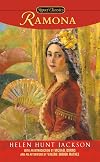
Holy hell, that was a challenge! I only wanted to read a story set in California, and thought a nineteenth century 'classic' might provide an interesting history of the land. Wrong! Helen Hunt Jackson wanted to write a novel which would do for the Indians of Southern California what Uncle Tom's Cabin did for the 'cause' of the African Americans, but instead produced a pulp romance novel which sold thousands of copies but had no overall cultural impact. After ploughing through this show more melodramatic tripe, I could have told Mrs Jackson where she went wrong - like James Cameron believing that the tragedy of the Titanic needed superimposing with a cliched romance to make history sell, she drowned the devastating message of her novel in frothy, sensational soap suds.
I remember the song 'Ramona' ('I hear the mission bells above, they're ringing out our song of love') but had no idea the lyrics came from the title song of a 1920s film based on this claptrap. Ramona is the unwanted half-Indian, half-Scottish - randomly - adopted daughter of a Mexican woman who takes on her jilted lover's bastard child and then dies, passing her onto her sister who hates the child. Ramona, of the black hair and blue eyes, is beloved by everybody except Senora Moreno, because she is good and pure and sunny and strong and superior, and whole list of other overused adjectives. She is a typical heroine of Victorian fiction, 'childlike' and subservient to men. When a team of Indian sheep shearers start work at the Moreno ranch, one of the more educated and cultured of the hired help, Alessandro, falls in love with Ramona and the two plan to marry. The Senora, who should be glad to get Ramona off her hands and away from her pathetic son, Felipe, perversely objects to the match, forcing Ramona to run away with Alessandro (after the obligatory period of pining). In the mean time, Alessandro's village is stolen from the Indians by the Government to sell onto white settlers, which rightly pisses him off and also unbalances his mind. Alessandro and Ramona, whom he renames 'Majella' and refers to in the third person even when talking directly to her, travel around California looking for somewhere safe to settle. They move to the mountains, where they meet a family from Tennessee who speak in barely decipherable dialect - I stopped trying to read what 'Aunt Ri' was saying (those who think Joseph in Wuthering Heights is bad should hold onto their hats) - but the harsh living conditions cost them their baby's life, which sends Alessandro over the edge. Men are so weak, honestly. He develops a kind of intermittent dementia and is eventually shot down for 'borrowing' a white man's horse (based on the real murder of an Indian by a man who then claimed 'self defense'), and Ramona swoons herself into unconsciousness while others fight for justice. Never fear, however, here comes Felipe, who has been searching for Alessandro and Ramona ever since his mother died, to the rescue.
Look, I was disgusted by the treatment of the Indians, or native Americans, who were driven off their land and onto 'reservations' by the US government, but this Victorian potboiler isn't the right platform for highlighting any kind of social injustice, then or now. None of the characters are convincing, especially saintly Ramona, the dialogue is either stilted or incomprehensible, and the narrative is leaden and long-winded. I thought I was suitably acclimatised to purple prose, but even I found this a chore to read.
Kudos to Mrs Jackson, who died two years after her novel was published, for pouring out her heart and trying to do good for others, but for your sanity, avoid this like the plague. show less
I remember the song 'Ramona' ('I hear the mission bells above, they're ringing out our song of love') but had no idea the lyrics came from the title song of a 1920s film based on this claptrap. Ramona is the unwanted half-Indian, half-Scottish - randomly - adopted daughter of a Mexican woman who takes on her jilted lover's bastard child and then dies, passing her onto her sister who hates the child. Ramona, of the black hair and blue eyes, is beloved by everybody except Senora Moreno, because she is good and pure and sunny and strong and superior, and whole list of other overused adjectives. She is a typical heroine of Victorian fiction, 'childlike' and subservient to men. When a team of Indian sheep shearers start work at the Moreno ranch, one of the more educated and cultured of the hired help, Alessandro, falls in love with Ramona and the two plan to marry. The Senora, who should be glad to get Ramona off her hands and away from her pathetic son, Felipe, perversely objects to the match, forcing Ramona to run away with Alessandro (after the obligatory period of pining). In the mean time, Alessandro's village is stolen from the Indians by the Government to sell onto white settlers, which rightly pisses him off and also unbalances his mind. Alessandro and Ramona, whom he renames 'Majella' and refers to in the third person even when talking directly to her, travel around California looking for somewhere safe to settle. They move to the mountains, where they meet a family from Tennessee who speak in barely decipherable dialect - I stopped trying to read what 'Aunt Ri' was saying (those who think Joseph in Wuthering Heights is bad should hold onto their hats) - but the harsh living conditions cost them their baby's life, which sends Alessandro over the edge. Men are so weak, honestly. He develops a kind of intermittent dementia and is eventually shot down for 'borrowing' a white man's horse (based on the real murder of an Indian by a man who then claimed 'self defense'), and Ramona swoons herself into unconsciousness while others fight for justice. Never fear, however, here comes Felipe, who has been searching for Alessandro and Ramona ever since his mother died, to the rescue.
Look, I was disgusted by the treatment of the Indians, or native Americans, who were driven off their land and onto 'reservations' by the US government, but this Victorian potboiler isn't the right platform for highlighting any kind of social injustice, then or now. None of the characters are convincing, especially saintly Ramona, the dialogue is either stilted or incomprehensible, and the narrative is leaden and long-winded. I thought I was suitably acclimatised to purple prose, but even I found this a chore to read.
Kudos to Mrs Jackson, who died two years after her novel was published, for pouring out her heart and trying to do good for others, but for your sanity, avoid this like the plague. show less
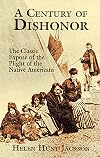
A book that truly lives up to the adjective landmark, as it was written in 1881 and the first to shine a light on the genocide of Native Americans, one of the two original sins of the United States.
Helen Hunt Jackson documented the conduct of European colonizers towards usually friendly Native Americans from seven tribes all over the country, and in so doing, clear patterns emerge, heartbreaking in their cruelty: continual treaty-making that gave Natives land, money, and equipment for show more farming, which was followed immediately by the United States Senate not ratifying or living up to the treaty, and colonizers squatting on the lands that had been declared sovereign. Any hostile act on the part of angered Natives met with asymmetrical responses to any and all Natives, even of different tribes. Outright massacres of Natives, sometimes after luring Natives in under the guise of a peaceful meal together, with butchery of the elderly, women, and children that is almost unimaginable. Even as Natives succeeded in adopting European ways, e.g. farming and schooling, white people motivated by greed and hatred continued to take land from them, with people in several states refusing to allow them to live there, which in turn meant new treaties, smaller land grants on worse land, and horrifying forced marches under brutal conditions. Lastly, turning reservations into what were essentially concentration camps, and deliberately starving Native Americans. We see all of this in each of the tribes Jackson covers, and her book is by no means complete.
Objectively speaking, it’s clear who the real “savages” were – and it makes my blood boil that Hollywood portrayed it in the reverse way in the century which followed, and American history was (and in many cases still is) taught in such a whitewashed manner.
To anyone who has read later history texts very little of what Jackson records is going to come as a surprise, and there are other books you should probably read first if you’re relatively new to the subject, such as Bury My Heart at Wounded Knee, The Trail of Tears, or An American Genocide. However considering when this one was written, just when most of the genocide had been completed, right after Reconstruction ended and heading into a long interval where race relations were at their nadir – it’s extraordinary that a woman did extensive research and compiled the truth about a country that was (and is) pretty proud of itself. Indeed, the book went out of print until 1964, as the country simply did not want to acknowledge its crimes against humanity. For those reasons it’s essential reading to me.
Some quotes:
Chief Pachgantschilias of the Delawares on the white man (1787):
“I admit that there are good white men, but they bear no proportion to the bad; the bad must be the strongest; for they rule. They do what they please. They enslave those who are not of their color, although created by the same Great Spirit who created them. They would make us slaves if they could; but as they cannot do it, they kill us. There is no faith to be placed in their words. They are not like the Indians, who are only enemies while at war, and are friends in peace. They will say to an Indian, ‘My friend; my brother!’ They will take him by the hand, at the same moment, destroy him.
Chief Sitting Bull of the Sioux (~1876):
“Tell them at Washington if they have one man who speaks the truth to send him to me, and I will listen to what he has to say.”
Unknown chief of the Cherokees (~1740):
“Why these are Christians at Savannah. Those are Christians at Frederica. Christians get drunk! Christians beat men! Me no Christian!”
And later:
“He that is above knows what he made us for. We know nothing; we are in the dark; but white men know much. And yet white men build great houses as if they were to live forever. But white men cannot live forever. In a little time white men will be dust as well as I.” show less
Helen Hunt Jackson documented the conduct of European colonizers towards usually friendly Native Americans from seven tribes all over the country, and in so doing, clear patterns emerge, heartbreaking in their cruelty: continual treaty-making that gave Natives land, money, and equipment for show more farming, which was followed immediately by the United States Senate not ratifying or living up to the treaty, and colonizers squatting on the lands that had been declared sovereign. Any hostile act on the part of angered Natives met with asymmetrical responses to any and all Natives, even of different tribes. Outright massacres of Natives, sometimes after luring Natives in under the guise of a peaceful meal together, with butchery of the elderly, women, and children that is almost unimaginable. Even as Natives succeeded in adopting European ways, e.g. farming and schooling, white people motivated by greed and hatred continued to take land from them, with people in several states refusing to allow them to live there, which in turn meant new treaties, smaller land grants on worse land, and horrifying forced marches under brutal conditions. Lastly, turning reservations into what were essentially concentration camps, and deliberately starving Native Americans. We see all of this in each of the tribes Jackson covers, and her book is by no means complete.
Objectively speaking, it’s clear who the real “savages” were – and it makes my blood boil that Hollywood portrayed it in the reverse way in the century which followed, and American history was (and in many cases still is) taught in such a whitewashed manner.
To anyone who has read later history texts very little of what Jackson records is going to come as a surprise, and there are other books you should probably read first if you’re relatively new to the subject, such as Bury My Heart at Wounded Knee, The Trail of Tears, or An American Genocide. However considering when this one was written, just when most of the genocide had been completed, right after Reconstruction ended and heading into a long interval where race relations were at their nadir – it’s extraordinary that a woman did extensive research and compiled the truth about a country that was (and is) pretty proud of itself. Indeed, the book went out of print until 1964, as the country simply did not want to acknowledge its crimes against humanity. For those reasons it’s essential reading to me.
Some quotes:
Chief Pachgantschilias of the Delawares on the white man (1787):
“I admit that there are good white men, but they bear no proportion to the bad; the bad must be the strongest; for they rule. They do what they please. They enslave those who are not of their color, although created by the same Great Spirit who created them. They would make us slaves if they could; but as they cannot do it, they kill us. There is no faith to be placed in their words. They are not like the Indians, who are only enemies while at war, and are friends in peace. They will say to an Indian, ‘My friend; my brother!’ They will take him by the hand, at the same moment, destroy him.
Chief Sitting Bull of the Sioux (~1876):
“Tell them at Washington if they have one man who speaks the truth to send him to me, and I will listen to what he has to say.”
Unknown chief of the Cherokees (~1740):
“Why these are Christians at Savannah. Those are Christians at Frederica. Christians get drunk! Christians beat men! Me no Christian!”
And later:
“He that is above knows what he made us for. We know nothing; we are in the dark; but white men know much. And yet white men build great houses as if they were to live forever. But white men cannot live forever. In a little time white men will be dust as well as I.” show less
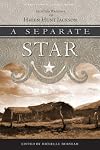
"Lifted by something over life
To power and service."
"The healing of the world
Is in its nameless saints. Each separate star
Seems nothing, but a myriad scattered stars
Break up the night and make it beautiful."
(p. 203)
I had heard of Helen Hunt Jackson prior to reading this book, however I can genuinely say I had no idea who she was- and that now I feel I know her at least glimpse of her. To know someone is to know what they stand for and what they are passionate about, what they will defend. In show more A Separate Star, which is composed of Selected Writings of Helen Hunt Jackson, Helen is caring for children and appalled by the treatment of Native Americans. Her writings include: poetry, travel writing, articles on the social living condition of the Native Americans, and parenting advice. She had a dream that through her words, change would come, and come swiftly, she wanted to make a difference. I doubt she saw the changes she desired, as her hopes were lofty for those times, but it is interesting that even now we can read her works and see how progressive her thoughts were. And how true her dreams were, and that they should have been heeded immediately.
I enjoyed reading A Separate Star, I took my time, read and thought about what she was communicating though her works, and in the end I found that she truly inspired me, many times and in many different ways. She left a legacy in her writing that still speaks today, her dreams of equality, of bettering the treatment of children, and of the journey of the Native American. I heard her voice in her words, and I know that I am not the only one, as she is known for challenging, provoking, and standing her ground on her claims and opinions. She is a women of the old west, but there is a side to her that I would not have expected to be present, she had a heart, a heart that rung through her words and openly displayed caring, and loving for those she was protecting. And not a calloused love, but she did fully love and embrace those she was fighting for, and did not hold back at a safe distance, not even for her safety.
A Separate Star contains many of her writings, and among them excerpts from her best known books :A Century of Dishonor and Ramona. This is one of my favourite quotes in the history selections is from "the Wards of the United States Government"(1880), it shows just how passionate she was about the issues that she wrote about.
That the Indians should be called "wards" of the United States Government, would seem a natural thing, significant of the natural dictionary definition of the word "ward" is "one under a guardian," and of the word "guardian," a "protector." [...] the term "ward applied to the Indian, savors of a satire as bitter as it was involuntary and unconscious on the part of the Supreme Court, which, I believe, first used the epithet, or, if it did not first use it, has used it since, as a convenient phase of "conveyance" of rights, not to the Indian, but from him; to define, not what he might hope for, but what he must not expect; not what he is, but what he is not; not what he may do, but what, being a "ward," he is forever debarred from doing (p. 111).
I recommend this book, I love history, I believe it is how we learn from our past mistakes and move on to treating each other with respect, dignity and full-hearted integrity. Without knowing our history we will just continue to make the same mistakes over and over. I learned a great deal from this book, and enjoyed myself while doing it! This was a great read.
This book is from Heyday Books and is part of the California Legacy series, "vibrant and relevant writings drawn from California’s past and present." show less
To power and service."
"The healing of the world
Is in its nameless saints. Each separate star
Seems nothing, but a myriad scattered stars
Break up the night and make it beautiful."
(p. 203)
I had heard of Helen Hunt Jackson prior to reading this book, however I can genuinely say I had no idea who she was- and that now I feel I know her at least glimpse of her. To know someone is to know what they stand for and what they are passionate about, what they will defend. In show more A Separate Star, which is composed of Selected Writings of Helen Hunt Jackson, Helen is caring for children and appalled by the treatment of Native Americans. Her writings include: poetry, travel writing, articles on the social living condition of the Native Americans, and parenting advice. She had a dream that through her words, change would come, and come swiftly, she wanted to make a difference. I doubt she saw the changes she desired, as her hopes were lofty for those times, but it is interesting that even now we can read her works and see how progressive her thoughts were. And how true her dreams were, and that they should have been heeded immediately.
I enjoyed reading A Separate Star, I took my time, read and thought about what she was communicating though her works, and in the end I found that she truly inspired me, many times and in many different ways. She left a legacy in her writing that still speaks today, her dreams of equality, of bettering the treatment of children, and of the journey of the Native American. I heard her voice in her words, and I know that I am not the only one, as she is known for challenging, provoking, and standing her ground on her claims and opinions. She is a women of the old west, but there is a side to her that I would not have expected to be present, she had a heart, a heart that rung through her words and openly displayed caring, and loving for those she was protecting. And not a calloused love, but she did fully love and embrace those she was fighting for, and did not hold back at a safe distance, not even for her safety.
A Separate Star contains many of her writings, and among them excerpts from her best known books :A Century of Dishonor and Ramona. This is one of my favourite quotes in the history selections is from "the Wards of the United States Government"(1880), it shows just how passionate she was about the issues that she wrote about.
That the Indians should be called "wards" of the United States Government, would seem a natural thing, significant of the natural dictionary definition of the word "ward" is "one under a guardian," and of the word "guardian," a "protector." [...] the term "ward applied to the Indian, savors of a satire as bitter as it was involuntary and unconscious on the part of the Supreme Court, which, I believe, first used the epithet, or, if it did not first use it, has used it since, as a convenient phase of "conveyance" of rights, not to the Indian, but from him; to define, not what he might hope for, but what he must not expect; not what he is, but what he is not; not what he may do, but what, being a "ward," he is forever debarred from doing (p. 111).
I recommend this book, I love history, I believe it is how we learn from our past mistakes and move on to treating each other with respect, dignity and full-hearted integrity. Without knowing our history we will just continue to make the same mistakes over and over. I learned a great deal from this book, and enjoyed myself while doing it! This was a great read.
This book is from Heyday Books and is part of the California Legacy series, "vibrant and relevant writings drawn from California’s past and present." show less
A dramatic love story set in Old California during brutally changing times.
The United States government took land illegally from the few remaining Spanish ranchers /farmers, and violently forced out thousands of Native Americans from missions and communities where they had lived, farmed and worked for generations. And simply gave Indian land, homes and property to American families without any recompense.
Once Helen Hunt Jackson learned about these injustices, she did everything in her show more power to help Native American tribes made homeless and jobless, unjustifiably. She travelled to many Indian villages and documented the abysmal circumstances in which they lived, and how hard they worked. She wrote to and met with government officials, journalists and groups of citizens to push for reform. Despite initial resistance to her determined efforts she eventually succeeded in pushing the US government to secure land for Indian reservations, return some of their own land to them, obtain compensation for others for land and property illegally taken, and offer them some legal protection from possible land seizures.
Ramona is the novel that Jackson felt she must write to reveal these injustices and change Americans’ perception of Indians as lazy, violent, and non-deserving of basic human rights.
Beautiful story about Ramona and her love Allesandro, trying to make a life for themselves amid magnificent but treacherous land and weather, sickness, heartbreak, poverty and disappointment. But… they experienced many positives as well: loyal, helpful Indian friends, as well as the (white) Tennessean Hyer family who saved their lives during a blinding white-out, their exceptional love, tender care and respect for each other, and their Catholic faith’s comfort and solace.
I enjoyed Ramona despite it being overwrought and melodramatic. I understood the book reflected Jackson’s passion and urgency in getting Americans to learn and confront the truth about the harm and abuse of Native Americans. show less
The United States government took land illegally from the few remaining Spanish ranchers /farmers, and violently forced out thousands of Native Americans from missions and communities where they had lived, farmed and worked for generations. And simply gave Indian land, homes and property to American families without any recompense.
Once Helen Hunt Jackson learned about these injustices, she did everything in her show more power to help Native American tribes made homeless and jobless, unjustifiably. She travelled to many Indian villages and documented the abysmal circumstances in which they lived, and how hard they worked. She wrote to and met with government officials, journalists and groups of citizens to push for reform. Despite initial resistance to her determined efforts she eventually succeeded in pushing the US government to secure land for Indian reservations, return some of their own land to them, obtain compensation for others for land and property illegally taken, and offer them some legal protection from possible land seizures.
Ramona is the novel that Jackson felt she must write to reveal these injustices and change Americans’ perception of Indians as lazy, violent, and non-deserving of basic human rights.
Beautiful story about Ramona and her love Allesandro, trying to make a life for themselves amid magnificent but treacherous land and weather, sickness, heartbreak, poverty and disappointment. But… they experienced many positives as well: loyal, helpful Indian friends, as well as the (white) Tennessean Hyer family who saved their lives during a blinding white-out, their exceptional love, tender care and respect for each other, and their Catholic faith’s comfort and solace.
I enjoyed Ramona despite it being overwrought and melodramatic. I understood the book reflected Jackson’s passion and urgency in getting Americans to learn and confront the truth about the harm and abuse of Native Americans. show less
Lists
Best Young Adult (1)
KID BOOKS (1)
Awards


You May Also Like


Associated Authors
Statistics
- Works
- 49
- Also by
- 12
- Members
- 1,433
- Popularity
- #17,953
- Rating
- 3.8
- Reviews
- 26
- ISBNs
- 219
- Languages
- 3
- Favorited
- 1

