
Robert M. Utley (1929–2022)
Author of The Lance and the Shield: The Life and Times of Sitting Bull
About the Author
Robert M. Utley, former chief historian of the National Park Service, is a founding member and former president of the Western History Association.
Image credit: Credit: Larry D. Moore, 2007 Texas Book Festival, Austin, Texas
Works by Robert M. Utley
Custer Battlefield: A History and Guide to the Battle of the Little Bighorn: Custer Battlefield National Monument, Montana (1988) 131 copies, 1 review
An Army Doctor on the Western Frontier: Journals and Letters of John Vance Lauderdale, 1864-1890 (2014) 5 copies
Little Bighorn Battlefield and Custer's Last Stand (American History: Little Bighorn Battlefield National Monument (Custer Battlefield)) (2012) 5 copies
Fort Union in miniature, 1 copy
Billy the Kid Country 1 copy
Associated Works
Forgotten Heroes: Inspiring American Portraits from Our Leading Historians (1999) — Contributor — 124 copies, 1 review
Colonials and Patriots: Historic Places Commemorating Our Forebears 1700–1783 (1964) — Editor — 71 copies, 1 review
Life in Custer's cavalry : diaries and letters of Albert and Jennie Barnitz, 1867-1868 (1977) — Editor — 54 copies
MHQ: The Quarterly Journal of Military History — Autumn 1988 (1988) — Author "Last Stand" — 25 copies
MHQ: The Quarterly Journal of Military History — Summer 1992 (1992) — Author "In Review: Blue Against Red" — 20 copies
MHQ: The Quarterly Journal of Military History — Autumn 1989 (1989) — Author "Crook and Miles, Fighting and Feuding on the Indian Frontier" — 18 copies
MHQ: The Quarterly Journal of Military History — Summer 1993 (1993) — Author "Sitting Bull" — 17 copies
MHQ: The Quarterly Journal of Military History — Autumn 2008 (2008) — Author "Victorio's War" — 14 copies
MHQ: The Quarterly Journal of Military History — Autumn 2007 (2007) — Author "Red River War: Last Uprising in the Texas Panhandle" — 11 copies
MHQ: The Quarterly Journal of Military History — Spring 2002 (2002) — Author "Los Diablos Tejanos" — 9 copies
MHQ: The Quarterly Journal of Military History — Spring 2004 (2004) — Author "In Review: Lone Star Rising: The Revolutionary Birth of the Texas Republic" — 8 copies
MHQ: The Quarterly Journal of Military History — Spring 2011 (2011) — Author "Border Showdown", some editions — 3 copies
Utah Historical Quarterly - Vol. 37, No. 3, Summer 1969 - Visitors of Utah (1969) — Contributor — 2 copies
Tagged
Common Knowledge
- Legal name
- Utley, Robert Marshall
- Birthdate
- 1929-10-31
- Date of death
- 2022-06-07
- Gender
- male
- Education
- Purdue University (BA|History)
Indiana University (MA|History) - Occupations
- historian
author - Organizations
- National Park Service (chief historian)
- Awards and honors
- Samuel Eliot Morison Prize (1997)
Owen Wister Award (1994) - Relationships
- Webb, Melody (spouse)
- Nationality
- USA
- Birthplace
- Bauxite, Arkansas, USA
- Places of residence
- Georgetown, Texas, USA
Scottsdale, Arizona, USA - Map Location
- Arkansas, USA
Members
Reviews

Author Robert Utley contends Geronimo is the most famous Native American. That may well be true; nobody yells “Metacomet!” or “Tecumseh!” or “Crazy Horse!” when they jump out of an airplane. He also notes the progression of the Geronimo mythos; with him going from a bloodthirsty savage perpetrator of hideous cruelty to a brave warrior defending his homeland. As usual, the reality is more nuanced. Geronimo doesn’t seem to be that much more “savage” than other natives – or show more than the troops pursuing him; Utley claims the Chiricahua didn’t rape female captives – they just killed them outright. On at least two occasions, Geronimo’s raiders murdered a settler’s wife and children before his eyes – but then let the man go; no explanation is offered. Utley notes Geronimo was never a “chief” of the Chiricahua; a best he was a warband leader; and he wasn’t really defending his homeland. The basic problem seems to be the Chiricahua were not agriculturalists/hunters like the eastern Native Americans or bison-hunters like the plains natives; they were raiders, pure and simple, and would celebrate successful raids or seek solace after unsuccessful ones by getting drunk on tiswin, made from fermented maize. Utley’s discussion of tiswin benders first seemed racist – the old “drunken Indian” stereotype – but he makes the case that the tiswin drunks were an important part of the Chiricahua lifestyle, almost a religious celebration. Thus the Chiricahua just didn’t understand efforts to get them to stop raiding and drinking, because they didn’t know how to do anything else,
This is a remarkably thorough study of Geronimo’s life as a raider and war leader; Utley notes Geronimo was considerably more complicated that people like Sitting Bull, Dull Knife, Crazy Horse, Santana or other native leaders and suggests he was more interested in himself than in his people; Utley makes the point he wasn’t very popular with other Chiricahua.
Geronimo displayed an almost uncanny ability to escape from American and Mexican military until the Americans adopted the method that had been successful in other Indian wars – using Indian scouts to track him down. After his final capture, he was put on display at various expositions and events around the country (always under military escort); he seemed to enjoy these, expressing interests in things like automobiles and motion pictures, and earning money from sales of “autographed” artifacts.
A good read. Well referenced, a plate section with numerous appropriate photographs, and good maps. show less
This is a remarkably thorough study of Geronimo’s life as a raider and war leader; Utley notes Geronimo was considerably more complicated that people like Sitting Bull, Dull Knife, Crazy Horse, Santana or other native leaders and suggests he was more interested in himself than in his people; Utley makes the point he wasn’t very popular with other Chiricahua.
Geronimo displayed an almost uncanny ability to escape from American and Mexican military until the Americans adopted the method that had been successful in other Indian wars – using Indian scouts to track him down. After his final capture, he was put on display at various expositions and events around the country (always under military escort); he seemed to enjoy these, expressing interests in things like automobiles and motion pictures, and earning money from sales of “autographed” artifacts.
A good read. Well referenced, a plate section with numerous appropriate photographs, and good maps. show less
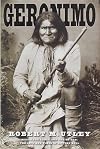
A richly-detailed biography of Geronimo, almost certain to become the standard full-scale academic treatment. While as a casual reader I found the amount of detail almost a bit too much, others will delight in it, and I highly recommend this to anyone with a strong interest in the subject. Utley not only traces Geronimo's life and career, but also his place in American public memory during and after his lifetime.

Excellent, balanced, thorough, a deep dive into the Lakota culture and beliefs, and the forces of the US westward settlement that they really had no hope to overcome. Sympathetic to Sitting Bull without being naïve. Written in 1993 and has stood the test of time very, very well. Highly recommended.
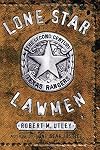
Utley's careful scholarship, so evident in the earlier volume, is absent here. The book reads like a vintage gossip tabloid combined with revisionist history.
Apologetic in tone, the majority of the text is spent on Rangers at the turn of the century with no positive mention of the cases which made them famous. Utley spends far too much time documenting and rehashing conspiracy theories which previous historians covered far more accurately.
Utley fails to differentiate between critical show more details such as the difference between the Texas Rangers and State Police. He begins this volume with the assertion that most reference material has "mysteriously" disappeared and continues in that vein. Where documentation has been noted, it comes from questionable sources such as daily newspapers. Any documentation from the Texas Rangers Museum and Hall of Fame is conspicuously absent.
Utley never does fulfill his promise of bringing the history of the Texas Rangers into the modern era. the 1930s through the 1970s are covered in a single chapter with another for 1970 onward. There appears to have been no actual effort to obtain modern resources or talk to today's Rangers.
This is a disappointing read, lacking in scholarship and objectivity. I expected better of this author. show less
Apologetic in tone, the majority of the text is spent on Rangers at the turn of the century with no positive mention of the cases which made them famous. Utley spends far too much time documenting and rehashing conspiracy theories which previous historians covered far more accurately.
Utley fails to differentiate between critical show more details such as the difference between the Texas Rangers and State Police. He begins this volume with the assertion that most reference material has "mysteriously" disappeared and continues in that vein. Where documentation has been noted, it comes from questionable sources such as daily newspapers. Any documentation from the Texas Rangers Museum and Hall of Fame is conspicuously absent.
Utley never does fulfill his promise of bringing the history of the Texas Rangers into the modern era. the 1930s through the 1970s are covered in a single chapter with another for 1970 onward. There appears to have been no actual effort to obtain modern resources or talk to today's Rangers.
This is a disappointing read, lacking in scholarship and objectivity. I expected better of this author. show less
Lists
Awards


You May Also Like


Associated Authors
Statistics
- Works
- 50
- Also by
- 19
- Members
- 3,964
- Popularity
- #6,368
- Rating
- 3.7
- Reviews
- 27
- ISBNs
- 139
- Languages
- 4
- Favorited
- 4
