
Mari Sandoz (1896–1966)
Author of Crazy Horse: The Strange Man of the Oglalas (50th Anniversary Edition)
About the Author
Image credit: Al Aumuller
Series
Works by Mari Sandoz
Crazy Horse: The Strange Man of the Oglalas (50th Anniversary Edition) (1942) 836 copies, 10 reviews
Old Jules Country: A Selection from Old Jules and Thirty Years of Writing Since the Book Was Published (1965) 65 copies
Victorie and Other Stories 1 copy
The Cattleman 1 copy
Associated Works
Reader's Digest Best of the West: A Treasury of Western Adventure Volumes 1 & 2 (1976) — Contributor — 38 copies
Reader's Digest Best of the West: A Treasury of Western Adventure Volume 2 — Contributor — 7 copies
O Cardeal; A Cidade Que Recusou Morrer; Vento Oeste Para o Havaí; O Caçador de Cavalos — Contributor — 1 copy
Tagged
Common Knowledge
- Other names
- Macumber, Marie
Sandoz, Mari Susette (birth name) - Birthdate
- 1896-05-11
- Date of death
- 1966-03-10
- Gender
- female
- Education
- University of Nebraska
- Occupations
- novelist
biographer
short story writer
historian
teacher - Nationality
- USA
- Birthplace
- Sand Hills, Nebraska, USA
- Places of residence
- Lincoln, Nebraska, USA
Denver, Colorado, USA - Place of death
- New York, New York, USA
- Burial location
- Mari Sandoz Museum, Gordon, Nebraska, USA
- Associated Place (for map)
- Nebraska, USA
Members
Reviews

I picked this book up in the NPS bookstore at the Badlands National Park visitor center, which had (as of 2023) a relatively small but very well curated selection. When I bought the book I expected it to be a biography but it is actually a lot closer to what we would today describe as historical fiction. That is not, of course, to denigrate it in any way; like the best historical fiction it is deeply and thoroughly researched but adds to the research a level of wisdom and insight that allows show more an author to inhabit the story and create plausible connective tissue to fill in the gaps and bridge the inconsistencies in historical accounts. I mention this because I agree with other reviewers who have mentioned that if this book was published today it would probably garner a much broader audience. It isn't just that Sandoz unapologetically takes the side of Native Americans that ensured the book was largely ignored when it was first published. It is also her style, her willingness to fully commit to a style of storytelling that was outside of her time but is perhaps much closer to her own.
Of course, it was only outside of her time in terms of expectations of white readers. A fascinating perspective is provided by the foreword contributed by noted Native American activist and author, Vine Deloria Jr. He admits that he panned the book when it first came out; while finding it informative, he was resentful of the attempt by a white woman to tell the story from the Indian perspective and even to attempt to write in a way that mimicked--as he saw it then--in an "Indian" style. When he came back to it years later, after many years doing his own research, it was like reading a different book. In her depiction not just of major events but the day-to-day lives of Native Americans, she "captured nuances that only a few would know and understand," a fact he attributed not simply to her research, or the fact that she had grown up in close proximity to the Siioux, many of whom had been alive during these events (a reminder how relatively recent all this "history" is, especially when measured on the time scale of human settlement in the Americas) but her deep understanding of the region itself.
For that reason, anyone expecting a simple narrative of "good Indians and evil Whites" will be disappointed. Sandoz is extremely attentive to the infighting and politicking among the various tribes and factions. Some of this was historical and geographical and almost ritualistic in nature. But it was also the result of the very typical divide-and-conquer strategy of colonialist powers everywhere. The final couple of chapters that detail the cloud of lies and deceit that swirled around the encampments around Fort Robinson in the days before Crazy Horse's death as whites and various Indian factions maneuvered for advantage is captured in nuanced if depressing detail.
I've read a lot of books about the Plains Wars and I can't remember being as immersed and moved by one since William Vollman's The Dying Grass. If you have any interest in this period and place, this book is a must-have. As Deloria notes, it is a book for "the careful reader who savors the well-written word who can see in this book history as biography and biography as history." show less
Of course, it was only outside of her time in terms of expectations of white readers. A fascinating perspective is provided by the foreword contributed by noted Native American activist and author, Vine Deloria Jr. He admits that he panned the book when it first came out; while finding it informative, he was resentful of the attempt by a white woman to tell the story from the Indian perspective and even to attempt to write in a way that mimicked--as he saw it then--in an "Indian" style. When he came back to it years later, after many years doing his own research, it was like reading a different book. In her depiction not just of major events but the day-to-day lives of Native Americans, she "captured nuances that only a few would know and understand," a fact he attributed not simply to her research, or the fact that she had grown up in close proximity to the Siioux, many of whom had been alive during these events (a reminder how relatively recent all this "history" is, especially when measured on the time scale of human settlement in the Americas) but her deep understanding of the region itself.
For that reason, anyone expecting a simple narrative of "good Indians and evil Whites" will be disappointed. Sandoz is extremely attentive to the infighting and politicking among the various tribes and factions. Some of this was historical and geographical and almost ritualistic in nature. But it was also the result of the very typical divide-and-conquer strategy of colonialist powers everywhere. The final couple of chapters that detail the cloud of lies and deceit that swirled around the encampments around Fort Robinson in the days before Crazy Horse's death as whites and various Indian factions maneuvered for advantage is captured in nuanced if depressing detail.
I've read a lot of books about the Plains Wars and I can't remember being as immersed and moved by one since William Vollman's The Dying Grass. If you have any interest in this period and place, this book is a must-have. As Deloria notes, it is a book for "the careful reader who savors the well-written word who can see in this book history as biography and biography as history." show less

I have never gotten past my fascination with cowboys and Indians. Well, actually, I have never gotten past my fascination with Native Americans. The cowboys I can do without, especially after reading another of Mari Sandoz’ books on the plains Indians. Maybe it’s a love for the underdog; maybe it’s just a desire for justice. Cheyenne Autumn is a book about a desperate people crushed under the wheels of the nobly named policy of Manifest Destiny. Unfortunately, that doctrine was not show more noble at all, but an excuse to seize land and property with little regard for treaties, laws, or propriety, and to essentially commit genocide. The author’s sympathetic treatment of the Cheyenne humanizes what is treated dryly in our school history books, brushing over the details.
The Northern Cheyenne were sent south to Indian Territory from their ancestral hunting grounds along the Powder and Yellowstone rivers in Montana, Wyoming, and the Dakotas. They were sent there with the promise that they could return if the didn’t like it there. Of course this promise was not written down anywhere. But the Cheyenne didn’t rely on writing for things like that, they relied on a man’s word. And guess what? They didn’t like it there. So after they had enough of being sickened and starved in Oklahoma, 278 men, women, and children fled north with their chiefs Little Wolf and Dull Knife. Between them and their homeland were rivers, railroads, ranchers and homesteads, the army, and winter. Amazingly, the two leaders managed to get their people North of the Platte into Kansas dispite the army’s best efforts. There they split and went to their separate fates. Sandoz does a great job of bringing their heroic journey to life without glossing over the injustice done to this noble people. This story needs to be read and known to put the U.S. settlement of the west in perspective and so that the people crushed by that settlement are not forgotten. show less
The Northern Cheyenne were sent south to Indian Territory from their ancestral hunting grounds along the Powder and Yellowstone rivers in Montana, Wyoming, and the Dakotas. They were sent there with the promise that they could return if the didn’t like it there. Of course this promise was not written down anywhere. But the Cheyenne didn’t rely on writing for things like that, they relied on a man’s word. And guess what? They didn’t like it there. So after they had enough of being sickened and starved in Oklahoma, 278 men, women, and children fled north with their chiefs Little Wolf and Dull Knife. Between them and their homeland were rivers, railroads, ranchers and homesteads, the army, and winter. Amazingly, the two leaders managed to get their people North of the Platte into Kansas dispite the army’s best efforts. There they split and went to their separate fates. Sandoz does a great job of bringing their heroic journey to life without glossing over the injustice done to this noble people. This story needs to be read and known to put the U.S. settlement of the west in perspective and so that the people crushed by that settlement are not forgotten. show less

it was nice to review this history through what felt like a more intimate, narrative lens that read like fiction. but this was still a tough read. it was just battle after battle, death after death. in the end, while it's a very important story to be told, i couldn't keep the people or the battles straight, except for the two main leaders of the cheyenne groups (little wolf and dull knife). what i will take away is a terrible view of how the government so often (has and still does) subverts show more the will of the many. according to this history, many white people tried to help the indians, but the government purposefully didn't send the food or water or fulfill their promises, even though the people wanted them to. which isn't to say that all the people wanted to do the right thing, but i had kind of assumed that virtually none did, so that was a pleasant surprise. still, the brutality of the government, and right after the lessons of reconstruction (although maybe that makes sense because the white people are all feeling so threatened by the idea of losing their power) is nauseating.
and it's shameful that this history remains virtually unknown to white people.
"By 1864, with the nation at war ostensibly to free the black man from slavery, the public had been prepared to accept a policy of extermination for the red." show less
and it's shameful that this history remains virtually unknown to white people.
"By 1864, with the nation at war ostensibly to free the black man from slavery, the public had been prepared to accept a policy of extermination for the red." show less
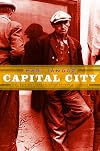
Franklin, the capital of Kanewa (as in Kansas-Nebraska-Iowa), is smaller and more provincial that its larger neighbor Grandapolis, from which it somehow wrested capital status in the past. The Grandapolis paper loves to publish any news showing Franklin’s provincialism, gaucherie, and brutality.
The Franklin establishment—the old money, the elite banking and high-end-merchant class, the police, the legislature, and the local paper—are anti-labor, anti-poor (they call them “the show more reliefers”), anti-Semitic, and pretty much anti-anything-that-ain’t-us.
The Capital City is the main character of the book, according to Helen Stauffer (Mari Sandoz, Boise State University Western Writers Series 63). But if so, the main character is an antagonist, and the protagonists are the people who try to hold back the corruption and the worst of the damage. These include most importantly Hamm Rufe, who, although living in obscurity in a squatter’s camp on a hill above the city, belongs to one of the city’s most prominent families. His real name is Rufer Hammond, and he is named after his progressive grandfather, George Rufer, who started the university and published a liberal newspaper. The family has since become as reactionary as the other elite families, though Hamm’s mother, Hallie Rufer Hammond, shows some awakening of conscience at the end of the book, rebuilding some of the squatter’s shacks in “Herb’s Addition” that have been torched by an arsonist. Another of the protagonists is Hamm’s friend Dr. Abigail Allerton, author of an exposé of the city titled Anteroom for Kingmakers (ostensibly about the history of the Frontier Hotel) and a history professor at the Franklin university until her fellow townspeople find out what’s really in her book and put pressure on the university. Lew Lewis is another, a labor leader who takes a bullet for his efforts to organize his strikers, but recovers. There is also Carl Halzer, a farmer who watches with dismay the increasingly corrupted farmers’ association and becomes a candidate for senator of the state. Entering the action of the book late is the woman who nursed Hamm back to health after a severe beating in Boston and whom he married and lived with for some years, Stephani Kolhoff.
Reactionary Franklin is brutal and violent, most notably in strikebreakers hired by the transport company with the connivance of the politicians, and in the activities of the fascist group, the Gold Shirts, who include prominent young men of the town such as Harold Welles, the son of Hamm’s oldest friend, Colmar (Cobby) Welles, whose suicide really starts the action of the book. Cobby’s is one of two suicides among Franklin’s elite, the other being Penny Hammond, wife of Hamm’s brother Cecil (Cees) Hammond, who takes sleeping pills when she finds herself pregnant with someone else’s child. There are a number of murders: the orphan Spaniard and Jewish kids taken in by a town doctor and a university professor are killed by a hit and run driver; an Italian immigrant is nearly wrongfully convicted of the murder of his hunting buddy, who was killed over sexual jealousy, and the murder of two small twin boys by the strikebreakers, who shoot up their car by mistake, precipitates some of the book’s concluding action, which results in the state supreme court striking down the anti-picketing law that has been the cover for much strikebreaking violence. That decision is a bit of irony, however, as it comes on the eve of the election of a governor who promises not to be restrained by any law in his strikebreaking activities.
On the eve of the election Halzer makes a barn-burning speech against the reactionaries that gets him arrested, though he ultimately wins the senate race, and Abigail sells the film rights for Anteroom. But the governor’s election goes to the demagogue Stetbettor, the negotiations with the strikers break down, and the new governor calls in the national guard. Curiously, Sandoz chooses to give this bleak apocalypse happy endings for her couples: Carl Halzer and Stephani Kolhoff get together, with Hamm’s blessing, and the young couple whose troubles we’ve been watching since the first pages, Mollie Tyndale and Burt Parr, get the blessing of her father, along with a wad of cash and orders to get out of town and make a life for themselves somewhere far away from the benighted streets of the Capital City. show less
The Franklin establishment—the old money, the elite banking and high-end-merchant class, the police, the legislature, and the local paper—are anti-labor, anti-poor (they call them “the show more reliefers”), anti-Semitic, and pretty much anti-anything-that-ain’t-us.
The Capital City is the main character of the book, according to Helen Stauffer (Mari Sandoz, Boise State University Western Writers Series 63). But if so, the main character is an antagonist, and the protagonists are the people who try to hold back the corruption and the worst of the damage. These include most importantly Hamm Rufe, who, although living in obscurity in a squatter’s camp on a hill above the city, belongs to one of the city’s most prominent families. His real name is Rufer Hammond, and he is named after his progressive grandfather, George Rufer, who started the university and published a liberal newspaper. The family has since become as reactionary as the other elite families, though Hamm’s mother, Hallie Rufer Hammond, shows some awakening of conscience at the end of the book, rebuilding some of the squatter’s shacks in “Herb’s Addition” that have been torched by an arsonist. Another of the protagonists is Hamm’s friend Dr. Abigail Allerton, author of an exposé of the city titled Anteroom for Kingmakers (ostensibly about the history of the Frontier Hotel) and a history professor at the Franklin university until her fellow townspeople find out what’s really in her book and put pressure on the university. Lew Lewis is another, a labor leader who takes a bullet for his efforts to organize his strikers, but recovers. There is also Carl Halzer, a farmer who watches with dismay the increasingly corrupted farmers’ association and becomes a candidate for senator of the state. Entering the action of the book late is the woman who nursed Hamm back to health after a severe beating in Boston and whom he married and lived with for some years, Stephani Kolhoff.
Reactionary Franklin is brutal and violent, most notably in strikebreakers hired by the transport company with the connivance of the politicians, and in the activities of the fascist group, the Gold Shirts, who include prominent young men of the town such as Harold Welles, the son of Hamm’s oldest friend, Colmar (Cobby) Welles, whose suicide really starts the action of the book. Cobby’s is one of two suicides among Franklin’s elite, the other being Penny Hammond, wife of Hamm’s brother Cecil (Cees) Hammond, who takes sleeping pills when she finds herself pregnant with someone else’s child. There are a number of murders: the orphan Spaniard and Jewish kids taken in by a town doctor and a university professor are killed by a hit and run driver; an Italian immigrant is nearly wrongfully convicted of the murder of his hunting buddy, who was killed over sexual jealousy, and the murder of two small twin boys by the strikebreakers, who shoot up their car by mistake, precipitates some of the book’s concluding action, which results in the state supreme court striking down the anti-picketing law that has been the cover for much strikebreaking violence. That decision is a bit of irony, however, as it comes on the eve of the election of a governor who promises not to be restrained by any law in his strikebreaking activities.
On the eve of the election Halzer makes a barn-burning speech against the reactionaries that gets him arrested, though he ultimately wins the senate race, and Abigail sells the film rights for Anteroom. But the governor’s election goes to the demagogue Stetbettor, the negotiations with the strikers break down, and the new governor calls in the national guard. Curiously, Sandoz chooses to give this bleak apocalypse happy endings for her couples: Carl Halzer and Stephani Kolhoff get together, with Hamm’s blessing, and the young couple whose troubles we’ve been watching since the first pages, Mollie Tyndale and Burt Parr, get the blessing of her father, along with a wad of cash and orders to get out of town and make a life for themselves somewhere far away from the benighted streets of the Capital City. show less
Lists
Awards


You May Also Like


Associated Authors
Statistics
- Works
- 31
- Also by
- 11
- Members
- 3,059
- Popularity
- #8,348
- Rating
- 3.9
- Reviews
- 42
- ISBNs
- 114
- Languages
- 4
- Favorited
- 10

